 People protesting at Jamsil Stadium, shouting for a 'rerun of fraudulent elections.' ⒸHankookilbo
There are peculiar phrases in history. In Japan, the expression "Kokura's Luck (小倉の幸運)" still remains. It emerged from the relief of those who survived, but it also encapsulates the tragedy of war and the irony of human fate.
On the morning of August 9, 1945, the American B-29 bomber Bockscar, carrying the second atomic bomb, headed towards Japanese airspace. Many believe Nagasaki was the original target, but this is not true.
A Streak of Clouds Determined the Fate of a City
The primary target for the atomic bombing on this day was Kokura, in northern Kyushu. This city, corresponding to the present-day Kitakyushu, was home to a concentration of the Japanese Imperial Army's major arsenals and military facilities at the time.
The bomber arrived as planned over Kokura. However, a problem arose: clouds and smoke made target identification difficult. The mission principle for dropping an atomic bomb required visual confirmation of the target, so the bomber circled multiple times, waiting for an opportunity. But the situation did not improve, and fuel was dwindling.
Ultimately, the commander made a decision. He decided to abandon the primary target and proceed to the secondary target. That secondary target was Nagasaki.
A few hours later, the atomic bomb was dropped over Nagasaki. Tens of thousands of lives vanished in an instant. The entire city was reduced to ruins. And Kokura survived.
Thus, the phrase "Kokura's Luck" originated in Japan. It signified that on the same day, with the same mission and the same bomb, one city survived and another was destroyed due to a piece of cloud and a few wisps of smoke.
However, this expression leaves a heavy question for the listener. Was it truly luck?
For the people of Kokura, it was certainly luck. Their families survived, and their city remained. But that luck was built upon the misfortune of another city, as Nagasaki became the sacrifice instead. Someone's survival was exchanged for someone else's death.
History often speaks of grand ideologies and national decisions. Yet, actual history is sometimes altered by minor elements such as the direction of the wind, the height of the clouds, or the flow of smoke. The fates of hundreds of thousands can be decided by weather rather than by a general's strategy.
"Kokura's Luck" is therefore not just an episode in the history of war. It is a case study demonstrating how imperfect a world humans inhabit. We often think history is driven by grand plans. However, real history contains moments where a single accidental weather condition diverts the life or death of a city and the fate of hundreds of thousands.
On the morning of August 9, 1945, the clouds covering Kokura were not merely a meteorological phenomenon. They were among the heaviest clouds in history, a cloud that saved one city and drove another to its death. And from that day forward, people came to call it "Kokura's Luck." Yet, within that phrase lies the tragedy of war, which cannot be explained by the word "luck" alone.
What is Needed Now is the Courage to Ask Uncomfortable Questions
The Republic of Korea stands at a major crossroads. Many citizens cheer or despair over the election or defeat of a particular politician. However, what time and history will evaluate is not the election result itself, but where that result led the country.
No matter which administration comes to power, if democracy is alive, citizens are vigilant, and power can be monitored, the nation has a chance to recover. Conversely, if all suspicion and criticism are forbidden simply because the faction one supports has won, democracy is reduced to an empty shell at that moment.
What the Republic of Korea needs now is not the intoxication of victory. It is the courage to ask uncomfortable questions. If there were not enough ballots, why were there not enough? Who is responsible? What must be done to ensure the same thing never happens again? Democracy is alive when such questions can be asked.
History is often decided by a single ballot, a single public official, a single decision. What may have seemed trivial at the time can later change the course of a nation.
What saved Kokura was not a great army, but clouds. What will save the Republic of Korea may not be a specific politician. It might be citizens who question power without fear, citizens who prioritize process over outcome, and citizens who think of the nation before their faction.
Perhaps what we need now is not the victory of someone, but the good fortune of the Republic of Korea. History tells us that luck does not come to those who wait, but is created by those who remain vigilant until the very end.
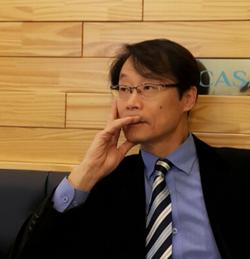
◆ Songshan (松山)
Poet and researcher of history and philosophy. Former director of the Syngman Rhee Institute. Currently serves as a research advisor for the Korean Modern and Contemporary History Research Society and as the representative of the philosophy forum 'Lyceum.' He has published four poetry collections, co-translated 'Heroes of Cape Fury,' and published the humanities books 'Joseon That Became a Myth,' 'Humanities on the Tatami,' and 'A Liberal's Reading of Gramsci.' Songshan is a pen name.

 Iranian Foreign Ministry: "Continuing Message Exchanges with the U.S. and Activities of Mediating Countries"
Esmaeil Baghaei, Spokesperson for the Iranian Ministry of Foreign Affairs [Xinhua, Yonhap News file photo]Esmaeil Baghaei, spokesperson for the Iranian Ministry of Foreign Affairs, stated on the 26th
Iranian Foreign Ministry: "Continuing Message Exchanges with the U.S. and Activities of Mediating Countries"
Esmaeil Baghaei, Spokesperson for the Iranian Ministry of Foreign Affairs [Xinhua, Yonhap News file photo]Esmaeil Baghaei, spokesperson for the Iranian Ministry of Foreign Affairs, stated on the 26th
 President Yoon: "Do You Think You Are Safe from the Special Counsel?"... Final Statement Video Released
President Yoon Suk Yeol rebuking the special prosecutor on the 24th. [Court video / @birds_justice X account subtitle GIF] A video of President Yoon Suk Yeol's closing statement at his trial rega
President Yoon: "Do You Think You Are Safe from the Special Counsel?"... Final Statement Video Released
President Yoon Suk Yeol rebuking the special prosecutor on the 24th. [Court video / @birds_justice X account subtitle GIF] A video of President Yoon Suk Yeol's closing statement at his trial rega
 President Yoon, regarding the first-instance ruling on the Public Official Election Act: “An excessive political verdict that distorts the facts… We will appeal immediately.”
The first-instance sentencing hearing for President Yoon Suk Yeol regarding violations of the Public Official Election Act is being broadcast live at Seoul Station on the 27th. [Photo=Yonhap News]Pres
President Yoon, regarding the first-instance ruling on the Public Official Election Act: “An excessive political verdict that distorts the facts… We will appeal immediately.”
The first-instance sentencing hearing for President Yoon Suk Yeol regarding violations of the Public Official Election Act is being broadcast live at Seoul Station on the 27th. [Photo=Yonhap News]Pres
 WSJ: "SK Hynix ADR Premium Is a Sign of AI Trading Overheat"
Advertisement for SK Hynix ADR listing in New York's Times Square [Reuters=Yonhap News file photo]The Wall Street Journal (WSJ) has pointed out that the price of SK Hynix’s American Depositary Recei
WSJ: "SK Hynix ADR Premium Is a Sign of AI Trading Overheat"
Advertisement for SK Hynix ADR listing in New York's Times Square [Reuters=Yonhap News file photo]The Wall Street Journal (WSJ) has pointed out that the price of SK Hynix’s American Depositary Recei
 'Godfather of Japanese Mystery Novels' Keigo Higashino Passes Away After Battle with Cancer at 68
Famous Japanese mystery novelist Keigo Higashino [AFP=Yonhap News]It has been belatedly reported that Keigo Higashino, the "godfather of Japanese mystery novels" and author of bestsellers such as "The
'Godfather of Japanese Mystery Novels' Keigo Higashino Passes Away After Battle with Cancer at 68
Famous Japanese mystery novelist Keigo Higashino [AFP=Yonhap News]It has been belatedly reported that Keigo Higashino, the "godfather of Japanese mystery novels" and author of bestsellers such as "The
 [Park Pil-kyu Security Column] To the Ignorant Trying to Clothe a Beast in Sheep's Clothing
Rep. Kim Byung-joo of the Democratic Party of Korea [Photo=Yonhap News]“The Air Force Academy doesn't teach you how to fly a plane!” “The Army, Navy, and Air Force academies are exactly the
[Park Pil-kyu Security Column] To the Ignorant Trying to Clothe a Beast in Sheep's Clothing
Rep. Kim Byung-joo of the Democratic Party of Korea [Photo=Yonhap News]“The Air Force Academy doesn't teach you how to fly a plane!” “The Army, Navy, and Air Force academies are exactly the
 [Issue Diagnosis] Two Effects of the Election Petition Review
 [Photo] Evidence of Election Fraud Flooding U.S. Media… Trump Had 2.7 Million Votes Stolen
 [Video] U.S. Semiquincentennial Air Show... 'Art in the Sky' streaks across New York
 [Editorial Cartoon] A Draconian Law That Undermines Freedom of Expression

 List
List









