- Critique and Reinterpretation of Traditional Culture from a Modern Perspective Search
- Investigating 'Tradition', a ghost born from scarcity and hope.
- From uncritical worship to a space for subjective 'editing'

A civilizational anatomical report on the grand ideology 'tradition' that dominates the Korean subconscious, 'The Editing of Tradition' (Timeline), has been published.
Is the 'traditional culture' of Korea, which we take for granted today, truly a legacy inherited intact from the past? Or is it an invention reconstructed retroactively for a specific purpose?
Through the book, author Choi Beom, a cultural critic, deconstructs the reality of 'tradition,' which our society has blindly sanctified, and sharply dissects the modern mechanisms hidden behind it.
“What is tradition to Koreans, and why are we so obsessed with tradition?” In the preface, the author borrows the concept of 'invented traditions' from British historian Eric Hobsbawm, revealing that much of what we commonly believe to be a product of a long history is, in fact, a political and cultural product invented and edited within the space-time of 'modernity'.
The author diagnoses Korean discourse on tradition as a product of a kind of 'lack' and 'hope.' He points out that the cultural sense of loss and inferiority accumulated through colonization, division, and rapid modernization has paradoxically led to clinging to the illusion of a 'pure and great tradition'.
In other words, the tradition we speak of is not the actual fact that existed in the past, but rather an 'idealized ghost' created by projecting what modern people 'hope for' to fill their present lack.
The most provocative aspect of this book is its direct criticism of the 'nationalist fallacy and ideology' inherent in Korean traditional discourse.
Through the preface, the author integrates theories such as Michel de Certeau's theories of everyday life practices to precisely trace how tradition has been 'edited' and instilled in the public as a dominant discourse by the state and power. It meticulously demonstrates the process by which state-sponsored festivals, standardized traditional arts, and the nationalistic ethos deeply embedded in daily life have made us uncritical worshippers of tradition.
However, the author's goal is not simply to devalue or destroy tradition. The author's true intention lies in the message of liberation: "By clearly 'knowing' that tradition is a product of the present, we can finally understand tradition better and deal with it proactively."
The moment we realize that tradition is not a preserved relic but a modern compilation, we gain the status of an 'editor' rather than a slave to tradition. The author argues that Korean society must now break free from uncritical sanctification and nationalist obsession, and freely reinterpret and edit tradition as a cultural resource needed for life here and now.
By Reporter Im Yo-hee
- 관련기사
-
What do you think of this article?

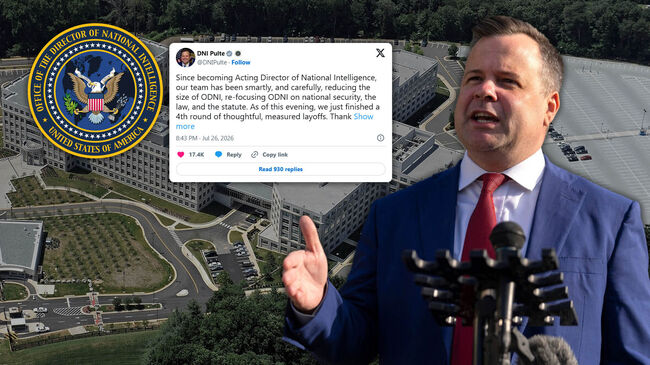 Bill Pulte to Restructure ‘Deep State’… Announces 4th Round of Layoffs at the Office of the Director of National Intelligence
Acting Director of National Intelligence Bill Pulte announced Sunday that he has carried out a fourth "deliberate and measured" reduction in personnel since taking office on June 19, as part of the Tr
Bill Pulte to Restructure ‘Deep State’… Announces 4th Round of Layoffs at the Office of the Director of National Intelligence
Acting Director of National Intelligence Bill Pulte announced Sunday that he has carried out a fourth "deliberate and measured" reduction in personnel since taking office on June 19, as part of the Tr
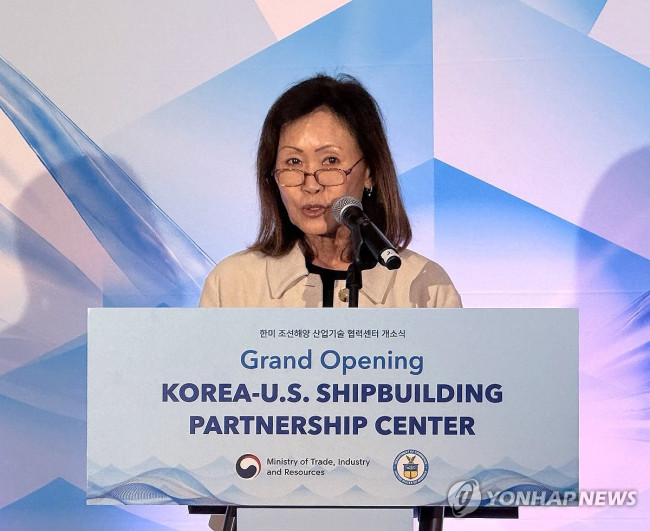 First U.S. Ambassador of Trump's Second Term to Arrive This Week… Will It Provide Momentum to Resolve Pending Issues?
U.S. Ambassador to South Korea Michelle Steel speaks at the opening ceremony of the Korea-U.S. Shipbuilding Cooperation Center held at the Mayflower Hotel in Washington, D.C., on the 23rd (local time)
First U.S. Ambassador of Trump's Second Term to Arrive This Week… Will It Provide Momentum to Resolve Pending Issues?
U.S. Ambassador to South Korea Michelle Steel speaks at the opening ceremony of the Korea-U.S. Shipbuilding Cooperation Center held at the Mayflower Hotel in Washington, D.C., on the 23rd (local time)
 President Yoon, regarding the first-instance ruling on the Public Official Election Act: “An excessive political verdict that distorts the facts… We will appeal immediately.”
The first-instance sentencing hearing for President Yoon Suk Yeol regarding violations of the Public Official Election Act is being broadcast live at Seoul Station on the 27th. [Photo=Yonhap News]Pres
President Yoon, regarding the first-instance ruling on the Public Official Election Act: “An excessive political verdict that distorts the facts… We will appeal immediately.”
The first-instance sentencing hearing for President Yoon Suk Yeol regarding violations of the Public Official Election Act is being broadcast live at Seoul Station on the 27th. [Photo=Yonhap News]Pres
 91% of Net Influx of MZ Generation Goes to Seoul Metropolitan Area… Population Migration Also Shows 'K-shaped Polarization' by Industry
[Provided by Leaders Index]Over the past four years, the MZ generation population has become increasingly concentrated in the Seoul metropolitan area and the Chungcheong region. While cities cen
91% of Net Influx of MZ Generation Goes to Seoul Metropolitan Area… Population Migration Also Shows 'K-shaped Polarization' by Industry
[Provided by Leaders Index]Over the past four years, the MZ generation population has become increasingly concentrated in the Seoul metropolitan area and the Chungcheong region. While cities cen
 'Godfather of Japanese Mystery Novels' Keigo Higashino Passes Away After Battle with Cancer at 68
Famous Japanese mystery novelist Keigo Higashino [AFP=Yonhap News]It has been belatedly reported that Keigo Higashino, the "godfather of Japanese mystery novels" and author of bestsellers such as "The
'Godfather of Japanese Mystery Novels' Keigo Higashino Passes Away After Battle with Cancer at 68
Famous Japanese mystery novelist Keigo Higashino [AFP=Yonhap News]It has been belatedly reported that Keigo Higashino, the "godfather of Japanese mystery novels" and author of bestsellers such as "The
 [Park Pil-kyu Security Column] To the Ignorant Trying to Clothe a Beast in Sheep's Clothing
Rep. Kim Byung-joo of the Democratic Party of Korea [Photo=Yonhap News]“The Air Force Academy doesn't teach you how to fly a plane!” “The Army, Navy, and Air Force academies are exactly the
[Park Pil-kyu Security Column] To the Ignorant Trying to Clothe a Beast in Sheep's Clothing
Rep. Kim Byung-joo of the Democratic Party of Korea [Photo=Yonhap News]“The Air Force Academy doesn't teach you how to fly a plane!” “The Army, Navy, and Air Force academies are exactly the
 [Issue Diagnosis] Two Effects of the Election Petition Review
 [Photo] Evidence of Election Fraud Flooding U.S. Media… Trump Had 2.7 Million Votes Stolen
 [Video] U.S. Semiquincentennial Air Show... 'Art in the Sky' streaks across New York
 [Editorial Cartoon] A Draconian Law That Undermines Freedom of Expression

 List
List