The Buddha Altar at Daeungjeon Hall, Hwaeomsa Temple, Gurye [Cultural Heritage Administration]
The history of humanity is not only a history of civilization but also a history of religion. Even as we enter the 21st century, dominated by advanced science and artificial intelligence, and discuss space exploration, humanity's yearning for religion does not subside.
Instead, modern people, feeling spiritual poverty amidst material abundance, still visit temples, churches, and cathedrals, clinging to their faith.
In this era where science clearly explains the physical laws of the world, why do humans continuously create and crave such a transcendent realm as religion? We see that at the deepest abyss of its origin lies nothing other than the 'fundamental fear of death'.
Defense Mechanism Against the Fear and Helplessness of Death
In his later years, the German poet Heinrich Heine collapsed in front of the Louvre Museum, embraced a statue, and cried out, "Do something to me, is there no stronger god?"
This poignant cry starkly illustrates that the most fundamental motive for humans seeking religion lies in the absolute fate of death and the resultant existential anxiety. Among the countless living beings on Earth, only humans possess the tragic ability to perceive and anticipate their own death in advance. As the German philosopher Martin Heidegger observed, humans are essentially beings moving towards death, that is, 'beings unto death'.
The moment humans become aware of this mortality, they experience an indescribable, profound fear and helplessness, and religion is the rope of salvation that blooms from this abyss of anxiety. Through concepts such as the afterlife, reincarnation, or eternal life, religion has declared that death is not a futile cessation but a new beginning, providing a psychological refuge to manage the fear of death. In essence, the birth of religion is the intense defense mechanism of the human soul striving to overcome the absolute limit of death.
Psychological Defense and the Pursuit of Meaning to Soothe Helplessness
The giant of psychology, Sigmund Freud, viewed religion as a product of human subconscious weakness and fear. In his book "The Future of an Illusion," he defined religion as "a mental illusion projected from humanity's infantile desire to protect itself against the oppressive forces of nature, the suffering of life, and above all, the harsh fate of death." Just as a child seeks a father when afraid, adult humans, in the face of the uncontrollable shadow of death, create and rely on a transcendent 'absolute being,' he analyzed.
This fear does not merely provide psychological comfort; it leads to an active 'pursuit of meaning' regarding death and suffering. As the Austrian psychiatrist Viktor Frankl emphasized, humans are beings with a will to meaning. Humans cannot endure the void of death and meaningless suffering. While science merely explains death as a simple biological cessation without satisfying the soul, religion sublates it into past-life karma or a noble process for spiritual growth. By believing in a divine cosmic plan or an afterlife beyond death, humans gain the existential strength to overcome the fear of death and continue their present lives.
A Leap Beyond Finitude Towards Eternity (Perfection)
Furthermore, religious rituals and community bonds serve as social mechanisms to collectively overcome the loneliness of death, which cannot be endured alone. The moral community described by Émile Durkheim is ultimately a public square of solidarity that shares and heals the 'solitude in the face of death'.
Moreover, the 'self-transcendence need' mentioned by Abraham Maslow, or Buddhist enlightenment, are ultimately expressions of the desire to escape the limited, mortal self (the cycle of birth, aging, sickness, and death) and reach eternal, perfect truth. It is only when humans recognize their own profound helplessness in the face of death that they dream of a great transcendence.
Therefore, humanity's creation and constant yearning for religion is by no means a weak, superstitious act. It is the soul's most desperate 'construction of a psychological refuge' to protect itself from the immense, external fear of death, and it is humanity's 'most noble spiritual leap' to break through the limitations of finite existence and reach eternal truth.
As Einstein said, "Science without religion is lame, religion without science is blind," science illuminates the present life, while religion illuminates the darkness of death. As long as humanity persists and humans are aware of their own death, the history of creating religions to overcome the fear of death and the yearning for truth will continue without pause.
※Karma (業): Originally a translation of the Sanskrit word 'Karma', meaning 'Action'. In Buddhism and Indian philosophy, it signifies not just mere movement but all intentional activities of body, speech, and mind, whether online or offline. The principle of 'cause and effect' (因果應報), where one's actions do not disappear but inevitably yield corresponding results, is embedded within it. In the context of this column, it is explained as a religious mechanism for gaining existential solace by accepting unresolved suffering in the present life as a 'necessary consequence of actions in past lives'.
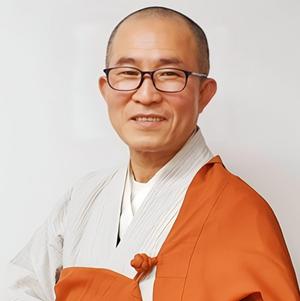
◆ Monk Eungcheon
Secretary-General of the Korean Buddhist Order of National Defense
First Commander of the National Defense Monk Corps

 Trump pressures for rate cut again ahead of FOMC... "Should be the lowest in the world"
U.S. President Donald Trump. [Photo = The White House] U.S. President Donald Trump once again pressured the Federal Reserve, the U.S. central bank, to lower interest rates on the 27th (local time
Trump pressures for rate cut again ahead of FOMC... "Should be the lowest in the world"
U.S. President Donald Trump. [Photo = The White House] U.S. President Donald Trump once again pressured the Federal Reserve, the U.S. central bank, to lower interest rates on the 27th (local time
 “Ignoring crisp ballots and damaged seals”… Tongyeong mayoral recount concludes with ‘no change in outcome,’ leaving suspicions and public outrage behind
Suspected counterfeit ballots discovered in Tongyeong [GIF from social media of Representative Hwang Kyo-ahn / Attorney Park Joo-hyun]During a recount of the Tongyeong mayoral election in South Gyeong
“Ignoring crisp ballots and damaged seals”… Tongyeong mayoral recount concludes with ‘no change in outcome,’ leaving suspicions and public outrage behind
Suspected counterfeit ballots discovered in Tongyeong [GIF from social media of Representative Hwang Kyo-ahn / Attorney Park Joo-hyun]During a recount of the Tongyeong mayoral election in South Gyeong
 President Yoon, regarding the first-instance ruling on the Public Official Election Act: “An excessive political verdict that distorts the facts… We will appeal immediately.”
The first-instance sentencing hearing for President Yoon Suk Yeol regarding violations of the Public Official Election Act is being broadcast live at Seoul Station on the 27th. [Photo=Yonhap News]Pres
President Yoon, regarding the first-instance ruling on the Public Official Election Act: “An excessive political verdict that distorts the facts… We will appeal immediately.”
The first-instance sentencing hearing for President Yoon Suk Yeol regarding violations of the Public Official Election Act is being broadcast live at Seoul Station on the 27th. [Photo=Yonhap News]Pres
 WSJ: "SK Hynix ADR Premium Is a Sign of AI Trading Overheat"
Advertisement for SK Hynix ADR listing in New York's Times Square [Reuters=Yonhap News file photo]The Wall Street Journal (WSJ) has pointed out that the price of SK Hynix’s American Depositary Recei
WSJ: "SK Hynix ADR Premium Is a Sign of AI Trading Overheat"
Advertisement for SK Hynix ADR listing in New York's Times Square [Reuters=Yonhap News file photo]The Wall Street Journal (WSJ) has pointed out that the price of SK Hynix’s American Depositary Recei
 'Godfather of Japanese Mystery Novels' Keigo Higashino Passes Away After Battle with Cancer at 68
Famous Japanese mystery novelist Keigo Higashino [AFP=Yonhap News]It has been belatedly reported that Keigo Higashino, the "godfather of Japanese mystery novels" and author of bestsellers such as "The
'Godfather of Japanese Mystery Novels' Keigo Higashino Passes Away After Battle with Cancer at 68
Famous Japanese mystery novelist Keigo Higashino [AFP=Yonhap News]It has been belatedly reported that Keigo Higashino, the "godfather of Japanese mystery novels" and author of bestsellers such as "The
 [Park Pil-kyu Security Column] To the Ignorant Trying to Clothe a Beast in Sheep's Clothing
Rep. Kim Byung-joo of the Democratic Party of Korea [Photo=Yonhap News]“The Air Force Academy doesn't teach you how to fly a plane!” “The Army, Navy, and Air Force academies are exactly the
[Park Pil-kyu Security Column] To the Ignorant Trying to Clothe a Beast in Sheep's Clothing
Rep. Kim Byung-joo of the Democratic Party of Korea [Photo=Yonhap News]“The Air Force Academy doesn't teach you how to fly a plane!” “The Army, Navy, and Air Force academies are exactly the
 [Issue Diagnosis] Two Effects of the Election Petition Review
 [Photo] Evidence of Election Fraud Flooding U.S. Media… Trump Had 2.7 Million Votes Stolen
 [Video] U.S. Semiquincentennial Air Show... 'Art in the Sky' streaks across New York
 [Editorial Cartoon] A Draconian Law That Undermines Freedom of Expression

 List
List