 Peace without power is begging the enemy, and peace without preparedness for war is merely duckweed floating on water. [Photo=Yonhap News]
26 years ago today marked the anniversary of the June 15th South-North Joint Declaration, the first summit between the leaders of South and North Korea since division. The progressive camp positively evaluates the June 15th Declaration for preventing war and opening the path for inter-Korean exchanges, while the conservative camp dismisses it as a counterfeit 'peace show' that bribed North Korea and bought a Nobel Prize. There is no need to dwell on this futile debate here.
Recently, President Lee, who attended a special mass at the Basilica of Saint Paul Outside the Walls in Rome, also mentioned the June 15th Declaration, emphasizing the need to rekindle the flame of peace in the current situation. However, 26 years later, it is undeniable that the reality of inter-Korean relations we face today is one of severance, confrontation, and tension, rather than dialogue and cooperation.
Freedom and peace are the highest values pursued by humanity. Disaster begins the moment we misunderstand their essence. We have so far perceived 'peace' as merely a passive concept, 'a state of freedom without war.' However, 'true peace' is a state of enjoying freedom by subjugating the enemy, not relying on the goodwill of the other party, and is an 'active state' where peace can be secured and maintained through overwhelming power.
Peace without power is begging the enemy, and peace without preparedness for war is merely duckweed floating on water. Actions that reduce and neutralize our own forces while appeasing surrounding enemies and principal enemies for the sake of peace inevitably lead to war. We must not forget the stern warning of history that if the peace we expected collapses after going 'all in,' the Korean Peninsula could once again transform into a theater of massive war.
Looking back at history, we can see how reckless peace policies have led nations to ruin. The Paris Peace Accord, signed in 1973, became a decisive catalyst for the fall of South Vietnam. While the Paris Accord was presented under the guise of 'peace,' it was in reality a surrender document for North Vietnam's communist unification.
North Vietnam, which had promised peace, broke its promise even before the ink on the peace accord was dry and launched an invasion, capturing the 'Independence Palace,' the presidential residence. South Vietnam, instead of strengthening its own military capabilities, settled for an agreement with the enemy and ultimately disappeared from the map.
The 'appeasement policy' of Britain and France in the 1930s also led to the greater disaster of World War II by abandoning deterrence in pursuit of the illusion of peace. Similarly, the complacent disarmament of some Western countries during the Cold War only emboldened the ambitions of their adversaries. In this way, peace not predicated on a superiority of power has paradoxically become a fuse for war.
From this historical perspective, we must view the recent hurried push for the transfer of wartime operational control. Realistically, an unprepared transfer of wartime operational control is like 'giving a live chicken and receiving a dead one.' It is an act of national security destruction to relinquish the strength of our alliance, which provides deterrence through the ROK-US alliance, under the guise of unverified self-reliance and to self-inflict a military vacuum. The ROK-US alliance is the last bastion protecting the Republic of Korea today.
Rhetorical declarations of an end-of-war and illusory peace discourse are no longer effective. North Korea has already designated itself as 'two hostile states' and is completing a barrier of separation. Offering words of peace to the enemy is not political dignity but an invitation to provocation.
It is now time to consider and pursue a policy of 'superiority of power' that prevents the enemy from even dreaming of provocation, rather than a peace policy. We must establish three core principles for the security of the Republic of Korea.
The first security principle is 'the defense of territorial integrity and the protection of the lives of the people, which are constitutional duties.' In response to North Korea's constitutional enshrinement of nuclear armament and the dangerous separatist challenge of the 'two hostile states theory,' we must uphold the territorial claims of the Korean Peninsula and its attached islands as stipulated by the Constitution, and maintain security and unification policies based on a free democratic basic order.
The second security principle is 'maximizing integrated deterrence with our allies.' Absolute deterrence secured through alliance provides us with the confidence to not have to beg for peace. Those who shake the ROK-US alliance are anti-state elements and internal enemies who threaten the survival of us all.
The third security principle is 'strategic flexibility that confronts hostile realities.' Instead of looking to the enemy's whims in a hostile reality, we must quantify and respond to their intentions and their physical and technological 'capabilities' as threats. We must develop strategic flexibility by predicting worst-case scenarios based on data, excluding emotional responses, and devising countermeasures according to changes in the international situation and US military functions.
We must break free from the illusion of peace that stems from misinterpreting the enemy's intentions as good faith and thereby aiding North Korea's nuclear armament. Instead, we must thoroughly manage and control the enemy's intentions through strategies that overwhelm their 'capabilities.' We must accurately assess the enemy's nuclear capabilities and persistently advocate for denuclearization on the international stage.
It is time to speak of tangible security, not of a peace that bewilders us when facing an enemy who threatens us with nuclear weapons. To avoid the tragedy of war, we must obtain countermeasures commensurate with independent nuclear armament, with the boldness to advocate for it.
The current government's security policy is at a truly precarious level, even from the perspective of reserve officers. It is moving against common sense security, caught in the magic of peace. It is even suspected of following unseen directives. We must cease with principled peace theories and transition to security policies that prioritize building strength.
We must recover our military sovereignty by organically combining a strong will to protect our constitutional territory and security values, overwhelming deterrence through the ROK-US alliance, and cold-blooded realism, to prevent war and respond to the visible threat of China without neglecting it. The Republic of Korea is not a laboratory for politicians and security officials, but a nation where 52 million dignified and great citizens live freely and prosperously.
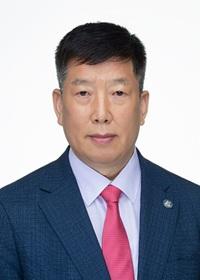
◆ Park Pil-kyu
Editor, Hankook Ilbo
40th graduating class, Korea Military Academy

 Iranian Foreign Ministry: "Continuing Message Exchanges with the U.S. and Activities of Mediating Countries"
Esmaeil Baghaei, Spokesperson for the Iranian Ministry of Foreign Affairs [Xinhua, Yonhap News file photo]Esmaeil Baghaei, spokesperson for the Iranian Ministry of Foreign Affairs, stated on the 26th
Iranian Foreign Ministry: "Continuing Message Exchanges with the U.S. and Activities of Mediating Countries"
Esmaeil Baghaei, Spokesperson for the Iranian Ministry of Foreign Affairs [Xinhua, Yonhap News file photo]Esmaeil Baghaei, spokesperson for the Iranian Ministry of Foreign Affairs, stated on the 26th
 President Yoon: "Do You Think You Are Safe from the Special Counsel?"... Final Statement Video Released
President Yoon Suk Yeol rebuking the special prosecutor on the 24th. [Court video / @birds_justice X account subtitle GIF] A video of President Yoon Suk Yeol's closing statement at his trial rega
President Yoon: "Do You Think You Are Safe from the Special Counsel?"... Final Statement Video Released
President Yoon Suk Yeol rebuking the special prosecutor on the 24th. [Court video / @birds_justice X account subtitle GIF] A video of President Yoon Suk Yeol's closing statement at his trial rega
 President Yoon, regarding the first-instance ruling on the Public Official Election Act: “An excessive political verdict that distorts the facts… We will appeal immediately.”
The first-instance sentencing hearing for President Yoon Suk Yeol regarding violations of the Public Official Election Act is being broadcast live at Seoul Station on the 27th. [Photo=Yonhap News]Pres
President Yoon, regarding the first-instance ruling on the Public Official Election Act: “An excessive political verdict that distorts the facts… We will appeal immediately.”
The first-instance sentencing hearing for President Yoon Suk Yeol regarding violations of the Public Official Election Act is being broadcast live at Seoul Station on the 27th. [Photo=Yonhap News]Pres
 WSJ: "SK Hynix ADR Premium Is a Sign of AI Trading Overheat"
Advertisement for SK Hynix ADR listing in New York's Times Square [Reuters=Yonhap News file photo]The Wall Street Journal (WSJ) has pointed out that the price of SK Hynix’s American Depositary Recei
WSJ: "SK Hynix ADR Premium Is a Sign of AI Trading Overheat"
Advertisement for SK Hynix ADR listing in New York's Times Square [Reuters=Yonhap News file photo]The Wall Street Journal (WSJ) has pointed out that the price of SK Hynix’s American Depositary Recei
 'Godfather of Japanese Mystery Novels' Keigo Higashino Passes Away After Battle with Cancer at 68
Famous Japanese mystery novelist Keigo Higashino [AFP=Yonhap News]It has been belatedly reported that Keigo Higashino, the "godfather of Japanese mystery novels" and author of bestsellers such as "The
'Godfather of Japanese Mystery Novels' Keigo Higashino Passes Away After Battle with Cancer at 68
Famous Japanese mystery novelist Keigo Higashino [AFP=Yonhap News]It has been belatedly reported that Keigo Higashino, the "godfather of Japanese mystery novels" and author of bestsellers such as "The
 [Park Pil-kyu Security Column] To the Ignorant Trying to Clothe a Beast in Sheep's Clothing
Rep. Kim Byung-joo of the Democratic Party of Korea [Photo=Yonhap News]“The Air Force Academy doesn't teach you how to fly a plane!” “The Army, Navy, and Air Force academies are exactly the
[Park Pil-kyu Security Column] To the Ignorant Trying to Clothe a Beast in Sheep's Clothing
Rep. Kim Byung-joo of the Democratic Party of Korea [Photo=Yonhap News]“The Air Force Academy doesn't teach you how to fly a plane!” “The Army, Navy, and Air Force academies are exactly the
 [Issue Diagnosis] Two Effects of the Election Petition Review
 [Photo] Evidence of Election Fraud Flooding U.S. Media… Trump Had 2.7 Million Votes Stolen
 [Video] U.S. Semiquincentennial Air Show... 'Art in the Sky' streaks across New York
 [Editorial Cartoon] A Draconian Law That Undermines Freedom of Expression

 List
List










