 Short-term stimulus measures targeting voter sentiment, combined with anti-corporate sentiment, are causing the Korean economy to face the boomerang effect of massive market distortions. [Graphic=Yonhap News]
The South Korean economy is walking a perilous tightrope. A structure that artificially props up the economy by defying the natural flow of the market for political purposes, fueled by the precious assets of its citizens and the debt of future generations, is like a sandcastle that could collapse at any moment.
Short-term stimulus measures targeting voter sentiment, combined with anti-corporate sentiment, are causing the Korean economy to face the boomerang effect of massive market distortions. Amidst the stock market frenzy, wherever people gather, the atmosphere is enlivened by talk of stock prices. However, this is contrasted by the polarization seen in the soaring number of bankruptcies among small and medium-sized enterprises and self-employed individuals. The employment rate for university graduates stands at a mere 44% (compared to 70-80% in G7 countries), meaning half of all graduates are unable to find jobs.
Citizens are now enduring a period of suffering due to high oil prices, high interest rates, and high inflation. The warning signs echoing across capital markets, macroeconomic indicators, real estate, and the labor environment cannot be ignored. We summarize the concerns and prescriptions of many experts.
Abnormal Stock Market Volatility
The most concerning aspect is the weakening constitution of the capital market. The stock market should inherently move based on corporate value and market trust, but our current market is reliant on massive artificial stimulus.
While the government proclaims market revitalization, in reality, it appears to be propping up the stock market by mobilizing the National Pension Service, the retirement safety net for citizens. Unlike global pension funds (such as ABP in the Netherlands and GPFG in Norway) that focus on diversified overseas investments to guard against distortions caused by a home bias, our National Pension Service invests about 30% in the domestic stock market, creating an unusual 'monopoly structure' that sways the market.
※ Netherlands Civil Service Pension Fund (ABP): A pension fund of global scale, yet its investment in the domestic (Dutch) stock market is less than 1-2%.
Norway Government Pension Fund Global (GPFG): The world's largest fund, but investment in domestic stocks is legally prohibited, and it invests 100% in overseas assets.
Adding to this, the "young-kkul" (all-in investment) and "bitu" (debt investment) by ordinary citizens and young people have pushed the credit loan balance to nearly 40 trillion won, reaching a dangerous level. If policy authorities encourage "bitu," it is essentially no different from pushing citizens into a gambling arena.
Furthermore, a skewed index illusion exists where a mere three large corporations—Samsung Electronics, SK Hynix, and Hyundai Motor—monopolize 55-58% of the KOSPI's market capitalization, leaving the majority of small and medium-sized enterprises and mid-tier companies completely neglected.
Our stock market, at about 3% of the world's market size, is highly unstable with its wide fluctuations. The current stock market, which amplifies volatility with the proliferation of high-risk speculative instruments like single-stock leveraged products, will devolve into a catastrophe of joint insolvency for individuals burdened with debt and the National Pension Service the moment artificial support reaches its limit.
Strange Exchange Rate Surge and Macroeconomic Cracks Amidst Export Surplus
The macroeconomic indicators, which reflect the fundamental strength of our economy, also demonstrate severe internal damage. Despite recording a large export surplus in the first half of the year, the peculiar phenomenon of the won-dollar exchange rate continuing its upward trend persists.
The won-dollar exchange rate soared to a high of 1,555.2 won during intraday trading (as of June 8, 2026), marking the highest point in 17 years since the 2009 financial crisis. Can our economy prevent a second foreign exchange crisis if the exchange rate continues to rise?
The causes are clear. First, excessive monetary expansion, fueled by two rounds of supplementary budgets (totaling 71.8 trillion won) poured in a short period under the guise of livelihood funds, has devalued the won. (Currency volume as a percentage of GDP: US 71%, Korea 154%)
Second, the policy gap between the Bank of Korea, which missed the timing for interest rate hikes due to concerns about household debt and economic slowdown amidst the US Federal Reserve's high-interest rate policy, has fueled dollar buying.
Third, amidst Korea's long-term weakening potential growth rate compared to the US (estimated at 1.7-1.8% in 2026 and 1.0-1.5% from 2028 to 2031), capital outflow is accelerating as foreigners convert funds from stock sales into dollars and repatriate them.
In this situation, foreign exchange reserves, which are supposed to defend the exchange rate's "magic line," have recently decreased by tens of billions of dollars, falling to the mid-420 billion dollar range, and securing a currency swap with the US remains a distant prospect. (Ratio of foreign reserves to GDP: Korea 23%, Taiwan 80%). The cash held by the Bank of Korea amounts to only 20 billion dollars. (The promised investment to the US is approximately 350 billion dollars.) It is said that a mere two-notch downgrade of Korea's credit rating by a US credit rating agency would trigger a foreign exchange crisis.
The reality that companies, facing future uncertainties, are tying up the dollars earned from exports in overseas assets rather than bringing them into the country demonstrates that the government's interventionism is inadvertently encouraging capital flight.
The Vicious Cycle of Real Supply Shortages and Jeonse Crises Caused by Regulations
The real estate market also exemplifies 'public failure' caused by government intervention. While the government attempted to control housing prices through loan regulations and various demand-suppressing measures, it failed to address the shortage of quality housing supply (move-in volumes) in urban centers that the market desires, causing housing prices to rise again.
With valid demand unable to purchase homes due to loan restrictions, buyers have instead moved to the jeonse market. However, excessive penalties such as mandatory residency periods and landlord regulations have led to the side effect of locking up jeonse listings. Ultimately, the soaring jeonse prices due to the hoarding of listings are once again pushing up sale prices, forming a vicious cycle. This is causing the real estate market to become unstable again, particularly in major reconstruction complexes in Seoul and large complexes in the Seoul metropolitan area.
The cost of regulation-centric policies, which disregard the private sector's free transactions and real supply mechanisms, is being passed on entirely to ordinary citizens in the form of increased housing expenses.
Pro-Union Corporate Environment and Generosity Management by Large Corporations
The anti-corporate social atmosphere and militant labor activism that tie the hands of businesses are the final fuse that will extinguish South Korea's growth engine. A corporate tax rate of 25% (compared to the OECD average of 21.5%), the Yellow Envelope Law, and the Serious Accidents Punishment Act are stifling corporate initiative.
The recent threat of a strike during labor negotiations at Samsung Electronics, a front-line player in the global technology war, and the unreasonable compensation package (30% of operating profit) offered to appease them, are symbolic events that erode corporations' long-term risk management and investment capacity. While the unions' demands were met, layoffs were not accepted.
In a normal capitalist economy, bonuses or performance-based pay are, in principle, paid within the scope of 'after-tax profits,' after corporate taxes are paid, funds reserved for future technology investment, and dividends to shareholders (the owners of the company) are distributed.
It is difficult to comprehend labor activism that, while evading responsibility for losses, seeks to monopolize excessive profits by undermining the company's future strength. The repeated, unprincipled concessions by large corporations, driven by a pro-union environment, will set a bad precedent across other industries, leading to a downward equalization of national competitiveness.
It's Time to Return to the 'Basics' of a Market Economy
Markets are living organisms. We must shed the illusion that stock prices can be sustained through artificial capital injections, prices controlled by regulations, and excessive labor demands accommodated by populism.
What the Korean economy needs now is not temporary fixes for political purposes or unreasonable market interventions. The current national debt level stands at 180% of GDP. A 'return to the basics' is urgently needed: defending currency value through bold fiscal dieting, dismantling regulations to allow companies to invest in future technologies with peace of mind, and establishing transparency and principles in the capital market.
Unless there is a bold shift towards a policy stance that revitalizes the private market and structural reforms are undertaken, we will not be able to prevent the overall economic crisis we fear.
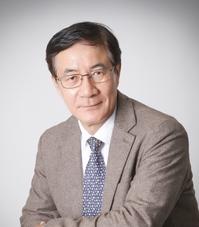
◆ Dr. Shin Dong-choon
Ph.D. in Public Administration, Representative of the National Alliance for Unification of Korea. After passing the 21st Higher Civil Service Examination, he has been actively engaged in public service, followed by roles as a corporate CEO, university professor, media contributor, author, and Chairman of the Global Aerospace Industry Association.

 Iranian Foreign Ministry: "Continuing Message Exchanges with the U.S. and Activities of Mediating Countries"
Esmaeil Baghaei, Spokesperson for the Iranian Ministry of Foreign Affairs [Xinhua, Yonhap News file photo]Esmaeil Baghaei, spokesperson for the Iranian Ministry of Foreign Affairs, stated on the 26th
Iranian Foreign Ministry: "Continuing Message Exchanges with the U.S. and Activities of Mediating Countries"
Esmaeil Baghaei, Spokesperson for the Iranian Ministry of Foreign Affairs [Xinhua, Yonhap News file photo]Esmaeil Baghaei, spokesperson for the Iranian Ministry of Foreign Affairs, stated on the 26th
 President Yoon: "Do You Think You Are Safe from the Special Counsel?"... Final Statement Video Released
President Yoon Suk Yeol rebuking the special prosecutor on the 24th. [Court video / @birds_justice X account subtitle GIF] A video of President Yoon Suk Yeol's closing statement at his trial rega
President Yoon: "Do You Think You Are Safe from the Special Counsel?"... Final Statement Video Released
President Yoon Suk Yeol rebuking the special prosecutor on the 24th. [Court video / @birds_justice X account subtitle GIF] A video of President Yoon Suk Yeol's closing statement at his trial rega
 President Yoon, regarding the first-instance ruling on the Public Official Election Act: “An excessive political verdict that distorts the facts… We will appeal immediately.”
The first-instance sentencing hearing for President Yoon Suk Yeol regarding violations of the Public Official Election Act is being broadcast live at Seoul Station on the 27th. [Photo=Yonhap News]Pres
President Yoon, regarding the first-instance ruling on the Public Official Election Act: “An excessive political verdict that distorts the facts… We will appeal immediately.”
The first-instance sentencing hearing for President Yoon Suk Yeol regarding violations of the Public Official Election Act is being broadcast live at Seoul Station on the 27th. [Photo=Yonhap News]Pres
 WSJ: "SK Hynix ADR Premium Is a Sign of AI Trading Overheat"
Advertisement for SK Hynix ADR listing in New York's Times Square [Reuters=Yonhap News file photo]The Wall Street Journal (WSJ) has pointed out that the price of SK Hynix’s American Depositary Recei
WSJ: "SK Hynix ADR Premium Is a Sign of AI Trading Overheat"
Advertisement for SK Hynix ADR listing in New York's Times Square [Reuters=Yonhap News file photo]The Wall Street Journal (WSJ) has pointed out that the price of SK Hynix’s American Depositary Recei
 'Godfather of Japanese Mystery Novels' Keigo Higashino Passes Away After Battle with Cancer at 68
Famous Japanese mystery novelist Keigo Higashino [AFP=Yonhap News]It has been belatedly reported that Keigo Higashino, the "godfather of Japanese mystery novels" and author of bestsellers such as "The
'Godfather of Japanese Mystery Novels' Keigo Higashino Passes Away After Battle with Cancer at 68
Famous Japanese mystery novelist Keigo Higashino [AFP=Yonhap News]It has been belatedly reported that Keigo Higashino, the "godfather of Japanese mystery novels" and author of bestsellers such as "The
 [Park Pil-kyu Security Column] To the Ignorant Trying to Clothe a Beast in Sheep's Clothing
Rep. Kim Byung-joo of the Democratic Party of Korea [Photo=Yonhap News]“The Air Force Academy doesn't teach you how to fly a plane!” “The Army, Navy, and Air Force academies are exactly the
[Park Pil-kyu Security Column] To the Ignorant Trying to Clothe a Beast in Sheep's Clothing
Rep. Kim Byung-joo of the Democratic Party of Korea [Photo=Yonhap News]“The Air Force Academy doesn't teach you how to fly a plane!” “The Army, Navy, and Air Force academies are exactly the
 [Issue Diagnosis] Two Effects of the Election Petition Review
 [Photo] Evidence of Election Fraud Flooding U.S. Media… Trump Had 2.7 Million Votes Stolen
 [Video] U.S. Semiquincentennial Air Show... 'Art in the Sky' streaks across New York
 [Editorial Cartoon] A Draconian Law That Undermines Freedom of Expression

 List
List









