 "Does the government not see that the entire nation is rising up, shouting for 're-election due to fraudulent elections'?" ⒸHanmi Ilbo
Democracy is not simply a system that determines power by majority rule. The essence of democracy is built upon the foundation of fairness and transparency in the process of obtaining power, and the nation's spiritual 'trust' in that process.
The beautiful culture of cleanly accepting election results is also possible only on the basis of the 'process' that produced them and that 'belief', not the results themselves. If these premises collapse, democracy becomes an empty shell with only the system remaining, a castle in the air.
Historian and philosopher Yuval Noah Harari cited 'common trust' as a key factor enabling the development of human civilization. This means that nations, currencies, and laws all operate on a system of mental trust shared by the majority.
American philosopher John Dewey understood democracy not as a mere political system but as a continuous process of creation through citizen participation and communication. German philosopher Jürgen Habermas also explained that the legitimacy of democracy is formed not by the mere outcome of majority rule, but through public discussion and fair procedures.
The history of democracy clearly shows how communities that focused only on results, disregarding process and procedure, have perished.
The ancient Roman Empire, amidst the political intrigues of politicians who trampled on legitimate procedural means, eventually faced the tragedy of Caesar's dictatorship and the ruin of the Republic. The Weimar Republic of 20th-century Germany, though evaluated as the most democratic system, was exploited for its blind majority rule and collapsed after birthing humanity's worst dictator, Hitler. Despite the difference in time, both left the commonality that corrupted processes ultimately led to world-historical dictatorships.
We too must remember that 66 years ago, our sacred right to suffrage was violated by the March 15th fraudulent election, and that the April 19th Revolution was an event where we prevented it through numerous sacrifices.
Despite all this, the current state of South Korean politics since the June 3rd election has brought deep self-abasement and disappointment to the nation. Regardless of age or gender, people are enraged by the unprecedented 'shortage of ballots' and suspicious election management incidents. Citizens are voluntarily taking to the streets, shouting for 're-election due to fraudulent elections,' and this is spreading nationwide. University students across the country are also rushing to issue statements on the 'violation of suffrage.'
In contrast, the political sphere is looking in entirely different directions than the public. Both the ruling and opposition parties are unconcerned with the contamination of the election process raised by the public and are solely absorbed in self-serving power struggles.
The People Power Party is preoccupied with internal power struggles, with non-faction leaders attacking the party leader Jang Dong-hyuk daily, and the Democratic Party of Korea is also engaged in an increasingly intense power struggle divided into 'pro-Myung' and 'pro-Cheong' factions, rather than verifying the flaws in the process. The current reality, where competition for party leadership overshadows the fundamental questions raised by the public, is a direct negation of democratic values. The term 'representative democracy' becomes meaningless.
The highest value of liberal democracy is freedom of expression, and the most powerful tool at the forefront of this is the act of 'election,' choosing representative politicians. This is the moment when the constitutional spirit of "all power comes from the people" is most concretely manifested. The fairness and transparency of the election process are not merely administrative procedures but a matter of constitutional value.
The zeitgeist of today is clear: to eradicate fraudulent elections and protect the people's right to suffrage.
Nevertheless, the political sphere has been consistently indifferent to the 'fraudulent election' suspicions of the National Election Commission, which have been raised since the April 15th general election in 2020. This behavior signifies a disregard for the tasks of the era, a renunciation of being politicians who uphold the constitution, and a dereliction of duty as citizens of the Republic of Korea.
What is even more disheartening is that the responsible authorities are dismissing suspicions of the sacred right to suffrage of sovereign citizens as 'conspiracy theories' and are openly concealing the situation. Labeling sovereign citizens who demand their rightful suffrage as conspiracy theorists is an act that creates a hole in the dike of democracy.
Elections are often called a 'festival' of democracy. However, the reason it can be a festival is that all participants believe in the fairness of the rules and can enjoy it together. If the playing field is tilted due to someone's intervention and a biased referee is rampant, it is no longer a festival. It merely becomes a 'wild dance' of distrust and division.
The political sphere must remember this: what the people want is not the victory of a particular camp, but the assurance that their precious vote was fairly reflected. Whether it is the ruling party, the opposition party, the executive branch, or the National Election Commission, they must strive with all their might to resolve public suspicion and restore trust. Democracy breathes through belief in the process, not the outcome.
We must not forget the historical lesson that the contamination and distortion of the democratic process have solely given birth to terrible dictators.
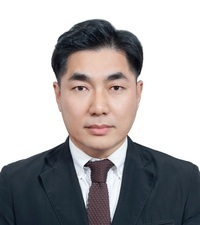
◆ Min Byung-gon, Writer
Political documentary writer
Spokesperson for the South Chungcheong Provincial Chapter of the People Power Party

 Iranian Foreign Ministry: "Continuing Message Exchanges with the U.S. and Activities of Mediating Countries"
Esmaeil Baghaei, Spokesperson for the Iranian Ministry of Foreign Affairs [Xinhua, Yonhap News file photo]Esmaeil Baghaei, spokesperson for the Iranian Ministry of Foreign Affairs, stated on the 26th
Iranian Foreign Ministry: "Continuing Message Exchanges with the U.S. and Activities of Mediating Countries"
Esmaeil Baghaei, Spokesperson for the Iranian Ministry of Foreign Affairs [Xinhua, Yonhap News file photo]Esmaeil Baghaei, spokesperson for the Iranian Ministry of Foreign Affairs, stated on the 26th
 President Yoon: "Do You Think You Are Safe from the Special Counsel?"... Final Statement Video Released
President Yoon Suk Yeol rebuking the special prosecutor on the 24th. [Court video / @birds_justice X account subtitle GIF] A video of President Yoon Suk Yeol's closing statement at his trial rega
President Yoon: "Do You Think You Are Safe from the Special Counsel?"... Final Statement Video Released
President Yoon Suk Yeol rebuking the special prosecutor on the 24th. [Court video / @birds_justice X account subtitle GIF] A video of President Yoon Suk Yeol's closing statement at his trial rega
 President Yoon, regarding the first-instance ruling on the Public Official Election Act: “An excessive political verdict that distorts the facts… We will appeal immediately.”
The first-instance sentencing hearing for President Yoon Suk Yeol regarding violations of the Public Official Election Act is being broadcast live at Seoul Station on the 27th. [Photo=Yonhap News]Pres
President Yoon, regarding the first-instance ruling on the Public Official Election Act: “An excessive political verdict that distorts the facts… We will appeal immediately.”
The first-instance sentencing hearing for President Yoon Suk Yeol regarding violations of the Public Official Election Act is being broadcast live at Seoul Station on the 27th. [Photo=Yonhap News]Pres
 WSJ: "SK Hynix ADR Premium Is a Sign of AI Trading Overheat"
Advertisement for SK Hynix ADR listing in New York's Times Square [Reuters=Yonhap News file photo]The Wall Street Journal (WSJ) has pointed out that the price of SK Hynix’s American Depositary Recei
WSJ: "SK Hynix ADR Premium Is a Sign of AI Trading Overheat"
Advertisement for SK Hynix ADR listing in New York's Times Square [Reuters=Yonhap News file photo]The Wall Street Journal (WSJ) has pointed out that the price of SK Hynix’s American Depositary Recei
 'Godfather of Japanese Mystery Novels' Keigo Higashino Passes Away After Battle with Cancer at 68
Famous Japanese mystery novelist Keigo Higashino [AFP=Yonhap News]It has been belatedly reported that Keigo Higashino, the "godfather of Japanese mystery novels" and author of bestsellers such as "The
'Godfather of Japanese Mystery Novels' Keigo Higashino Passes Away After Battle with Cancer at 68
Famous Japanese mystery novelist Keigo Higashino [AFP=Yonhap News]It has been belatedly reported that Keigo Higashino, the "godfather of Japanese mystery novels" and author of bestsellers such as "The
 [Park Pil-kyu Security Column] To the Ignorant Trying to Clothe a Beast in Sheep's Clothing
Rep. Kim Byung-joo of the Democratic Party of Korea [Photo=Yonhap News]“The Air Force Academy doesn't teach you how to fly a plane!” “The Army, Navy, and Air Force academies are exactly the
[Park Pil-kyu Security Column] To the Ignorant Trying to Clothe a Beast in Sheep's Clothing
Rep. Kim Byung-joo of the Democratic Party of Korea [Photo=Yonhap News]“The Air Force Academy doesn't teach you how to fly a plane!” “The Army, Navy, and Air Force academies are exactly the
 [Issue Diagnosis] Two Effects of the Election Petition Review
 [Photo] Evidence of Election Fraud Flooding U.S. Media… Trump Had 2.7 Million Votes Stolen
 [Video] U.S. Semiquincentennial Air Show... 'Art in the Sky' streaks across New York
 [Editorial Cartoon] A Draconian Law That Undermines Freedom of Expression

 List
List









