 May 2026, lawmaker Jeong Cheong-rae pays respects at the 5·18 Cemetery [Photo=Yonhap News]
You are the people who raised your voices as if the nation would be overturned over a cup of Starbucks coffee. You analyzed which company held which political stance, called for boycotts, and spoke of justice and democracy.
Yet, if you remain silent when an unprecedented situation of insufficient ballot papers occurs during an election, we cannot help but ask: "Where has the democracy you so vehemently advocated for gone?"
The Core of Democracy is Trust in Procedures
Democracy is not precious only when the candidate you support wins. The core of democracy is trust in procedures. If there were not enough ballot papers, it is natural to question why that happened, who should be held responsible, and how to prevent it from happening again.
To dismiss questions as conspiracy theories and try to silence them is not an attitude that protects democracy, but one that undermines its trust.
Therefore, we ask again. What is the spirit of Gwangju that you so often speak of? Is the spirit of Gwangju exclusive to a particular party? Is it a license for a specific political force? If not, isn't now the time to speak of the spirit of Gwangju? Is it not one aspect of the spirit of Gwangju that many remember: to demand answers from state power or electoral management bodies in the face of citizens' questions, and to demand explanations from those in power?
In May 1980, the citizens of Gwangju did not remain silent in the face of power. Even amidst fear, they asked questions. Why is this happening? Why are the rights of the people being ignored? Why is the state turning its back on its citizens? If you claim to inherit that spirit today, you must ask the same questions, regardless of which camp holds power. This is because the principles of democracy do not change based on the person.
Do as Was Done in May 1980
Does the spirit of Gwangju only exist at memorial ceremonies? Does it only exist in eulogies? The true spirit of Gwangju lies in the courage to ask uncomfortable questions to the living power. It lies in criticizing the wrongdoings of one's own side, holding accountable the forces one supports, and demanding explanations when citizens' rights are violated.
Therefore, what you need now is not silence. It is not boasting about past democratization while keeping your mouths shut. If you are someone who has spoken of democracy, you must answer. How do you view the shortage of ballot papers? What went wrong? Who is responsible? And what must be done to ensure this never happens again?
If you have a mouth and a conscience, speak. If you have called for democracy, show it through your actions. If you have spoken of the spirit of Gwangju, shout it now. Just as it was on May 18, 1980. However, this time, direct it towards the current power, not the past power, and towards today's issues, not just past problems.
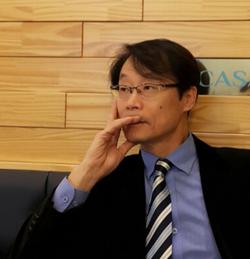
◆ Songsan (송산)
A poet and researcher of history and philosophy. Former director of the Syngman Rhee Institute. Currently serving as a research advisor for the Korean Modern and Contemporary History Research Association and the representative of the philosophy forum Lyceum. He has published four poetry collections, co-translated "Heroes of Hukogji," and authored the humanities books "Chosun That Became a Myth," "Humanities on the Tatami," and "A Liberal's Reading of Gramsci." Songsan is a pen name.
What do you think of this article?

 Iranian Foreign Ministry: "Continuing Message Exchanges with the U.S. and Activities of Mediating Countries"
Esmaeil Baghaei, Spokesperson for the Iranian Ministry of Foreign Affairs [Xinhua, Yonhap News file photo]Esmaeil Baghaei, spokesperson for the Iranian Ministry of Foreign Affairs, stated on the 26th
Iranian Foreign Ministry: "Continuing Message Exchanges with the U.S. and Activities of Mediating Countries"
Esmaeil Baghaei, Spokesperson for the Iranian Ministry of Foreign Affairs [Xinhua, Yonhap News file photo]Esmaeil Baghaei, spokesperson for the Iranian Ministry of Foreign Affairs, stated on the 26th
 President Yoon: "Do You Think You Are Safe from the Special Counsel?"... Final Statement Video Released
President Yoon Suk Yeol rebuking the special prosecutor on the 24th. [Court video / @birds_justice X account subtitle GIF] A video of President Yoon Suk Yeol's closing statement at his trial rega
President Yoon: "Do You Think You Are Safe from the Special Counsel?"... Final Statement Video Released
President Yoon Suk Yeol rebuking the special prosecutor on the 24th. [Court video / @birds_justice X account subtitle GIF] A video of President Yoon Suk Yeol's closing statement at his trial rega
 President Yoon, regarding the first-instance ruling on the Public Official Election Act: “An excessive political verdict that distorts the facts… We will appeal immediately.”
The first-instance sentencing hearing for President Yoon Suk Yeol regarding violations of the Public Official Election Act is being broadcast live at Seoul Station on the 27th. [Photo=Yonhap News]Pres
President Yoon, regarding the first-instance ruling on the Public Official Election Act: “An excessive political verdict that distorts the facts… We will appeal immediately.”
The first-instance sentencing hearing for President Yoon Suk Yeol regarding violations of the Public Official Election Act is being broadcast live at Seoul Station on the 27th. [Photo=Yonhap News]Pres
 WSJ: "SK Hynix ADR Premium Is a Sign of AI Trading Overheat"
Advertisement for SK Hynix ADR listing in New York's Times Square [Reuters=Yonhap News file photo]The Wall Street Journal (WSJ) has pointed out that the price of SK Hynix’s American Depositary Recei
WSJ: "SK Hynix ADR Premium Is a Sign of AI Trading Overheat"
Advertisement for SK Hynix ADR listing in New York's Times Square [Reuters=Yonhap News file photo]The Wall Street Journal (WSJ) has pointed out that the price of SK Hynix’s American Depositary Recei
 'Godfather of Japanese Mystery Novels' Keigo Higashino Passes Away After Battle with Cancer at 68
Famous Japanese mystery novelist Keigo Higashino [AFP=Yonhap News]It has been belatedly reported that Keigo Higashino, the "godfather of Japanese mystery novels" and author of bestsellers such as "The
'Godfather of Japanese Mystery Novels' Keigo Higashino Passes Away After Battle with Cancer at 68
Famous Japanese mystery novelist Keigo Higashino [AFP=Yonhap News]It has been belatedly reported that Keigo Higashino, the "godfather of Japanese mystery novels" and author of bestsellers such as "The
 [Park Pil-kyu Security Column] To the Ignorant Trying to Clothe a Beast in Sheep's Clothing
Rep. Kim Byung-joo of the Democratic Party of Korea [Photo=Yonhap News]“The Air Force Academy doesn't teach you how to fly a plane!” “The Army, Navy, and Air Force academies are exactly the
[Park Pil-kyu Security Column] To the Ignorant Trying to Clothe a Beast in Sheep's Clothing
Rep. Kim Byung-joo of the Democratic Party of Korea [Photo=Yonhap News]“The Air Force Academy doesn't teach you how to fly a plane!” “The Army, Navy, and Air Force academies are exactly the
 [Issue Diagnosis] Two Effects of the Election Petition Review
 [Photo] Evidence of Election Fraud Flooding U.S. Media… Trump Had 2.7 Million Votes Stolen
 [Video] U.S. Semiquincentennial Air Show... 'Art in the Sky' streaks across New York
 [Editorial Cartoon] A Draconian Law That Undermines Freedom of Expression

 List
List










