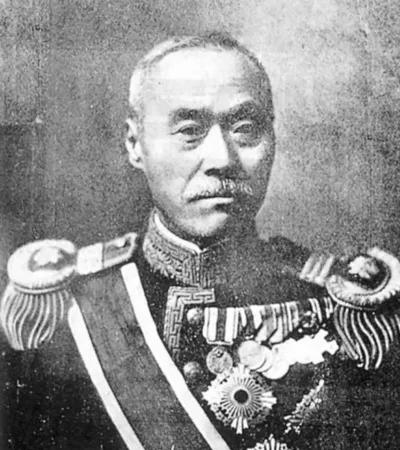
 Yi Wanjong in his old age
Yi Wanjong. My name has already been set in stone as a traitor to history. Schools teach that I was a traitor, and people remember me as the quintessential figure who sold out the nation. My name has become the opposite of a loyal subject, and it is even used metaphorically to severely criticize someone.
I am not someone unaware of how I am perceived. On the contrary, I know better than anyone. However, if posterity is to judge me, should they not at least hear what I saw and what I thought? While the victor's record is necessary, the testimony of the vanquished should also remain.
I do not wish to be remembered as a hero. I simply want to speak about the era in which I lived and why I made the decisions I did.
The Korean Empire I witnessed was not the romantic nation depicted in textbooks. Anyone could speak of the need to protect national sovereignty. But where was the strength to protect it?
Joseon had lived within the order of Neo-Confucianism for centuries, but the world had already moved into a new era following the Industrial Revolution. Britain, France, and Germany had become industrial powerhouses, and the United States was expanding its influence across the Pacific to Asia. Japan, after the Meiji Restoration, had reformed its state system, modernized its military, and adopted Western technologies.
However, Joseon remained fixated on factional strife, hereditary privilege, principles, and righteousness. We were unaware of where the world was heading, and even if we were, we lacked the capacity to follow. There were many voices worried about the nation, but the capacity to actually reform the state was insufficient. I could not deny this fact.
When the Sino-Japanese War broke out, I already saw that Joseon's fate was changing. Joseon had long relied on Qing China, but Qing was disastrously defeated by Japan. There were also expectations that Russia would become a new patron. However, the Russo-Japanese War also ended in Japan's victory.
I believed Joseon's future was effectively decided the moment that war ended. Japan had won, and Russia had withdrawn. The international community operated on the logic of power. The United States adjusted its interests with Japan, and Britain recognized Japan as an ally. There was no nation anywhere that would take up arms for Joseon.
We were not the center of the world. In the calculations of the great powers, Joseon was merely a variable. I faced that harsh reality and acknowledged it.
Many people say that we should have fought to the end, despite everything. They speak of the sacrifices of the righteous armies and the spirit of independence. I do not doubt their loyalty. However, from the perspective of managing a nation, different questions had to be asked. Could we win a fight?
War is not waged by will alone. It requires an army, weapons, finances, and diplomacy. Japan was a modern nation, and we were not. The Japanese army had defeated Qing China and Russia. Yet, Joseon lacked a proper arms industry and a modern defense system.
Emotions do not stop bullets. Patriotism cannot overcome artillery shells. I believed that a war with no chance of victory would only increase the sacrifices of the people. Some would call that cowardice. But I did not see recklessness and courage as the same thing.
The most important issue, in my view, was the people. A nation ultimately exists for its people. The preservation of the dynasty itself is not the goal. I prioritized the survival of countless people over whether the nation's name would remain or disappear.
What would have happened if there had been a full-scale conflict with Japan? Countless villages would have been burned, farmlands devastated, and people would have starved. While the honor gained from a certain defeat might be substantial, the lives of the people would not have been. I wanted, at the very least, to reduce that damage.
Posterity may condemn that judgment. However, I made my choice within the realities of that time.
Another reason was the change of the era. I did not choose annexation out of love for Japan. I saw the source of Japan's strength. It was modernization. Railways, ports, communication networks, financial systems, modern education, and administrative structures made Japan powerful. Joseon had failed to achieve such changes.
I believed that even under Japanese rule, new systems and technologies would eventually be introduced. Of course, this does not mean justifying colonial rule. However, I judged that Joseon's own strength at the time was insufficient to achieve that transformation.
From the perspective of posterity, it may have been a wrong judgment. However, I was not giving up entirely on Joseon's future; I was contemplating a different form of survival.
People say I acted out of a desire for power, wealth, and glory. I have no intention of evading that criticism. In fact, I received titles and enjoyed economic benefits after annexation. That is an undeniable fact. However, if I had been solely pursuing personal gain, there would have been no reason to endure such immense criticism.
I already knew. I knew that once the nation gained independence, my name would be the first target of condemnation. I knew I could not receive the respect of future generations. Nevertheless, I did not change my judgment. Because the reality I was witnessing was heavier and more brutal than the ideals others spoke of.
I am not a hero. I am not someone who fought with my life on the line like the independence activists. I was a politician who judged that the tide of the times could not be resisted. Some will call me a coward, and some will call me a realist. But at least I knew what I was choosing.
I saw Joseon as already defeated. And I tried to find a path to survival for a defeated nation. Whether that choice was correct remains a subject of debate today. And it will continue to be so.
However, there is one thing I want to say. People of future generations judge the past knowing the outcome. But I had to make decisions without knowing the outcome.
There were countless possibilities before me, and none of them was a perfect path. I chose the path I believed to be the most realistic under the information and conditions of that era. If that is my excuse, then it is an excuse. But it is also the last statement I can leave before history.
While I may not be remembered as a hero who loved Joseon, I want to say that I was not someone who made decisions while ignoring the realities of the era in which I lived.
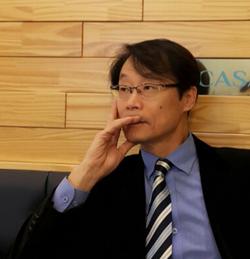
◆ Song San (송산)
Poet and researcher of history and philosophy. Former director of the Syngman Rhee Institute. Currently serves as senior researcher at the Korean Modern and Contemporary History Research Association and as the head of the philosophy forum Lyceum. He has published four poetry collections, co-translated 'Heroes of Cape Chichagov,' and authored the non-fiction books 'Joseon, a Myth,' 'Humanities on a Tatami Mat,' and 'A Liberal's Reading of Gramsci.' Song San is a pen name.

 Iranian Foreign Ministry: "Continuing Message Exchanges with the U.S. and Activities of Mediating Countries"
Esmaeil Baghaei, Spokesperson for the Iranian Ministry of Foreign Affairs [Xinhua, Yonhap News file photo]Esmaeil Baghaei, spokesperson for the Iranian Ministry of Foreign Affairs, stated on the 26th
Iranian Foreign Ministry: "Continuing Message Exchanges with the U.S. and Activities of Mediating Countries"
Esmaeil Baghaei, Spokesperson for the Iranian Ministry of Foreign Affairs [Xinhua, Yonhap News file photo]Esmaeil Baghaei, spokesperson for the Iranian Ministry of Foreign Affairs, stated on the 26th
 President Yoon: "Do You Think You Are Safe from the Special Counsel?"... Final Statement Video Released
President Yoon Suk Yeol rebuking the special prosecutor on the 24th. [Court video / @birds_justice X account subtitle GIF] A video of President Yoon Suk Yeol's closing statement at his trial rega
President Yoon: "Do You Think You Are Safe from the Special Counsel?"... Final Statement Video Released
President Yoon Suk Yeol rebuking the special prosecutor on the 24th. [Court video / @birds_justice X account subtitle GIF] A video of President Yoon Suk Yeol's closing statement at his trial rega
 President Yoon, regarding the first-instance ruling on the Public Official Election Act: “An excessive political verdict that distorts the facts… We will appeal immediately.”
The first-instance sentencing hearing for President Yoon Suk Yeol regarding violations of the Public Official Election Act is being broadcast live at Seoul Station on the 27th. [Photo=Yonhap News]Pres
President Yoon, regarding the first-instance ruling on the Public Official Election Act: “An excessive political verdict that distorts the facts… We will appeal immediately.”
The first-instance sentencing hearing for President Yoon Suk Yeol regarding violations of the Public Official Election Act is being broadcast live at Seoul Station on the 27th. [Photo=Yonhap News]Pres
 WSJ: "SK Hynix ADR Premium Is a Sign of AI Trading Overheat"
Advertisement for SK Hynix ADR listing in New York's Times Square [Reuters=Yonhap News file photo]The Wall Street Journal (WSJ) has pointed out that the price of SK Hynix’s American Depositary Recei
WSJ: "SK Hynix ADR Premium Is a Sign of AI Trading Overheat"
Advertisement for SK Hynix ADR listing in New York's Times Square [Reuters=Yonhap News file photo]The Wall Street Journal (WSJ) has pointed out that the price of SK Hynix’s American Depositary Recei
 'Godfather of Japanese Mystery Novels' Keigo Higashino Passes Away After Battle with Cancer at 68
Famous Japanese mystery novelist Keigo Higashino [AFP=Yonhap News]It has been belatedly reported that Keigo Higashino, the "godfather of Japanese mystery novels" and author of bestsellers such as "The
'Godfather of Japanese Mystery Novels' Keigo Higashino Passes Away After Battle with Cancer at 68
Famous Japanese mystery novelist Keigo Higashino [AFP=Yonhap News]It has been belatedly reported that Keigo Higashino, the "godfather of Japanese mystery novels" and author of bestsellers such as "The
 [Park Pil-kyu Security Column] To the Ignorant Trying to Clothe a Beast in Sheep's Clothing
Rep. Kim Byung-joo of the Democratic Party of Korea [Photo=Yonhap News]“The Air Force Academy doesn't teach you how to fly a plane!” “The Army, Navy, and Air Force academies are exactly the
[Park Pil-kyu Security Column] To the Ignorant Trying to Clothe a Beast in Sheep's Clothing
Rep. Kim Byung-joo of the Democratic Party of Korea [Photo=Yonhap News]“The Air Force Academy doesn't teach you how to fly a plane!” “The Army, Navy, and Air Force academies are exactly the
 [Issue Diagnosis] Two Effects of the Election Petition Review
 [Photo] Evidence of Election Fraud Flooding U.S. Media… Trump Had 2.7 Million Votes Stolen
 [Video] U.S. Semiquincentennial Air Show... 'Art in the Sky' streaks across New York
 [Editorial Cartoon] A Draconian Law That Undermines Freedom of Expression

 List
List