 Reporters, who were covering the new Floor Leader of the People Power Party, Jung Jin-sik, at the National Assembly on the 17th, all turned their cameras towards Representative Jang Dong-hyuk, who suddenly entered. [Photo=Yonhap News]
Many free-right citizens feel frustration and helplessness when they look at today's conservative politics. It's not just because they lost power. It's not simply because they lost an election.
The more fundamental problem is that it's becoming increasingly unclear what kind of party it is, where it intends to go, and what future it dreams of.
A political party is originally an organization that sets the direction for society. It is a place that presents a vision to the nation about where the country should go, how to grow the economy, how to protect national security, and what kind of education and culture it should aim for, and persuades the public.
However, today's conservative parties are exhausting most of their energy responding to various current issues and incidents rather than fulfilling that role. One day, they are explaining someone's remarks, another day they are managing internal conflicts, and yet another day they are spending time formulating a stance on controversies that erupt externally. It appears as if the party is not leading society, but is being dragged along by society's whirlpool.
In fact, the problems facing South Korea today are by no means trivial. The world is reorganizing its industrial order around artificial intelligence and semiconductors. The hegemony competition between the United States and China is intensifying.
North Korea has not abandoned its nuclear armament, and population decline and low birth rates threaten the very sustainability of the nation. Japan is concentrating national capabilities on normalizing its military power and rebuilding its high-tech industries, and the United States is demanding greater roles from its allies.
In such times, conservative parties should, above all else, talk about the nation's long-term strategy. They should discuss how to reform the labor market, how to enhance corporate competitiveness, how to streamline regulations, to what extent to develop the ROK-US alliance and ROK-Japan cooperation, and from what perspective to prepare for the issue of unification.
However, the reality is flowing in the opposite direction. Immediate controversies take precedence over the nation's future, tactics are emphasized over strategy, and emotions override vision.
Political parties originally exist to mediate conflicts. The role of a political party is to gather diverse opinions and consolidate them into a single direction. However, if a party abandons this role, conflicts escalate. When differing opinions clash, the leadership should create a forum for discussion and draw conclusions, but if this process does not function properly, divisions within the supporter base only deepen.
For example, let's consider a debate surrounding an election. A political party should examine the facts, gather expert opinions, listen to the views of its members and supporters, and formulate an official position. That is responsible politics. However, if these processes are insufficient, only individual claims remain, and the party becomes an object swept up in the controversy rather than the subject leading it.
A bigger problem is the lack of interest in culture and society. Politics may seem to be at the forefront of society, but in reality, it is at the very back. Education, culture, academia, media, and civil society flows are established first, and politics follows their outcomes.
However, Korean conservatives have long been overly focused on politics, underestimating the importance of society and culture. They thought that winning elections would solve everything, and that if they gained power, the zeitgeist would naturally follow.
But reality has proven otherwise. A political force without accumulated strength in the realms of culture, education, academia, and civic movements is ultimately bound to be pulled along by external currents. It is not politics that moves society, but society that moves politics. Political parties must not forget this fact.
What conservative parties need today is not more slogans. It is not more hostility. What is needed is a long-term vision that can explain what the nation should look like in 20 or 30 years.
It is a consistent strategy for economic growth and industrial competitiveness, security and diplomacy, unification and national identity. And it is the ability to explain it in language that the public can understand.
Ultimately, the current confusion is a crisis of leadership. A leader is not someone who follows public opinion, but someone who persuades public opinion. A leader is not someone who exploits conflict, but someone who resolves conflict. A leader is someone who can choose long-term national interests over immediate applause.
The public does not expect a perfect party. They do not expect a flawless leader. They simply want a party that knows where to go, and a leader who can explain what needs to be done. This is precisely what conservative parties have lost today.
If parties are to regain public trust, they must stop floundering in the center of the whirlpool. They must become parties that set agendas, not parties that chase controversies.
They must become parties that design the future, not parties that react to events. Only then will conservatism be recognized again not as a political force, but as a force leading the nation.
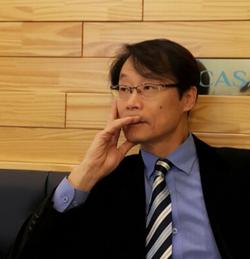
◆ Songsan
Poet and researcher of history and philosophy. Former director of the Rhee Syngman School. Currently serves as research advisor for the Korean Modern and Contemporary History Research Society and as representative of the philosophy forum Lyceum. He has published four collections of poetry, co-translated "Heroes of Chosin," and authored the humanities books "Joseon, a Myth," "Humanities on the Tatami," and "A Liberal's Reading of Gramsci." Songsan is a pen name.

 Iranian Foreign Ministry: "Continuing Message Exchanges with the U.S. and Activities of Mediating Countries"
Esmaeil Baghaei, Spokesperson for the Iranian Ministry of Foreign Affairs [Xinhua, Yonhap News file photo]Esmaeil Baghaei, spokesperson for the Iranian Ministry of Foreign Affairs, stated on the 26th
Iranian Foreign Ministry: "Continuing Message Exchanges with the U.S. and Activities of Mediating Countries"
Esmaeil Baghaei, Spokesperson for the Iranian Ministry of Foreign Affairs [Xinhua, Yonhap News file photo]Esmaeil Baghaei, spokesperson for the Iranian Ministry of Foreign Affairs, stated on the 26th
 President Yoon: "Do You Think You Are Safe from the Special Counsel?"... Final Statement Video Released
President Yoon Suk Yeol rebuking the special prosecutor on the 24th. [Court video / @birds_justice X account subtitle GIF] A video of President Yoon Suk Yeol's closing statement at his trial rega
President Yoon: "Do You Think You Are Safe from the Special Counsel?"... Final Statement Video Released
President Yoon Suk Yeol rebuking the special prosecutor on the 24th. [Court video / @birds_justice X account subtitle GIF] A video of President Yoon Suk Yeol's closing statement at his trial rega
 President Yoon, regarding the first-instance ruling on the Public Official Election Act: “An excessive political verdict that distorts the facts… We will appeal immediately.”
The first-instance sentencing hearing for President Yoon Suk Yeol regarding violations of the Public Official Election Act is being broadcast live at Seoul Station on the 27th. [Photo=Yonhap News]Pres
President Yoon, regarding the first-instance ruling on the Public Official Election Act: “An excessive political verdict that distorts the facts… We will appeal immediately.”
The first-instance sentencing hearing for President Yoon Suk Yeol regarding violations of the Public Official Election Act is being broadcast live at Seoul Station on the 27th. [Photo=Yonhap News]Pres
 WSJ: "SK Hynix ADR Premium Is a Sign of AI Trading Overheat"
Advertisement for SK Hynix ADR listing in New York's Times Square [Reuters=Yonhap News file photo]The Wall Street Journal (WSJ) has pointed out that the price of SK Hynix’s American Depositary Recei
WSJ: "SK Hynix ADR Premium Is a Sign of AI Trading Overheat"
Advertisement for SK Hynix ADR listing in New York's Times Square [Reuters=Yonhap News file photo]The Wall Street Journal (WSJ) has pointed out that the price of SK Hynix’s American Depositary Recei
 'Godfather of Japanese Mystery Novels' Keigo Higashino Passes Away After Battle with Cancer at 68
Famous Japanese mystery novelist Keigo Higashino [AFP=Yonhap News]It has been belatedly reported that Keigo Higashino, the "godfather of Japanese mystery novels" and author of bestsellers such as "The
'Godfather of Japanese Mystery Novels' Keigo Higashino Passes Away After Battle with Cancer at 68
Famous Japanese mystery novelist Keigo Higashino [AFP=Yonhap News]It has been belatedly reported that Keigo Higashino, the "godfather of Japanese mystery novels" and author of bestsellers such as "The
 [Park Pil-kyu Security Column] To the Ignorant Trying to Clothe a Beast in Sheep's Clothing
Rep. Kim Byung-joo of the Democratic Party of Korea [Photo=Yonhap News]“The Air Force Academy doesn't teach you how to fly a plane!” “The Army, Navy, and Air Force academies are exactly the
[Park Pil-kyu Security Column] To the Ignorant Trying to Clothe a Beast in Sheep's Clothing
Rep. Kim Byung-joo of the Democratic Party of Korea [Photo=Yonhap News]“The Air Force Academy doesn't teach you how to fly a plane!” “The Army, Navy, and Air Force academies are exactly the
 [Issue Diagnosis] Two Effects of the Election Petition Review
 [Photo] Evidence of Election Fraud Flooding U.S. Media… Trump Had 2.7 Million Votes Stolen
 [Video] U.S. Semiquincentennial Air Show... 'Art in the Sky' streaks across New York
 [Editorial Cartoon] A Draconian Law That Undermines Freedom of Expression

 List
List









