 Patriotic citizens chanting 'Fair Election, Recount on Election Day' around Jamsil Olympic Park Station. ⒸHanmi Ilbo
Recently, immediately after President Lee Jae-myung returned to the country from an overseas visit, the political sphere was heated by parliamentary questions to the government regarding the so-called 'Jamsil 6.3 Election Uprising'.
At this juncture, he attributed the responsibility for this election fraud incident entirely to the Supreme Court, which colluded with the National Election Commission, and argued for amending the Election Commission Act through a one-point constitutional amendment. This is a clever evasion of responsibility.
Following the first part of this column, this second part aims to delve more concretely into the full reality of election fraud. The roots of suspicion do not simply end with the Election Commission.
We will trace the reality of an extensive cartel involving the top leadership of both the ruling and opposition parties, closely connected with the Central Election Commission, the Democratic Research Institute – the ruling party's think tank – the media industry, and the international organization the Association of World Election Bodies (A-WEB).
1. The Democratic Party's Sweep of Early Voting Since the Introduction of Big Data
According to internal records of the Democratic Research Institute, the Democratic Party of Korea fully adopted 'big data' for election campaigning in the 21st General Election in 2020, a first in the history of Korean political parties.
At the time, author Yoo Si-min, then chairman of the Roh Moo-hyun Foundation, predicted with unprecedented specificity that the pro-progressive camp would secure 180 seats just five days before the election, a prediction that came true.
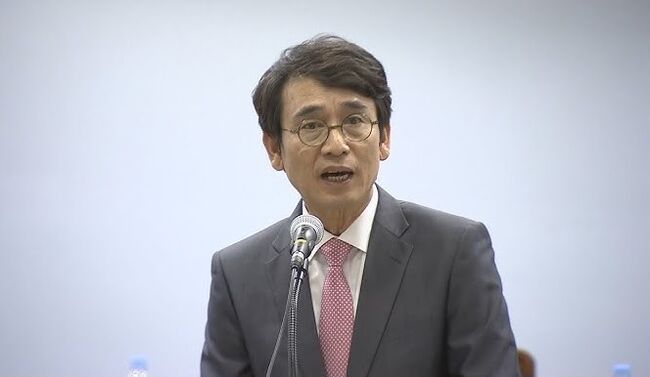 Yoo Si-min predicted with unprecedented specificity that the pro-progressive camp would secure 180 seats just five days before the election, a prediction that came true. [Photo=Yonhap News]
However, the mechanical and uniform early voting turnout ratio of '63 to 36' revealed in the April 15th General Election results was sufficient to raise statistical suspicions. The Democratic Party's candidates' sweep in early voting gradually increased in scale, resulting in Lee Jae-myung's victory in the June 3rd, 2025 Presidential Election early voting with a nearly threefold difference. Subsequently, slogans like "fake parliament" and "fake president" emerged among netizens.
Typically, the barcode on early voting ballots includes the election name, constituency name, jurisdiction of the election commission, and serial number. Netizens suspect that this information was the basis for the Democratic Party accurately predicting specific numbers. Strict investigation by judicial authorities is urgently needed into the early voting barcodes, which are constantly at the center of election fraud controversies, and those who utilized them.
2. Behind the Scenes of Core Leadership's 'Big Data System for Elections' Construction
The bizarre events repeated themselves during the 22nd General Election in 2024. Immediately after the early voting concluded, Rep. Kim Min-seok accurately predicted the early voting rate as '31.3%'. What was the background that allowed a mere party official to predict the final tally of a national institution, the Election Commission, as if in real-time?
While Rep. Kim Min-seok was serving as the director of the Democratic Research Institute, Deputy Director Go Han-seok, former director Yang Jung-chul, and former Standing Member of the Election Commission Cho Hae-ju, appointed by former President Moon Jae-in, formed a team and conducted joint big data research.
The fact that a senior official of the Election Commission, whose independence and neutrality are paramount, collaborated with a specific party's think tank in building big data is shocking in itself.
This supports the suspicion that the Democratic Party leaked election data and voter personal information from the Election Commission and telecommunication companies to build exclusive election-purpose big data within the Democratic Research Institute. This is a clear violation of the Personal Information Protection Act, and thorough investigations into all involved parties are necessary.
3. Suspicions of Collusion Between the Democratic Research Institute and the Election Commission, and Micro-Strategy
Examining the official activities of the Democratic Research Institute clearly shows the objective of 'supporting election campaigns through big data construction'. During the 19th Presidential Election in 2017, the Democratic Research Institute meticulously divided the country into 252 autonomous districts and 3,495 townships, sub-townships, and villages.
Subsequently, by combining historical election data from the Central Election Commission and population and housing census data from the National Statistical Office, they conducted a comprehensive analysis of voters' political leanings and voting behavior. Based on this, they developed and actively utilized the so-called 'micro-strategy map' in their election campaigns.
They even created a website to match customized pledges for each candidate based on inputted personal information, and in specific regions like Suji-gu, raised suspicions of 'gerrymandering' to adjust electoral districts in their favor.
The suspicion of collusion, where Election Commission data, which should be public assets, was privately used for a specific party's long-term power strategy, is also subject to judicial clarification.
4. The Curious Symbiotic Relationship Between Ruling and Opposition Leadership and the Election Commission
The large-scale overseas trips by Election Commission staff during election periods are also under scrutiny. Recently, as many as 176 individuals traveled abroad, and there are widespread rumors that Democratic Party operatives accompanied them on these trips. This behavior is thoroughly detached from the Election Commission's core duty of political neutrality.
The Election Commission must inform the public through what channels state election data, which they exclusively manage, was leaked to the Democratic Party. To reform the Election Commission and break the chains of collusion, a comprehensive investigation into current and former senior officials of the Central Election Commission, including former Secretary-General Kim Yong-bin and former Standing Member Cho Hae-ju, is unavoidable.
5. At the Center of International Suspicion: USAID, A-WEB, and Miru Systems
The Association of World Election Bodies (A-WEB), established in Songdo, Incheon, during the Park Geun-hye administration in October 2013, is a non-profit international organization that currently supports election systems in 111 countries worldwide and operates under the supervision of the Central Election Commission.
What is noteworthy is that the organization's 12-member advisory board includes prominent figures from both the ruling and opposition parties, such as Kim Moo-sung and Park Jie-won, as well as key figures from the mainstream media, including JoongAng Ilbo, Chosun Ilbo, Dong-A Ilbo, Hankook Ilbo, and MBC. Furthermore, A-WEB's secretary-general has been operating under a structure where it is concurrently held by the Secretary-General of the Central Election Commission (e.g., Kim Yong-hee).
In the past, the Board of Audit and Inspection pointed out circumstances where public funds from the Central Election Commission were improperly channeled to A-WEB. A greater problem is the damage to national interest and international disgrace. After the introduction of equipment from 'Miru Systems,' a Korean manufacturer of electronic voting equipment, in 19 countries worldwide, including Iraq, the Democratic Republic of Congo, Kenya, and Belarus, controversies over election fraud and political turmoil invariably occurred locally.
Recently, in 2026, reports emerged from the US Trump administration that the US Agency for International Development (USAID) had improperly intervened in the 2020 US presidential election and the 2024 Indian general election, leading to the closure of that agency. However, A-WEB has signed an MOU with CEPPS (Consortium for Elections and Political Process Strengthening), an international solidarity organization that supports elections with funding from USAID.
This suggests the possibility that domestic election fraud suspicions are linked to a global election engineering cartel. The organic connection between A-WEB, the Central Election Commission, and US-Korean election processes, as well as the complicity of the left and right-leaning establishment media (legacy media) that have remained silent by dismissing this as 'conspiracy theory', must be clearly revealed.
Conclusion: Urgent Need for a Comprehensive Special Prosecutor and Arrest of Top Leadership
The unchecked power wielded by the Central Election Commission has not only undermined the transparency of domestic elections but has also extended to suspicions of international election fraud, tarnishing the international standing of the Republic of Korea.
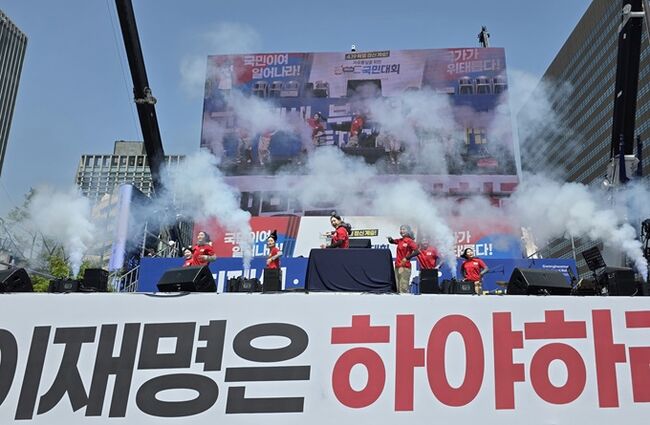 'Lee Jae-myung must resign' rally held in Gwanghwamun in April 2026. ⒸHanmi Ilbo
The leadership of the Election Commission, the top leadership of the Democratic Party, and their key subordinates cannot be absolved of suspicion of being the central figures in a domestic and international election manipulation cartel. Those who have violated the election system, the foundation of constitutional order, must be immediately arrested and subjected to forced investigation.
Further silence is a crime. The only solution to rebuild the collapsed democracy is to dissolve the National Assembly in the name of the sovereign people and demand Lee Jae-myung's resignation.

◆ Shin Sook-hee, Representative
Co-Representative of International Free Sovereignty Alliance
Overseas Korean Representative in Australia
Ph.D. in TESOL, University of Sydney

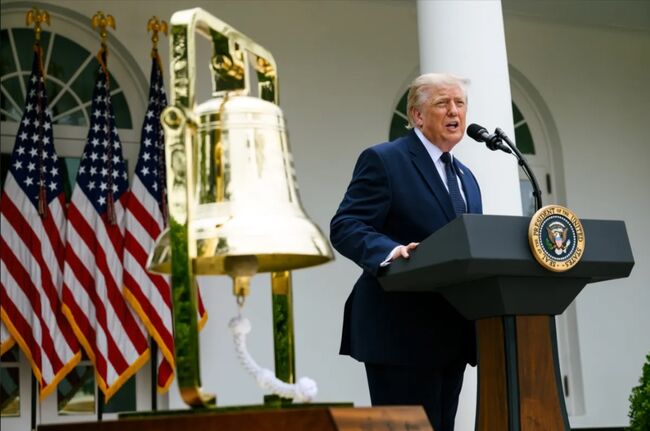 Trump pressures for rate cut again ahead of FOMC... "Should be the lowest in the world"
U.S. President Donald Trump. [Photo = The White House] U.S. President Donald Trump once again pressured the Federal Reserve, the U.S. central bank, to lower interest rates on the 27th (local time
Trump pressures for rate cut again ahead of FOMC... "Should be the lowest in the world"
U.S. President Donald Trump. [Photo = The White House] U.S. President Donald Trump once again pressured the Federal Reserve, the U.S. central bank, to lower interest rates on the 27th (local time
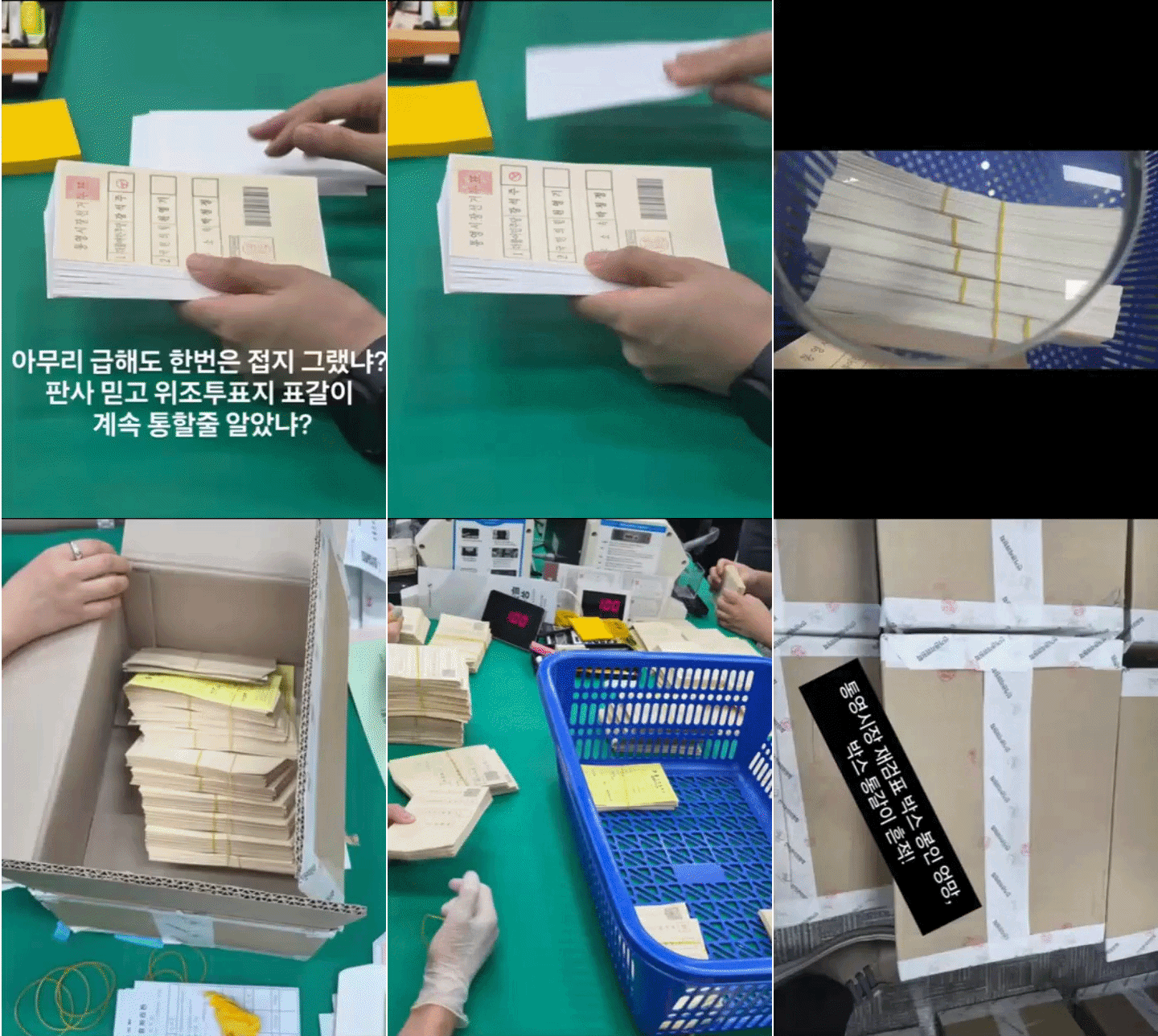 “Ignoring crisp ballots and damaged seals”… Tongyeong mayoral recount concludes with ‘no change in outcome,’ leaving suspicions and public outrage behind
Suspected counterfeit ballots discovered in Tongyeong [GIF from social media of Representative Hwang Kyo-ahn / Attorney Park Joo-hyun]During a recount of the Tongyeong mayoral election in South Gyeong
“Ignoring crisp ballots and damaged seals”… Tongyeong mayoral recount concludes with ‘no change in outcome,’ leaving suspicions and public outrage behind
Suspected counterfeit ballots discovered in Tongyeong [GIF from social media of Representative Hwang Kyo-ahn / Attorney Park Joo-hyun]During a recount of the Tongyeong mayoral election in South Gyeong
 President Yoon, regarding the first-instance ruling on the Public Official Election Act: “An excessive political verdict that distorts the facts… We will appeal immediately.”
The first-instance sentencing hearing for President Yoon Suk Yeol regarding violations of the Public Official Election Act is being broadcast live at Seoul Station on the 27th. [Photo=Yonhap News]Pres
President Yoon, regarding the first-instance ruling on the Public Official Election Act: “An excessive political verdict that distorts the facts… We will appeal immediately.”
The first-instance sentencing hearing for President Yoon Suk Yeol regarding violations of the Public Official Election Act is being broadcast live at Seoul Station on the 27th. [Photo=Yonhap News]Pres
 WSJ: "SK Hynix ADR Premium Is a Sign of AI Trading Overheat"
Advertisement for SK Hynix ADR listing in New York's Times Square [Reuters=Yonhap News file photo]The Wall Street Journal (WSJ) has pointed out that the price of SK Hynix’s American Depositary Recei
WSJ: "SK Hynix ADR Premium Is a Sign of AI Trading Overheat"
Advertisement for SK Hynix ADR listing in New York's Times Square [Reuters=Yonhap News file photo]The Wall Street Journal (WSJ) has pointed out that the price of SK Hynix’s American Depositary Recei
 'Godfather of Japanese Mystery Novels' Keigo Higashino Passes Away After Battle with Cancer at 68
Famous Japanese mystery novelist Keigo Higashino [AFP=Yonhap News]It has been belatedly reported that Keigo Higashino, the "godfather of Japanese mystery novels" and author of bestsellers such as "The
'Godfather of Japanese Mystery Novels' Keigo Higashino Passes Away After Battle with Cancer at 68
Famous Japanese mystery novelist Keigo Higashino [AFP=Yonhap News]It has been belatedly reported that Keigo Higashino, the "godfather of Japanese mystery novels" and author of bestsellers such as "The
 [Park Pil-kyu Security Column] To the Ignorant Trying to Clothe a Beast in Sheep's Clothing
Rep. Kim Byung-joo of the Democratic Party of Korea [Photo=Yonhap News]“The Air Force Academy doesn't teach you how to fly a plane!” “The Army, Navy, and Air Force academies are exactly the
[Park Pil-kyu Security Column] To the Ignorant Trying to Clothe a Beast in Sheep's Clothing
Rep. Kim Byung-joo of the Democratic Party of Korea [Photo=Yonhap News]“The Air Force Academy doesn't teach you how to fly a plane!” “The Army, Navy, and Air Force academies are exactly the
 [Issue Diagnosis] Two Effects of the Election Petition Review
 [Photo] Evidence of Election Fraud Flooding U.S. Media… Trump Had 2.7 Million Votes Stolen
 [Video] U.S. Semiquincentennial Air Show... 'Art in the Sky' streaks across New York
 [Editorial Cartoon] A Draconian Law That Undermines Freedom of Expression

 List
List









