‘Fahrenheit 451’, a film adaptation of Ray Bradbury’s novel of the same name. [Movie Still]
Literature depicts what humans cannot endure more often than it describes what they love. Some cannot endure poverty; others cannot endure loneliness.
However, when an ideology begins to deeply occupy the human mind, another change emerges: one becomes unable to tolerate differing thoughts themselves. While debate remains possible, the mere existence of a contrary perspective becomes unacceptable.
At first, we question unfamiliar arguments. This is a natural reaction; everyone feels tense when their familiar world is shaken. But over time, that tension turns into discomfort, and discomfort transforms into hostility—not because the other is wrong, but because their existence disrupts our internal mental order.
Literature has long captured this psychology with great precision.
Books create questions, and questions shake certainty
In Ray Bradbury’s ‘Fahrenheit 451’, people no longer read books. Books are not banned because paper is dangerous, but because differing thoughts make people uncomfortable.
The society in the novel chooses to eliminate diverse opinions to erase conflict. Books generate questions, and questions shake certainty. Thus, the easiest solution was to burn the questions themselves.
What Bradbury warned against was not just censorship; it was the fact that humans might voluntarily abandon their own thinking for the sake of peace. The moment we desire a world without discomfort, a free spirit is the first thing to vanish.
Henrik Ibsen’s play ‘An Enemy of the People’ addresses the same issue. The protagonist, a doctor, discovers that the town’s hot springs are contaminated. He speaks the truth out of a desire to save the community, but the townspeople do not welcome him. It is not because the truth is incorrect, but because it is too uncomfortable.
Because their economy might waver and their reputation could be lost, people choose silence over facts. Ultimately, the community turns the person who spoke the truth into an “enemy of the people.”
Ibsen demonstrates that majority rule does not always guarantee the truth. People sometimes reject the truth not because they love lies, but because they loathe the truth that shakes the foundations of their lives.
In Arthur Miller’s ‘The Crucible’, an even more dramatic scene unfolds. As the witch hunts begin, people trust the prevailing atmosphere more than evidence. Suspicion becomes guilt, and silence also becomes guilt. Those who raise objections are met with even greater suspicion. Once a community becomes gripped by a single belief, rational inquiry becomes the most dangerous act of all.
These works all share a common theme: people can be more averse to uncomfortable truths than they are to lies.
We may dislike uncomfortable truths even more than lies
In psychology, the discomfort that arises when encountering information that clashes with one’s existing beliefs is known as “cognitive dissonance.” Humans use various methods to reduce this discomfort: they may ignore data, suspect the motives of others, or even change the sources they deem credible. Sometimes, they trust their emotions over facts. While this makes them feel more comfortable, it distances them further from reality.
Literature illustrates this process more vividly than any thesis. Readers observe characters deceiving themselves and wonder, “Why go that far?” Yet, the moment they close the book, they realize that we, too, are living our lives in much the same way.
This phenomenon has intensified in modern society. People read only the media outlets they like, watch videos that align with their political inclinations, and converse only with those who share their opinions. Algorithms analyze our preferences and repeatedly show us similar information. Consequently, different thoughts become increasingly alien, and what is alien quickly becomes unpleasant.
From this point on, something strange happens: people begin to reject arguments not because they are wrong, but because they make them “feel bad.” Emotion begins to judge before logic can. The phrase “I don’t want to hear it” replaces the phrase “That is wrong.” Discomfort itself is treated as proof of error.
However, discomfort is not a standard for truth. Throughout history, new ideas have always been uncomfortable. The assertions of Galileo Galilei were uncomfortable, as were the theories of Charles Darwin.
Many literary masterpieces were also accused of being obscene or dangerous when they were first published. Because new ideas disrupt the established order, they almost always trigger resistance at first.
A great reader is not one who reads only the books they like, but one who can read even the books they don’t want to read until the very end. A great society, likewise, is not one that permits only one opinion, but one where even uncomfortable arguments can coexist. The maturity of thought is achieved not in the midst of applause, but in the process of enduring uncomfortable questions.
The greatest gift literature offers us is not merely empathy; it is the ability to understand the unfamiliar human. It allows us to follow the minds of people we might never meet in our lifetimes and to hear out the logic of characters with whom we fundamentally disagree. This is why we read novels and plays. Before literature persuades us, it invites us into the psyche of the other.
The freedom of thought is not complete with only the freedom to speak. It is perfected only when we possess the patience to listen, until the end, to the things we do not want to hear. Literature is the oldest and deepest school for training that patience.
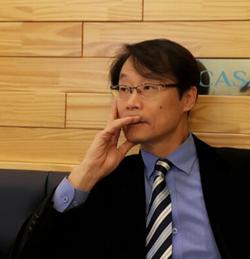
◆ Songsan (松山) Jung Kwang-je
A poet and researcher of history and philosophy. Former board member of the Rhee Syngman Academy. Currently serving as a research advisor to the Korean Modern and Contemporary History Research Association and as representative of the philosophy forum 'Lyceum'. He has published four volumes of poetry, co-translated 'Heroes of Hook Hill', and authored humanities books including 'Joseon Turned into Myth', 'Humanities on the Tatami', and 'A Liberal’s Reading of Gramsci'. "Songsan" is his pen name.

 Trump pressures for rate cut again ahead of FOMC... "Should be the lowest in the world"
U.S. President Donald Trump. [Photo = The White House] U.S. President Donald Trump once again pressured the Federal Reserve, the U.S. central bank, to lower interest rates on the 27th (local time
Trump pressures for rate cut again ahead of FOMC... "Should be the lowest in the world"
U.S. President Donald Trump. [Photo = The White House] U.S. President Donald Trump once again pressured the Federal Reserve, the U.S. central bank, to lower interest rates on the 27th (local time
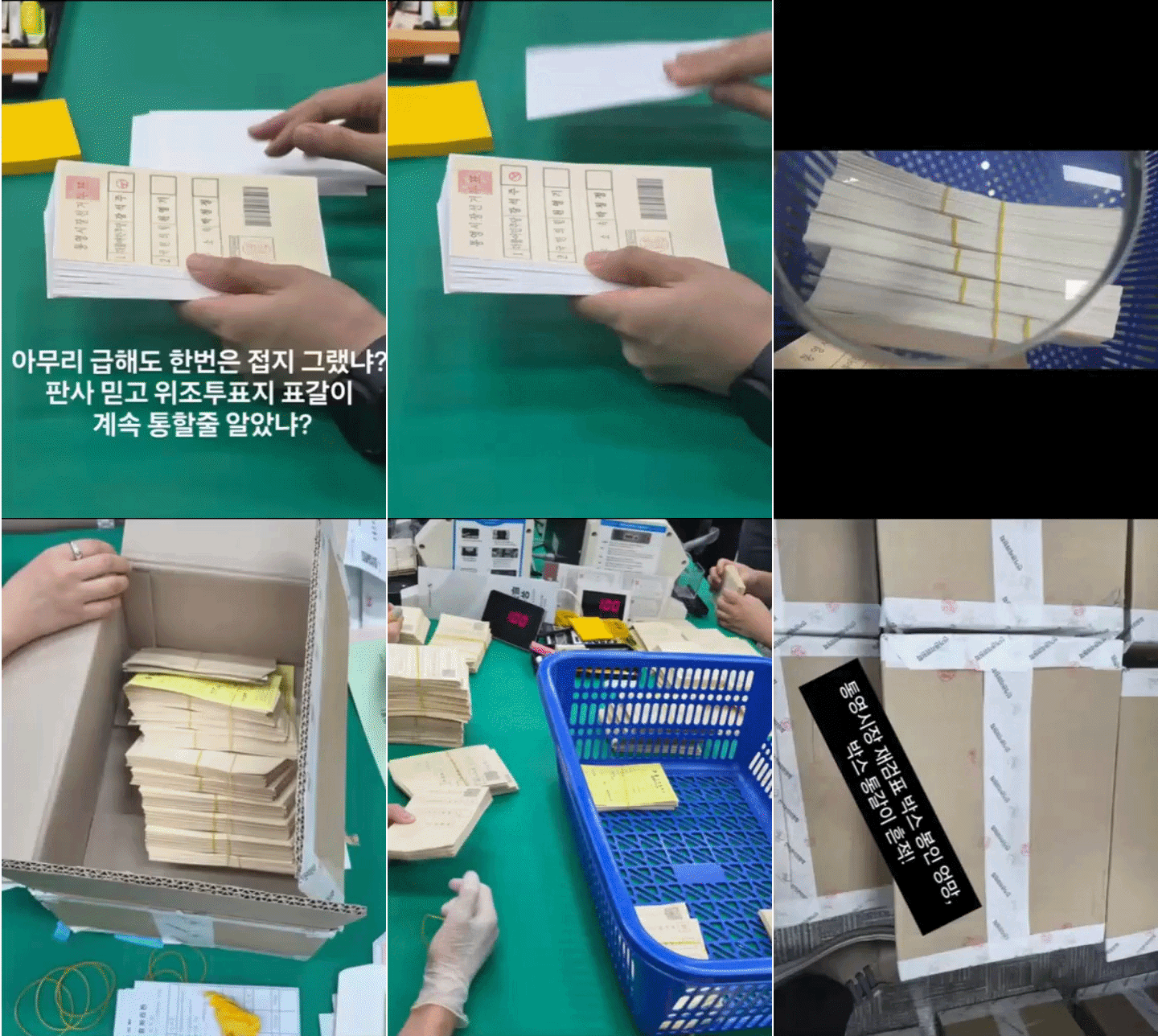 “Ignoring crisp ballots and damaged seals”… Tongyeong mayoral recount concludes with ‘no change in outcome,’ leaving suspicions and public outrage behind
Suspected counterfeit ballots discovered in Tongyeong [GIF from social media of Representative Hwang Kyo-ahn / Attorney Park Joo-hyun]During a recount of the Tongyeong mayoral election in South Gyeong
“Ignoring crisp ballots and damaged seals”… Tongyeong mayoral recount concludes with ‘no change in outcome,’ leaving suspicions and public outrage behind
Suspected counterfeit ballots discovered in Tongyeong [GIF from social media of Representative Hwang Kyo-ahn / Attorney Park Joo-hyun]During a recount of the Tongyeong mayoral election in South Gyeong
 President Yoon, regarding the first-instance ruling on the Public Official Election Act: “An excessive political verdict that distorts the facts… We will appeal immediately.”
The first-instance sentencing hearing for President Yoon Suk Yeol regarding violations of the Public Official Election Act is being broadcast live at Seoul Station on the 27th. [Photo=Yonhap News]Pres
President Yoon, regarding the first-instance ruling on the Public Official Election Act: “An excessive political verdict that distorts the facts… We will appeal immediately.”
The first-instance sentencing hearing for President Yoon Suk Yeol regarding violations of the Public Official Election Act is being broadcast live at Seoul Station on the 27th. [Photo=Yonhap News]Pres
 WSJ: "SK Hynix ADR Premium Is a Sign of AI Trading Overheat"
Advertisement for SK Hynix ADR listing in New York's Times Square [Reuters=Yonhap News file photo]The Wall Street Journal (WSJ) has pointed out that the price of SK Hynix’s American Depositary Recei
WSJ: "SK Hynix ADR Premium Is a Sign of AI Trading Overheat"
Advertisement for SK Hynix ADR listing in New York's Times Square [Reuters=Yonhap News file photo]The Wall Street Journal (WSJ) has pointed out that the price of SK Hynix’s American Depositary Recei
 'Godfather of Japanese Mystery Novels' Keigo Higashino Passes Away After Battle with Cancer at 68
Famous Japanese mystery novelist Keigo Higashino [AFP=Yonhap News]It has been belatedly reported that Keigo Higashino, the "godfather of Japanese mystery novels" and author of bestsellers such as "The
'Godfather of Japanese Mystery Novels' Keigo Higashino Passes Away After Battle with Cancer at 68
Famous Japanese mystery novelist Keigo Higashino [AFP=Yonhap News]It has been belatedly reported that Keigo Higashino, the "godfather of Japanese mystery novels" and author of bestsellers such as "The
 [Park Pil-kyu Security Column] To the Ignorant Trying to Clothe a Beast in Sheep's Clothing
Rep. Kim Byung-joo of the Democratic Party of Korea [Photo=Yonhap News]“The Air Force Academy doesn't teach you how to fly a plane!” “The Army, Navy, and Air Force academies are exactly the
[Park Pil-kyu Security Column] To the Ignorant Trying to Clothe a Beast in Sheep's Clothing
Rep. Kim Byung-joo of the Democratic Party of Korea [Photo=Yonhap News]“The Air Force Academy doesn't teach you how to fly a plane!” “The Army, Navy, and Air Force academies are exactly the
 [Issue Diagnosis] Two Effects of the Election Petition Review
 [Photo] Evidence of Election Fraud Flooding U.S. Media… Trump Had 2.7 Million Votes Stolen
 [Video] U.S. Semiquincentennial Air Show... 'Art in the Sky' streaks across New York
 [Editorial Cartoon] A Draconian Law That Undermines Freedom of Expression

 List
List