 Franz Kafka (left) requested that all his manuscripts be burned after his death. However, his friend Max Brod did not follow his wishes. Thanks to him, we are able to read 'The Metamorphosis' and 'The Trial' today.
A book does not change the world when a reader is simply moved by it. It happens the moment that reader recommends it to someone else. Literature does not end with one person's reading. It only truly enters society when those who have read it create new readers.
What is interesting is that people often cannot explain well why they recommend a certain work. Phrases like "I just like it," "You have to read it," or "It’s a life-changing book" come out first. There is no need for a long explanation of the plot. In fact, a short, simple phrase carries more weight. Recommendations do not require the logic of a thesis; they are conveyed through trust.
Therefore, literature is both a commodity sold in the market and a gift passed from person to person. Old books have survived for centuries not because of advertising, but because someone handed them to someone else. One person’s bookshelf created another’s.
Literature connects person to person
In 19th-century Europe, salons and cafes played this role. Writers, philosophers, and painters would gather to read and discuss works. Word-of-mouth became a more powerful form of promotion than printed books. Some works were forgotten immediately upon publication, while others became classics of the era solely through the buzz generated by readers.
A similar phenomenon occurred in Russia. Leo Tolstoy’s works were not merely read in isolation. They were read aloud in rural communities and intellectual circles, and hand-copied manuscripts were passed around. A single novel created conversations among many, and those conversations, in turn, birthed new readers.
Our own history is not without such examples. During the Japanese colonial period, modern literary works spread rapidly through schools, reading clubs, and youth organizations. While not everyone met the authors in person, the scope of readership widened as those who had read the works first explained them and discussed them with others. Literature became a conversation within the community, not just type on paper.
An important change occurs in this process. The reader is no longer just a consumer. They become someone who reinterprets the work. Even when reading the same novel, people remember different scenes and quote different sentences. There is only one work, but the reading experience is divided into hundreds of variations. Literature is reborn at the moment of discussion even more than at the moment of reading.
This is why great works leave behind quoted lines rather than just plots. Shakespeare’s lines left the stage to become expressions in daily life, and Johann Wolfgang von Goethe’s sentences were passed down like proverbs even to those who had never read his novels. Literature does not stay in books; it permeates our language.
An era where citations arrive before the original text
Today, this reproduction happens much faster. A sentence is written over a photo and drifts through social media, a phrase becomes a subtitle in a video, and a paragraph adorns the opening of a lecture. Many people know parts of a work before they have even read the whole thing. We have entered an era where citations arrive before the original text.
This phenomenon broadens the influence of literature, but it also creates new problems. Context is lost. A sentence may be consumed with a meaning different from the original, or used in a direction completely contrary to the author’s intent. The work survives, but its meaning is gradually altered.
Nevertheless, literature does not stop. Readers continue the work by adding meanings that resonate with their own lives. This is how literature differs from other arts. While a painting remains as the original, a novel continues to live in new forms through the interpretations of its readers.
Franz Kafka requested that all his manuscripts be burned after his death. However, his friend Max Brod did not follow his wishes. Thanks to him, we are able to read 'The Metamorphosis' and 'The Trial' today. One person's choice essentially sustained the literature of an entire era. It is a symbolic case showing that literature is not created by the author alone, but is a culture carried on by readers, editors, translators, teachers, and critics together.
Translation, too, is a reproduction of literature. The moment a work is moved from one language to another, it meets new readers. Even the same novel can take on an entirely different atmosphere depending on the translator's vocabulary and phrasing. This is why it is said that a translator is not merely a messenger, but another creator.
Literature is not an art that ends with reading. The entire process—recommending it to someone, talking about it together, remembering lines that touched the heart, translating it into other languages, and reinterpreting it—is the lifeblood of literature. A book does not end the moment the last page is turned; it begins anew the moment the person who closed it opens their mouth.
Therefore, the history of literature is not just the history of writers; it is also the history of readers. Countless nameless readers have passed on, read aloud, quoted, and translated works, carrying them to the next generation. Literature is written in type, but it survives through people.
The moment one reader creates another reader, a work’s life is extended once again. That is the most fundamental reason why literature has crossed hundreds of years of time to reach us today.

◆ Songsan Jeong Gwang-je
A poet and researcher of history and philosophy. Former director of the Syngman Rhee Institute. Currently serves as a research advisor for the Korea Modern and Contemporary History Research Association and representative of the philosophy forum Lyceum. He has published four volumes of poetry, co-translated 'Heroes of Pork Chop Hill,' and authored humanities books such as 'Joseon Become Myth,' 'Humanities on the Tatami,' and 'A Liberal Reading Gramsci.' Songsan is his pen name.

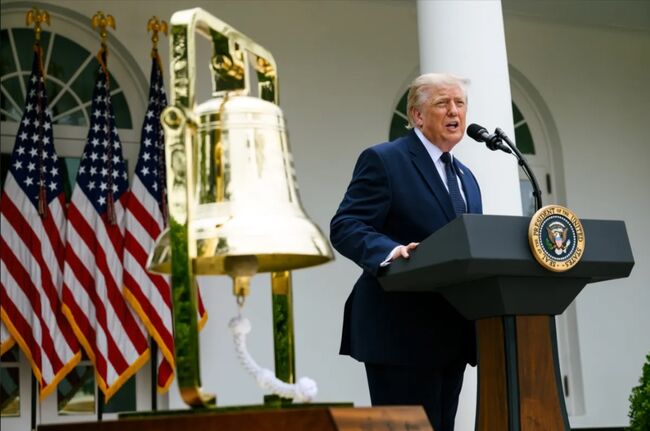 Trump pressures for rate cut again ahead of FOMC... "Should be the lowest in the world"
U.S. President Donald Trump. [Photo = The White House] U.S. President Donald Trump once again pressured the Federal Reserve, the U.S. central bank, to lower interest rates on the 27th (local time
Trump pressures for rate cut again ahead of FOMC... "Should be the lowest in the world"
U.S. President Donald Trump. [Photo = The White House] U.S. President Donald Trump once again pressured the Federal Reserve, the U.S. central bank, to lower interest rates on the 27th (local time
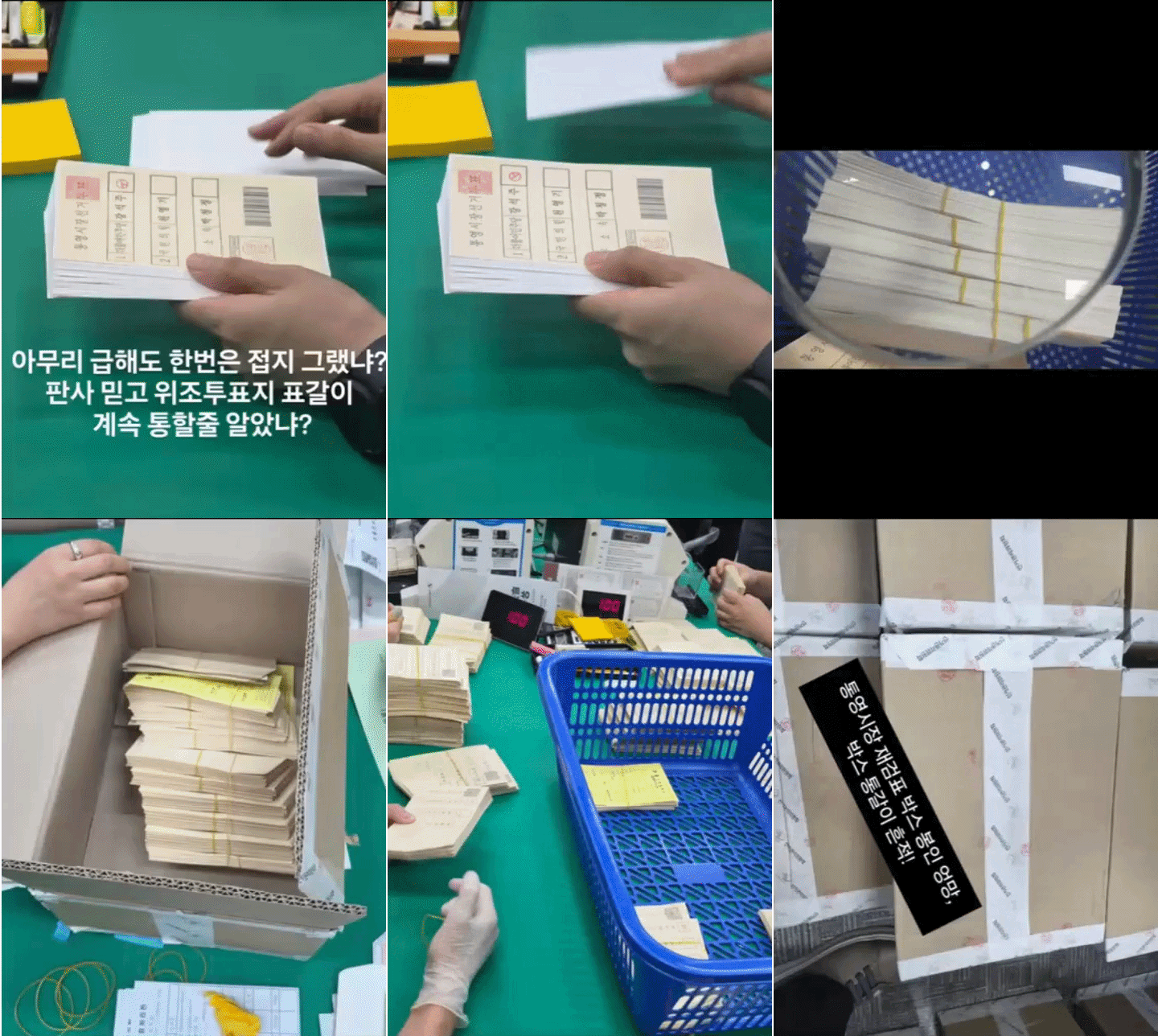 “Ignoring crisp ballots and damaged seals”… Tongyeong mayoral recount concludes with ‘no change in outcome,’ leaving suspicions and public outrage behind
Suspected counterfeit ballots discovered in Tongyeong [GIF from social media of Representative Hwang Kyo-ahn / Attorney Park Joo-hyun]During a recount of the Tongyeong mayoral election in South Gyeong
“Ignoring crisp ballots and damaged seals”… Tongyeong mayoral recount concludes with ‘no change in outcome,’ leaving suspicions and public outrage behind
Suspected counterfeit ballots discovered in Tongyeong [GIF from social media of Representative Hwang Kyo-ahn / Attorney Park Joo-hyun]During a recount of the Tongyeong mayoral election in South Gyeong
 President Yoon, regarding the first-instance ruling on the Public Official Election Act: “An excessive political verdict that distorts the facts… We will appeal immediately.”
The first-instance sentencing hearing for President Yoon Suk Yeol regarding violations of the Public Official Election Act is being broadcast live at Seoul Station on the 27th. [Photo=Yonhap News]Pres
President Yoon, regarding the first-instance ruling on the Public Official Election Act: “An excessive political verdict that distorts the facts… We will appeal immediately.”
The first-instance sentencing hearing for President Yoon Suk Yeol regarding violations of the Public Official Election Act is being broadcast live at Seoul Station on the 27th. [Photo=Yonhap News]Pres
 WSJ: "SK Hynix ADR Premium Is a Sign of AI Trading Overheat"
Advertisement for SK Hynix ADR listing in New York's Times Square [Reuters=Yonhap News file photo]The Wall Street Journal (WSJ) has pointed out that the price of SK Hynix’s American Depositary Recei
WSJ: "SK Hynix ADR Premium Is a Sign of AI Trading Overheat"
Advertisement for SK Hynix ADR listing in New York's Times Square [Reuters=Yonhap News file photo]The Wall Street Journal (WSJ) has pointed out that the price of SK Hynix’s American Depositary Recei
 'Godfather of Japanese Mystery Novels' Keigo Higashino Passes Away After Battle with Cancer at 68
Famous Japanese mystery novelist Keigo Higashino [AFP=Yonhap News]It has been belatedly reported that Keigo Higashino, the "godfather of Japanese mystery novels" and author of bestsellers such as "The
'Godfather of Japanese Mystery Novels' Keigo Higashino Passes Away After Battle with Cancer at 68
Famous Japanese mystery novelist Keigo Higashino [AFP=Yonhap News]It has been belatedly reported that Keigo Higashino, the "godfather of Japanese mystery novels" and author of bestsellers such as "The
 [Park Pil-kyu Security Column] To the Ignorant Trying to Clothe a Beast in Sheep's Clothing
Rep. Kim Byung-joo of the Democratic Party of Korea [Photo=Yonhap News]“The Air Force Academy doesn't teach you how to fly a plane!” “The Army, Navy, and Air Force academies are exactly the
[Park Pil-kyu Security Column] To the Ignorant Trying to Clothe a Beast in Sheep's Clothing
Rep. Kim Byung-joo of the Democratic Party of Korea [Photo=Yonhap News]“The Air Force Academy doesn't teach you how to fly a plane!” “The Army, Navy, and Air Force academies are exactly the
 [Issue Diagnosis] Two Effects of the Election Petition Review
 [Photo] Evidence of Election Fraud Flooding U.S. Media… Trump Had 2.7 Million Votes Stolen
 [Video] U.S. Semiquincentennial Air Show... 'Art in the Sky' streaks across New York
 [Editorial Cartoon] A Draconian Law That Undermines Freedom of Expression

 List
List









