 "Freedom is not a grace or favor bestowed by the state. It is a 'modern' sphere of life that individuals and society have secured against the power of the state, and the state must not arbitrarily intrude upon that realm." ⒸHanmi Ilbo
At this juncture, it is worth—nay, necessary—to reflect on George Orwell’s 1984. The first edition of this work was published in London, England, by Secker & Warburg on June 8, 1949. It was published in the United States five days later (George Orwell, Nineteen Eighty-Four, Secker & Warburg, 1949).
When the book was published, Orwell was in a sanatorium suffering from tuberculosis; he passed away seven months later, on January 21, 1950. 1984 is said to have been the last novel Orwell completed and published during his lifetime.
I consider it a terrifying novel that cannot be imitated. The world of the novel, a virtual allegory, vividly presents to the reader the threat of the totalitarianism that was about to arrive with overwhelming force. In the work, the dictator O'Brien, a high-ranking member of the Inner Party and a key figure in the Thought Police, speaks.
The Final Stage of Totalitarianism Warned by George Orwell: "Thou Art"
The commands of the old despotisms were "Thou shalt not." The totalitarians' command was "Thou shalt." But our command is "THOU ART." (George Orwell, 1984, Part 3, Chapter 2)
In this way, George Orwell sought to inform people of a more advanced, higher-dimensional stage of the emerging totalitarianism.
Initially, totalitarianism prohibits certain acts: "You must not engage in independence movements. You must not harbor national consciousness." Next, it compels certain acts: "You must become a subject of the Emperor. You must actively participate in war mobilization."
When it reaches the final stage, totalitarianism dominates the entire inner world of a human being. "You have become a subject of the Emperor. You automatically live as a subject." This stage signifies the emergence of a being that can automatically feel, think, and act as the power—as the Party—desires, without the need for conscious processing.
I am explaining this by taking the Emperor-system fascism of the late Japanese colonial period as an example. Over a decade ago, while preparing my research book Discourse and Text of Korean Literature in the Late Colonial Period (2011), I discovered in a book explaining the logic of the "New Order" an expression describing the Emperor as the "brain" of the Japanese people he governed.
I could intuit that Japan's Emperor-system fascism, along with Soviet Leninism and Stalinism, was one of the prehistories of North Korea’s Juche ideology.
What Emperor-system fascism and Juche ideology aim for is precisely "THOU ART"—the unconscious automatism of consciousness, where one becomes the existence the state and the Party desire without having to struggle to think through conscious effort. Thus, subjects or the masses become the hands and feet of the Emperor or the Leader, moving without complaint exactly as the "brain" commands.
Let us focus on the relationship between this new stage of "totalitarianism" and "traditional" totalitarianism.
First, the totalitarianism Orwell described as "You must do this"—that is, totalitarianism in the "traditional" sense—refers to the Mussolini fascism Orwell experienced with horror during his lifetime, its specific variant, Hitler’s Nazism, and the Franco regime in Spain, which exhibited similar forms.
This totalitarianism is a system and ideology that sought to "reclaim" from individual humans the freedom—that most precious core—and the achievements gained through efforts to escape from the state's ancient and absolute rule and subjugation.
Under the rule of Mussolini and Hitler, the Italian and German people had their freedom—which European liberal democracy had acquired through three stages of revolution: the Glorious Revolution (1688), the American Revolution (1776), and the French Revolution (1789)—"reclaimed" by their respective states.
They were forced to act according to what a "state" like Mussolini or Hitler thought. They had to strive to make the state's will their own. They were politicized, collectivized, and in doing so, lost their individual characteristics as living humans, "degenerated" into loyal members of Italian or German nationalism.
Going further, the new dimension of totalitarianism presented by Orwell as "You are this" can be called totalitarianism beyond totalitarianism.
This new totalitarianism does not simply mean a quantitative increase in the "intensity of dictatorship." It is not just a stronger totalitarianism, but a totalitarianism unseen in the traditional era, signifying the creation of a new relationship form between state, society, and individual. What does this mean?
Ghosts of History: From 'Emperor-System Fascism' to 'Juche Ideology'
In fact, human society after the emergence of the state could not be a purely natural society. As Agamben noted through Zoe and Bios, the state has reclaimed the biological, raw lives of each human, defining their legal status, political identity, property relations, family relations, the protection of their lives, and the conditions of their right to speak.
After the birth of the state, most societies were "state societies" where individuals were defined by the state; in that sense, an individual was a "state individual."
The totalitarianism of Mussolini and Hitler was an attempt to suppress the liberal democracy formed in Europe and to once again maximize the power of the "state society"—the power by which the state defines the qualifications and forms of human life. (Giorgio Agamben, Homo Sacer: Sovereign Power and Bare Life, Introduction)
In the new totalitarianism of the Emperor and the Leader that goes beyond this, the state now goes beyond the stage of ordering subjects and the people to do something; it "declares" who they are and seeks to "produce" their very existence.
At this stage, the "state society" goes beyond simply mobilizing individuals into collective politics. State power, or the "Party," makes its subjects and people become the very humans it demands. Thus, the individuals in such a system "live" the Leader-Party-State system.
They cannot imagine anything outside this system, nor can they escape it. Their workplaces, schools, youth organizations, women's organizations, literature and art, media, and ideological life are all placed within the organic network of the Party and the state. Their lives, from start to finish, from cradle to grave, become nationalized and the property of the Party. The people maintain their meaning of existence only within the vital totality of the Leader-Party-Masses.
Differences between Traditional Totalitarianism and Yushin
In this respect, the Yushin system that Koreans experienced in the 1970s and the North Korean Juche system are different. It is not a quantitative difference in oppression, but a difference in the qualitative dimension of nationalization. The state in the Yushin system limitedly participated in and mobilized individuals in politics. There, individuals participated in politics in ways the power desired and allowed, yet they still lived their own lives.
This society of individuals was statist, yet it could "remain" outside the state. Companies, churches, universities, literary circles, families, markets, and dissenting intellectuals could exist. The state controlled and oppressed them, but it did not seek to completely transform them into an organic part of the Party-State system.
The ideology of the Yushin system sought to create efficient and productive individuals, but it did not define all of them as political humans. This issue needs to be examined delicately and carefully in the future. Capitalist totalitarianism or authoritarianism is not the same as socialist totalitarianism or organic vitalism.
It seems I have finally finished the long, presuppositional review for this discussion. Then, let us ask: Since December 3rd, where is South Korean society heading? Today, as I write this, is July 13th, a total of 588 days. It has been 1 year and 223 days. What have we experienced in the meantime?
South Korea After December 3rd: The Reclamation of Freedom and the Monopoly of Power
While this past period could be characterized in many ways, from the perspective of the totalitarianization of Korean society, it can be bluntly characterized as a process of rapid formation of totalitarian state power and the "reclamation of freedom" of each citizen by this power.
In less than two years and five months, the election-rigging forces used parliamentary power to seize executive power and further placed judicial power under their effective control. Trials were paralyzed or ruled according to the tastes of those in power. A minister with a history of desertion is evaluated as neutralizing the military, and the police, who can be corrupt at any moment, have neutralized the prosecution. In the National Assembly, there is only monopoly and arbitrariness, with no substantive dialogue or compromise.
This extreme monopoly of legislative, executive, and judicial powers has socially isolated, legally sanctioned, and psychologically unsettled individual humans who resist and criticize this monopoly. The ideal of popular sovereignty, in which representatives chosen by free and transparent elections govern on behalf of the sovereign, has collapsed. The principle that free citizens are the masters of the political community has been dismantled by illegal elections using electronic systems.
It was an act where unjust power hijacked the political freedom of the people. It was a process of demanding unjust obedience from individuals through a fabricated "will of the people." It went beyond merely infringing on individual rights; it was a process of collectively and aggregately reorganizing individuals under the will of unjust state power.
Individuals were forced to be crushed by illegal power will, manipulated public opinion, and a substanceless majority. Election fraud was even politically and psychologically justified by those who committed it and those who support these forces. It is argued that "emergency measures" can be allowed to create a progressive society and eliminate discrimination and hatred.
In fact, one can see this justificatory psychology operating at the bottom of the avoidant writings of literary figures and intellectuals circulating on platforms like Facebook. In the psychology of those who label people stating the "fact" of election fraud as conspiracy theorists, there is a working obsession and victim mentality that justice must be realized even through election fraud.
The Essence of the Revised Information and Communications Network Act: Surveillance Below, Concentration of Power Above
The amendment to the Information and Communications Network Act, which took effect on July 7, is an extension of this process. Illegal elections and unjust power are bound to suffer from the temptation to "rewrite" reality. Reality must be newly constructed according to the results of illegal elections and opinion polls.
Those trying to correct election fraud must be treated as extreme outliers, and the overwhelming, good-natured majority must reasonably support them. The fake must become real, and the real must become fake. One cannot handle a inverted reality without standing upside down or doing a handstand. Thus, the issue of punishing "fake news" emerges as a desperate, pressing agenda.
The main contents of the revised Information and Communications Network Act are the establishment of the concept of "false and manipulated information," the prohibition of distribution through information and communication networks, and the imposition of duties such as reporting responses, establishing operational policies, and publishing transparency reports on large-scale information and communication service providers. It also includes a provision that allows for compensation of up to five times the amount of damages if harm occurs due to the distribution of false/manipulated information. (Act on Promotion of Information and Communications Network Utilization and Information Protection, etc., Articles 44-7, 44-10, 44-12, 44-14, Act No. 21305, effective July 7, 2026.)
The "justification" put forward for this law is to protect citizens from false and manipulated information, reduce harm caused by malicious information distribution, and strengthen the responsibility of online platforms.
However, the hidden essence of this law is to totalitarianly "reclaim" "freedom of expression" through the "hierarchical spread of surveillance and judgment," and by doing so, to isolate and, if possible, even extinguish "other individuals" who do not approve of the unjust power mechanism.
First, the "hierarchical spread of surveillance and judgment." The danger of this Information and Communications Network Act does not lie in the state directly reviewing every utterance of the people. The more essential problem lies in the fact that the state, through law, establishes boundaries for the permission and prohibition of expression, normalcy and deviance, truth and falsehood, and can arrange the executive branch and courts, platform operators, media and fact-checking organizations, and various social organizations and citizens within a single hierarchical surveillance system.
In this structure, at first glance, the executors of surveillance and judgment seem to have spread to many places. However, that power is not horizontally dispersed. At the very top, there is state power that makes and executes laws, and the executive and judicial branches grant public authority and coercive power to those standards.
Platforms, media, fact-checking agencies, and social organizations interpret and routinely apply those standards. Citizens report and evaluate other citizens' speech, and in the end, individuals censor their own words and thoughts.
Therefore, calling this structure "decentralization of judgment power" is inaccurate. A more accurate expression is as follows: The act of judgment and surveillance spreads throughout society, but the standards and final sanctioning power are hierarchically concentrated. Or, to compress it further, surveillance spreads downward, and power concentrates upward.
This is not a process of the state abandoning its domination over society or handing it over to the private sector. Rather, it is a way for the state to more efficiently dominate individuals and society by hierarchically organizing various intermediate institutions and social actors.
Next, the attempt to totalitarianly "reclaim" "freedom of expression" and isolate/extinguish "other individuals."
Why is "freedom of expression" special? As I understand it, the most important meaning of the First Amendment to the U.S. Constitution does not lie in the state granting freedom of expression to the people. The essence of that clause lies in drawing a certain prohibition line against state power. It means the state must not arbitrarily infringe upon an individual's freedom of religion, expression, press, assembly, and petition. (U.S. Constitution, First Amendment, 1791).
Here, "freedom" is not a grace or favor bestowed by the state. It is a "modern" sphere of life that individuals and society have secured against the power of the state, and the state must not arbitrarily enter that realm. In particular, "freedom of expression" should not be understood as just one of many fundamental rights. It is the condition that allows other freedoms to actually exist.
To claim that "freedom of religion" has been infringed, one needs "freedom of speech." To criticize unjust searches and arrests, one needs "freedom of the press." To appeal that property rights have been infringed, one needs "freedom of petition and assembly."
To argue that an election was unfair, one needs the freedom to record, report, and debate. Academic freedom also only exists when one can present and refute hypotheses that differ from established theories.
'Freedom of Expression' is the Condition for All Other Freedoms
"Freedom of expression" is not just one of many freedoms. It is the freedom that allows one to recognize, argue for, defend, and unite with others regarding other freedoms. "Freedom of expression" is the condition that allows all other freedoms to socially emerge.
Therefore, freedom of expression does not stop at "freedom to speak." It is the freedom for an individual to appear in the public world as "themselves," and the freedom to appear as a "different being" from the judgments of the state and the majority.
Who is the "other individual"? A free society is not simply a society where many individuals exist. It is a society where mutually "different individuals" can exist. "Other individual" does not simply mean someone with different tastes or personalities.
He is an "individual capable of making a different judgment" from the general will of the state, political parties, the social majority, or the class or group to which he belongs. He is a citizen, but he is not completely absorbed into the collective identity of being a citizen. He is a member of society, but a being who can think differently from the majority opinion of society.
A being who can support a specific party but also criticize the party's faults, a being who is a member of academia but can present hypotheses different from established theories; he can doubt media reports and the explanations of state agencies and verify them independently.
A free individual is not an isolated being who does not belong to any group. He is a being who, while belonging to many groups, is not completely reduced to any of them. This irreducibility constitutes his true freedom. "Freedom of expression" is absolutely necessary for the existence of the "other individual." An individual thinking differently only in their heart is not yet existing as an "other individual" in the political and social sense.
They must be able to speak their differences, record them, transmit them to others, and combine with people who have the same sense of the problem. A difference that cannot be expressed is a difference trapped in silence.
In this sense, "freedom of expression" is the freedom to stand as an "other individual." "Freedom of expression" is both the freedom for me to speak and the freedom for others to speak differently from me.
A free society is not a society where everyone says the right things. It is a society where different people say what they think is right, refute errors, verify facts, and revise their opinions. "Freedom of expression" is not an institution that guarantees a specific truth, but an institution that ensures that public inquiry surrounding the truth can continue.
The revised Information and Communications Network Act, therefore, is a challenge to a free society and an attempt to reclaim the freedom that individuals, free from the state, had acquired. It is an attempt to hierarchically oppress those with "different thoughts" and to "state-socialize" this society according to the will of those who usurped power. It is an important methodological attempt among many diverse ways.
For the Success of a Korean Glorious Revolution
It will not go according to their will. During the ten years before December 3rd, it could be said that Korean society tasted a richer "freedom of expression" than any other country in the world. Koreans are republicans who have experienced freedoms that neighboring countries cannot enjoy.
Paradoxically, this freedom was an important realistic basis for "them" to distort the truth to usurp power and attack and oppress dissenters. Because of an abundance of freedom, freedom could even collapse.
Nevertheless, there are still too many people in this country who know the value of freedom and know that "other individuals" must be protected from unjust totalitarian power. Young people, in particular, are beings who are very accustomed to the "free" relationship mode of state-society-individual in Korean society.
To them, surveillance, oppression, and punishment only become grounds for a real "fight" toward a free society. Am I being too optimistic when I say this? The controversy surrounding "Musungno" (You're scary), the boos and criticisms of young people, and the futile retreat of the politician who caused the problem are signs of this. The will and critical power of those who know freedom can have such powerful reserve.
Above all, the Sanche regime has been on a definitive path to collapse since last June 3rd. How can they possibly come up with a brilliant plan or conspiracy to extract themselves from the people's full demand for a re-election? (Can they even prepare such a strange move?)
How can the power of this anger, which has already surpassed 500,000 signatures for impeachment in an instant, be quieted? How can they overcome the surging waves of the 2020 U.S. presidential election? How can they cover up the timely collapse of their economic policies?
When examining all these factors, I believe our revolution—our Glorious Revolution—is not far from success. Because of that overwhelming power of people aiming for freedom, this revolution will not have to pay the price of blood. Wouldn't it be so? This is the reason why we are different from Iran.
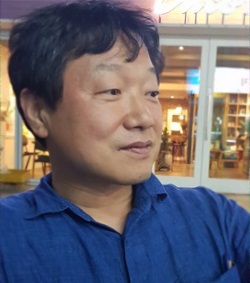
◆ Professor Bang Min-ho
Doctor of Literature, Professor of Korean Language and Literature at Seoul National University. He is the editor-in-chief of the quarterly literary magazine 'Maek' (since 2022) and is actively engaged as a poet, novelist, and literary critic. His books include Lover Shim Cheong (2015), Language of Pain (2019), Asking Korean Criticism Again (2021), and Seoul Literary Pilgrimage (2024).

 Iranian Foreign Ministry: "Continuing Message Exchanges with the U.S. and Activities of Mediating Countries"
Esmaeil Baghaei, Spokesperson for the Iranian Ministry of Foreign Affairs [Xinhua, Yonhap News file photo]Esmaeil Baghaei, spokesperson for the Iranian Ministry of Foreign Affairs, stated on the 26th
Iranian Foreign Ministry: "Continuing Message Exchanges with the U.S. and Activities of Mediating Countries"
Esmaeil Baghaei, Spokesperson for the Iranian Ministry of Foreign Affairs [Xinhua, Yonhap News file photo]Esmaeil Baghaei, spokesperson for the Iranian Ministry of Foreign Affairs, stated on the 26th
 President Yoon: "Do You Think You Are Safe from the Special Counsel?"... Final Statement Video Released
President Yoon Suk Yeol rebuking the special prosecutor on the 24th. [Court video / @birds_justice X account subtitle GIF] A video of President Yoon Suk Yeol's closing statement at his trial rega
President Yoon: "Do You Think You Are Safe from the Special Counsel?"... Final Statement Video Released
President Yoon Suk Yeol rebuking the special prosecutor on the 24th. [Court video / @birds_justice X account subtitle GIF] A video of President Yoon Suk Yeol's closing statement at his trial rega
 President Yoon, regarding the first-instance ruling on the Public Official Election Act: “An excessive political verdict that distorts the facts… We will appeal immediately.”
The first-instance sentencing hearing for President Yoon Suk Yeol regarding violations of the Public Official Election Act is being broadcast live at Seoul Station on the 27th. [Photo=Yonhap News]Pres
President Yoon, regarding the first-instance ruling on the Public Official Election Act: “An excessive political verdict that distorts the facts… We will appeal immediately.”
The first-instance sentencing hearing for President Yoon Suk Yeol regarding violations of the Public Official Election Act is being broadcast live at Seoul Station on the 27th. [Photo=Yonhap News]Pres
 WSJ: "SK Hynix ADR Premium Is a Sign of AI Trading Overheat"
Advertisement for SK Hynix ADR listing in New York's Times Square [Reuters=Yonhap News file photo]The Wall Street Journal (WSJ) has pointed out that the price of SK Hynix’s American Depositary Recei
WSJ: "SK Hynix ADR Premium Is a Sign of AI Trading Overheat"
Advertisement for SK Hynix ADR listing in New York's Times Square [Reuters=Yonhap News file photo]The Wall Street Journal (WSJ) has pointed out that the price of SK Hynix’s American Depositary Recei
 'Godfather of Japanese Mystery Novels' Keigo Higashino Passes Away After Battle with Cancer at 68
Famous Japanese mystery novelist Keigo Higashino [AFP=Yonhap News]It has been belatedly reported that Keigo Higashino, the "godfather of Japanese mystery novels" and author of bestsellers such as "The
'Godfather of Japanese Mystery Novels' Keigo Higashino Passes Away After Battle with Cancer at 68
Famous Japanese mystery novelist Keigo Higashino [AFP=Yonhap News]It has been belatedly reported that Keigo Higashino, the "godfather of Japanese mystery novels" and author of bestsellers such as "The
 [Park Pil-kyu Security Column] To the Ignorant Trying to Clothe a Beast in Sheep's Clothing
Rep. Kim Byung-joo of the Democratic Party of Korea [Photo=Yonhap News]“The Air Force Academy doesn't teach you how to fly a plane!” “The Army, Navy, and Air Force academies are exactly the
[Park Pil-kyu Security Column] To the Ignorant Trying to Clothe a Beast in Sheep's Clothing
Rep. Kim Byung-joo of the Democratic Party of Korea [Photo=Yonhap News]“The Air Force Academy doesn't teach you how to fly a plane!” “The Army, Navy, and Air Force academies are exactly the
 [Issue Diagnosis] Two Effects of the Election Petition Review
 [Photo] Evidence of Election Fraud Flooding U.S. Media… Trump Had 2.7 Million Votes Stolen
 [Video] U.S. Semiquincentennial Air Show... 'Art in the Sky' streaks across New York
 [Editorial Cartoon] A Draconian Law That Undermines Freedom of Expression

 List
List









