 Solar panels [Photo=Yonhap News]
As generative AI and semiconductor clusters emerge as the future of Korean industry, how to bridge the massive "power gap" that lies ahead has become a national task. This is why nuclear power is once again drawing attention.
However, some ask, "If the Honam region has abundant RE100 electricity, why are we trying to build nuclear power plants again?" They argue that by massively expanding renewable energy facilities, such as solar and wind power, up to 100GW, the power demand for semiconductors and AI data centers can be met. This is further justified by the need to address the climate crisis and promote regional development.
Electricity must be supplied at the right place, at the right time, and with the right quality
Yet, when we strip away government subsidies and policy rhetoric and analyze the situation through the lens of physics and market economics, the conclusion changes. Electricity does not gain economic value simply by being generated at a power plant.
Electricity only becomes useful when it is supplied at the right place, at the right time, and with the right quality. Based on these criteria, current solar power in the Honam region is unlikely to become the primary power source for the AI and semiconductor industries.
Of course, solar power has clear advantages: it requires no fuel costs, facilities can be installed in a modular fashion, and construction periods are shorter than those of nuclear or large-scale thermal power plants.
Distributed installations in already-used spaces, such as building rooftops or parking lots, can reduce transmission and distribution losses and partially cover cooling demand during the daytime in summer. Another advantage is that it does not emit carbon or air pollutants directly during operation.
However, these advantages do not eliminate the physical limitations of solar power. Solar energy cannot be generated at night, and its output varies significantly depending on clouds and seasons.
In Korea, land prices are high, mountainous terrain is prevalent, and capacity factors are lower than in the southwestern United States or the deserts of the Middle East. Therefore, when evaluating the economic feasibility of solar power, one must consider the cost of the entire system, including transmission networks, output control, backup generators, and storage devices, rather than just the construction cost of the power plant itself.
In regions like Texas, the rapid expansion of solar power was possible due to vast, inexpensive land, abundant solar radiation, and a large-scale power market. Conversely, while Korea's levelized cost of electricity (LCOE) for solar power varies by location and scale, it is estimated to be roughly 110–120 KRW per 1kWh.
Compared to the 50–60 KRW generation cost of existing nuclear power plants, there is a significant gap from the start. Business viability is maintained only with the addition of Renewable Energy Certificates (REC) and various policy supports.
A more critical issue is the "temporality" and "spatiality" of electricity.
The "Hidden System Costs" Lurking Beneath
Unlike ordinary commodities, it is difficult to store electricity in a warehouse and retrieve it when needed. In a power grid, production and consumption must match almost perfectly at every moment. When I teach physics, I describe the power grid as a massive real-time experiment. Frequency and voltage do not move according to political slogans. If supply exceeds or falls short of demand, the laws of physics immediately reveal the consequences.
Currently, a significant portion of domestic solar power facilities is concentrated in the Honam region, where land prices are relatively low. However, semiconductor factories and AI data centers that consume vast amounts of power 24/7 are mainly located in the Seoul metropolitan area.
To transmit electricity generated in the Honam region to the metropolitan area, massive new ultra-high-voltage transmission networks connecting the west coast and inland areas must be constructed. This could cost anywhere from trillions to tens of trillions of KRW.
However, these transmission and grid reinforcement costs are not properly reflected in individual solar power generation costs. A significant portion is transferred to KEPCO's transmission and distribution investment costs and deficits, ultimately returning as a burden on electricity rates or the public.
Looking only at the unit cost recorded on the meter in front of a power plant and claiming that "solar power is cheap" is akin to calculating the price of a factory-made product while excluding transportation and warehousing costs.
In the Honam region, output control is already becoming frequent on sunny days during spring and autumn when power demand is low and solar output surges simultaneously. To protect the power grid, solar facilities capable of generating power are being forcibly switched off.
High generation volume does not necessarily equate to high value. Electricity produced at a time when no one needs it can see its market price drop to zero or even negative.
Physically, energy is never destroyed. However, economically, its value disappears the moment it loses its necessary time and place. Electricity left over at noon and the electricity demanded by a semiconductor factory after sunset are, in reality, different products, despite having the same name.
Electricity no one uses has no value
There are also claims that we should store daytime electricity in Energy Storage Systems (ESS)—which act as large-scale batteries—to use at night. However, adding batteries introduces charging/discharging losses, power conversion losses, fire prevention equipment costs, and expenses related to reduced lifespan and replacement.
While it is possible to shift power for a few hours a day, the scale and cost of storage grow exponentially if one attempts to cover multi-day cloud cover or seasonal variations. If storage costs are added to generation costs, the power unit price could rise to over 150–200 KRW per 1kWh.
We must also examine the case of California. While they rapidly increased renewable energy facilities based on favorable solar and wind conditions, the burden on electricity rates also increased significantly due to the rising costs of transmission grids, storage devices, gas backups, and wildfire response. The fact that the price of solar panels has dropped does not automatically lower the cost of the entire power system.
There is no need to reject solar power entirely. Methods where electricity is produced and consumed immediately close to where it is needed—such as rooftop solar, parking lot solar, and self-consumption facilities—have significant utility value. However, the plan to install large-scale solar farms in the Honam region to find cheap land, then spend massive sums to transmit it to the metropolitan area and store the surplus in batteries, ignores both economic feasibility and physical reality.
Honam solar power, which relies on the IV drip of subsidies, cannot be the primary power source for the AI and semiconductor industries. Power strategies, on which national competitiveness depends, must be evaluated not by image or good intentions, but by supply stability, power quality, and total cost.
The Need for an 'Energy Mix' Based on Cold Reason
We must establish nuclear power, which generates electricity reliably 24/7, as the backbone of our power system, while utilizing natural gas, pumped-storage hydro, and transmission grids to respond to demand fluctuations. It is appropriate to integrate solar and wind power as auxiliary sources within the scope of economic feasibility, while considering regional and temporal conditions.
It is the laws of physics, not slogans, that move electricity through the grid. What Korea needs is not a policy designed to meet renewable energy target numbers. It requires an energy mix based on cold reason that calculates all system costs from the power plant to the factory outlet, while simultaneously considering stability and power quality.
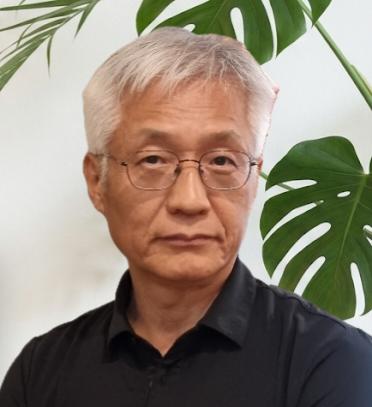
◆ Dr. Chae Soo-jo
Ph.D. in Physics, Seoul National University

 Iranian Foreign Ministry: "Continuing Message Exchanges with the U.S. and Activities of Mediating Countries"
Esmaeil Baghaei, Spokesperson for the Iranian Ministry of Foreign Affairs [Xinhua, Yonhap News file photo]Esmaeil Baghaei, spokesperson for the Iranian Ministry of Foreign Affairs, stated on the 26th
Iranian Foreign Ministry: "Continuing Message Exchanges with the U.S. and Activities of Mediating Countries"
Esmaeil Baghaei, Spokesperson for the Iranian Ministry of Foreign Affairs [Xinhua, Yonhap News file photo]Esmaeil Baghaei, spokesperson for the Iranian Ministry of Foreign Affairs, stated on the 26th
 President Yoon: "Do You Think You Are Safe from the Special Counsel?"... Final Statement Video Released
President Yoon Suk Yeol rebuking the special prosecutor on the 24th. [Court video / @birds_justice X account subtitle GIF] A video of President Yoon Suk Yeol's closing statement at his trial rega
President Yoon: "Do You Think You Are Safe from the Special Counsel?"... Final Statement Video Released
President Yoon Suk Yeol rebuking the special prosecutor on the 24th. [Court video / @birds_justice X account subtitle GIF] A video of President Yoon Suk Yeol's closing statement at his trial rega
 President Yoon, regarding the first-instance ruling on the Public Official Election Act: “An excessive political verdict that distorts the facts… We will appeal immediately.”
The first-instance sentencing hearing for President Yoon Suk Yeol regarding violations of the Public Official Election Act is being broadcast live at Seoul Station on the 27th. [Photo=Yonhap News]Pres
President Yoon, regarding the first-instance ruling on the Public Official Election Act: “An excessive political verdict that distorts the facts… We will appeal immediately.”
The first-instance sentencing hearing for President Yoon Suk Yeol regarding violations of the Public Official Election Act is being broadcast live at Seoul Station on the 27th. [Photo=Yonhap News]Pres
 WSJ: "SK Hynix ADR Premium Is a Sign of AI Trading Overheat"
Advertisement for SK Hynix ADR listing in New York's Times Square [Reuters=Yonhap News file photo]The Wall Street Journal (WSJ) has pointed out that the price of SK Hynix’s American Depositary Recei
WSJ: "SK Hynix ADR Premium Is a Sign of AI Trading Overheat"
Advertisement for SK Hynix ADR listing in New York's Times Square [Reuters=Yonhap News file photo]The Wall Street Journal (WSJ) has pointed out that the price of SK Hynix’s American Depositary Recei
 'Godfather of Japanese Mystery Novels' Keigo Higashino Passes Away After Battle with Cancer at 68
Famous Japanese mystery novelist Keigo Higashino [AFP=Yonhap News]It has been belatedly reported that Keigo Higashino, the "godfather of Japanese mystery novels" and author of bestsellers such as "The
'Godfather of Japanese Mystery Novels' Keigo Higashino Passes Away After Battle with Cancer at 68
Famous Japanese mystery novelist Keigo Higashino [AFP=Yonhap News]It has been belatedly reported that Keigo Higashino, the "godfather of Japanese mystery novels" and author of bestsellers such as "The
 [Park Pil-kyu Security Column] To the Ignorant Trying to Clothe a Beast in Sheep's Clothing
Rep. Kim Byung-joo of the Democratic Party of Korea [Photo=Yonhap News]“The Air Force Academy doesn't teach you how to fly a plane!” “The Army, Navy, and Air Force academies are exactly the
[Park Pil-kyu Security Column] To the Ignorant Trying to Clothe a Beast in Sheep's Clothing
Rep. Kim Byung-joo of the Democratic Party of Korea [Photo=Yonhap News]“The Air Force Academy doesn't teach you how to fly a plane!” “The Army, Navy, and Air Force academies are exactly the
 [Issue Diagnosis] Two Effects of the Election Petition Review
 [Photo] Evidence of Election Fraud Flooding U.S. Media… Trump Had 2.7 Million Votes Stolen
 [Video] U.S. Semiquincentennial Air Show... 'Art in the Sky' streaks across New York
 [Editorial Cartoon] A Draconian Law That Undermines Freedom of Expression

 List
List









