 The 'Parthenon' (left), an iconic relic of Ancient Greece, and the 'Colosseum,' representing Ancient Rome.
In Korean historical education and public discourse, Greece has long been presented as the symbol of the 'cradle of democracy,' the 'birthplace of philosophy,' and 'human-centric humanism.'
While the eras of Socrates, Plato, Aristotle, and Pericles are emphasized as the starting point of Western civilization, the Roman Empire is frequently confined to images of conquest, imperialism, and slavery. It is even sometimes perceived as a secondary civilization that merely inherited Greek culture.
Athenian Democracy and the Roman Republic
However, this perception overly simplifies the formation and development of Western civilization. To properly understand Western civilization, one must examine Rome’s pragmatism, rule of law, administrative capabilities, and wisdom in statecraft alongside Greece’s idealism. Learning only about Greece while ignoring Rome is akin to understanding only half of Western history.
Ancient Greece left behind brilliant achievements in the history of human civilization. Athenian direct democracy provided the prototype for civic politics, while its philosophy, logic, historiography, and theater formed the foundation of subsequent Western civilization. The tradition of citizens solving community problems through debate also began in Greece. This legacy continues today as the spiritual basis of liberal democracy and civil society.
Yet, Greece also had clear limitations. Athenian democracy was not a system open to everyone; political participation was permitted only to adult male citizens, while women, slaves, and foreigners were excluded. Furthermore, its city-state-centered political system revealed its limitations as the scale of the state grew, and internal conflicts and partisan strife eventually led to the Peloponnesian War.
Although the Greek world later transitioned into the Hellenistic period following the conquests of Alexander the Great, it failed to establish a long-term, stable political order. While rich in ideals, it could not provide a realistic model for the sustained operation of a large-scale state.
The civilization that solved these challenges was Rome. Rome valued institutions over philosophy, administration over ideology, and reality over idealism. The Senate and consul system developed during the Republic, as well as the Law of the Twelve Tables established in the 5th century B.C., became the crucial starting points of Western rule of law. The protection of individual rights, the principles of contracts, and the stability of the law became the foundation for subsequent European legal systems and modern civil law.
After the era of Augustus, Rome achieved the Pax Romana, which lasted for about 200 years, stably integrating the Mediterranean world. Its vast network of roads, aqueducts, ports, administrative organizations, and legionary systems were not merely the results of conquest, but the products of state management capability. Rome demonstrated how to maintain an empire by incorporating countless peoples and cultures into a single order.
The Roman Republic as the Prototype for the United States
A strength of Rome was that it did not reject Greek culture. Instead, it actively embraced Greek philosophy, literature, and art, while reinterpreting them to suit real-world politics and administration. If Greece created a civilization of thought, Rome developed it into a technology of statecraft. Philosophy evolved into administration, rhetoric into politics, and jurisprudence into state order. Such a synthesis can be called the essence of modern Western civilization.
Today, this balance is necessary in our own society as well. As much as the values of democracy, freedom, human rights, and equality are important, so too are the rule of law, public interest, administrative capability, and the sustainability of the state. A state cannot be operated by speaking of ideals alone. A community can develop stably only when systems and rules, responsibilities and organizations work together. In this respect, Rome remains a living textbook even today.
The founding leaders of the United States used the Roman Republic as an important reference model. The Senate system, republicanism, and the rule of law were developed through the Roman experience and had a major influence on the institutional design of modern democratic states. While the history of Western civilization began in Greece, it is not an exaggeration to say that it was institutionalized and spread to the world through Rome.
It is time for our history education to restore this balance. Only when we learn not just Greek mythology and philosophy, but also the history of Roman law, administration, military, and statecraft, can we truly understand the full picture of Western civilization. Greece offered humanity its ideals, while Rome showed how to implement those ideals in reality. Ideals and reality, philosophy and institutions are not competing values, but two axes of civilization that must develop together.
Knowing only Greece means knowing half of Western history. By learning about Rome as well, we can more fully understand the true depth of Western civilization and the historical lessons that can be applied to the governance of today's nation.
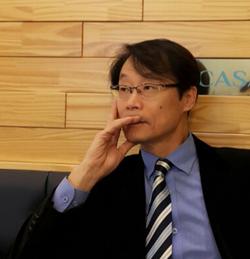
◆ Songsan Jeong Gwang-je
A poet and researcher of history and philosophy. Former board member of the Syngman Rhee Institute. Currently serving as a research advisor to the Korea Modern and Contemporary History Research Association and representative of the philosophy forum 'Lyceum.' He has published four books of poetry, co-translated 'Heroes of Pork Chop Hill,' and authored the humanities books 'Joseon That Became a Myth,' 'Humanities on the Tatami,' and 'A Liberal's Reading of Gramsci.'

 Iranian Foreign Ministry: "Continuing Message Exchanges with the U.S. and Activities of Mediating Countries"
Esmaeil Baghaei, Spokesperson for the Iranian Ministry of Foreign Affairs [Xinhua, Yonhap News file photo]Esmaeil Baghaei, spokesperson for the Iranian Ministry of Foreign Affairs, stated on the 26th
Iranian Foreign Ministry: "Continuing Message Exchanges with the U.S. and Activities of Mediating Countries"
Esmaeil Baghaei, Spokesperson for the Iranian Ministry of Foreign Affairs [Xinhua, Yonhap News file photo]Esmaeil Baghaei, spokesperson for the Iranian Ministry of Foreign Affairs, stated on the 26th
 President Yoon: "Do You Think You Are Safe from the Special Counsel?"... Final Statement Video Released
President Yoon Suk Yeol rebuking the special prosecutor on the 24th. [Court video / @birds_justice X account subtitle GIF] A video of President Yoon Suk Yeol's closing statement at his trial rega
President Yoon: "Do You Think You Are Safe from the Special Counsel?"... Final Statement Video Released
President Yoon Suk Yeol rebuking the special prosecutor on the 24th. [Court video / @birds_justice X account subtitle GIF] A video of President Yoon Suk Yeol's closing statement at his trial rega
 President Yoon, regarding the first-instance ruling on the Public Official Election Act: “An excessive political verdict that distorts the facts… We will appeal immediately.”
The first-instance sentencing hearing for President Yoon Suk Yeol regarding violations of the Public Official Election Act is being broadcast live at Seoul Station on the 27th. [Photo=Yonhap News]Pres
President Yoon, regarding the first-instance ruling on the Public Official Election Act: “An excessive political verdict that distorts the facts… We will appeal immediately.”
The first-instance sentencing hearing for President Yoon Suk Yeol regarding violations of the Public Official Election Act is being broadcast live at Seoul Station on the 27th. [Photo=Yonhap News]Pres
 WSJ: "SK Hynix ADR Premium Is a Sign of AI Trading Overheat"
Advertisement for SK Hynix ADR listing in New York's Times Square [Reuters=Yonhap News file photo]The Wall Street Journal (WSJ) has pointed out that the price of SK Hynix’s American Depositary Recei
WSJ: "SK Hynix ADR Premium Is a Sign of AI Trading Overheat"
Advertisement for SK Hynix ADR listing in New York's Times Square [Reuters=Yonhap News file photo]The Wall Street Journal (WSJ) has pointed out that the price of SK Hynix’s American Depositary Recei
 'Godfather of Japanese Mystery Novels' Keigo Higashino Passes Away After Battle with Cancer at 68
Famous Japanese mystery novelist Keigo Higashino [AFP=Yonhap News]It has been belatedly reported that Keigo Higashino, the "godfather of Japanese mystery novels" and author of bestsellers such as "The
'Godfather of Japanese Mystery Novels' Keigo Higashino Passes Away After Battle with Cancer at 68
Famous Japanese mystery novelist Keigo Higashino [AFP=Yonhap News]It has been belatedly reported that Keigo Higashino, the "godfather of Japanese mystery novels" and author of bestsellers such as "The
 [Park Pil-kyu Security Column] To the Ignorant Trying to Clothe a Beast in Sheep's Clothing
Rep. Kim Byung-joo of the Democratic Party of Korea [Photo=Yonhap News]“The Air Force Academy doesn't teach you how to fly a plane!” “The Army, Navy, and Air Force academies are exactly the
[Park Pil-kyu Security Column] To the Ignorant Trying to Clothe a Beast in Sheep's Clothing
Rep. Kim Byung-joo of the Democratic Party of Korea [Photo=Yonhap News]“The Air Force Academy doesn't teach you how to fly a plane!” “The Army, Navy, and Air Force academies are exactly the
 [Issue Diagnosis] Two Effects of the Election Petition Review
 [Photo] Evidence of Election Fraud Flooding U.S. Media… Trump Had 2.7 Million Votes Stolen
 [Video] U.S. Semiquincentennial Air Show... 'Art in the Sky' streaks across New York
 [Editorial Cartoon] A Draconian Law That Undermines Freedom of Expression

 List
List









