President Trump and Prime Minister Netanyahu meeting at the White House last April [EPA=Yonhap News file photo]
U.S. President Donald Trump and Israeli Prime Minister Benjamin Netanyahu, who began the war with Iran together but have since shown signs of friction as the conflict has unfolded, are set to hold a summit at the White House on the 28th (local time).
Coming at a time of growing discord between the two leaders over future military actions and diplomatic solutions regarding Iran, this meeting is expected to serve as a litmus test for the future of bilateral relations.
On the 27th, the U.S. political media outlet Politico reported that while the meeting Prime Minister Netanyahu has long awaited is finally taking place, it may do little to improve the already strained relationship between the two countries.
Two sources familiar with the matter stated that the Prime Minister has not visited the White House since the start of the Iran war and has been seeking an invitation since at least April.
One source said that Prime Minister Netanyahu is eager to discuss the Iran war and the U.S.-Saudi Arabia nuclear agreement with President Trump as a matter of urgency.
Prime Minister Netanyahu is also scheduled to attend the funeral of the late Senator Lindsey Graham, who was one of President Trump's strongest political allies.
The New York Times (NYT) reported that in a statement released on the day, Prime Minister Netanyahu highlighted that this meeting would be the eighth between the two leaders since President Trump's re-election, and stated that the Iran issue would be at the "top of the priority list" among various pending matters.
The NYT noted that with Israeli general elections approaching in late October, Prime Minister Netanyahu faces the political pressure of needing to demonstrate to voters that he is maintaining close coordination with the U.S., despite his differences with President Trump.
For President Trump, with the midterm elections approaching in November, he must be mindful of domestic criticism that the U.S. was drawn into the Iran war because of Israel. Managing domestic public fatigue over the prolonged war is also a critical challenge.
The two leaders initiated the war with Iran on February 28, with the goal of dismantling Iran's nuclear weapons program. However, as the war has dragged on, they have diverged on issues such as additional military action and potential end-of-war negotiations, and these disagreements have intensified recently.
Israel has largely been excluded from the process of drafting a Memorandum of Understanding (MOU) to end the war between the U.S. and Iran.
President Trump has also strongly criticized Israel's ongoing airstrikes in Lebanon targeting the pro-Iranian militant group Hezbollah and has pressured the Israeli military to withdraw from southern Lebanon and parts of Syria.
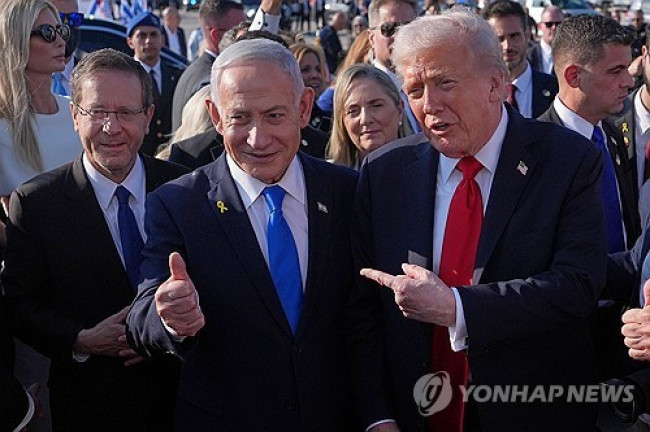 President Trump and Prime Minister Netanyahu [AP=Yonhap News file photo]
Axios previously reported that during a phone call on June 1, President Trump harshly criticized Prime Minister Netanyahu for Israel's airstrikes in Lebanon, calling him "crazy."
Politico reported that the objectives of the U.S. and Israel in the Iran war are increasingly diverging, with Israel wanting to continue the war while the U.S. has, until recently, placed greater weight on a diplomatic resolution.
Danny Citrinowicz, an Iran expert at the Institute for National Security Studies (INSS) in Israel, told the NYT, "President Trump is interested in a deal (with Iran), but Israel does not want to hear about a deal, so their interests are not aligned."
He explained that Israel believes any peace agreement between the U.S. and Iran would only serve to strengthen the Iranian regime, leading them to conclude that a return to war is preferable to negotiations.
There is also concern in Israel that President Trump's recent nuclear agreement with Saudi Arabia could trigger a nuclear arms race in the Middle East.
Since signing the agreement, President Trump has stated that Saudi Arabia's normalization of ties with Israel—joining the "Abraham Accords"—is a prerequisite for the deal's implementation, but Israel remains skeptical about whether Saudi Arabia will actually move toward normalization.
As such, differences between the two countries are emerging not only on the Iran issue but also on overall Middle East strategy, including the nature of the relationship with Saudi Arabia.
However, as President Trump has warned that he may take large-scale military action if Iran does not show a forward-looking attitude toward negotiations, the progress of U.S.-Iran talks and the subsequent level of U.S. military response are expected to influence the direction of future U.S.-Israel coordination.

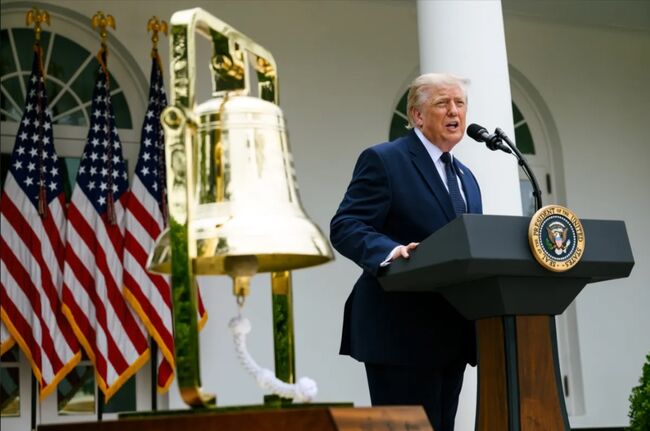 Trump pressures for rate cut again ahead of FOMC... "Should be the lowest in the world"
U.S. President Donald Trump. [Photo = The White House] U.S. President Donald Trump once again pressured the Federal Reserve, the U.S. central bank, to lower interest rates on the 27th (local time
Trump pressures for rate cut again ahead of FOMC... "Should be the lowest in the world"
U.S. President Donald Trump. [Photo = The White House] U.S. President Donald Trump once again pressured the Federal Reserve, the U.S. central bank, to lower interest rates on the 27th (local time
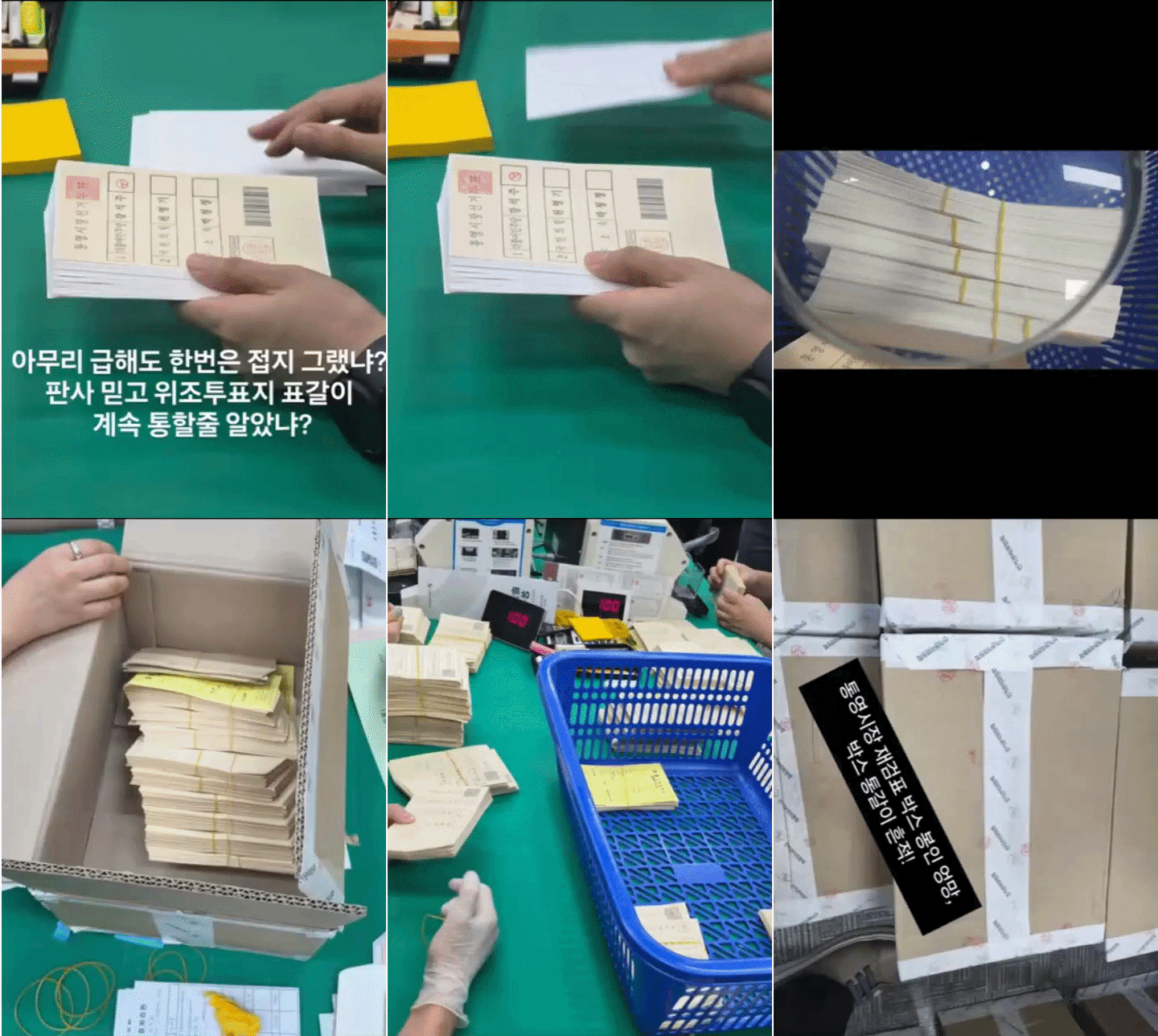 “Ignoring crisp ballots and damaged seals”… Tongyeong mayoral recount concludes with ‘no change in outcome,’ leaving suspicions and public outrage behind
Suspected counterfeit ballots discovered in Tongyeong [GIF from social media of Representative Hwang Kyo-ahn / Attorney Park Joo-hyun]During a recount of the Tongyeong mayoral election in South Gyeong
“Ignoring crisp ballots and damaged seals”… Tongyeong mayoral recount concludes with ‘no change in outcome,’ leaving suspicions and public outrage behind
Suspected counterfeit ballots discovered in Tongyeong [GIF from social media of Representative Hwang Kyo-ahn / Attorney Park Joo-hyun]During a recount of the Tongyeong mayoral election in South Gyeong
 President Yoon, regarding the first-instance ruling on the Public Official Election Act: “An excessive political verdict that distorts the facts… We will appeal immediately.”
The first-instance sentencing hearing for President Yoon Suk Yeol regarding violations of the Public Official Election Act is being broadcast live at Seoul Station on the 27th. [Photo=Yonhap News]Pres
President Yoon, regarding the first-instance ruling on the Public Official Election Act: “An excessive political verdict that distorts the facts… We will appeal immediately.”
The first-instance sentencing hearing for President Yoon Suk Yeol regarding violations of the Public Official Election Act is being broadcast live at Seoul Station on the 27th. [Photo=Yonhap News]Pres
 WSJ: "SK Hynix ADR Premium Is a Sign of AI Trading Overheat"
Advertisement for SK Hynix ADR listing in New York's Times Square [Reuters=Yonhap News file photo]The Wall Street Journal (WSJ) has pointed out that the price of SK Hynix’s American Depositary Recei
WSJ: "SK Hynix ADR Premium Is a Sign of AI Trading Overheat"
Advertisement for SK Hynix ADR listing in New York's Times Square [Reuters=Yonhap News file photo]The Wall Street Journal (WSJ) has pointed out that the price of SK Hynix’s American Depositary Recei
 'Godfather of Japanese Mystery Novels' Keigo Higashino Passes Away After Battle with Cancer at 68
Famous Japanese mystery novelist Keigo Higashino [AFP=Yonhap News]It has been belatedly reported that Keigo Higashino, the "godfather of Japanese mystery novels" and author of bestsellers such as "The
'Godfather of Japanese Mystery Novels' Keigo Higashino Passes Away After Battle with Cancer at 68
Famous Japanese mystery novelist Keigo Higashino [AFP=Yonhap News]It has been belatedly reported that Keigo Higashino, the "godfather of Japanese mystery novels" and author of bestsellers such as "The
 [Park Pil-kyu Security Column] To the Ignorant Trying to Clothe a Beast in Sheep's Clothing
Rep. Kim Byung-joo of the Democratic Party of Korea [Photo=Yonhap News]“The Air Force Academy doesn't teach you how to fly a plane!” “The Army, Navy, and Air Force academies are exactly the
[Park Pil-kyu Security Column] To the Ignorant Trying to Clothe a Beast in Sheep's Clothing
Rep. Kim Byung-joo of the Democratic Party of Korea [Photo=Yonhap News]“The Air Force Academy doesn't teach you how to fly a plane!” “The Army, Navy, and Air Force academies are exactly the
 [Issue Diagnosis] Two Effects of the Election Petition Review
 [Photo] Evidence of Election Fraud Flooding U.S. Media… Trump Had 2.7 Million Votes Stolen
 [Video] U.S. Semiquincentennial Air Show... 'Art in the Sky' streaks across New York
 [Editorial Cartoon] A Draconian Law That Undermines Freedom of Expression

 List
List