이 기사는 [MAGA와 글로벌리즘의 충돌] 시리즈 두 번째 편입니다. 트럼프 전 대통령의 대표 구호인 “Make America Great Again(MAGA)”은 흔히 보호무역주의나 관세정책으로 설명됩니다. 그러나 그 이면에는 단순한 무역 갈등을 넘어, 글로벌리즘과 ESG(환경·사회·지배구조)라는 국제 금융 규범 자체를 거부하는 의도가 깔려 있습니다. 본문에서는 MAGA를 관세전쟁의 외피가 아닌 ‘규범전쟁’으로 읽어내고, 그것이 미국 정치·경제 질서에 어떤 변화를 예고하는지 분석합니다. <편집자 주>
 The graphic on the left, 'ESG-Wind Power', is contrasted with the graphic on the right, 'US Flag-Shale Drilling', to depict the clash between global ESG norms and America's pursuit of energy and industrial independence. This composite graphic visualizes the article's theme of a 'norms war' extending beyond the facade of trade wars. Composite by Yonhap News and Hanmi Ilbo.
Table of Contents
① ESG… A Financial Weapon of Globalism
② MAGA's Challenge… "Not a Trade War, but a Norms War"
③ Political Correctness and Elections… How Democracy Was Tamed
④ Election Fraud Discourse… The Cracks in Globalism and Democracy
⑤ Korea's Choice… A Time for Decision Between Two Systems
The Trump administration's MAGA (Make America Great Again) agenda is often framed as a trade war. The tariff hikes initiated during the 2018 US-China trade war captured global media attention, and many experts interpreted them as traditional protectionism. However, the message from the Trump camp went beyond mere tariff conflicts. He repeatedly declared, "The United States will no longer be beholden to global norms," which led to a challenge against globalism and the entire ESG framework.
The core of MAGA is the 'restoration of industry' and the 'restoration of sovereignty.'
Over the past few decades, as the US expanded free trade and global supply chains, its manufacturing base shifted to China and emerging economies. In this process, ESG norms, driven by global financial elites and international organizations, prevented even American companies from freely determining their investment directions. If companies failed to meet standards for carbon emissions, diversity metrics, and social responsibility, they faced difficulties in raising capital in international financial markets, which in turn applied pressure on domestic US politics. Trump began an attempt to dismantle this structure head-on.
Tariff policies were merely superficial tools. In reality, Trump actively supported fossil fuels and nuclear power (pillars of energy independence), and eased environmental regulations to revive the coal and shale industries. This was a policy that rejected the 'E (Environment)' of ESG. He also directly opposed the trend of emphasizing corporate board diversity and PC (politically correct) social norms. He characterized the political correctness demanded by the 'S (Social)' component of ESG as "suppression of industry." He rejected the norms themselves and instead prominently promoted the mantra of "America First."
This approach goes beyond mere economic policy and carries the character of a political rebellion. While the Democratic Party and European progressives promote ESG and globalism as universal values of democracy, Trump views them as external disciplines that undermine American sovereignty. Thus, MAGA has expanded into a political platform of "a movement of the American people against political correctness and globalism." Indeed, many Republican states have excluded ESG funds from large asset managers like BlackRock from their public pension funds and passed 'anti-ESG legislation.' The economic war has directly moved to the political front.
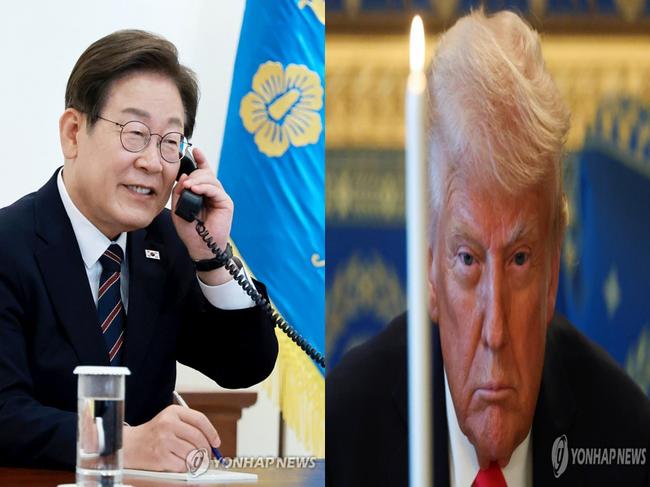 A composite image juxtaposing President Lee Jae-myung (left) and former US President Donald Trump (right). It highlights the contrasting policy stances of Trump's 'MAGA (America First)' and the Lee Jae-myung administration's 'acceptance of ESG and globalism.' Composite by Yonhap News and Hanmi Ilbo.
Invest in an American-Centric Order Instead of Paying 'Tribute'
What is unique about Trump's MAGA approach is that resistance to norms is directly linked to an attempt at capital market independence.
He demanded large-scale investments in the US from countries like South Korea, Japan, and the EU. This was not merely about attracting industry. In a situation where globalist capital controlled capital flows through ESG norms, this was a way to seek capital market independence by directly drawing in funds from allied nations to the US. What the US demanded from its allies was not 'pay up,' but a message to 'invest in an American-centric order instead of global norms.'
In this regard, the frame of trade wars diminishes MAGA. In essence, MAGA is a norms war that rejects the ESG order built by global financial elites and proposes an American-style real economy-centric order as an alternative model. Here, Trump targets not only China but the entire ESG network, encompassing Europe, international organizations, and Wall Street.
However, the issue is not simple. The global financial order is still linked to dollar hegemony, and the US itself cannot operate independently of international financial elites. It is difficult for MAGA to achieve complete independence in the capital markets. Nevertheless, the challenge posed by Trump is clear: "The United States will not be beholden to global norms and will determine its own path."
This challenge also poses uncomfortable questions for allies. Europe is strengthening its ESG order by pushing for CBAM (Carbon Border Adjustment Mechanism) and CSRD (Corporate Sustainability Reporting Directive). South Korea and Japan cannot avoid these norms due to their export competitiveness. Simultaneously, the US is strongly pressuring for domestic investment through the IRA (Inflation Reduction Act) and the CHIPS Act. Ultimately, South Korea finds itself under a dual burden, caught between Europe's ESG order and the US's MAGA order.
MAGA is not simply protectionism but a political rebellion against international norms and a new economic experiment. Whether it will succeed remains unknown, but one thing is clear. This war is a grand test that, beyond the surface-level issue of tariffs, will determine whether globalism, PC culture, and the ESG norms created by financial elites can be dismantled.
#MAGA #Trump #ESG #TradeWar #Globalism #PoliticalCorrectness #USChinaConflict #KoreasChoice #CapitalMarkets #HanmiIlbo

 Iranian Foreign Ministry: "Continuing Message Exchanges with the U.S. and Activities of Mediating Countries"
Esmaeil Baghaei, Spokesperson for the Iranian Ministry of Foreign Affairs [Xinhua, Yonhap News file photo]Esmaeil Baghaei, spokesperson for the Iranian Ministry of Foreign Affairs, stated on the 26th
Iranian Foreign Ministry: "Continuing Message Exchanges with the U.S. and Activities of Mediating Countries"
Esmaeil Baghaei, Spokesperson for the Iranian Ministry of Foreign Affairs [Xinhua, Yonhap News file photo]Esmaeil Baghaei, spokesperson for the Iranian Ministry of Foreign Affairs, stated on the 26th
 President Yoon: "Do You Think You Are Safe from the Special Counsel?"... Final Statement Video Released
President Yoon Suk Yeol rebuking the special prosecutor on the 24th. [Court video / @birds_justice X account subtitle GIF] A video of President Yoon Suk Yeol's closing statement at his trial rega
President Yoon: "Do You Think You Are Safe from the Special Counsel?"... Final Statement Video Released
President Yoon Suk Yeol rebuking the special prosecutor on the 24th. [Court video / @birds_justice X account subtitle GIF] A video of President Yoon Suk Yeol's closing statement at his trial rega
 President Yoon, regarding the first-instance ruling on the Public Official Election Act: “An excessive political verdict that distorts the facts… We will appeal immediately.”
The first-instance sentencing hearing for President Yoon Suk Yeol regarding violations of the Public Official Election Act is being broadcast live at Seoul Station on the 27th. [Photo=Yonhap News]Pres
President Yoon, regarding the first-instance ruling on the Public Official Election Act: “An excessive political verdict that distorts the facts… We will appeal immediately.”
The first-instance sentencing hearing for President Yoon Suk Yeol regarding violations of the Public Official Election Act is being broadcast live at Seoul Station on the 27th. [Photo=Yonhap News]Pres
 WSJ: "SK Hynix ADR Premium Is a Sign of AI Trading Overheat"
Advertisement for SK Hynix ADR listing in New York's Times Square [Reuters=Yonhap News file photo]The Wall Street Journal (WSJ) has pointed out that the price of SK Hynix’s American Depositary Recei
WSJ: "SK Hynix ADR Premium Is a Sign of AI Trading Overheat"
Advertisement for SK Hynix ADR listing in New York's Times Square [Reuters=Yonhap News file photo]The Wall Street Journal (WSJ) has pointed out that the price of SK Hynix’s American Depositary Recei
 'Godfather of Japanese Mystery Novels' Keigo Higashino Passes Away After Battle with Cancer at 68
Famous Japanese mystery novelist Keigo Higashino [AFP=Yonhap News]It has been belatedly reported that Keigo Higashino, the "godfather of Japanese mystery novels" and author of bestsellers such as "The
'Godfather of Japanese Mystery Novels' Keigo Higashino Passes Away After Battle with Cancer at 68
Famous Japanese mystery novelist Keigo Higashino [AFP=Yonhap News]It has been belatedly reported that Keigo Higashino, the "godfather of Japanese mystery novels" and author of bestsellers such as "The
 [Park Pil-kyu Security Column] To the Ignorant Trying to Clothe a Beast in Sheep's Clothing
Rep. Kim Byung-joo of the Democratic Party of Korea [Photo=Yonhap News]“The Air Force Academy doesn't teach you how to fly a plane!” “The Army, Navy, and Air Force academies are exactly the
[Park Pil-kyu Security Column] To the Ignorant Trying to Clothe a Beast in Sheep's Clothing
Rep. Kim Byung-joo of the Democratic Party of Korea [Photo=Yonhap News]“The Air Force Academy doesn't teach you how to fly a plane!” “The Army, Navy, and Air Force academies are exactly the
 [Issue Diagnosis] Two Effects of the Election Petition Review
 [Photo] Evidence of Election Fraud Flooding U.S. Media… Trump Had 2.7 Million Votes Stolen
 [Video] U.S. Semiquincentennial Air Show... 'Art in the Sky' streaks across New York
 [Editorial Cartoon] A Draconian Law That Undermines Freedom of Expression

 List
List










