노조법 2·3조 개정안, 이른바 ‘노란봉투법’이 국회를 통과했다. 노동계는 “노동권 보호의 진전”이라 평가하지만, 법조계와 재계, 국제사회에서는 법치주의와 시장경제를 뒤흔드는 법안이라고 우려한다. 본 기사는 법안의 핵심 조항과 쟁점, 그리고 국내외 반응을 종합적으로 정리했다. <편집자 주>
 "Yellow Envelope" Bill Passes National Assembly Under Ruling Party Leadership.
On August 24th, the "Yellow Envelope" bill (amendments to Articles 2 and 3 of the Labor Union Act) passed the National Assembly's plenary session. While the bill was promoted under the pretext of protecting the rights of subcontracted workers, it immediately sparked fierce controversy.
The amended articles contain four significant issues: △ a provision expanding employer liability to include prime contractors, △ provisions that effectively limit damage claims arising from strikes, △ concerns about conflicts with constitutional principles of property rights and the rule of law, and △ a disconnect with ILO and OECD norms.
While the labor sector welcomed the protection of rights, the business community, academia, and foreign business organizations protested, stating that "the investment environment could collapse."
The amended Article 2, subparagraph 2 of the Labor Union Act stipulates, "The term 'employer' includes not only those who direct or order workers regarding wages and other working conditions, but also those who can factually control or decide concerning them." This now extends employer status to prime contractors.
The business community protested, stating, "Imposing negotiation obligations and legal responsibilities on prime contractors, who have no direct contractual relationship with the union, is excessive regulation." In a media interview, Professor Park Ji-soon of Korea University pointed out, "Legislation that broadly expands the scope of employers in this manner is difficult to find anywhere else in the world," criticizing the unreasonable expansion of employer liability.
The amendment to Article 3 of the Labor Union Act states, "No claim for damages due to workers' dispute activities shall be made within a justifiable scope." This makes it virtually impossible to claim damages even if a company suffers losses due to illegal strikes or occupations.
The business community argues, "If unions are exempted from liability for illegal acts, the damages will be entirely shifted to companies, shareholders, and consumers." Professor Kim Hee-seong of Kangwon National University stated in a media interview that "provisions exempting liability for illegal acts undermine the foundation of the rule of law."
The Constitution guarantees the freedom of occupation (Article 15), the right to property (Article 23), and the basic order of a free market economy (Article 119). However, it is argued that the "Yellow Envelope" bill could conflict with the Constitution as it restricts the free business activities of prime contractors and limits the judiciary's authority to determine damages.
Some legal circles have even mentioned the possibility of constitutional litigation. One constitutional scholar pointed out, "Preventing the judiciary from recognizing liability for damages for illegal acts also goes against the principle of separation of powers."
Major OECD countries and ILO conventions guarantee union rights while clearly defining responsibility for illegal acts.
However, the amended bill in Korea is assessed as having lost balance by strengthening union powers while weakening sanctions.
The American Chamber of Commerce in Korea warned that it "could damage the business environment and investment attractiveness," and the European Chamber of Commerce in Korea also stated that "if uncertainty persists, we will have no choice but to consider withdrawing from the Korean market." Foreign experts are even discussing the "possibility of capital outflow and the encroachment of Chinese capital."
The controversy extended to the Presidential Office's reaction.
Immediately after the bill's passage, a Presidential Office official stated a principled stance, saying, "We respect the legislative outcome by the parliamentary majority." Beyond stating that "remedial measures will be considered in the enforcement decree," no specific response was provided.
As the business and academic communities raise the possibility of constitutional litigation, the Presidential Office's stance, which appears to shift responsibility to the National Assembly, has drawn criticism from within and outside the political sphere for being "overly lukewarm on a critical issue directly related to the economy and the rule of law."
Despite the rationale of protecting labor rights, the "Yellow Envelope" bill is generating intense controversy surrounding legal stability and international trust. Experts predict that the Constitutional Court's decision and the government's process of preparing the enforcement decree will serve as a test case for gauging the law's actual effects and social impact.
#YellowEnvelopeBill #LaborUnionActAmendment #EmployerLiability #DamageClaimLimitation #ConstitutionalConflict #DisconnectWithInternationalNorms #InvestmentOutflow #BusinessCommunityBacklash #PresidentialOfficeResponse #KoreanDemocracy

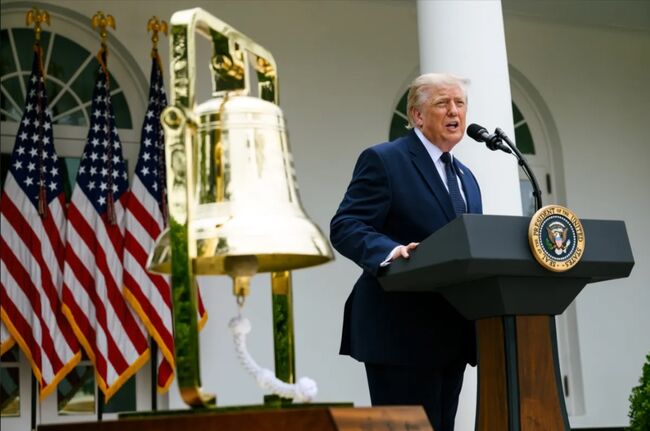 Trump pressures for rate cut again ahead of FOMC... "Should be the lowest in the world"
U.S. President Donald Trump. [Photo = The White House] U.S. President Donald Trump once again pressured the Federal Reserve, the U.S. central bank, to lower interest rates on the 27th (local time
Trump pressures for rate cut again ahead of FOMC... "Should be the lowest in the world"
U.S. President Donald Trump. [Photo = The White House] U.S. President Donald Trump once again pressured the Federal Reserve, the U.S. central bank, to lower interest rates on the 27th (local time
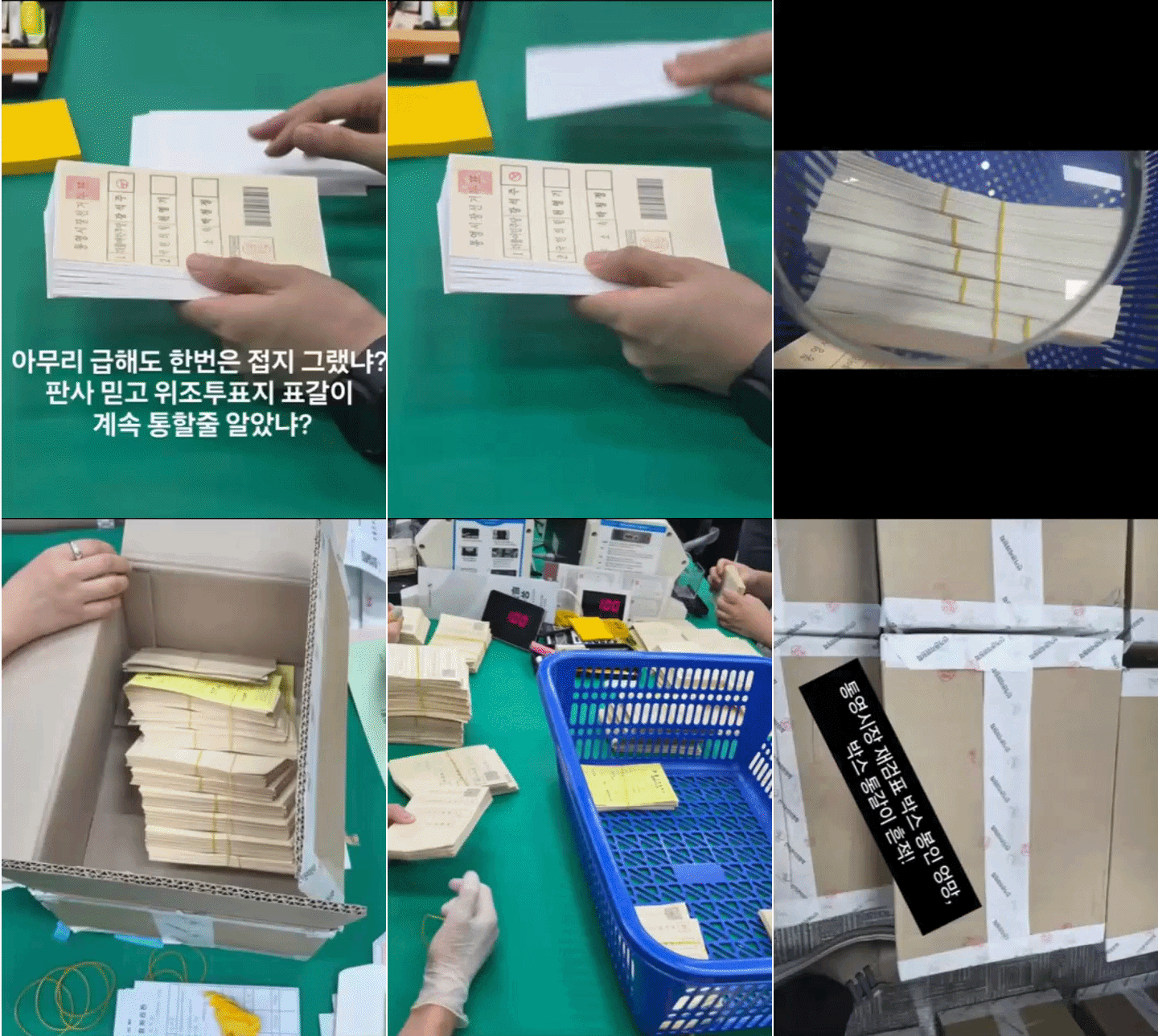 “Ignoring crisp ballots and damaged seals”… Tongyeong mayoral recount concludes with ‘no change in outcome,’ leaving suspicions and public outrage behind
Suspected counterfeit ballots discovered in Tongyeong [GIF from social media of Representative Hwang Kyo-ahn / Attorney Park Joo-hyun]During a recount of the Tongyeong mayoral election in South Gyeong
“Ignoring crisp ballots and damaged seals”… Tongyeong mayoral recount concludes with ‘no change in outcome,’ leaving suspicions and public outrage behind
Suspected counterfeit ballots discovered in Tongyeong [GIF from social media of Representative Hwang Kyo-ahn / Attorney Park Joo-hyun]During a recount of the Tongyeong mayoral election in South Gyeong
 President Yoon, regarding the first-instance ruling on the Public Official Election Act: “An excessive political verdict that distorts the facts… We will appeal immediately.”
The first-instance sentencing hearing for President Yoon Suk Yeol regarding violations of the Public Official Election Act is being broadcast live at Seoul Station on the 27th. [Photo=Yonhap News]Pres
President Yoon, regarding the first-instance ruling on the Public Official Election Act: “An excessive political verdict that distorts the facts… We will appeal immediately.”
The first-instance sentencing hearing for President Yoon Suk Yeol regarding violations of the Public Official Election Act is being broadcast live at Seoul Station on the 27th. [Photo=Yonhap News]Pres
 WSJ: "SK Hynix ADR Premium Is a Sign of AI Trading Overheat"
Advertisement for SK Hynix ADR listing in New York's Times Square [Reuters=Yonhap News file photo]The Wall Street Journal (WSJ) has pointed out that the price of SK Hynix’s American Depositary Recei
WSJ: "SK Hynix ADR Premium Is a Sign of AI Trading Overheat"
Advertisement for SK Hynix ADR listing in New York's Times Square [Reuters=Yonhap News file photo]The Wall Street Journal (WSJ) has pointed out that the price of SK Hynix’s American Depositary Recei
 'Godfather of Japanese Mystery Novels' Keigo Higashino Passes Away After Battle with Cancer at 68
Famous Japanese mystery novelist Keigo Higashino [AFP=Yonhap News]It has been belatedly reported that Keigo Higashino, the "godfather of Japanese mystery novels" and author of bestsellers such as "The
'Godfather of Japanese Mystery Novels' Keigo Higashino Passes Away After Battle with Cancer at 68
Famous Japanese mystery novelist Keigo Higashino [AFP=Yonhap News]It has been belatedly reported that Keigo Higashino, the "godfather of Japanese mystery novels" and author of bestsellers such as "The
 [Park Pil-kyu Security Column] To the Ignorant Trying to Clothe a Beast in Sheep's Clothing
Rep. Kim Byung-joo of the Democratic Party of Korea [Photo=Yonhap News]“The Air Force Academy doesn't teach you how to fly a plane!” “The Army, Navy, and Air Force academies are exactly the
[Park Pil-kyu Security Column] To the Ignorant Trying to Clothe a Beast in Sheep's Clothing
Rep. Kim Byung-joo of the Democratic Party of Korea [Photo=Yonhap News]“The Air Force Academy doesn't teach you how to fly a plane!” “The Army, Navy, and Air Force academies are exactly the
 [Issue Diagnosis] Two Effects of the Election Petition Review
 [Photo] Evidence of Election Fraud Flooding U.S. Media… Trump Had 2.7 Million Votes Stolen
 [Video] U.S. Semiquincentennial Air Show... 'Art in the Sky' streaks across New York
 [Editorial Cartoon] A Draconian Law That Undermines Freedom of Expression

 List
List