ESG는 이제 기업에게 선택이 아니라 의무가 되었다. 한국 정부는 공시를 제도화했고, 글로벌 평가사는 점수를 매긴다. 그러나 그 점수판은 단순한 경영평가가 아니라 국제 금융 종속의 사슬이기도 하다. ③편에서는 한국 기업이 왜 ‘ESG 점수판’에 갇히게 되었는지를 추적한다. <편집자 주>
 Korean companies such as Samsung, Hyundai, LG, and SK stand before the ESG scoreboards of global rating agencies. Autonomy has vanished, leaving only financial dependency. Han-Mi Daily Graphic
The Moment Reports Turned into Scorecards
South Korean listed companies publish 'sustainability reports' every year. Just 10 years ago, this was merely an optional measure for corporate image management, but now it is different. With the Financial Services Commission and the Korea Exchange declaring the mandatory implementation of ESG disclosures, these reports have effectively become regulatory documents.
The Financial Services Commission announced that it would make ESG disclosures mandatory for all KOSPI-listed companies by 2025. There are plans to expand this to KOSDAQ companies by 2030. Companies must collect data across accounting, environmental, labor, and governance sectors to compile these reports. While the format is said to be voluntary, in reality, there is no other option but to conform to the standards of global rating agencies.
Scoreboards of Global Capital
The entities assigning ESG scores are global rating agencies such as MSCI, Sustainalytics, and S&P Global. They collect vast amounts of data to assign ratings. In the case of MSCI, they assign one of seven grades from AAA to CCC; if a rating is low, large pension funds and global funds often withdraw their investments.
The problem is that these standards are inconsistent. According to a Bloomberg survey, it is common for the ESG scores of the same company to differ by more than 30% depending on the rating agency. Cases have occurred where major corporations like Samsung Electronics and Hyundai Motor Company receive an 'A' grade from one agency and a 'C' grade from another simultaneously. Ultimately, companies are swayed by the arbitrary standards of these rating agencies and become helpless before the 'scoreboards' of global capital.
The Shackles of K-ESG
In 2021, the South Korean government introduced the 'K-ESG Guidelines,' promoting a "Korean-style standard." However, in reality, it simply reflects international standards. While large corporations have established dedicated departments to respond, small and medium-sized enterprises (SMEs) are suffering under an unbearable burden.
An official from a mid-sized manufacturing company stated, "Even government agencies don't have some of the environmental data we are being asked to produce in our corporate reports. We have to compile data across all fields, including accounting, labor, and human rights; it is effectively paralyzing our administration." Large corporations face similar issues. One executive from a major conglomerate lamented, "We spend more time filling out reports than we do innovating."
ESG Bonds: No Path Without Approval
Companies secure funds through the issuance of ESG bonds. These bonds, issued under names like "green bonds," "social bonds," and "sustainability bonds," are attractive products to investors. In 2023, the scale of ESG bond issuance in Korea exceeded 80 trillion won.
However, the conditions for issuance are demanding. They must be verified by international certification bodies, and the company's scores from global rating agencies must meet a certain threshold. Without this approval, investors do not bite. It is a structure where capital can essentially only be raised by crossing the threshold of the international financial sector.
In this process, financial institutions collect massive fees. While companies issue the bonds, the costs are ultimately passed on through product prices and service fees. It is, in effect, the public who bears the burden as consumers.
The Vanishing Autonomy of Corporations
The moment the ESG scoreboard begins to operate, corporate autonomy disappears. Management focuses more on writing reports than on market demand, and prioritizes meeting scores over innovation. Some companies pour resources into items that can boost their scores in the short term (e.g., reducing paper cup usage, obtaining eco-friendly certifications) rather than on technology development.
As a result, the global competitiveness of Korean companies may actually weaken, because management tailored to the demands of international capital takes root instead of autonomous strategic planning. Economists call this a "subcontracting structure of capital."
International Comparison: US vs. Europe
International trends regarding ESG are also divided. The European Union (EU) has mandated ESG disclosures for all financial institutions since 2021 through the 'Sustainable Finance Disclosure Regulation (SFDR).' From 2024, this will expand beyond large corporations to include mid-sized companies. South Korea is importing this model as is.
On the other hand, a backlash against ESG is spreading in the United States. Republican-led states have declared bans on ESG investments by state pension funds, arguing that "ESG kills our domestic industries." Asset managers like BlackRock have even become targets of boycotts. The path chosen by Korea is clear: a European-style model of dependency.
The Trap of Financial Dependency
Ultimately, ESG disclosures and scoreboards constrain corporate autonomy and deepen international financial dependency. The justification of protecting the environment has morphed into a standard created by financial power. Companies must follow the scoreboard, and the state must forfeit its policy autonomy.
The slogan of "sustainability" is becoming another name for "sustainable financial dominance." As long as Korea cannot design its own norms, ESG is not sovereign management, but merely a yoke of financial dependency.
In Part 4, we will track how ESG costs are passed on to the public and corporations. We will dissect a structure where electricity bills and taxes rise, and only the financial sector profits.
#ESGDisclosure #K_ESG #CorporateBurden #InternationalRatingAgency #FinancialDependency #ESGBonds #KoreanEconomy #GreenIrony #HanMiDaily

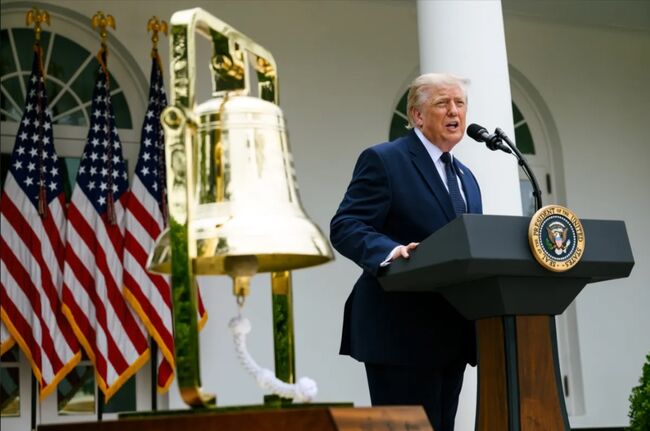 Trump pressures for rate cut again ahead of FOMC... "Should be the lowest in the world"
U.S. President Donald Trump. [Photo = The White House] U.S. President Donald Trump once again pressured the Federal Reserve, the U.S. central bank, to lower interest rates on the 27th (local time
Trump pressures for rate cut again ahead of FOMC... "Should be the lowest in the world"
U.S. President Donald Trump. [Photo = The White House] U.S. President Donald Trump once again pressured the Federal Reserve, the U.S. central bank, to lower interest rates on the 27th (local time
 “Ignoring crisp ballots and damaged seals”… Tongyeong mayoral recount concludes with ‘no change in outcome,’ leaving suspicions and public outrage behind
Suspected counterfeit ballots discovered in Tongyeong [GIF from social media of Representative Hwang Kyo-ahn / Attorney Park Joo-hyun]During a recount of the Tongyeong mayoral election in South Gyeong
“Ignoring crisp ballots and damaged seals”… Tongyeong mayoral recount concludes with ‘no change in outcome,’ leaving suspicions and public outrage behind
Suspected counterfeit ballots discovered in Tongyeong [GIF from social media of Representative Hwang Kyo-ahn / Attorney Park Joo-hyun]During a recount of the Tongyeong mayoral election in South Gyeong
 President Yoon, regarding the first-instance ruling on the Public Official Election Act: “An excessive political verdict that distorts the facts… We will appeal immediately.”
The first-instance sentencing hearing for President Yoon Suk Yeol regarding violations of the Public Official Election Act is being broadcast live at Seoul Station on the 27th. [Photo=Yonhap News]Pres
President Yoon, regarding the first-instance ruling on the Public Official Election Act: “An excessive political verdict that distorts the facts… We will appeal immediately.”
The first-instance sentencing hearing for President Yoon Suk Yeol regarding violations of the Public Official Election Act is being broadcast live at Seoul Station on the 27th. [Photo=Yonhap News]Pres
 WSJ: "SK Hynix ADR Premium Is a Sign of AI Trading Overheat"
Advertisement for SK Hynix ADR listing in New York's Times Square [Reuters=Yonhap News file photo]The Wall Street Journal (WSJ) has pointed out that the price of SK Hynix’s American Depositary Recei
WSJ: "SK Hynix ADR Premium Is a Sign of AI Trading Overheat"
Advertisement for SK Hynix ADR listing in New York's Times Square [Reuters=Yonhap News file photo]The Wall Street Journal (WSJ) has pointed out that the price of SK Hynix’s American Depositary Recei
 'Godfather of Japanese Mystery Novels' Keigo Higashino Passes Away After Battle with Cancer at 68
Famous Japanese mystery novelist Keigo Higashino [AFP=Yonhap News]It has been belatedly reported that Keigo Higashino, the "godfather of Japanese mystery novels" and author of bestsellers such as "The
'Godfather of Japanese Mystery Novels' Keigo Higashino Passes Away After Battle with Cancer at 68
Famous Japanese mystery novelist Keigo Higashino [AFP=Yonhap News]It has been belatedly reported that Keigo Higashino, the "godfather of Japanese mystery novels" and author of bestsellers such as "The
 [Park Pil-kyu Security Column] To the Ignorant Trying to Clothe a Beast in Sheep's Clothing
Rep. Kim Byung-joo of the Democratic Party of Korea [Photo=Yonhap News]“The Air Force Academy doesn't teach you how to fly a plane!” “The Army, Navy, and Air Force academies are exactly the
[Park Pil-kyu Security Column] To the Ignorant Trying to Clothe a Beast in Sheep's Clothing
Rep. Kim Byung-joo of the Democratic Party of Korea [Photo=Yonhap News]“The Air Force Academy doesn't teach you how to fly a plane!” “The Army, Navy, and Air Force academies are exactly the
 [Issue Diagnosis] Two Effects of the Election Petition Review
 [Photo] Evidence of Election Fraud Flooding U.S. Media… Trump Had 2.7 Million Votes Stolen
 [Video] U.S. Semiquincentennial Air Show... 'Art in the Sky' streaks across New York
 [Editorial Cartoon] A Draconian Law That Undermines Freedom of Expression

 List
List









