The Japanese government announced on the 5th that it welcomes President Donald Trump's signing of an executive order to implement the Japan-U.S. trade agreement.
 Japanese Prime Minister Shigeru Ishiba. AFP Yonhap News.
Prime Minister Shigeru Ishiba told reporters that day, "We have been coordinating to achieve a swift reduction of tariffs by the United States," adding, "This was our top priority."
Prime Minister Ishiba stated that to realize an early reduction of tariffs by the U.S., two documents were prepared accepting the U.S. side's requests, and said, "This is very meaningful from the perspective of explaining it in a way that the public can understand."
Regarding Japan's $550 billion (approximately 766 trillion won) investment in the U.S., which has shown a significant divergence in interpretation between the two countries, he reported that Ryosei Akazawa, Minister of Economic Revitalization, who is visiting the U.S., and Howard Rutnik, U.S. Secretary of Commerce, signed a Memorandum of Understanding to confirm common understanding.
Furthermore, a joint statement was also prepared to reaffirm the agreement between the two countries and was sent to President Trump along with a personal letter through Representative Akazawa.
Prime Minister Ishiba introduced the personal letter sent to President Trump, stating, "It conveys the desire to jointly usher in a golden age of Japan-U.S. relations and my invitation for President Trump to visit Japan."
Chief Cabinet Secretary Yoshiimasa Hayashi, the Japanese government spokesperson, also said at a regular press conference that day, "This presidential decree is a faithful implementation of the agreement reached between the two countries on July 22," and added, "We welcome it."
Regarding the joint statement, which is being created separately from the investment MOU, he explained, "It will also specify that regarding semiconductors and pharmaceuticals, we will not impose tariffs disadvantageous compared to other countries in the future, and that aircraft and aircraft parts will not be subject to tariffs."
Previously, the executive order signed by President Trump on the 4th (local time) stipulated a reduction of the 25% item-specific tariff imposed on Japanese automobiles and automobile parts to 15%.
Currently, the U.S. has been applying a total tariff of 27.5% on Japanese cars, combining the existing 2.5% with the 25% item-specific tariff, and this will be reduced to 15%.
The definition of "reciprocal tariff" imposed on Japan has also been clarified.
According to the executive order, for items where the existing tariff is less than 15%, the combined tariff rate of the existing tariff and the reciprocal tariff will not exceed 15%.
For items where the existing tariff is 15% or more, reciprocal tariffs will not be added. This is the same treatment as the European Union (EU) and is what Japan had sought.
According to the White House, President Trump instructed that procedures such as modifying the Harmonized Tariff Schedule of the United States (HTSUS) be completed within seven days of the executive order being published in the Federal Register.
However, regarding the timing of the application of the new automobile tariffs, Minister of Economic Revitalization Akazawa said, "I cannot say definitively, but I believe it will be within two weeks at the maximum."
Regarding the investment MOU, he explained, "There is no change in providing investments, loans, and loan guarantees up to $550 billion." (Reporting assistance: Kim Ji-soo, Correspondent)
Yonhap News

 Trump pressures for rate cut again ahead of FOMC... "Should be the lowest in the world"
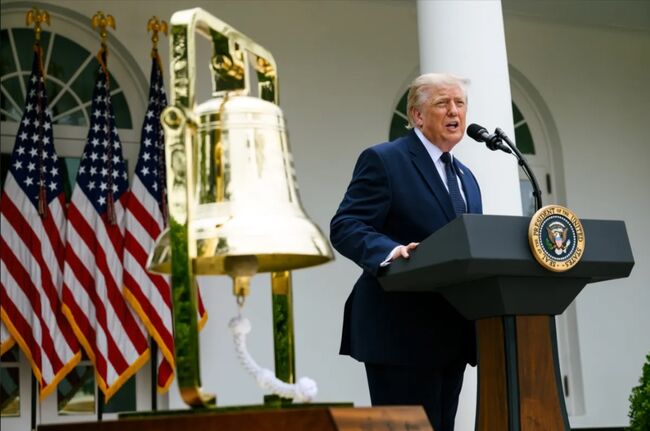
U.S. President Donald Trump. [Photo = The White House] U.S. President Donald Trump once again pressured the Federal Reserve, the U.S. central bank, to lower interest rates on the 27th (local time
Trump pressures for rate cut again ahead of FOMC... "Should be the lowest in the world"
U.S. President Donald Trump. [Photo = The White House] U.S. President Donald Trump once again pressured the Federal Reserve, the U.S. central bank, to lower interest rates on the 27th (local time
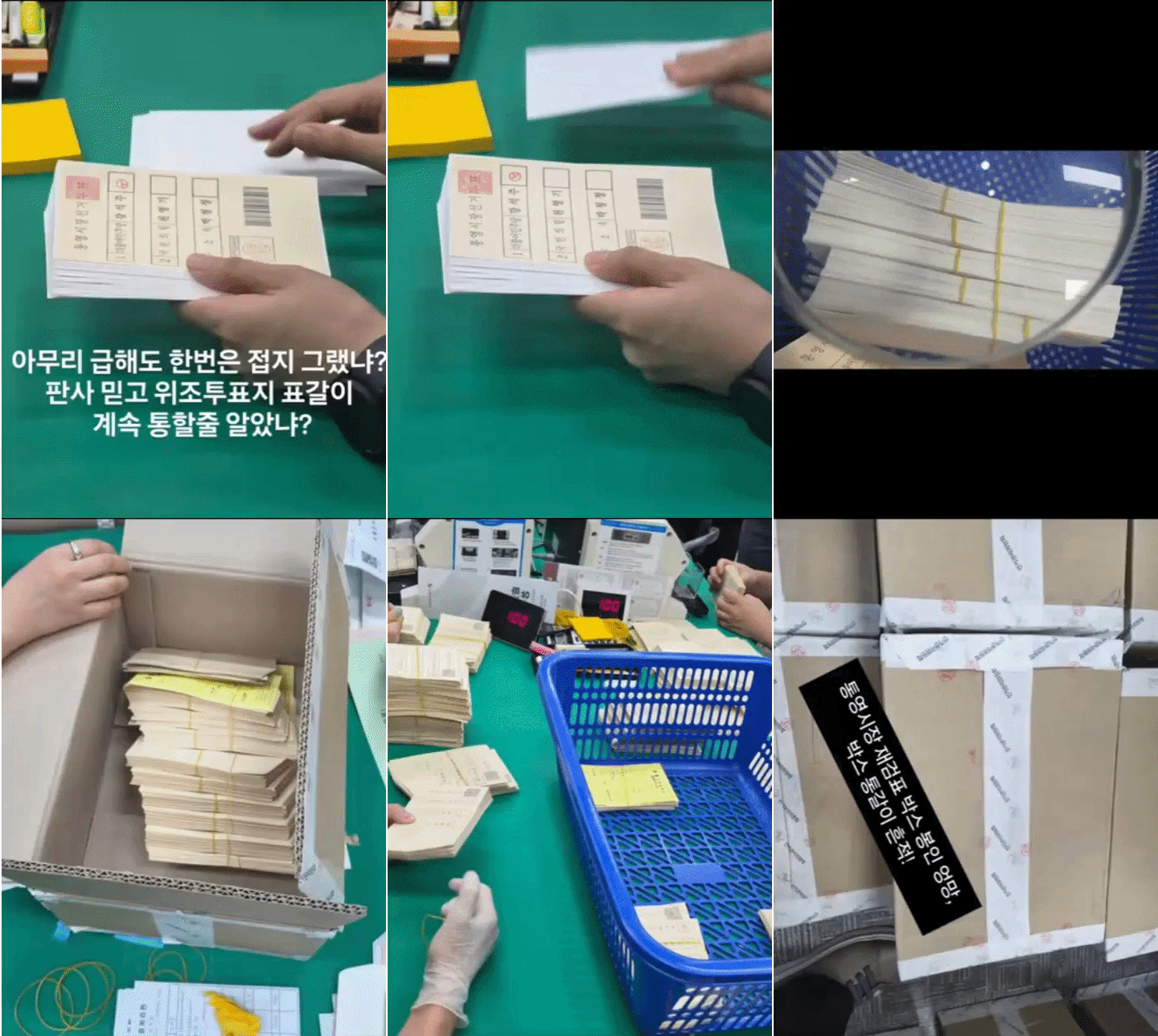 “Ignoring crisp ballots and damaged seals”… Tongyeong mayoral recount concludes with ‘no change in outcome,’ leaving suspicions and public outrage behind
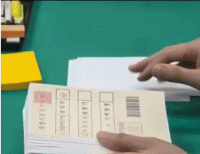
Suspected counterfeit ballots discovered in Tongyeong [GIF from social media of Representative Hwang Kyo-ahn / Attorney Park Joo-hyun]During a recount of the Tongyeong mayoral election in South Gyeong
“Ignoring crisp ballots and damaged seals”… Tongyeong mayoral recount concludes with ‘no change in outcome,’ leaving suspicions and public outrage behind
Suspected counterfeit ballots discovered in Tongyeong [GIF from social media of Representative Hwang Kyo-ahn / Attorney Park Joo-hyun]During a recount of the Tongyeong mayoral election in South Gyeong
 President Yoon, regarding the first-instance ruling on the Public Official Election Act: “An excessive political verdict that distorts the facts… We will appeal immediately.”
The first-instance sentencing hearing for President Yoon Suk Yeol regarding violations of the Public Official Election Act is being broadcast live at Seoul Station on the 27th. [Photo=Yonhap News]Pres
President Yoon, regarding the first-instance ruling on the Public Official Election Act: “An excessive political verdict that distorts the facts… We will appeal immediately.”
The first-instance sentencing hearing for President Yoon Suk Yeol regarding violations of the Public Official Election Act is being broadcast live at Seoul Station on the 27th. [Photo=Yonhap News]Pres
 WSJ: "SK Hynix ADR Premium Is a Sign of AI Trading Overheat"
Advertisement for SK Hynix ADR listing in New York's Times Square [Reuters=Yonhap News file photo]The Wall Street Journal (WSJ) has pointed out that the price of SK Hynix’s American Depositary Recei
WSJ: "SK Hynix ADR Premium Is a Sign of AI Trading Overheat"
Advertisement for SK Hynix ADR listing in New York's Times Square [Reuters=Yonhap News file photo]The Wall Street Journal (WSJ) has pointed out that the price of SK Hynix’s American Depositary Recei
 'Godfather of Japanese Mystery Novels' Keigo Higashino Passes Away After Battle with Cancer at 68
Famous Japanese mystery novelist Keigo Higashino [AFP=Yonhap News]It has been belatedly reported that Keigo Higashino, the "godfather of Japanese mystery novels" and author of bestsellers such as "The
'Godfather of Japanese Mystery Novels' Keigo Higashino Passes Away After Battle with Cancer at 68
Famous Japanese mystery novelist Keigo Higashino [AFP=Yonhap News]It has been belatedly reported that Keigo Higashino, the "godfather of Japanese mystery novels" and author of bestsellers such as "The
 [Park Pil-kyu Security Column] To the Ignorant Trying to Clothe a Beast in Sheep's Clothing
Rep. Kim Byung-joo of the Democratic Party of Korea [Photo=Yonhap News]“The Air Force Academy doesn't teach you how to fly a plane!” “The Army, Navy, and Air Force academies are exactly the
[Park Pil-kyu Security Column] To the Ignorant Trying to Clothe a Beast in Sheep's Clothing
Rep. Kim Byung-joo of the Democratic Party of Korea [Photo=Yonhap News]“The Air Force Academy doesn't teach you how to fly a plane!” “The Army, Navy, and Air Force academies are exactly the
 [Issue Diagnosis] Two Effects of the Election Petition Review
 [Photo] Evidence of Election Fraud Flooding U.S. Media… Trump Had 2.7 Million Votes Stolen
 [Video] U.S. Semiquincentennial Air Show... 'Art in the Sky' streaks across New York
 [Editorial Cartoon] A Draconian Law That Undermines Freedom of Expression

 List
List