중국은 전통적 군사력보다 훨씬 은밀한 방식으로 상대국을 압박한다. 여론을 흔들고, 경제를 무기화하며, 인프라까지 볼모로 삼는 초한전(超限戰) 전략이다. 이는 한국의 주권을 직접 제약할 수 있는 치명적 위협이다. 한국이 중국을 멀리해야 하는 세 번째 이유는 바로 이러한 정치·외교적 종속 위험에 맞서 국가 자율성을 지켜야 하기 때문이다. <편집자 주>
 China weaponizes public opinion, the economy, and infrastructure. Graphic by Han-Mi-Il Bo.
“Manipulating public opinion, weaponizing the economy, and holding infrastructure hostage.”
Whenever tensions arise, China has consistently employed a pattern of manipulating public opinion, applying economic pressure, and using infrastructure as leverage.
Online public opinion manipulation and fake news have instilled a fear in Korean society that "provoking China leads to losses," while economic retaliation against nations like Norway, Australia, and Lithuania has laid bare the reality of these threats.
Now, with South Korea’s critical reliance on Chinese components in power grids, telecommunications networks, and renewable energy facilities, the nation is increasingly vulnerable to becoming a target of political and diplomatic coercion at any time.
China’s first weapon is public opinion and psychological warfare.
The most prominent organization is the so-called “50 Cent Party” (Wumao). While the name originated from the 0.5-yuan stipend per post, it is actually an organized cyber force that mobilizes local government officials, students, and even party members.
Research from Harvard University suggests that China is estimated to propagate approximately 480 million online posts annually. These actors promote the Chinese government’s narrative, dilute critical voices, and have recently begun utilizing AI accounts to amplify their influence. Due to the structural vulnerabilities of portals and social media platforms, South Korean society is also defenselessly exposed to such external operations.
As a result, corporations and political circles have begun to exercise self-censorship, leading to a pervasive atmosphere of apprehension throughout society.
The second weapon is economic retaliation.
China immediately links diplomatic dissatisfaction to trade and investment sanctions. In 2010, when Norway awarded the Nobel Peace Prize to Liu Xiaobo, China completely blocked Norwegian salmon imports. In 2017, in response to South Korea’s decision to deploy THAAD, China retaliated with bans on group tourism, restrictions on retail distribution, and blocks on Korean cultural exports (Hallyu); the Korea International Trade Association estimated the damage at approximately 8 trillion won.
In 2020, when Australia called for an investigation into the origins of COVID-19, China imposed tariffs of up to 218% on Australian wine, causing exports to China to plummet by 96%. When Lithuania allowed the opening of a Taiwanese representative office in 2021, its exports to China dropped by more than 80%. This is exactly why the U.S. and the EU are implementing “anti-economic coercion” regulations and diversifying their supply chains.
The third weapon is infrastructure dependency.
More than 90% of the solar inverter market in South Korea is dominated by Chinese products, and the discovery of undocumented communication chips in some equipment has raised concerns over a potential "kill switch." China’s market share also exceeds 60% in areas such as 5G telecommunications equipment, battery raw materials, and wind turbines.
The U.S. has excluded Chinese equipment through its "Clean Network" program, and the EU has strengthened its supply chain risk management strategies. South Korea, however, continues to rely on price competitiveness while leaving these structural risks unaddressed.
If, during a period of conflict, China were to disrupt the power grid or block communication networks, South Korea’s political and diplomatic decision-making power would be effectively constrained.
China manipulates public opinion, weaponizes the economy, and holds infrastructure hostage. This is a form of pressure that is more subtle than traditional warfare, yet far more lethal and persistent. The third reason why South Korea must distance itself from this dependency is to escape the risks of political and diplomatic subordination and to protect its national sovereignty.
#ChinaThreat #WumaoParty #PsychologicalWarfare #EconomicRetaliation #InfrastructureDependency #PoliticalSubordination #DiplomaticPressure #UnrestrictedWarfare #NationalSovereignty #DeChinaStrategy

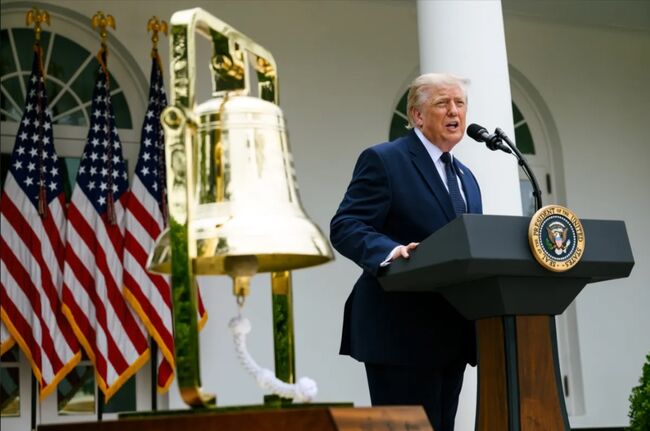 Trump pressures for rate cut again ahead of FOMC... "Should be the lowest in the world"
U.S. President Donald Trump. [Photo = The White House] U.S. President Donald Trump once again pressured the Federal Reserve, the U.S. central bank, to lower interest rates on the 27th (local time
Trump pressures for rate cut again ahead of FOMC... "Should be the lowest in the world"
U.S. President Donald Trump. [Photo = The White House] U.S. President Donald Trump once again pressured the Federal Reserve, the U.S. central bank, to lower interest rates on the 27th (local time
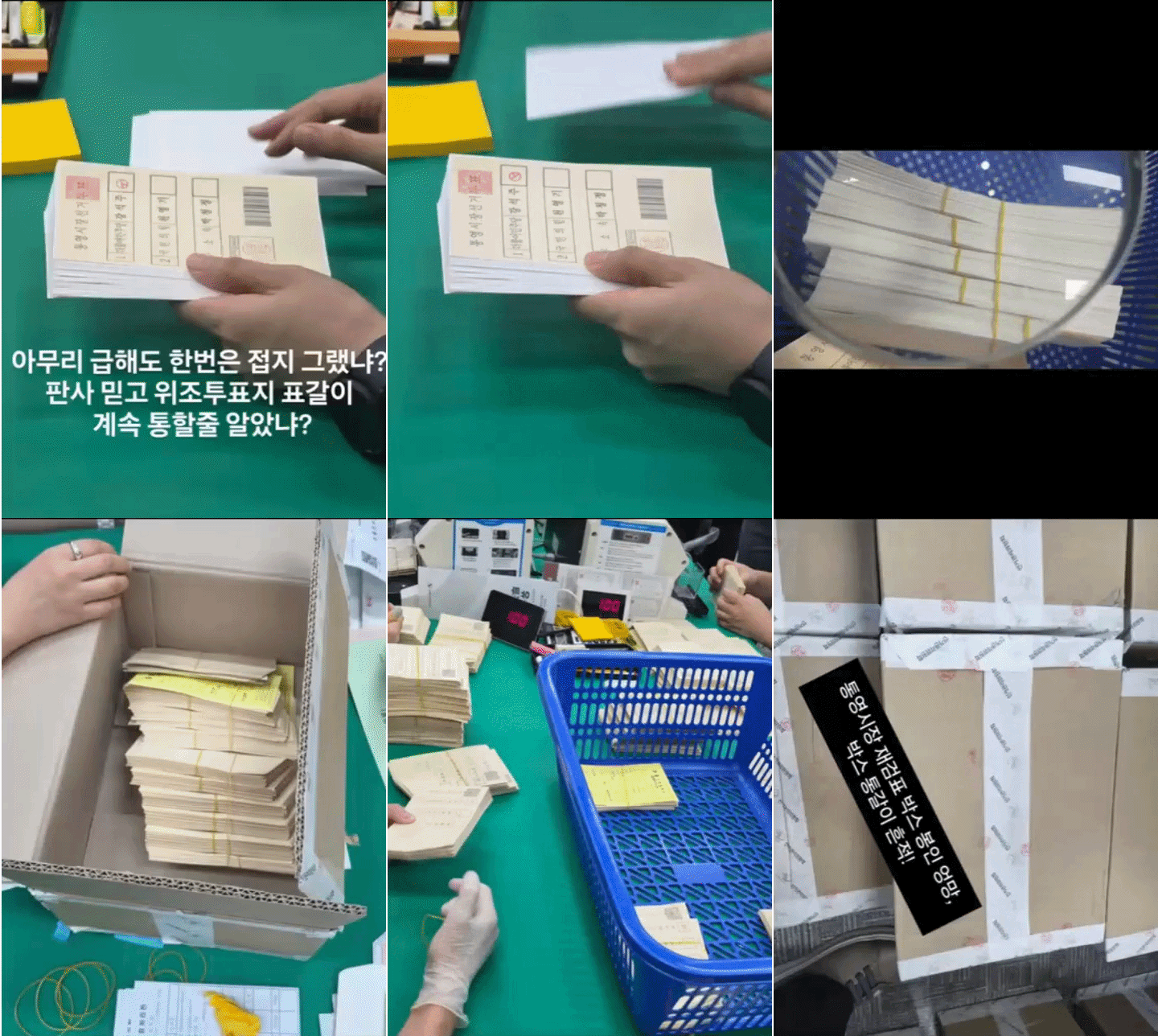 “Ignoring crisp ballots and damaged seals”… Tongyeong mayoral recount concludes with ‘no change in outcome,’ leaving suspicions and public outrage behind
Suspected counterfeit ballots discovered in Tongyeong [GIF from social media of Representative Hwang Kyo-ahn / Attorney Park Joo-hyun]During a recount of the Tongyeong mayoral election in South Gyeong
“Ignoring crisp ballots and damaged seals”… Tongyeong mayoral recount concludes with ‘no change in outcome,’ leaving suspicions and public outrage behind
Suspected counterfeit ballots discovered in Tongyeong [GIF from social media of Representative Hwang Kyo-ahn / Attorney Park Joo-hyun]During a recount of the Tongyeong mayoral election in South Gyeong
 President Yoon, regarding the first-instance ruling on the Public Official Election Act: “An excessive political verdict that distorts the facts… We will appeal immediately.”
The first-instance sentencing hearing for President Yoon Suk Yeol regarding violations of the Public Official Election Act is being broadcast live at Seoul Station on the 27th. [Photo=Yonhap News]Pres
President Yoon, regarding the first-instance ruling on the Public Official Election Act: “An excessive political verdict that distorts the facts… We will appeal immediately.”
The first-instance sentencing hearing for President Yoon Suk Yeol regarding violations of the Public Official Election Act is being broadcast live at Seoul Station on the 27th. [Photo=Yonhap News]Pres
 WSJ: "SK Hynix ADR Premium Is a Sign of AI Trading Overheat"
Advertisement for SK Hynix ADR listing in New York's Times Square [Reuters=Yonhap News file photo]The Wall Street Journal (WSJ) has pointed out that the price of SK Hynix’s American Depositary Recei
WSJ: "SK Hynix ADR Premium Is a Sign of AI Trading Overheat"
Advertisement for SK Hynix ADR listing in New York's Times Square [Reuters=Yonhap News file photo]The Wall Street Journal (WSJ) has pointed out that the price of SK Hynix’s American Depositary Recei
 'Godfather of Japanese Mystery Novels' Keigo Higashino Passes Away After Battle with Cancer at 68
Famous Japanese mystery novelist Keigo Higashino [AFP=Yonhap News]It has been belatedly reported that Keigo Higashino, the "godfather of Japanese mystery novels" and author of bestsellers such as "The
'Godfather of Japanese Mystery Novels' Keigo Higashino Passes Away After Battle with Cancer at 68
Famous Japanese mystery novelist Keigo Higashino [AFP=Yonhap News]It has been belatedly reported that Keigo Higashino, the "godfather of Japanese mystery novels" and author of bestsellers such as "The
 [Park Pil-kyu Security Column] To the Ignorant Trying to Clothe a Beast in Sheep's Clothing
Rep. Kim Byung-joo of the Democratic Party of Korea [Photo=Yonhap News]“The Air Force Academy doesn't teach you how to fly a plane!” “The Army, Navy, and Air Force academies are exactly the
[Park Pil-kyu Security Column] To the Ignorant Trying to Clothe a Beast in Sheep's Clothing
Rep. Kim Byung-joo of the Democratic Party of Korea [Photo=Yonhap News]“The Air Force Academy doesn't teach you how to fly a plane!” “The Army, Navy, and Air Force academies are exactly the
 [Issue Diagnosis] Two Effects of the Election Petition Review
 [Photo] Evidence of Election Fraud Flooding U.S. Media… Trump Had 2.7 Million Votes Stolen
 [Video] U.S. Semiquincentennial Air Show... 'Art in the Sky' streaks across New York
 [Editorial Cartoon] A Draconian Law That Undermines Freedom of Expression

 List
List










