한국 정부와 블랙록이 합의한 MOU는 ‘AI 허브’와 ‘데이터센터 투자’라는 화려한 포장으로 소개됐다. 그러나 그 속을 들여다보면 진짜 골자는 따로 있다. 풍력단지 조성과 전력망 확충, 그리고 그 과정에서 대거 유입될 중국산 풍력 기술이다. 전력망과 발전소는 국가 기간산업의 핵심이며 주권과 직결된다. 그럼에도 정부는 ‘첨단 AI 투자’라는 홍보만 반복하며 국민에게 실질적 위험을 설명하지 않았다. 본지는 이 MOU가 안고 있는 주권·세금·안보 리스크를 직시하고, 언론이 침묵해서는 안 될 이유를 짚어보고자 한다. <편집자 주>
 Power Grid Stakes and Chinese Technology Hidden Behind the Facade of AI Investment. The Reality of the BlackRock MOU. Hanmi Ilbo Graphics
AI Hub is a Front, the Real Aim is Power Grid Stakes
BlackRock is the world's largest asset manager, with $12.5 trillion in assets under management. The stated purpose of the MOU signed with the South Korean government was the "AI Data Center."
However, data centers are merely a facade. Large-scale AI infrastructure cannot exist without power. In exchange for investing in the development of wind farms and the construction of power grid highways, BlackRock is entering the South Korean power grid business.
Through its subsidiary Global Infrastructure Partners (GIP), BlackRock has already undertaken numerous wind and transmission projects in Europe and North America. The model being pursued in South Korea is identical.
While the government promoted rosy rhetoric of "AI investment," BlackRock has been securing stakes and operational control in energy infrastructure.
According to sources, there is a high probability that President Lee Jae-myung will directly meet with BlackRock Chairman Larry Fink during his visit to the UN to sign the MOU.
However, the specific details of the MOU have not been disclosed. It remains unclear whether BlackRock will simply invest in data centers and renewable energy facilities, or if it aims to acquire stakes in power supply companies.
However, looking back at the Shinan offshore wind farm case in 2024, BlackRock was not satisfied with mere facility investment.
At the time, its subsidiary GIP attempted to secure equity investment and long-term operational rights for the 8.2GW project, valued at tens of trillions of won. However, the government approval was rejected due to financial capacity and grid connection issues. It is highly likely that this MOU will follow the same pattern.
The Trap of Dependence on Chinese Technology
A more serious issue is the structure of technological dependence. The global wind power market is already dominated by Chinese companies.
According to BloombergNEF, over 60% of newly installed wind turbines in 2023 were made in China. Four of the top five largest turbine manufacturers globally are Chinese companies. Their prices are also 20-30% lower than those from Europe and South Korea.
Investors naturally use cheaper equipment. For global capital like BlackRock, what matters is not nationality but return on investment. Therefore, it is highly probable that Chinese technology will be extensively deployed in the wind farms and power grids being pursued in South Korea.
Hacking and Backdoors: Warnings from the International Community
Security risks have already materialized. In the United States, undocumented communication modules were discovered in Chinese-made inverters, raising concerns about the possibility of remote control of the power grid. In Denmark, unregistered electronic components were found on circuit boards for energy equipment, prompting an investigation.
While these have not yet been definitively classified as intentional hacking devices, if cheap Chinese equipment is introduced on a large scale, South Korea's power grid will inevitably be exposed to the same risks.
National Taxpayer Funds and the Fuse of Regional Conflict
There is also a high possibility of national tax funds being involved in this process. Wind farms and ultra-high voltage transmission lines are long-term projects worth tens of trillions of won. It is unlikely that foreign capital will bear all the risks. Tax benefits, subsidies, and land support, along with various other incentives, will inevitably fall upon the shoulders of the taxpayers.
Regional conflicts are also unavoidable. The construction of wind farms has already sparked environmental destruction controversies and resident opposition in various parts of the country. Ultra-high voltage transmission lines are an even more sensitive issue. BlackRock's involvement carries a significant risk of exacerbating regional conflicts, delaying projects, and increasing social costs.
An Issue the President Cannot Decide Alone
A more critical issue is the decision-making process. Power grids and power plants are not merely investment targets; they are national infrastructure and core assets that support the lives and security of the people.
The principles of economic democratization stipulated in Article 119 of the Constitution, and the binding force of the Electric Utility Act and the National Energy Basic Plan clearly indicate areas that the president cannot arbitrarily handle. If a structure involves large foreign capital acquiring stakes and is accompanied by tax subsidies, it must be subject to the consent of the people and deliberation by the National Assembly.
Ultimately, this MOU is an issue that should be handled by the National Assembly's Trade, Industry, Energy and SME Committee or the Special Committee on Energy, not a matter to be processed through the president's sole approval.
Without Media Silence, the Public Remains Uninformed
In conclusion, this MOU reveals the reality of securing power grid stakes and dependence on Chinese technology, hidden behind the rosy facade of AI data centers. This is not simply attracting investment; it is an issue that threatens national sovereignty and energy security.
If the media does not address this issue, the public will remain unaware of the truth. It is the media's responsibility to expose the substantive risks hidden within, rather than merely relaying the government's packaging and public relations.
#BlackRock #MOU #AIInvestment #PowerGrid #WindFarm #ChineseTechnology #HackingRisk #TaxBurden #NationalSovereignty #HanmiIlbo

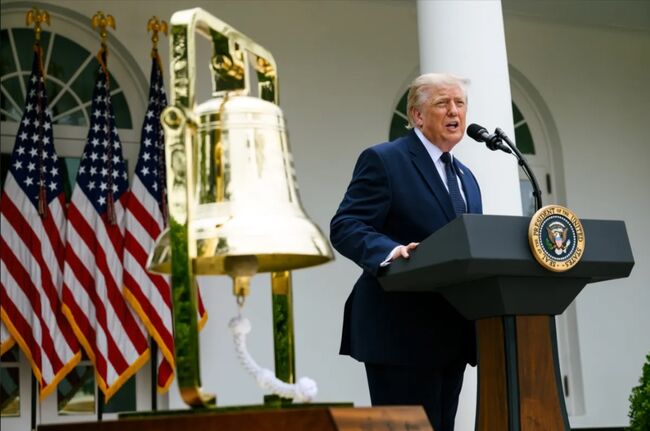 Trump pressures for rate cut again ahead of FOMC... "Should be the lowest in the world"
U.S. President Donald Trump. [Photo = The White House] U.S. President Donald Trump once again pressured the Federal Reserve, the U.S. central bank, to lower interest rates on the 27th (local time
Trump pressures for rate cut again ahead of FOMC... "Should be the lowest in the world"
U.S. President Donald Trump. [Photo = The White House] U.S. President Donald Trump once again pressured the Federal Reserve, the U.S. central bank, to lower interest rates on the 27th (local time
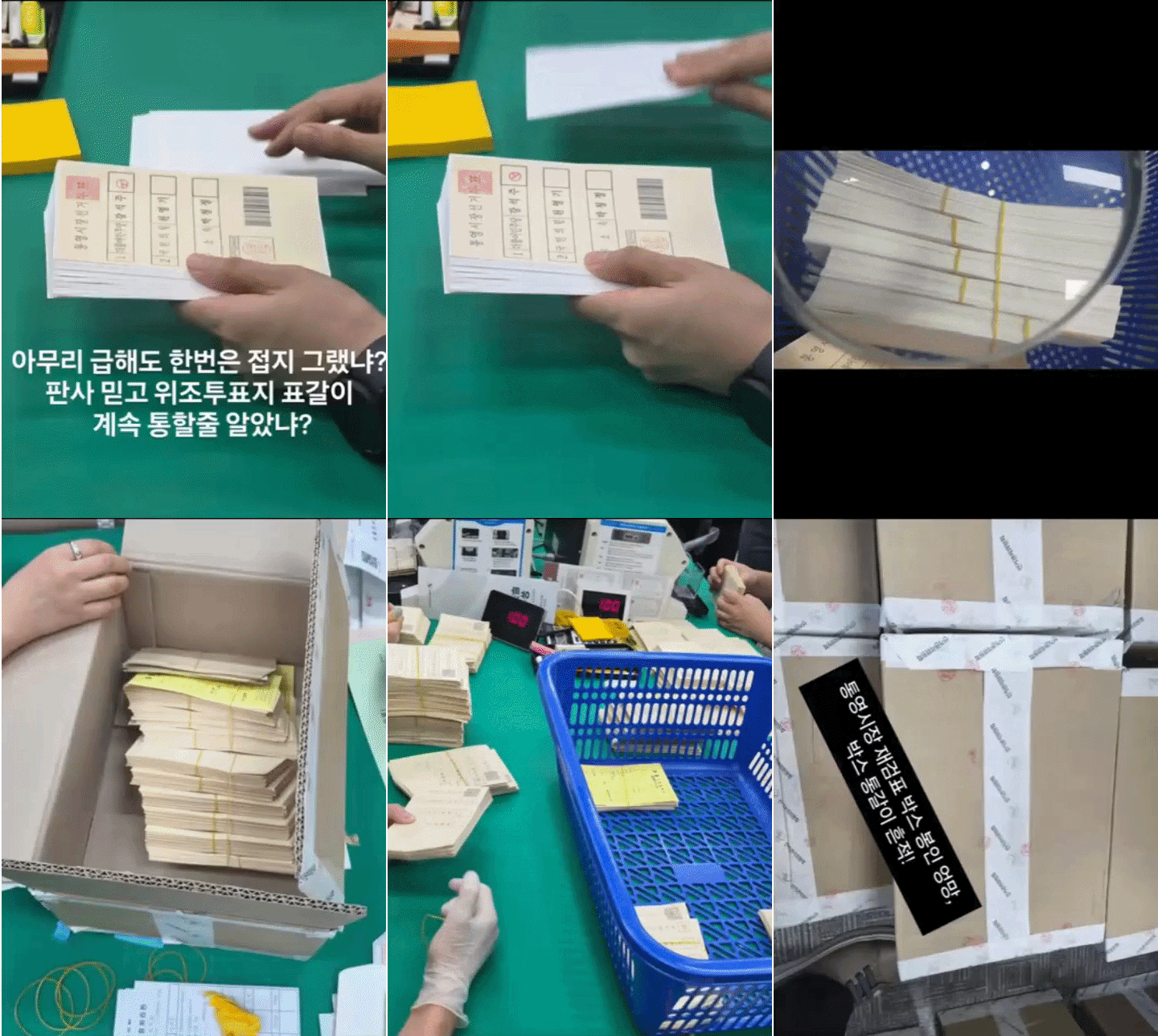 “Ignoring crisp ballots and damaged seals”… Tongyeong mayoral recount concludes with ‘no change in outcome,’ leaving suspicions and public outrage behind
Suspected counterfeit ballots discovered in Tongyeong [GIF from social media of Representative Hwang Kyo-ahn / Attorney Park Joo-hyun]During a recount of the Tongyeong mayoral election in South Gyeong
“Ignoring crisp ballots and damaged seals”… Tongyeong mayoral recount concludes with ‘no change in outcome,’ leaving suspicions and public outrage behind
Suspected counterfeit ballots discovered in Tongyeong [GIF from social media of Representative Hwang Kyo-ahn / Attorney Park Joo-hyun]During a recount of the Tongyeong mayoral election in South Gyeong
 President Yoon, regarding the first-instance ruling on the Public Official Election Act: “An excessive political verdict that distorts the facts… We will appeal immediately.”
The first-instance sentencing hearing for President Yoon Suk Yeol regarding violations of the Public Official Election Act is being broadcast live at Seoul Station on the 27th. [Photo=Yonhap News]Pres
President Yoon, regarding the first-instance ruling on the Public Official Election Act: “An excessive political verdict that distorts the facts… We will appeal immediately.”
The first-instance sentencing hearing for President Yoon Suk Yeol regarding violations of the Public Official Election Act is being broadcast live at Seoul Station on the 27th. [Photo=Yonhap News]Pres
 WSJ: "SK Hynix ADR Premium Is a Sign of AI Trading Overheat"
Advertisement for SK Hynix ADR listing in New York's Times Square [Reuters=Yonhap News file photo]The Wall Street Journal (WSJ) has pointed out that the price of SK Hynix’s American Depositary Recei
WSJ: "SK Hynix ADR Premium Is a Sign of AI Trading Overheat"
Advertisement for SK Hynix ADR listing in New York's Times Square [Reuters=Yonhap News file photo]The Wall Street Journal (WSJ) has pointed out that the price of SK Hynix’s American Depositary Recei
 'Godfather of Japanese Mystery Novels' Keigo Higashino Passes Away After Battle with Cancer at 68
Famous Japanese mystery novelist Keigo Higashino [AFP=Yonhap News]It has been belatedly reported that Keigo Higashino, the "godfather of Japanese mystery novels" and author of bestsellers such as "The
'Godfather of Japanese Mystery Novels' Keigo Higashino Passes Away After Battle with Cancer at 68
Famous Japanese mystery novelist Keigo Higashino [AFP=Yonhap News]It has been belatedly reported that Keigo Higashino, the "godfather of Japanese mystery novels" and author of bestsellers such as "The
 [Park Pil-kyu Security Column] To the Ignorant Trying to Clothe a Beast in Sheep's Clothing
Rep. Kim Byung-joo of the Democratic Party of Korea [Photo=Yonhap News]“The Air Force Academy doesn't teach you how to fly a plane!” “The Army, Navy, and Air Force academies are exactly the
[Park Pil-kyu Security Column] To the Ignorant Trying to Clothe a Beast in Sheep's Clothing
Rep. Kim Byung-joo of the Democratic Party of Korea [Photo=Yonhap News]“The Air Force Academy doesn't teach you how to fly a plane!” “The Army, Navy, and Air Force academies are exactly the
 [Issue Diagnosis] Two Effects of the Election Petition Review
 [Photo] Evidence of Election Fraud Flooding U.S. Media… Trump Had 2.7 Million Votes Stolen
 [Video] U.S. Semiquincentennial Air Show... 'Art in the Sky' streaks across New York
 [Editorial Cartoon] A Draconian Law That Undermines Freedom of Expression

 List
List