한미 무역협상이 교착에 빠졌다. 표면적 이유는 관세와 투자 조건이지만, 그 이면에는 더 복잡한 계산이 숨어 있다. 한국은 미국 연방대법원 판결이라는 외부 변수에 국익을 걸고 있으며, 동시에 중국과의 외교 줄타기로 협상 공간을 넓히려 한다. 이번 분석 기사는 이재명 정권의 전략이 ‘벼랑끝 전술’이 아니라 ‘도박과 줄타기’에 가깝다는 점을 짚는다. <편집자 주>
 Graphic symbolizing the Lee Jae-myung administration's 'gambling and tightrope walking' strategy between China on the left and the US on the right, amidst the US-Korea trade negotiations deadlock. - Hankumiilbo
The US-Korea trade negotiations have reached a stalemate. While the stated issues revolve around automotive tariffs and investment conditions, more complex calculations are actually at play. The Lee Jae-myung administration is buying time by betting on a US Supreme Court ruling, while simultaneously seeking to broaden its diplomatic engagement with China to expand negotiation space. However, this approach is difficult to escape criticism for being a gamble and tightrope walk with national interests, rather than a strategic stance.
So, what are the factors that have led to this impasse? Hankumiilbo has analyzed it from four perspectives.
① Economic Aspects… Pressure for Cash Outlay and the Unlimited Swap Card
Japan has already signed MOUs for investments worth $550 billion, accepting a structure centered on financial guarantees. However, South Korea has not signed under the same terms. South Korea's demand for unlimited currency swaps is interpreted precisely at this juncture. It's a counter-argument logic: "We can accept the same terms as Japan, but in return, we demand unlimited swaps like G7 countries." In other words, it can be seen as a defensive card to alleviate pressure for cash outlays and balance the negotiations.
However, the crucial point is that the alleged 'pressure for cash outlay' has not been officially confirmed by either country. While the interpretation that South Korea was offered unfavorable terms compared to Japan has been raised by some foreign and Korean media outlets, neither the US government nor the South Korean government has explicitly acknowledged it. Therefore, the demand for unlimited swaps is more likely to be a political card strategically used to secure negotiating leverage by creating such an impression, rather than a direct response to actual pressure for cash outlays.
② Political Aspects… Buying Time While Awaiting a Supreme Court Ruling
The demand for unlimited swaps also holds significant symbolic weight domestically. The message "we rejected an unequal agreement to protect national interests" is necessary for President Lee Jae-myung, who faces judicial risks. Furthermore, by presenting conditions that are difficult for the US to accept, negotiations are bound to be delayed. During that time, South Korea can await the US Supreme Court's ruling.
Legal and trade experts in the US believe that the Trump administration's invocation of IEEPA is highly likely to lose in the Supreme Court. This is due to the arguments that the imposition of tariffs, which is constitutionally a congressional prerogative, was an abuse of presidential emergency economic powers, that the conditions for a national emergency were not met, and that it directly contradicts the recently strengthened 'Major Questions Doctrine' by the Supreme Court. The mainstream assessment is that even conservative justices would find it difficult to disregard the principles of constitutionalism.
The ruling could come as early as the end of this year, or as late as June of next year. Therefore, the South Korean government is essentially betting on a "more favorable situation after the ruling" by buying time until then.
③ Strategic Aspects… 'Brinkmanship' or 'Gambling'?
The South Korean media has described the Lee Jae-myung administration's approach to trade negotiations with the US as 'brinkmanship,' interpreting it as a strategy of holding out until the other party concedes. However, the actual situation appears different.
The South Korean government's current stance seems to be betting everything on the external variable of the US Supreme Court ruling against the Trump administration's invocation of IEEPA. If Trump wins, South Korea will face the burden of tariffs and further pressure; if he loses, a reversal is possible, securing better terms than Japan.
In essence, this choice is closer to a gamble with an all-in on the Supreme Court ruling than a strategic holdout. This is because it is structured to bet on the possibility of a "cost-free victory" while accepting economic losses. It is important to note that this conclusion is a deduction based on the circumstances revealed so far.
④ Diplomatic Aspects… APEC, Xi Jinping, and Message Management
South Korea is keeping the APEC summit in October in mind. There is also a calculation to create distance from negotiations with Trump while simultaneously encouraging President Xi Jinping's attendance. This can be interpreted as a diplomatic message management strategy to signal to China and the international community that "South Korea is not entirely cooperative with US pressure."
Supporting this, Foreign Minister Cho Hyun recently visited Beijing and held talks with Chinese Foreign Minister Wang Yi. During this meeting, Minister Cho discussed the possibility of President Xi Jinping visiting South Korea on the occasion of the APEC summit in Gyeongju, and clearly raised South Korean agenda items such as developing the strategic cooperative partnership between South Korea and China, the second phase of negotiations for the Korea-China FTA, the issue of structures in the West Sea, and the denuclearization of North Korea.
The Chinese side responded with messages emphasizing "opposition to trade protectionism" and "maintenance of economic globalization," aligning with South Korea's balanced diplomacy. This is interpreted as South Korea's attempt to expand its diplomatic space amidst the US-Korea deadlock.
Combining the four aspects leads to the following conclusion:
If Trump wins in the Supreme Court, South Korea will face critical tariff pressure. If he loses, South Korea could secure more favorable terms than Japan. Given the extremely divergent outcomes, the argument that this choice is not a strategy but an all-in gamble with national interests gains credibility.
Concurrently, as seen in Minister Cho Hyun's visit to China, South Korea is expanding its engagement with China and aiming to bring President Xi Jinping to the APEC stage.
Ultimately, the Lee Jae-myung administration appears to be relying on a dual strategy: gambling in the US-Korea negotiations and tightrope walking in its diplomacy with China. The problem is that it remains unknown whether this gamble and tightrope walk will be remembered as a sophisticated strategy that protected national interests, or as a reckless choice that put the nation on a gambling table.
#USKoreaTradeNegotiations #LeeJaeMyungAdministration #GamblingAndTightropeWalking #SupremeCourt #TariffWar #UnlimitedSwap #CashOutlayPressureRumor #APEC #ForeignMinisterChoHyun #XiJinping

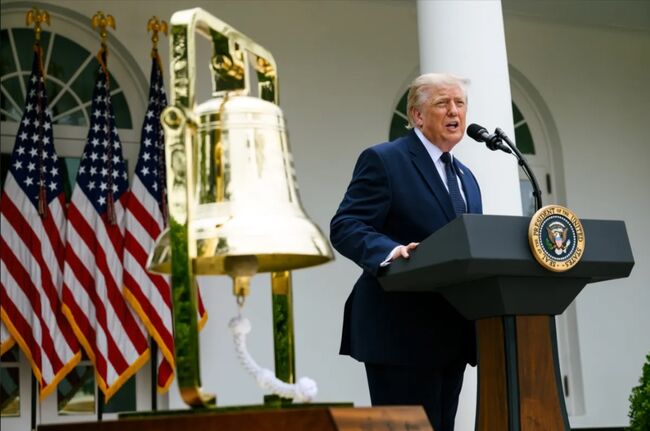 Trump pressures for rate cut again ahead of FOMC... "Should be the lowest in the world"
U.S. President Donald Trump. [Photo = The White House] U.S. President Donald Trump once again pressured the Federal Reserve, the U.S. central bank, to lower interest rates on the 27th (local time
Trump pressures for rate cut again ahead of FOMC... "Should be the lowest in the world"
U.S. President Donald Trump. [Photo = The White House] U.S. President Donald Trump once again pressured the Federal Reserve, the U.S. central bank, to lower interest rates on the 27th (local time
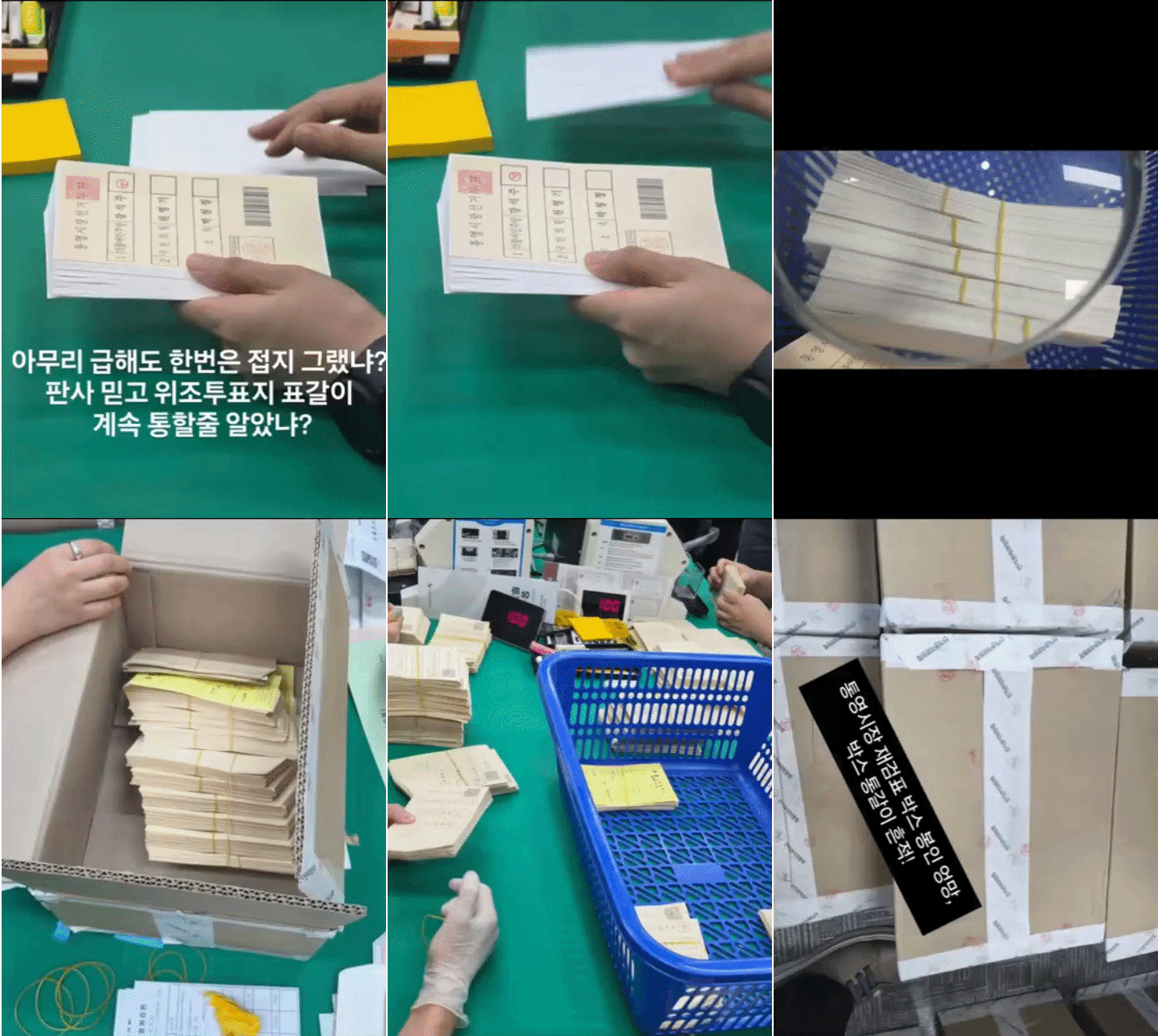 “Ignoring crisp ballots and damaged seals”… Tongyeong mayoral recount concludes with ‘no change in outcome,’ leaving suspicions and public outrage behind
Suspected counterfeit ballots discovered in Tongyeong [GIF from social media of Representative Hwang Kyo-ahn / Attorney Park Joo-hyun]During a recount of the Tongyeong mayoral election in South Gyeong
“Ignoring crisp ballots and damaged seals”… Tongyeong mayoral recount concludes with ‘no change in outcome,’ leaving suspicions and public outrage behind
Suspected counterfeit ballots discovered in Tongyeong [GIF from social media of Representative Hwang Kyo-ahn / Attorney Park Joo-hyun]During a recount of the Tongyeong mayoral election in South Gyeong
 President Yoon, regarding the first-instance ruling on the Public Official Election Act: “An excessive political verdict that distorts the facts… We will appeal immediately.”
The first-instance sentencing hearing for President Yoon Suk Yeol regarding violations of the Public Official Election Act is being broadcast live at Seoul Station on the 27th. [Photo=Yonhap News]Pres
President Yoon, regarding the first-instance ruling on the Public Official Election Act: “An excessive political verdict that distorts the facts… We will appeal immediately.”
The first-instance sentencing hearing for President Yoon Suk Yeol regarding violations of the Public Official Election Act is being broadcast live at Seoul Station on the 27th. [Photo=Yonhap News]Pres
 WSJ: "SK Hynix ADR Premium Is a Sign of AI Trading Overheat"
Advertisement for SK Hynix ADR listing in New York's Times Square [Reuters=Yonhap News file photo]The Wall Street Journal (WSJ) has pointed out that the price of SK Hynix’s American Depositary Recei
WSJ: "SK Hynix ADR Premium Is a Sign of AI Trading Overheat"
Advertisement for SK Hynix ADR listing in New York's Times Square [Reuters=Yonhap News file photo]The Wall Street Journal (WSJ) has pointed out that the price of SK Hynix’s American Depositary Recei
 'Godfather of Japanese Mystery Novels' Keigo Higashino Passes Away After Battle with Cancer at 68
Famous Japanese mystery novelist Keigo Higashino [AFP=Yonhap News]It has been belatedly reported that Keigo Higashino, the "godfather of Japanese mystery novels" and author of bestsellers such as "The
'Godfather of Japanese Mystery Novels' Keigo Higashino Passes Away After Battle with Cancer at 68
Famous Japanese mystery novelist Keigo Higashino [AFP=Yonhap News]It has been belatedly reported that Keigo Higashino, the "godfather of Japanese mystery novels" and author of bestsellers such as "The
 [Park Pil-kyu Security Column] To the Ignorant Trying to Clothe a Beast in Sheep's Clothing
Rep. Kim Byung-joo of the Democratic Party of Korea [Photo=Yonhap News]“The Air Force Academy doesn't teach you how to fly a plane!” “The Army, Navy, and Air Force academies are exactly the
[Park Pil-kyu Security Column] To the Ignorant Trying to Clothe a Beast in Sheep's Clothing
Rep. Kim Byung-joo of the Democratic Party of Korea [Photo=Yonhap News]“The Air Force Academy doesn't teach you how to fly a plane!” “The Army, Navy, and Air Force academies are exactly the
 [Issue Diagnosis] Two Effects of the Election Petition Review
 [Photo] Evidence of Election Fraud Flooding U.S. Media… Trump Had 2.7 Million Votes Stolen
 [Video] U.S. Semiquincentennial Air Show... 'Art in the Sky' streaks across New York
 [Editorial Cartoon] A Draconian Law That Undermines Freedom of Expression

 List
List