민주주의 제도의 생명은 신뢰다. 그러나 한국 사회에서 5·18 민주유공자 제도는 추모와 존경의 역사적 위상에도 불구하고 ‘명단 비공개’라는 구조적 한계를 안고 있다. 본 기획은 5·18 유공자 제도가 어떻게 사회적 불신을 키우는가를 살펴보고, 나아가 선거제도와의 구조적 유사성을 짚으며 민주주의 신뢰 회복의 과제를 제시한다. 아울러 5·18과 관련한 본질적 논란 가운데 하나인 북한군 개입설 문제는 이번 시리즈에서는 다루지 않음을 밝힌다. <편집자 주>
 The Hall of Commemoration at the National 5·18 Democracy Cemetery in Gwangju. While nameplates remain, the list of meritorious individuals, not disclosed to the public, continues to be a question mark. Graphic by Hankook Ilbo
Table of Contents
① Hidden Names ― Meritorious Individuals of the 5·18 Democracy Movement
② Hidden Charts ― The Compelling Electoral System
③ From Hidden Democracy to Open Democracy
At the National 5·18 Democracy Cemetery in Gwangju, nameplates and memorial tablets bearing the names of victims are densely placed. However, the official list of meritorious individuals managed by the Ministry of Patriots and Veterans Affairs is not publicly disclosed. While the scope and scale can be confirmed through statistics, citizens cannot know the individual recipients.
Despite the social consensus on commemoration and respect, the lack of transparency in the system is instead fostering distrust.
In May 1980, Gwangju cried out for democracy in the face of the martial law army's guns and bayonets. Their sacrifices and contributions were later institutionalized as national honor through the 'Act on the Compensation for Victims of the May 18 Democratization Movement' (1990) and the 'Act on the Respect for Meritorious Individuals of the May 18 Democratization Movement' (2002).
The law defines "meritorious individuals of the May 18 democratization movement" as "those who suffered damages such as death, injury, detention, or dismissal in connection with the democratization movement, or those who contributed to the advancement of democracy."
However, the abstract expression "contributed to the advancement of democracy" has led to interpretation disputes, further deepening the ambiguity of the system.
While the Supreme Court has made a narrow interpretation in individual cases, stating that "simple crowd participation is difficult to recognize as a contribution," the Constitutional Court has allowed a broad interpretation, stating that "legislative and administrative discretion is wide."
With even the highest judicial bodies showing divergent stances, the line dividing "who is a meritorious individual" has varied depending on legal and political interpretations.
Official figures are announced regularly. As of July 31, 2025, there are a total of 4,601 meritorious individuals of the 5·18 Democracy Movement. Of these, 3,493 are individuals themselves and 1,108 are first-priority bereaved families. In detail, there are 159 deceased or missing persons, 2,802 injured (2,102 individuals + 700 bereaved families), and 1,640 victims of detention, dismissal, etc. (1,391 individuals + 249 bereaved families).
What is noteworthy is the trend of change. The number of registered individuals, which was 4,406 as of September 2020, increased by approximately 200 to 4,601 as of July 2025.
However, this is not simply due to an increase in new meritorious individuals. The number of direct victims has decreased annually, and the total sum has risen due to an increase in bereaved family registrations.
As time passes, the voices of the direct victims disappear, and the structural contradiction of the system being reorganized around bereaved families is being revealed.
The scale of compensation is also substantial. Compensation payments disbursed since the 1990s alone amounted to 250 billion won (as of 2016), and subsequently, tens of billions of won more were paid through judgments and additional compensation. In 2024, the Supreme Court confirmed an additional compensation of 43 billion won for victims of the 5·18 movement. In addition, medical, educational, employment, and pension support totaling hundreds of billions of won is provided annually.
From the public's perspective, the issue is not merely a financial burden. The fact that "vast amounts of tax money are being invested when it is unknown who is a meritorious individual" fuels distrust. Although the scope and scale are disclosed, the legitimacy of the system is instead being shaken in a reality where the list remains closed.
The non-disclosure of the list breeds political conflict.
The conservative camp claims that "fake meritorious individuals are included" and demands the disclosure of the list, while the progressive camp opposes it citing "infringement of victims' honor and privacy."
The pursuit of truth is pushed to the side, and the controversy is consumed as a tool for political debate. The names of the victims and the honor of their families are wounded again in the process.
The nameplates engraved at the Gwangju National Cemetery are a symbol of commemoration, but they do not guarantee the reliability of the entire system. While some names have been revealed, the complete list remains closed.
Individual honor and privacy are important values guaranteed by the Constitution.
However, the reliability of democratic institutions is also the foundation that supports the existence of a national community.
The controversy surrounding the list of meritorious individuals of the 5·18 Democracy Movement is ultimately a question of how to harmonize these two values.
Therefore, a wise judgment by the Supreme Court is needed, one that not only addresses political disputes over disclosure but also considers the balance between protecting personal information and the benefits of disclosure.
The trust in democracy can be restored not through political gains and losses, but through precise legal interpretation and social consensus.
The system for meritorious individuals of the 5·18 Democracy Movement stands at the boundary between social consensus and distrust. What is needed for trust is not the statistics or compensation amounts from the Ministry of Patriots and Veterans Affairs, but transparency that the public can verify.
This structurally resembles the controversy surrounding the electoral system. To revive trust in democratic institutions, we must now directly confront the issue of 'disclosure,' not just 'numbers.'
#HiddenDemocracy #518MeritoriousIndividuals #NonDisclosureOfList #TaxControversy #CompensationAmount #MinistryOfPatriotsAndVeteransAffairs #SocialDistrust #SupremeCourt #ConstitutionalCourt #DemocraticTrust

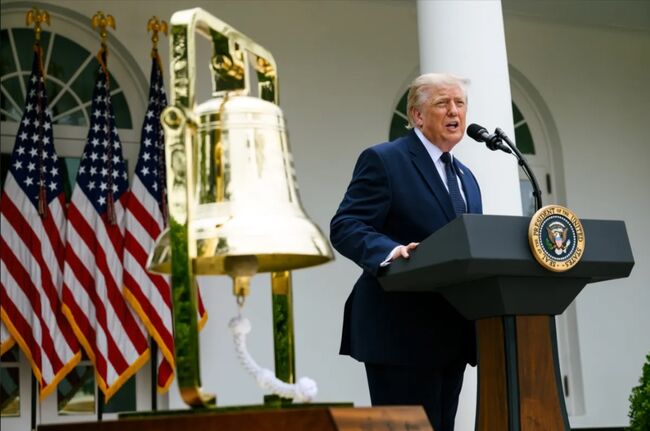 Trump pressures for rate cut again ahead of FOMC... "Should be the lowest in the world"
U.S. President Donald Trump. [Photo = The White House] U.S. President Donald Trump once again pressured the Federal Reserve, the U.S. central bank, to lower interest rates on the 27th (local time
Trump pressures for rate cut again ahead of FOMC... "Should be the lowest in the world"
U.S. President Donald Trump. [Photo = The White House] U.S. President Donald Trump once again pressured the Federal Reserve, the U.S. central bank, to lower interest rates on the 27th (local time
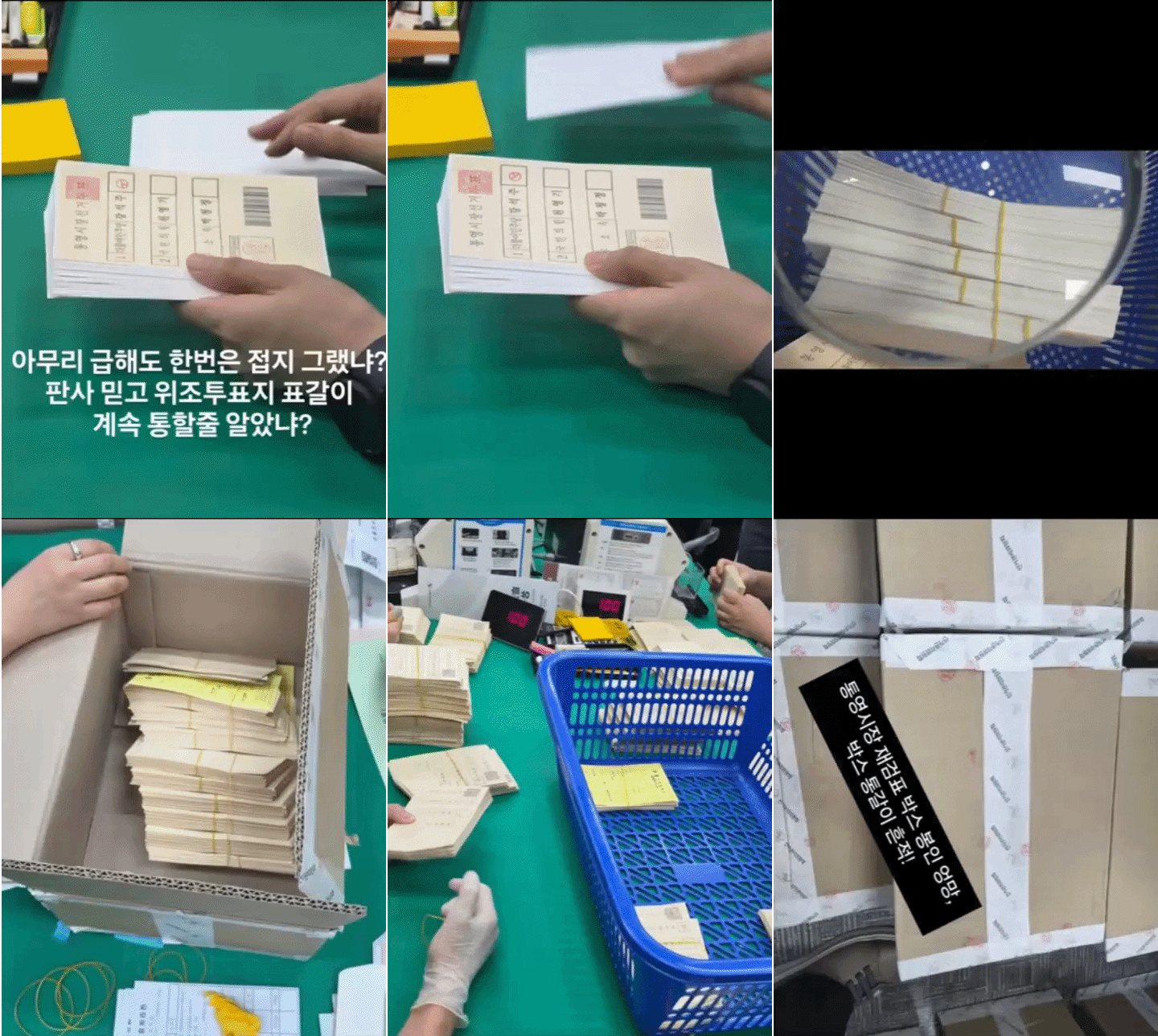 “Ignoring crisp ballots and damaged seals”… Tongyeong mayoral recount concludes with ‘no change in outcome,’ leaving suspicions and public outrage behind
Suspected counterfeit ballots discovered in Tongyeong [GIF from social media of Representative Hwang Kyo-ahn / Attorney Park Joo-hyun]During a recount of the Tongyeong mayoral election in South Gyeong
“Ignoring crisp ballots and damaged seals”… Tongyeong mayoral recount concludes with ‘no change in outcome,’ leaving suspicions and public outrage behind
Suspected counterfeit ballots discovered in Tongyeong [GIF from social media of Representative Hwang Kyo-ahn / Attorney Park Joo-hyun]During a recount of the Tongyeong mayoral election in South Gyeong
 President Yoon, regarding the first-instance ruling on the Public Official Election Act: “An excessive political verdict that distorts the facts… We will appeal immediately.”
The first-instance sentencing hearing for President Yoon Suk Yeol regarding violations of the Public Official Election Act is being broadcast live at Seoul Station on the 27th. [Photo=Yonhap News]Pres
President Yoon, regarding the first-instance ruling on the Public Official Election Act: “An excessive political verdict that distorts the facts… We will appeal immediately.”
The first-instance sentencing hearing for President Yoon Suk Yeol regarding violations of the Public Official Election Act is being broadcast live at Seoul Station on the 27th. [Photo=Yonhap News]Pres
 WSJ: "SK Hynix ADR Premium Is a Sign of AI Trading Overheat"
Advertisement for SK Hynix ADR listing in New York's Times Square [Reuters=Yonhap News file photo]The Wall Street Journal (WSJ) has pointed out that the price of SK Hynix’s American Depositary Recei
WSJ: "SK Hynix ADR Premium Is a Sign of AI Trading Overheat"
Advertisement for SK Hynix ADR listing in New York's Times Square [Reuters=Yonhap News file photo]The Wall Street Journal (WSJ) has pointed out that the price of SK Hynix’s American Depositary Recei
 'Godfather of Japanese Mystery Novels' Keigo Higashino Passes Away After Battle with Cancer at 68
Famous Japanese mystery novelist Keigo Higashino [AFP=Yonhap News]It has been belatedly reported that Keigo Higashino, the "godfather of Japanese mystery novels" and author of bestsellers such as "The
'Godfather of Japanese Mystery Novels' Keigo Higashino Passes Away After Battle with Cancer at 68
Famous Japanese mystery novelist Keigo Higashino [AFP=Yonhap News]It has been belatedly reported that Keigo Higashino, the "godfather of Japanese mystery novels" and author of bestsellers such as "The
 [Park Pil-kyu Security Column] To the Ignorant Trying to Clothe a Beast in Sheep's Clothing
Rep. Kim Byung-joo of the Democratic Party of Korea [Photo=Yonhap News]“The Air Force Academy doesn't teach you how to fly a plane!” “The Army, Navy, and Air Force academies are exactly the
[Park Pil-kyu Security Column] To the Ignorant Trying to Clothe a Beast in Sheep's Clothing
Rep. Kim Byung-joo of the Democratic Party of Korea [Photo=Yonhap News]“The Air Force Academy doesn't teach you how to fly a plane!” “The Army, Navy, and Air Force academies are exactly the
 [Issue Diagnosis] Two Effects of the Election Petition Review
 [Photo] Evidence of Election Fraud Flooding U.S. Media… Trump Had 2.7 Million Votes Stolen
 [Video] U.S. Semiquincentennial Air Show... 'Art in the Sky' streaks across New York
 [Editorial Cartoon] A Draconian Law That Undermines Freedom of Expression

 List
List