본 기사는 블랙록과 뱅가드가 한국 증시를 넘어 에너지·전력 산업까지 자금줄을 틀어쥐고 있음을 추적한다. 이재명 정권이 추진하는 AI 데이터센터와 그린에너지 전략이 글로벌 자본의 장기 수익 모델과 어떻게 맞물리는지 살펴본다. <편집자 주>
 The Shadow Behind the Investment Festival — Korean Industry in the Grip of Global Capital. Graphic by HMI Daily
Table of Contents
① The Invisible Hand Shaking the Stock Market
② The Industrial Dependency Structure Designed by BlackRock
③ Lee Jae-myung’s Choice for Comprador Capitalism
BlackRock holds significant stakes in many of Korea's major companies. However, their influence extends far beyond the stock market.
From the acquisition of Westinghouse and the Czech nuclear power plant contract to investments in wind power, massive asset managers like BlackRock and Vanguard operate as the hidden architects of the energy industry.
The AI data center and green energy strategies pursued by the Korean government under the guise of attracting foreign capital are directly linked to this structure.
As confirmed in Part 1, BlackRock and Vanguard are major shareholders in Korea’s leading firms, including Samsung Electronics, Hyundai Motor, and SK Hynix. Yet, their leverage goes beyond mere equity percentages.
According to Financial Supervisory Service disclosures, BlackRock holds approximately 5% of Doosan Enerbility, 4% of Korea Electric Power Corporation (KEPCO), and 3% of LS, the parent company of LS Cable & System. The fact that foreign capital has deep roots in power and energy infrastructure suggests that this leads to industrial dependency, surpassing mere financial reliance.
BlackRock has played a decisive role in the global energy transition. With the arrival of the Trump administration, BlackRock made the decision to lower the weighting of green energy in its ESG evaluation framework.
Changes in the standards set by financial capital immediately alter the investment strategies of global corporations and influence national policies. This is a classic example of financial capital moving in lockstep with shifts in politics and global hegemony.
The shadow of BlackRock is also dark in the nuclear energy sector. When Westinghouse, which holds U.S. proprietary nuclear technology, was acquired by Canada's Brookfield, BlackRock and Vanguard provided the funding.
These global capital firms were also behind the scenes of the Czech nuclear power project, from which Korean-built reactors were excluded. While it appeared to be an international competitive bidding process on the surface, the outcome was actually dictated by capital networks.
The wind power market is no exception. According to the International Energy Agency (IEA), over 60% of new wind power capacity in 2024 was installed in China. BlackRock has invested not only in the European wind turbine manufacturer Vestas but also in China’s Goldwind and Longi.
This reveals the nature of global funds: profits take precedence over national identity. The wind and solar projects pushed by the Korean government are also aligned with BlackRock’s investment portfolio.
The AI data center and green energy strategies championed by the Lee Jae-myung administration are not unrelated to this.
The contract structure where AI data centers purchase electricity produced by wind farms over the long term is the “long-term stable profit model” that BlackRock desires. It is a scheme where the Korean government and local companies shoulder the burden of building the grid and handling public complaints, while BlackRock secures stable profits. If the installation of the power grid is delayed, astronomical claims for damages could follow.
This structure has been repeated in overseas SOC (Social Overhead Capital) projects. Investors include various safeguards in contracts to guarantee their returns, while designing the projects so that the actual risks fall on the host country.
Mega-asset managers like BlackRock use financial engineering and legal counsel to eliminate their risks. The AI and green energy initiatives pursued by Korea are unlikely to escape this framework.
The pressure from the Trump administration was blatant. In his first term, he tightened the screws on Korea through defense cost-sharing and security; in his second, through trade wars led by tariffs. However, that was a form of power that left room for negotiation—diplomatic or political.
In contrast, global capital like BlackRock is heartless and ruthless. By manipulating indices, investment criteria, and fund rebalancing, they shake markets and industries without offering any room for negotiation or compromise.
Trying to find refuge in their arms to avoid Trump’s pressure is an act of insanity. That path is not one of negotiation but of subordination—a choice to willingly throw away Korea’s economic sovereignty.
#BlackRock #MSCI #Vanguard #DoosanEnerbility #Westinghouse #CzechNuclearPlant #WindPower #ChineseEnergy #AIDataCenter #EconomicSovereignty

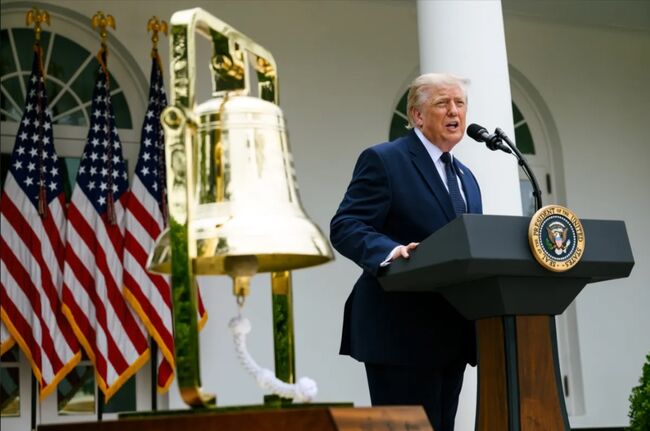 Trump pressures for rate cut again ahead of FOMC... "Should be the lowest in the world"
U.S. President Donald Trump. [Photo = The White House] U.S. President Donald Trump once again pressured the Federal Reserve, the U.S. central bank, to lower interest rates on the 27th (local time
Trump pressures for rate cut again ahead of FOMC... "Should be the lowest in the world"
U.S. President Donald Trump. [Photo = The White House] U.S. President Donald Trump once again pressured the Federal Reserve, the U.S. central bank, to lower interest rates on the 27th (local time
 “Ignoring crisp ballots and damaged seals”… Tongyeong mayoral recount concludes with ‘no change in outcome,’ leaving suspicions and public outrage behind
Suspected counterfeit ballots discovered in Tongyeong [GIF from social media of Representative Hwang Kyo-ahn / Attorney Park Joo-hyun]During a recount of the Tongyeong mayoral election in South Gyeong
“Ignoring crisp ballots and damaged seals”… Tongyeong mayoral recount concludes with ‘no change in outcome,’ leaving suspicions and public outrage behind
Suspected counterfeit ballots discovered in Tongyeong [GIF from social media of Representative Hwang Kyo-ahn / Attorney Park Joo-hyun]During a recount of the Tongyeong mayoral election in South Gyeong
 President Yoon, regarding the first-instance ruling on the Public Official Election Act: “An excessive political verdict that distorts the facts… We will appeal immediately.”
The first-instance sentencing hearing for President Yoon Suk Yeol regarding violations of the Public Official Election Act is being broadcast live at Seoul Station on the 27th. [Photo=Yonhap News]Pres
President Yoon, regarding the first-instance ruling on the Public Official Election Act: “An excessive political verdict that distorts the facts… We will appeal immediately.”
The first-instance sentencing hearing for President Yoon Suk Yeol regarding violations of the Public Official Election Act is being broadcast live at Seoul Station on the 27th. [Photo=Yonhap News]Pres
 WSJ: "SK Hynix ADR Premium Is a Sign of AI Trading Overheat"
Advertisement for SK Hynix ADR listing in New York's Times Square [Reuters=Yonhap News file photo]The Wall Street Journal (WSJ) has pointed out that the price of SK Hynix’s American Depositary Recei
WSJ: "SK Hynix ADR Premium Is a Sign of AI Trading Overheat"
Advertisement for SK Hynix ADR listing in New York's Times Square [Reuters=Yonhap News file photo]The Wall Street Journal (WSJ) has pointed out that the price of SK Hynix’s American Depositary Recei
 'Godfather of Japanese Mystery Novels' Keigo Higashino Passes Away After Battle with Cancer at 68
Famous Japanese mystery novelist Keigo Higashino [AFP=Yonhap News]It has been belatedly reported that Keigo Higashino, the "godfather of Japanese mystery novels" and author of bestsellers such as "The
'Godfather of Japanese Mystery Novels' Keigo Higashino Passes Away After Battle with Cancer at 68
Famous Japanese mystery novelist Keigo Higashino [AFP=Yonhap News]It has been belatedly reported that Keigo Higashino, the "godfather of Japanese mystery novels" and author of bestsellers such as "The
 [Park Pil-kyu Security Column] To the Ignorant Trying to Clothe a Beast in Sheep's Clothing
Rep. Kim Byung-joo of the Democratic Party of Korea [Photo=Yonhap News]“The Air Force Academy doesn't teach you how to fly a plane!” “The Army, Navy, and Air Force academies are exactly the
[Park Pil-kyu Security Column] To the Ignorant Trying to Clothe a Beast in Sheep's Clothing
Rep. Kim Byung-joo of the Democratic Party of Korea [Photo=Yonhap News]“The Air Force Academy doesn't teach you how to fly a plane!” “The Army, Navy, and Air Force academies are exactly the
 [Issue Diagnosis] Two Effects of the Election Petition Review
 [Photo] Evidence of Election Fraud Flooding U.S. Media… Trump Had 2.7 Million Votes Stolen
 [Video] U.S. Semiquincentennial Air Show... 'Art in the Sky' streaks across New York
 [Editorial Cartoon] A Draconian Law That Undermines Freedom of Expression

 List
List









