앞선 ①편에서 우리는 5·18 민주유공자 제도의 ‘명단 비공개’ 문제를 살펴봤고, ②편에서는 선거제도의 ‘검증 불가능한 구조’를 짚었다. 두 제도는 서로 다르지만, 공통적으로 사회적 불신을 키우는 메커니즘을 공유한다. 마지막 편에서는 이 두 사례를 연결해 ‘가려진 민주주의’라는 구조적 문제를 분석하고, 신뢰를 회복하기 위한 방향을 제시한다. <편집자 주>
 The light of democracy revealed when the veil is lifted. Trust does not begin with hiding, but with showing. Graphic by Hanmi Ilbo
The essence of democracy lies in transparency and participation.
However, some institutions in the Republic of Korea proclaim "transparency" while obscuring actual verification.
While the scope and scale of the 5·18 merit recipients have been made public, the list remains closed. In the electoral system, while vote counts and turnout are transparently disclosed, the verification of ballots and checks on electronic systems are blocked.
Numbers are released, but names are hidden; results are revealed, but the process is concealed. This very structure is the core of what erodes trust in democracy.
Democratic institutions only function when the public can trust them.
Yet, both the 5·18 merit system and the electoral system rely on the authority of "trust the official announcement." Saying "it is correct because the state designated it" or "it is accurate because the National Election Commission announced it" is no longer a sufficient answer. The moment the process disappears from the public eye, distrust becomes an inevitable consequence.
Distrust transforms into a political weapon.
The opposition party drives the 5·18 merit list into a controversy over "fake merit recipients," while the ruling party counters by labeling any questions regarding election integrity as "denial of democracy." The truth is obscured, and only distrust is amplified amidst political maneuvering.
The courts have maintained the decision to keep the 5·18 merit list private, citing the protection of personal information, but this has only fueled controversy without resolving social suspicion. Rather than strengthening democratic trust, the system has hardened into a structure that is constantly questioned.
The disparity becomes even clearer when compared to other systems for national merit recipients.
The names and achievements of independence merit recipients are made public, and veterans are honored in memorial halls and on monuments. Although there are plaques for victims at the Gwangju National Cemetery, the complete registry managed by the Ministry of Patriots and Veterans Affairs remains undisclosed. While partial verification is possible, there is a lack of transparency to support the system as a whole.
In the electoral system, too, only the results remain, while the process is hidden.
While turnout and vote percentages are released in real-time, there is no external way to verify the ballots or the operation of counting machines. Although the law stipulates that ballots must be kept until the end of the term, it is known that in practice, they are often disposed of after six months unless there are special circumstances.
No matter how accurate the National Election Commission's announcements may be, a structure that the public cannot inspect for themselves creates a gap in trust. Ultimately, the question "Why won't you show us?" leads to distrust in the system itself.
Restoring trust comes from the process, not just the results.
Even if a full disclosure of the 5·18 merit system is difficult, it must at least be opened so that the public can verify independent review and screening procedures. The electoral system also requires institutional mechanisms that allow independent organizations or citizens to monitor the counting process, the electronic systems, and the preservation of ballots.
Transparency brings inconvenience. It may even spark controversy. However, relying solely on authority while blocking verification only deepens distrust.
Democracy should not fear questioning.
When questioning is resolved through verification, it strengthens democracy. Conversely, the moment questioning is suppressed, democracy destroys itself.
The current system demands that the public "just accept the results," excluding them rather than making them observers. The path from a veiled democracy toward an open one begins right here.
#VeiledDemocracy #518MeritRecipients #NonDisclosureOfList #BallotVerification #SocialDistrust #TransparencyAndTrust #DemocraticReform #Verifiability #OpenDemocracy

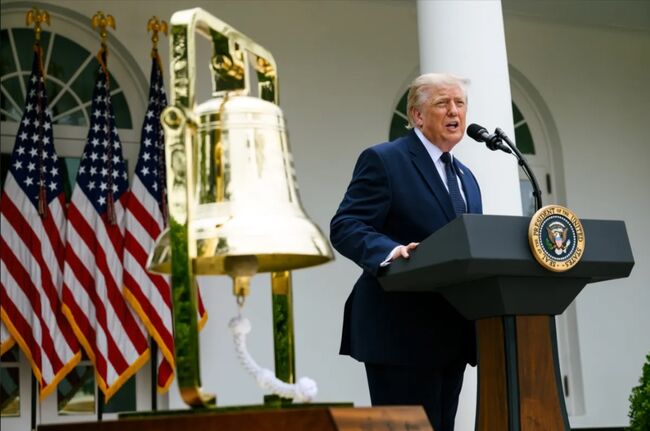 Trump pressures for rate cut again ahead of FOMC... "Should be the lowest in the world"
U.S. President Donald Trump. [Photo = The White House] U.S. President Donald Trump once again pressured the Federal Reserve, the U.S. central bank, to lower interest rates on the 27th (local time
Trump pressures for rate cut again ahead of FOMC... "Should be the lowest in the world"
U.S. President Donald Trump. [Photo = The White House] U.S. President Donald Trump once again pressured the Federal Reserve, the U.S. central bank, to lower interest rates on the 27th (local time
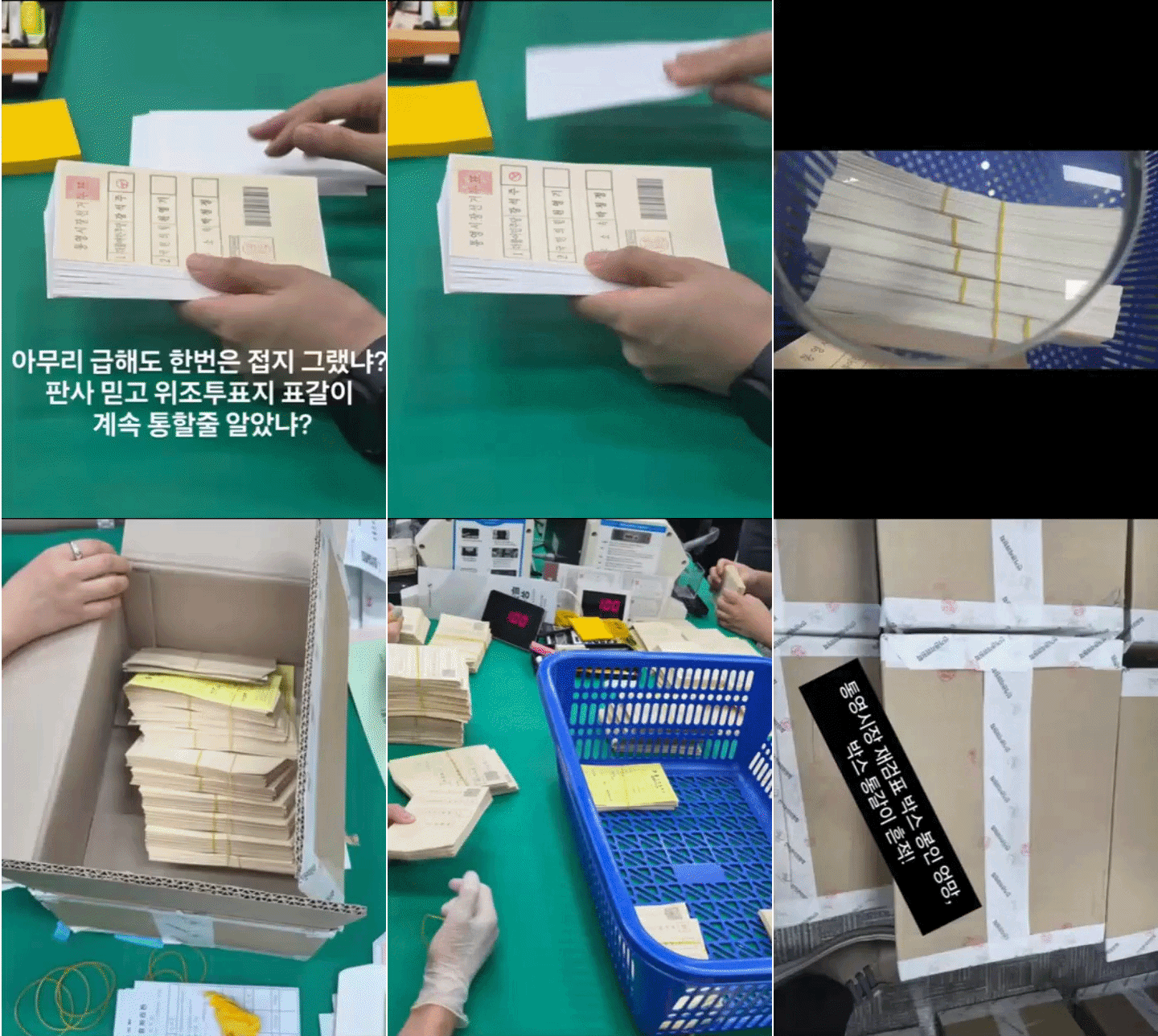 “Ignoring crisp ballots and damaged seals”… Tongyeong mayoral recount concludes with ‘no change in outcome,’ leaving suspicions and public outrage behind
Suspected counterfeit ballots discovered in Tongyeong [GIF from social media of Representative Hwang Kyo-ahn / Attorney Park Joo-hyun]During a recount of the Tongyeong mayoral election in South Gyeong
“Ignoring crisp ballots and damaged seals”… Tongyeong mayoral recount concludes with ‘no change in outcome,’ leaving suspicions and public outrage behind
Suspected counterfeit ballots discovered in Tongyeong [GIF from social media of Representative Hwang Kyo-ahn / Attorney Park Joo-hyun]During a recount of the Tongyeong mayoral election in South Gyeong
 President Yoon, regarding the first-instance ruling on the Public Official Election Act: “An excessive political verdict that distorts the facts… We will appeal immediately.”
The first-instance sentencing hearing for President Yoon Suk Yeol regarding violations of the Public Official Election Act is being broadcast live at Seoul Station on the 27th. [Photo=Yonhap News]Pres
President Yoon, regarding the first-instance ruling on the Public Official Election Act: “An excessive political verdict that distorts the facts… We will appeal immediately.”
The first-instance sentencing hearing for President Yoon Suk Yeol regarding violations of the Public Official Election Act is being broadcast live at Seoul Station on the 27th. [Photo=Yonhap News]Pres
 WSJ: "SK Hynix ADR Premium Is a Sign of AI Trading Overheat"
Advertisement for SK Hynix ADR listing in New York's Times Square [Reuters=Yonhap News file photo]The Wall Street Journal (WSJ) has pointed out that the price of SK Hynix’s American Depositary Recei
WSJ: "SK Hynix ADR Premium Is a Sign of AI Trading Overheat"
Advertisement for SK Hynix ADR listing in New York's Times Square [Reuters=Yonhap News file photo]The Wall Street Journal (WSJ) has pointed out that the price of SK Hynix’s American Depositary Recei
 'Godfather of Japanese Mystery Novels' Keigo Higashino Passes Away After Battle with Cancer at 68
Famous Japanese mystery novelist Keigo Higashino [AFP=Yonhap News]It has been belatedly reported that Keigo Higashino, the "godfather of Japanese mystery novels" and author of bestsellers such as "The
'Godfather of Japanese Mystery Novels' Keigo Higashino Passes Away After Battle with Cancer at 68
Famous Japanese mystery novelist Keigo Higashino [AFP=Yonhap News]It has been belatedly reported that Keigo Higashino, the "godfather of Japanese mystery novels" and author of bestsellers such as "The
 [Park Pil-kyu Security Column] To the Ignorant Trying to Clothe a Beast in Sheep's Clothing
Rep. Kim Byung-joo of the Democratic Party of Korea [Photo=Yonhap News]“The Air Force Academy doesn't teach you how to fly a plane!” “The Army, Navy, and Air Force academies are exactly the
[Park Pil-kyu Security Column] To the Ignorant Trying to Clothe a Beast in Sheep's Clothing
Rep. Kim Byung-joo of the Democratic Party of Korea [Photo=Yonhap News]“The Air Force Academy doesn't teach you how to fly a plane!” “The Army, Navy, and Air Force academies are exactly the
 [Issue Diagnosis] Two Effects of the Election Petition Review
 [Photo] Evidence of Election Fraud Flooding U.S. Media… Trump Had 2.7 Million Votes Stolen
 [Video] U.S. Semiquincentennial Air Show... 'Art in the Sky' streaks across New York
 [Editorial Cartoon] A Draconian Law That Undermines Freedom of Expression

 List
List