Chief Justice Cho Hee-dae arrives at the Supreme Court in Seocho-gu, Seoul, on the 25th. Yonhap News.
Chief Justice Cho Hee-dae stated at a new judge appointment ceremony on the 25th, "Our Constitution proclaims the independence of the judiciary and guarantees the status of judges," urging them to "deeply reflect on the constitutional spirit that guarantees judicial independence and approach trials with an unwavering stance."
Chief Justice Cho made these remarks at the appointment ceremony for new judges held in the main auditorium on the first floor of the Supreme Court that afternoon. Amidst mounting pressure from the ruling party regarding his tenure following the Supreme Court’s full-bench ruling on the case of President Lee Jae-myung, the Chief Justice emphasized 'constitutional judicial independence and the guarantee of judicial status' to the new members of the judiciary.
Chief Justice Cho stated, "The power of judicial judgment is delegated by the people in accordance with the Constitution, and judges are entrusted with the heavy responsibility of guaranteeing the fundamental rights of the people through 'speedy and fair trials'."
He noted, "The public can only trust the judiciary when it fulfills the duties mandated by the Constitution," adding, "Such firm public trust is the strongest foundation for the judiciary's existence."
He further remarked, "Today, social conflict and confusion are intensifying daily, and the tendency to resolve such conflicts and disputes in court is growing. The weight of the responsibilities held by the judiciary is greater than ever."
Chief Justice Cho emphasized, "Our Constitution proclaims judicial independence and guarantees the status of judges. This is based on the firm belief and historical experience that the constitutional mission entrusted to the judiciary can only be fully performed, and the fundamental rights of the people can only be faithfully guaranteed, through independent trials."
He continued, "I ask that you deeply reflect on the constitutional spirit that guarantees the independence of trials, and approach your duties with a steady, unwavering stance, solely in accordance with the Constitution, the law, and your conscience."
However, the Chief Justice also stressed that "judicial independence is not something that is obtained automatically, and judges must never forget that they are servants of the people, who are the sovereigns." He stated, "Unless backed by the careful and restrained conduct and speech of individual judges, judicial independence will remain an empty slogan without gaining public sympathy."
Regarding a judge's conduct, he also emphasized the importance of 'shindok'—the practice of maintaining proper conduct even when alone.
Chief Justice Cho said, "To meet the public's expectations for our era's mission, judges must reflect on the spirit of 'shindok' (practicing self-discipline and ensuring one's behavior and speech do not deviate from the path of righteousness even when alone) in both their public and private lives, and maintain a stance of self-restraint at all times and in all places."
He added, "You must do your utmost to possess a deep respect for humanity and a delicate sensitivity toward the socially vulnerable and minorities."
Concluding his address, he said, "The path of a judge is by no means easy. At times, you may face hardships and trials that are difficult to endure, but it is also a noble and valuable path that cannot be exchanged for anything in the world."
As the ruling party intensifies its pressure on the judiciary, Chief Justice Cho mentioned 'independence' five times during his address at the ceremony.
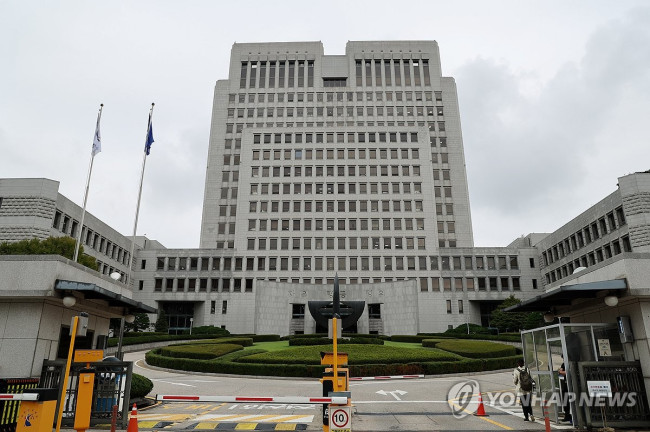 The Supreme Court building in Seocho-dong. Yonhap News.
At the ceremony, 153 legal professionals with at least five years of experience, including lawyers and prosecutors, joined the judiciary as new judges.
The largest number of new judges came from a background as lawyers (114). There were 32 former prosecutors and 7 former judicial researchers. Notably, the number of former prosecutors increased by 18 compared to last year (14).
Among the lawyers, 68 were from law firms, 15 were in-house counsel, 16 were public defenders, and 15 came from government or public institutions.
By gender, 52.9% were female (81) and 47.1% were male (72). The ratio of female judges increased slightly from last year (48.6%).
The average age was 35.7, a slight increase from last year's 35.6. Those aged 30–34 formed the largest group (72), followed by 35–39 (52), 40–44 (25), and 45 or older (3).
132 were graduates of law schools, and 21 were graduates of the Judicial Research and Training Institute.
By alma mater, Seoul National University (42) topped the list, followed by Korea University (24), Yonsei University (23), Sungkyunkwan University (11), Ewha Womans University (6), and Hanyang University (5). Among law school graduates, Seoul National University had the most (18), followed by Yonsei (17), Korea (13), and Sungkyunkwan (12).
Under the legal profession unification system, candidates for new judges must hold a lawyer's license and have accumulated a certain period of legal experience.
In terms of years of legal experience, 107 had 5 to 7 years, 35 had 7 to 10 years, and 11 had 10 years or more.
The new judges will undergo training at the Judicial Research and Training Institute until February 20 of next year, focusing on practical training and judgment writing to build their capabilities and virtues as judges, before being assigned to courts at each level on February 23.
Yonhap News

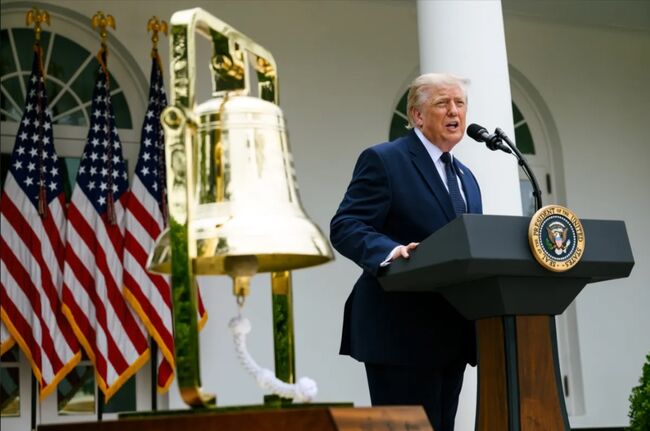 Trump pressures for rate cut again ahead of FOMC... "Should be the lowest in the world"
U.S. President Donald Trump. [Photo = The White House] U.S. President Donald Trump once again pressured the Federal Reserve, the U.S. central bank, to lower interest rates on the 27th (local time
Trump pressures for rate cut again ahead of FOMC... "Should be the lowest in the world"
U.S. President Donald Trump. [Photo = The White House] U.S. President Donald Trump once again pressured the Federal Reserve, the U.S. central bank, to lower interest rates on the 27th (local time
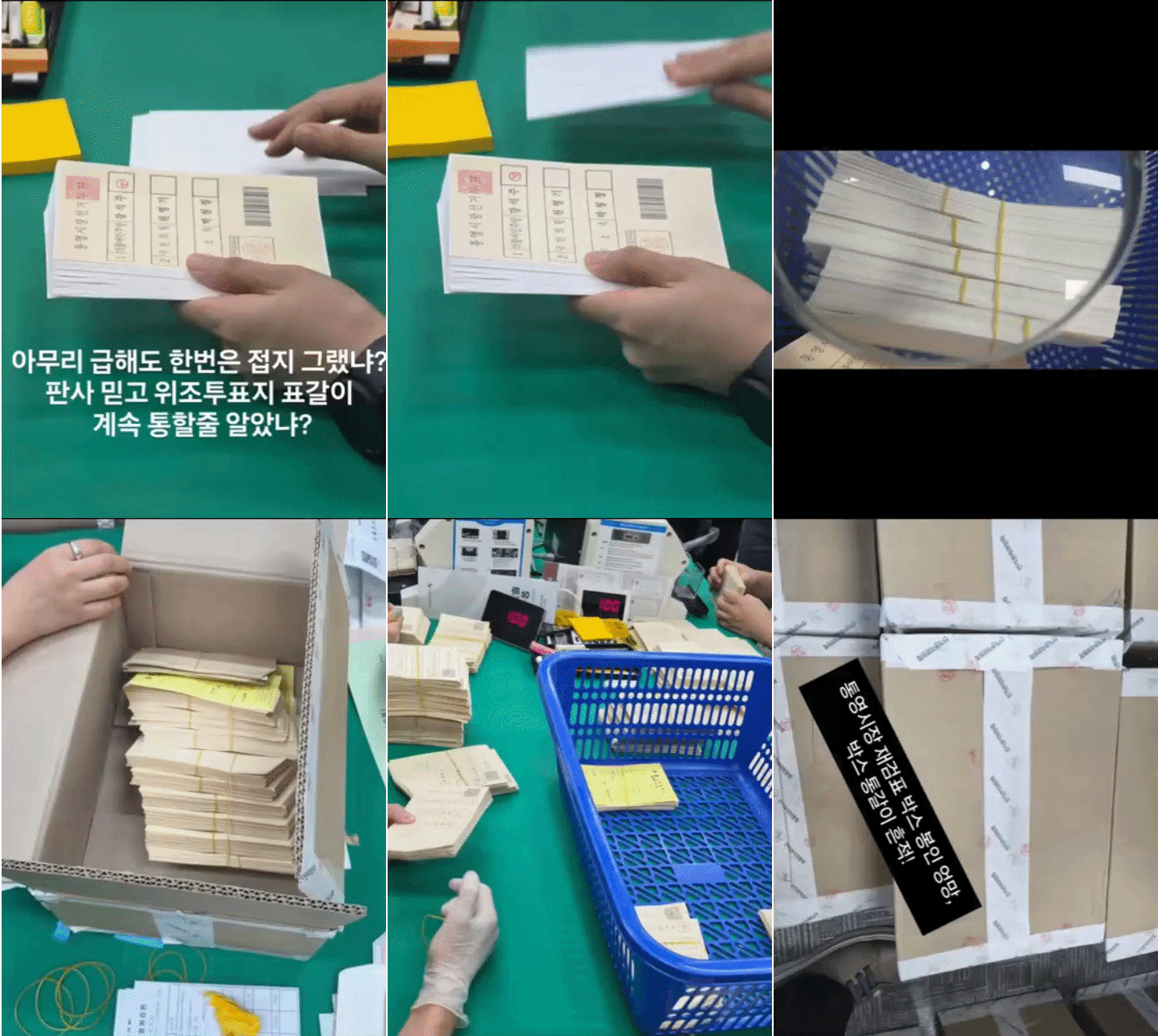 “Ignoring crisp ballots and damaged seals”… Tongyeong mayoral recount concludes with ‘no change in outcome,’ leaving suspicions and public outrage behind
Suspected counterfeit ballots discovered in Tongyeong [GIF from social media of Representative Hwang Kyo-ahn / Attorney Park Joo-hyun]During a recount of the Tongyeong mayoral election in South Gyeong
“Ignoring crisp ballots and damaged seals”… Tongyeong mayoral recount concludes with ‘no change in outcome,’ leaving suspicions and public outrage behind
Suspected counterfeit ballots discovered in Tongyeong [GIF from social media of Representative Hwang Kyo-ahn / Attorney Park Joo-hyun]During a recount of the Tongyeong mayoral election in South Gyeong
 President Yoon, regarding the first-instance ruling on the Public Official Election Act: “An excessive political verdict that distorts the facts… We will appeal immediately.”
The first-instance sentencing hearing for President Yoon Suk Yeol regarding violations of the Public Official Election Act is being broadcast live at Seoul Station on the 27th. [Photo=Yonhap News]Pres
President Yoon, regarding the first-instance ruling on the Public Official Election Act: “An excessive political verdict that distorts the facts… We will appeal immediately.”
The first-instance sentencing hearing for President Yoon Suk Yeol regarding violations of the Public Official Election Act is being broadcast live at Seoul Station on the 27th. [Photo=Yonhap News]Pres
 WSJ: "SK Hynix ADR Premium Is a Sign of AI Trading Overheat"
Advertisement for SK Hynix ADR listing in New York's Times Square [Reuters=Yonhap News file photo]The Wall Street Journal (WSJ) has pointed out that the price of SK Hynix’s American Depositary Recei
WSJ: "SK Hynix ADR Premium Is a Sign of AI Trading Overheat"
Advertisement for SK Hynix ADR listing in New York's Times Square [Reuters=Yonhap News file photo]The Wall Street Journal (WSJ) has pointed out that the price of SK Hynix’s American Depositary Recei
 'Godfather of Japanese Mystery Novels' Keigo Higashino Passes Away After Battle with Cancer at 68
Famous Japanese mystery novelist Keigo Higashino [AFP=Yonhap News]It has been belatedly reported that Keigo Higashino, the "godfather of Japanese mystery novels" and author of bestsellers such as "The
'Godfather of Japanese Mystery Novels' Keigo Higashino Passes Away After Battle with Cancer at 68
Famous Japanese mystery novelist Keigo Higashino [AFP=Yonhap News]It has been belatedly reported that Keigo Higashino, the "godfather of Japanese mystery novels" and author of bestsellers such as "The
 [Park Pil-kyu Security Column] To the Ignorant Trying to Clothe a Beast in Sheep's Clothing
Rep. Kim Byung-joo of the Democratic Party of Korea [Photo=Yonhap News]“The Air Force Academy doesn't teach you how to fly a plane!” “The Army, Navy, and Air Force academies are exactly the
[Park Pil-kyu Security Column] To the Ignorant Trying to Clothe a Beast in Sheep's Clothing
Rep. Kim Byung-joo of the Democratic Party of Korea [Photo=Yonhap News]“The Air Force Academy doesn't teach you how to fly a plane!” “The Army, Navy, and Air Force academies are exactly the
 [Issue Diagnosis] Two Effects of the Election Petition Review
 [Photo] Evidence of Election Fraud Flooding U.S. Media… Trump Had 2.7 Million Votes Stolen
 [Video] U.S. Semiquincentennial Air Show... 'Art in the Sky' streaks across New York
 [Editorial Cartoon] A Draconian Law That Undermines Freedom of Expression

 List
List