본 기사는 윤석열 전 대통령 측이 제기한 특검법 위헌심판 청구를 둘러싸고 제기되는 법리적 쟁점과 정치적 함의를 분석합니다. 청구와 전원재판부 회부, 보석 신청 등 절차를 따라가면서, 과거 특검법 사례를 살펴보고 내년 지방선거 국면과 맞물린 파장을 전망합니다. 특히 정치적 유불리를 떠난 순수 법리 판단의 의미를 짚어봅니다. <편집자 주>
 Former President Yoon Suk-yeol praying while holding the 'Constitution' in prison. The request for a constitutional court ruling has emerged as a fuse for the political situation, going beyond a simple legal battle. Hanmiilbo Graphics
Former President Yoon Suk-yeol filed a constitutional appeal with the Constitutional Court on September 8, arguing that the special prosecutor law targeting him is unconstitutional.
On the 24th, the Constitutional Court referred the case to a full bench for formal review, and former President Yoon's side separately filed for bail, with a court hearing scheduled for the 26th.
Despite assessments that the chances of success are low, why did he knock on the Constitutional Court's door?
There are two levels to former President Yoon's visit to the Constitutional Court: one is legal, and the other is political.
Legally, he argues that the special prosecutor law is an unconstitutional attempt that exceeds the legislative authority of the National Assembly.
He contends that the National Assembly effectively controlling the investigation and prosecution structure by targeting a specific individual undermines the principle of separation of powers. Furthermore, he argues that the unbalanced recommendation structure between the ruling and opposition parties infringes upon the right to equality and violates the guarantee of the right to a trial.
The logic is that trials must be conducted fairly under the control of independent judges, and entrusting this to a special prosecutor appointed through political selection infringes upon fundamental constitutional rights.
However, many analyses suggest that the real reason he approached the Constitutional Court is closer to political calculation.
Everyone knows that it is difficult to achieve a ruling of unconstitutionality given the composition of the Constitutional Court justices. Nevertheless, a strategy of utilizing the procedure itself through the request for a constitutional review is at play.
While a constitutional appeal alone does not automatically suspend a trial, the situation changes if the legal team requests the presiding court to refer the case for constitutional review. If the court accepts this, the main trial is suspended until the Constitutional Court makes a final decision. This provides a lifeline of 'time' for a defendant in custody.
Simultaneously, former President Yoon's side is seeking to secure his physical freedom by filing for bail. This dual strategy of slowing down the trial and getting out of detention serves as a means to secure minimal political space in a losing battle.
The Constitutional Court's procedures also add political significance.
Constitutional review first involves three designated judges examining the admissibility of the case. If the case is not unanimously dismissed at this stage, it is automatically referred to the full bench. This case was not dismissed and was referred for formal review.
The full bench consists of all nine justices, and a ruling of unconstitutionality requires the approval of at least six justices. Therefore, it is not easy to actually obtain a ruling of unconstitutionality.
Nevertheless, former President Yoon can politically secure the message that “constitutional doubts actually exist” through the Constitutional Court's review. Even if a ruling of constitutionality is made, if a dissenting opinion contains arguments for unconstitutionality, it provides sufficient political justification.
While there have been several special prosecutors, the only case that has reached the Constitutional Court was the special prosecutor law related to the Choi Soon-sil scandal. In that case, the Constitutional Court did not accept the claim of unconstitutionality. However, the Constitutional Court did point out the National Assembly's abuse by adding a caveat that "a special prosecutor is an exceptional and supplementary system."
Unlike in the past, this case clearly targets a specific individual and a specific event, and it grants the right to recommend one special prosecutor only to the Democratic Party and the Justice Party. Therefore, the legal community is cautiously discussing the possibility of a limited constitutional review. The argument is that it is possible if the timing of legislation and the specific case name are made into contentious issues. However, Justice Jeong Gye-seon being appointed as the presiding justice is cited as a variable.
Meanwhile, former President Yoon has been additionally indicted on charges of abuse of power by the special prosecutor for the rebellion (Cho Eun-seok).
If the Constitutional Court rules the special prosecutor law unconstitutional, the very legality of the indictment will be shaken, and if it rules it constitutional, the interpretation of authority will carry over to the abuse of power trial.
Both abuse of power and the special prosecutor law share a similar legal structure, with 'the limits and abuse of authority' as the central issue. For this reason, the request for constitutional review this time is more than just a delaying tactic; it signifies an extension of the defense strategy for the main trial.
The timing of the Constitutional Court's decision will ignite another spark in the political arena.
Constitutional review typically takes several months or more. This case is also likely to be decided in the first half of next year, between March and May. This coincides with the local elections scheduled for June 3rd of next year. There are predictions that the Constitutional Court will proceed unusually quickly to prevent this. However, regardless of the Constitutional Court's decision, it is bound to escalate into a political issue.
If a ruling of unconstitutionality is made, the special prosecutor law itself will be shaken along with debates about the abuse of legislative power by the National Assembly. Conversely, if a ruling of constitutionality is made, the guilt or innocence will be decided through normal trial procedures. Even if a compromise such as constitutional unconstitutionality or limited constitutionality is reached, the political circles will interpret it in their favor and use it for their election strategies.
So, setting aside political advantages and disadvantages, what conclusion will the Constitutional Court reach from a purely legal perspective? The focus of the Constitutional Court's attention is clear.
It is whether the National Assembly has excessively encroached upon the investigative and prosecutorial powers of the executive branch beyond its legislative authority, whether the special prosecutor recommendation structure violates the principle of proportionality, and whether it has fundamentally undermined the right to a trial by an ordinary judge.
In other words, the conclusion will be determined by how the Constitutional Court interprets the principle of separation of powers, the guarantee of the right to equality, and the guarantee of the right to a trial.
If the Constitutional Court rules it unconstitutional, the ongoing trial of former President Yoon is likely to be dismissed. If constitutional unconstitutionality or limited constitutionality is reached, it will present the National Assembly with a new legislative task. If a ruling of constitutionality is made, former President Yoon's case will return to the time of the main trial. In any case, the war of political interpretations will intensify.
Through this request for constitutional review, former President Yoon is expected to position himself as a 'protector of the constitutional order' and a 'resister of political retaliation,' making it a choice with many gains.
Furthermore, regardless of the Constitutional Court's judgment, the outcome will affect the local elections scheduled for June 3rd of next year, drawing attention to the political response.
#YoonSukyeol #ConstitutionalReview #SpecialProsecutorLaw #ConstitutionalCourt #SeparationOfPowers #RightToTrial #AbuseOfPower #BailApplication #LocalElections #PoliticalAnalysis

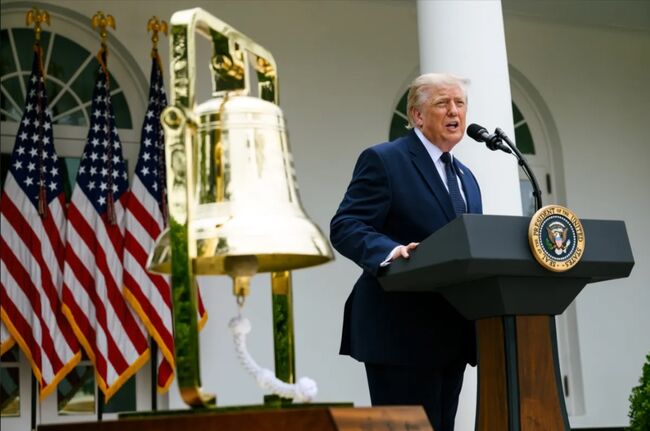 Trump pressures for rate cut again ahead of FOMC... "Should be the lowest in the world"
U.S. President Donald Trump. [Photo = The White House] U.S. President Donald Trump once again pressured the Federal Reserve, the U.S. central bank, to lower interest rates on the 27th (local time
Trump pressures for rate cut again ahead of FOMC... "Should be the lowest in the world"
U.S. President Donald Trump. [Photo = The White House] U.S. President Donald Trump once again pressured the Federal Reserve, the U.S. central bank, to lower interest rates on the 27th (local time
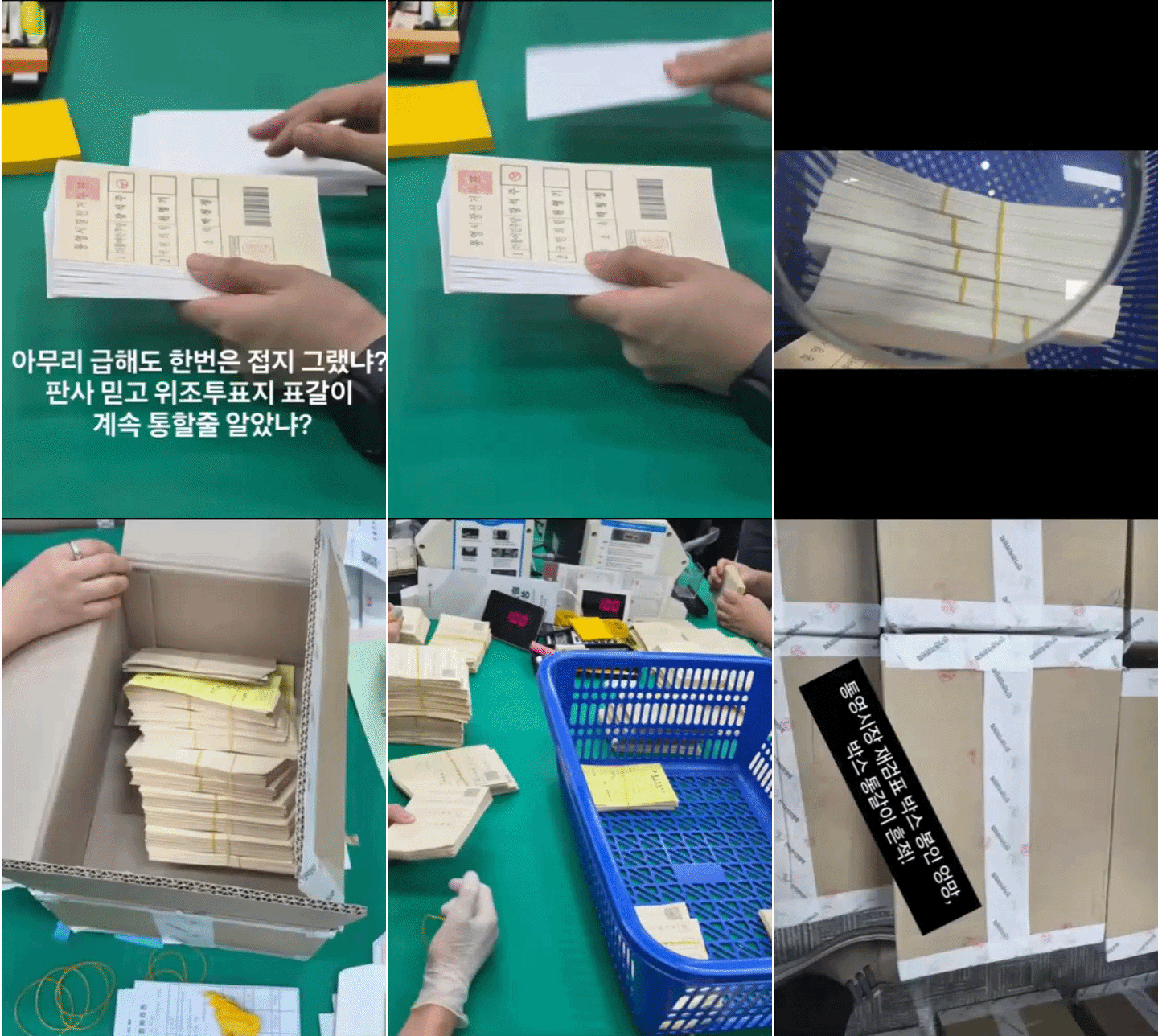 “Ignoring crisp ballots and damaged seals”… Tongyeong mayoral recount concludes with ‘no change in outcome,’ leaving suspicions and public outrage behind
Suspected counterfeit ballots discovered in Tongyeong [GIF from social media of Representative Hwang Kyo-ahn / Attorney Park Joo-hyun]During a recount of the Tongyeong mayoral election in South Gyeong
“Ignoring crisp ballots and damaged seals”… Tongyeong mayoral recount concludes with ‘no change in outcome,’ leaving suspicions and public outrage behind
Suspected counterfeit ballots discovered in Tongyeong [GIF from social media of Representative Hwang Kyo-ahn / Attorney Park Joo-hyun]During a recount of the Tongyeong mayoral election in South Gyeong
 President Yoon, regarding the first-instance ruling on the Public Official Election Act: “An excessive political verdict that distorts the facts… We will appeal immediately.”
The first-instance sentencing hearing for President Yoon Suk Yeol regarding violations of the Public Official Election Act is being broadcast live at Seoul Station on the 27th. [Photo=Yonhap News]Pres
President Yoon, regarding the first-instance ruling on the Public Official Election Act: “An excessive political verdict that distorts the facts… We will appeal immediately.”
The first-instance sentencing hearing for President Yoon Suk Yeol regarding violations of the Public Official Election Act is being broadcast live at Seoul Station on the 27th. [Photo=Yonhap News]Pres
 WSJ: "SK Hynix ADR Premium Is a Sign of AI Trading Overheat"
Advertisement for SK Hynix ADR listing in New York's Times Square [Reuters=Yonhap News file photo]The Wall Street Journal (WSJ) has pointed out that the price of SK Hynix’s American Depositary Recei
WSJ: "SK Hynix ADR Premium Is a Sign of AI Trading Overheat"
Advertisement for SK Hynix ADR listing in New York's Times Square [Reuters=Yonhap News file photo]The Wall Street Journal (WSJ) has pointed out that the price of SK Hynix’s American Depositary Recei
 'Godfather of Japanese Mystery Novels' Keigo Higashino Passes Away After Battle with Cancer at 68
Famous Japanese mystery novelist Keigo Higashino [AFP=Yonhap News]It has been belatedly reported that Keigo Higashino, the "godfather of Japanese mystery novels" and author of bestsellers such as "The
'Godfather of Japanese Mystery Novels' Keigo Higashino Passes Away After Battle with Cancer at 68
Famous Japanese mystery novelist Keigo Higashino [AFP=Yonhap News]It has been belatedly reported that Keigo Higashino, the "godfather of Japanese mystery novels" and author of bestsellers such as "The
 [Park Pil-kyu Security Column] To the Ignorant Trying to Clothe a Beast in Sheep's Clothing
Rep. Kim Byung-joo of the Democratic Party of Korea [Photo=Yonhap News]“The Air Force Academy doesn't teach you how to fly a plane!” “The Army, Navy, and Air Force academies are exactly the
[Park Pil-kyu Security Column] To the Ignorant Trying to Clothe a Beast in Sheep's Clothing
Rep. Kim Byung-joo of the Democratic Party of Korea [Photo=Yonhap News]“The Air Force Academy doesn't teach you how to fly a plane!” “The Army, Navy, and Air Force academies are exactly the
 [Issue Diagnosis] Two Effects of the Election Petition Review
 [Photo] Evidence of Election Fraud Flooding U.S. Media… Trump Had 2.7 Million Votes Stolen
 [Video] U.S. Semiquincentennial Air Show... 'Art in the Sky' streaks across New York
 [Editorial Cartoon] A Draconian Law That Undermines Freedom of Expression

 List
List