Kim Dong-soo, Professor at Wonkwang Digital UniversityThe Democratic Party of Korea is pushing to abolish the crime of breach of trust under the Criminal Act. On July 14, Representative Kim Tae-nyeon initiated a partial amendment to the Criminal Act. Examining the reasons for the proposal and its key contents, the current law stipulates that a person who handles the affairs of another and causes loss to the principal by committing an act in breach of their duties, thereby acquiring property gains or allowing a third party to do so, shall be punished for breach of trust.
However, despite the phrasing that it is established when "loss is caused to the principal," legal practice interprets the crime as being established even in cases where there is merely a risk of loss occurring. Under this interpretation, corporate management is inevitably exposed to the risk of criminal punishment depending on the outcome, even when they have made what they consider reasonable judgments based on market conditions and professional expertise.
Because of this, there has been consistent criticism that criminal law excessively intervenes in the realm of "private autonomy." Although it is claimed that the intention is to establish explicit provisions to exclude the application of the crime of breach of trust when management or others handling the affairs of others make the most reasonable decisions for the benefit of the principal without a conflict of interest, I believe this does not align with the reality.
Currently, the prevailing public opinion in political circles is that this move is intended to secure a "dismissal of indictment" by abolishing the crime of breach of trust, as it is considered certain that President Lee Jae-myung would be found guilty of it. President Lee is currently facing charges of breach of trust in cases including the Daejang-dong development, the Baekhyeon-dong development, and the Seongnam FC donation allegations.
On August 25, the Democratic Party passed bills unfavorable to businesses in the plenary session, such as a "stronger Commercial Act" and the "Yellow Envelope Act" (Labor Union and Labor Relations Adjustment Act). The "Yellow Envelope Act" includes corporate investment decisions and management strategies as subjects of labor disputes. This means that a company's facility investment, R&D investment, factory expansion or relocation, overseas expansion, and business restructuring could all become subjects of labor disputes.
The public is puzzled by the Democratic Party's sudden attempt to abolish the crime of breach of trust after having just passed laws that "restrict corporate management autonomy." While they claim it is for the benefit of businesses, people view it as a bill intended for President Lee personally. This could lead to the grave mistake of undermining the fundamental order of the state.
The crime of breach of trust exists both under the Criminal Act and the Commercial Act. Breach of trust under the Criminal Act (Article 355, Paragraph 2) and under the Commercial Act (Article 622, Special Breach of Trust by Promoters, Directors, and other officers) refers to cases where a person who handles the affairs of another acts in breach of their duties, causing property gains for themselves or a third party, or causing loss to the principal.
Breach of trust under the Criminal Act is often applied in the public sector. Breach of trust under the Commercial Act is applied when a company executive causes economic loss to the company by violating laws or articles of incorporation due to intent or gross negligence.
The abolition of the crime of breach of trust requires careful deliberation. If it is no longer punishable for corporate executives to cause loss to their company for the benefit of their families or acquaintances, the social costs would be truly enormous. This goes without saying for the crime of breach of trust under the Criminal Act. If representatives or high-ranking officials of public institutions were to use their licensing authority to secure gains for third parties, state agencies themselves could degenerate into "thieves."
There is a need to ease the crime of breach of trust under the Commercial Act to respect rational decision-making in corporate management strategy. However, I believe the crime of breach of trust under the Criminal Act should not be abolished, as its removal could encourage the abuse of authority and corruption among public officials.
What do you think of this article?

 [Statement by the Seobeokka KMA Patriots Association] ㉛ Recount the ballots openly, as the previous recount covered up election fraud
Recount of the Tongyeong mayoral election [Photo=Yonhap News]South Korea's liberal democracy is dying. The National Election Commission (NEC), which has degraded into a criminal organization through t
[Statement by the Seobeokka KMA Patriots Association] ㉛ Recount the ballots openly, as the previous recount covered up election fraud
Recount of the Tongyeong mayoral election [Photo=Yonhap News]South Korea's liberal democracy is dying. The National Election Commission (NEC), which has degraded into a criminal organization through t
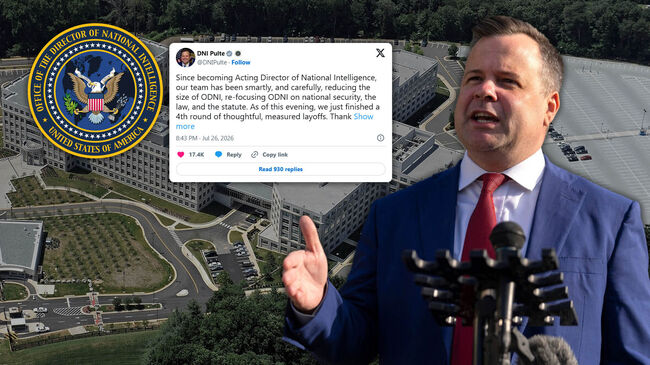 Bill Pulte to Restructure ‘Deep State’… Announces 4th Round of Layoffs at the Office of the Director of National Intelligence
Acting Director of National Intelligence Bill Pulte announced Sunday that he has carried out a fourth "deliberate and measured" reduction in personnel since taking office on June 19, as part of the Tr
Bill Pulte to Restructure ‘Deep State’… Announces 4th Round of Layoffs at the Office of the Director of National Intelligence
Acting Director of National Intelligence Bill Pulte announced Sunday that he has carried out a fourth "deliberate and measured" reduction in personnel since taking office on June 19, as part of the Tr
 First U.S. Ambassador of Trump's Second Term to Arrive This Week… Will It Provide Momentum to Resolve Pending Issues?
U.S. Ambassador to South Korea Michelle Steel speaks at the opening ceremony of the Korea-U.S. Shipbuilding Cooperation Center held at the Mayflower Hotel in Washington, D.C., on the 23rd (local time)
First U.S. Ambassador of Trump's Second Term to Arrive This Week… Will It Provide Momentum to Resolve Pending Issues?
U.S. Ambassador to South Korea Michelle Steel speaks at the opening ceremony of the Korea-U.S. Shipbuilding Cooperation Center held at the Mayflower Hotel in Washington, D.C., on the 23rd (local time)
 President Yoon, regarding the first-instance ruling on the Public Official Election Act: “An excessive political verdict that distorts the facts… We will appeal immediately.”
The first-instance sentencing hearing for President Yoon Suk Yeol regarding violations of the Public Official Election Act is being broadcast live at Seoul Station on the 27th. [Photo=Yonhap News]Pres
President Yoon, regarding the first-instance ruling on the Public Official Election Act: “An excessive political verdict that distorts the facts… We will appeal immediately.”
The first-instance sentencing hearing for President Yoon Suk Yeol regarding violations of the Public Official Election Act is being broadcast live at Seoul Station on the 27th. [Photo=Yonhap News]Pres
 91% of Net Influx of MZ Generation Goes to Seoul Metropolitan Area… Population Migration Also Shows 'K-shaped Polarization' by Industry
[Provided by Leaders Index]Over the past four years, the MZ generation population has become increasingly concentrated in the Seoul metropolitan area and the Chungcheong region. While cities cen
91% of Net Influx of MZ Generation Goes to Seoul Metropolitan Area… Population Migration Also Shows 'K-shaped Polarization' by Industry
[Provided by Leaders Index]Over the past four years, the MZ generation population has become increasingly concentrated in the Seoul metropolitan area and the Chungcheong region. While cities cen
 'Godfather of Japanese Mystery Novels' Keigo Higashino Passes Away After Battle with Cancer at 68
Famous Japanese mystery novelist Keigo Higashino [AFP=Yonhap News]It has been belatedly reported that Keigo Higashino, the "godfather of Japanese mystery novels" and author of bestsellers such as "The
'Godfather of Japanese Mystery Novels' Keigo Higashino Passes Away After Battle with Cancer at 68
Famous Japanese mystery novelist Keigo Higashino [AFP=Yonhap News]It has been belatedly reported that Keigo Higashino, the "godfather of Japanese mystery novels" and author of bestsellers such as "The
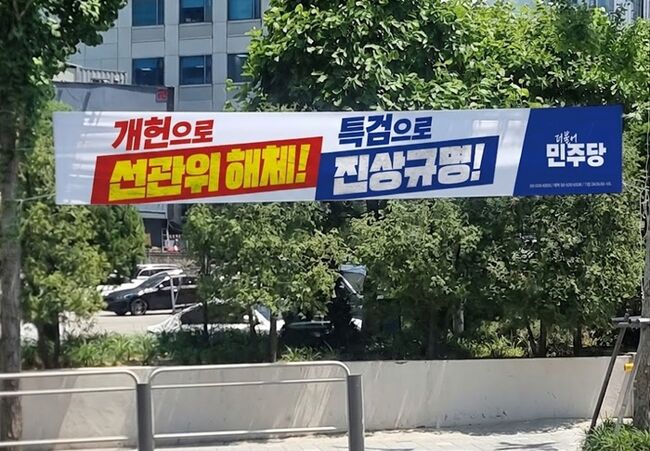 [Cho Yang-geon Column] The NEC: Facing a Fate of "Discarding the Dog After the Hunt"
Banner calling for the "dissolution of the NEC" posted by the Democratic Party. [AI-generated image]Banners calling for the "dissolution of the National Election Commission (NEC)" posted by the Democr
[Cho Yang-geon Column] The NEC: Facing a Fate of "Discarding the Dog After the Hunt"
Banner calling for the "dissolution of the NEC" posted by the Democratic Party. [AI-generated image]Banners calling for the "dissolution of the National Election Commission (NEC)" posted by the Democr
 [Photo] Evidence of Election Fraud Flooding U.S. Media… Trump Had 2.7 Million Votes Stolen
 [Video] U.S. Semiquincentennial Air Show... 'Art in the Sky' streaks across New York
 [Editorial Cartoon] A Draconian Law That Undermines Freedom of Expression

 List
List