- New Export Control Regulations… Export Controls Automatically Applied to Subsidiaries with Over 50% Ownership
- Companies in joint ventures with blacklisted firms are also expected to be subject to export controls.
 Logo of China's Huawei. Reuters Yonhap News.
The U.S. government is moving to block Chinese companies on its "blacklist"—which prohibits the import of sensitive U.S. technologies—from circumventing restrictions through their subsidiaries.
On the 29th (local time), the U.S. Department of Commerce's Bureau of Industry and Security (BIS) announced that firms majority-owned (50% or more) by entities on the export control list would also be subject to 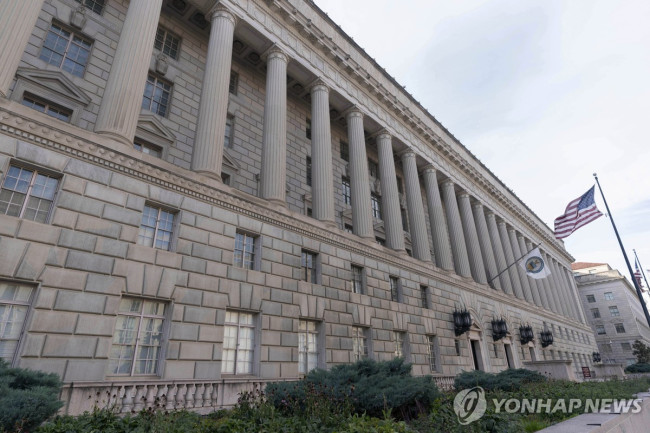 U.S. Department of Commerce building. AP Yonhap News. restrictions. Previously, even if a company was a subsidiary of an entity under export controls, it was exempt if the subsidiary itself was not explicitly listed.
This loophole allowed companies designated for export controls, such as China's Huawei, to establish new subsidiaries and import sensitive technologies through them.
The new regulation also imposes a duty of care on exporters to ensure they do not violate export control rules when exporting sensitive technology to companies in which a listed entity holds a "substantial minority stake" or maintains a "significant relationship."
The Department of Commerce maintains a list of foreign companies and institutions that could pose a threat to national security, requiring government approval—or effectively banning—the export of dual-use technologies that could be diverted for military purposes.
This regulation applies to affiliates of companies listed on the "Entity List," which includes firms involved in activities contrary to U.S. national security or foreign policy interests, and the "Military End-User List," which targets entities that may use technology for military purposes.
Thea D. Rozman Kendler, Assistant Secretary of Commerce for Export Administration, stated, "For too long, [regulatory] loopholes have enabled exports that undermine U.S. national security and foreign policy interests. Under this administration, BIS is closing those gaps and ensuring that our export controls operate as intended."
The new regulation will be officially published in the Federal Register on the 30th and will take effect 60 days thereafter.
The U.S. has been aggressively expanding export controls to prevent China from securing advanced technologies that could be used for military purposes, and many analysts view this measure as also being aimed at China.
However, it is also possible that companies from third countries, such as South Korea, that establish joint ventures with Chinese firms on the export control list could be affected.
The Wall Street Journal (WSJ) reported that while this measure could impact thousands of companies worldwide, most industry executives see China's technology sector as the primary target.
Chinese companies like Huawei have numerous subsidiaries and global business partners, making it difficult for the U.S. to completely block the supply of U.S. technology.
The WSJ reported that Trump administration officials are particularly concerned about the potential for U.S. technology to aid Chinese firms due to the ongoing AI competition between the U.S. and China.
These measures could affect ongoing trade negotiations between the U.S. and China.
According to Reuters, the Chinese Ministry of Commerce expressed "strong opposition" to the U.S. action in a statement that day, declaring that it would take necessary measures to protect the legitimate rights and interests of Chinese companies.
The Chinese Ministry of Commerce urged the U.S. to immediately correct its wrongdoings and cease its "unreasonable suppression of Chinese enterprises."
Yonhap News
What do you think of this article?

 Bill Pulte to Restructure ‘Deep State’… Announces 4th Round of Layoffs at the Office of the Director of National Intelligence
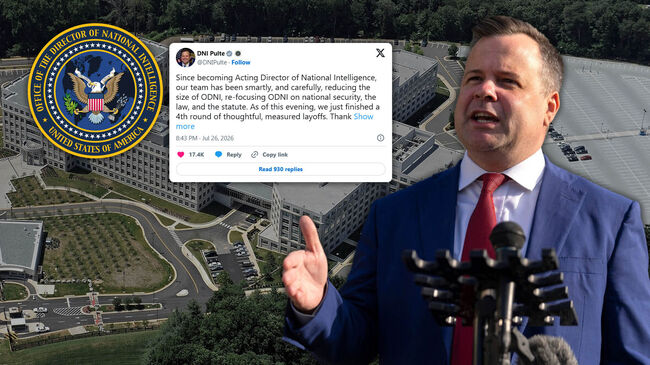
Acting Director of National Intelligence Bill Pulte announced Sunday that he has carried out a fourth "deliberate and measured" reduction in personnel since taking office on June 19, as part of the Tr
Bill Pulte to Restructure ‘Deep State’… Announces 4th Round of Layoffs at the Office of the Director of National Intelligence
Acting Director of National Intelligence Bill Pulte announced Sunday that he has carried out a fourth "deliberate and measured" reduction in personnel since taking office on June 19, as part of the Tr
 First U.S. Ambassador of Trump's Second Term to Arrive This Week… Will It Provide Momentum to Resolve Pending Issues?
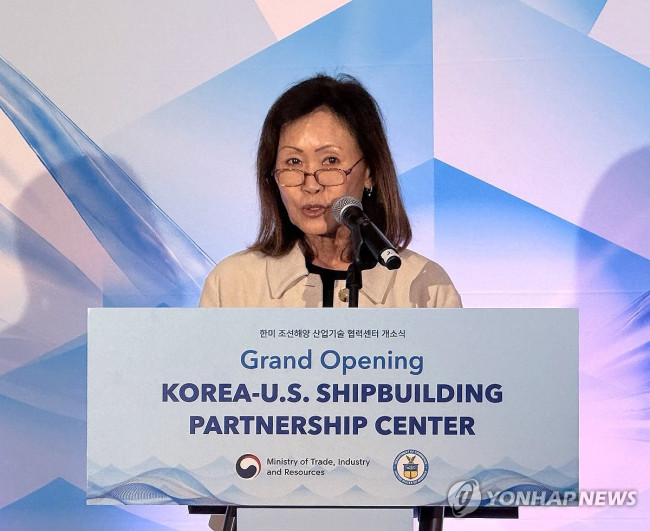
U.S. Ambassador to South Korea Michelle Steel speaks at the opening ceremony of the Korea-U.S. Shipbuilding Cooperation Center held at the Mayflower Hotel in Washington, D.C., on the 23rd (local time)
First U.S. Ambassador of Trump's Second Term to Arrive This Week… Will It Provide Momentum to Resolve Pending Issues?
U.S. Ambassador to South Korea Michelle Steel speaks at the opening ceremony of the Korea-U.S. Shipbuilding Cooperation Center held at the Mayflower Hotel in Washington, D.C., on the 23rd (local time)
 President Yoon, regarding the first-instance ruling on the Public Official Election Act: “An excessive political verdict that distorts the facts… We will appeal immediately.”
The first-instance sentencing hearing for President Yoon Suk Yeol regarding violations of the Public Official Election Act is being broadcast live at Seoul Station on the 27th. [Photo=Yonhap News]Pres
President Yoon, regarding the first-instance ruling on the Public Official Election Act: “An excessive political verdict that distorts the facts… We will appeal immediately.”
The first-instance sentencing hearing for President Yoon Suk Yeol regarding violations of the Public Official Election Act is being broadcast live at Seoul Station on the 27th. [Photo=Yonhap News]Pres
 91% of Net Influx of MZ Generation Goes to Seoul Metropolitan Area… Population Migration Also Shows 'K-shaped Polarization' by Industry
[Provided by Leaders Index]Over the past four years, the MZ generation population has become increasingly concentrated in the Seoul metropolitan area and the Chungcheong region. While cities cen
91% of Net Influx of MZ Generation Goes to Seoul Metropolitan Area… Population Migration Also Shows 'K-shaped Polarization' by Industry
[Provided by Leaders Index]Over the past four years, the MZ generation population has become increasingly concentrated in the Seoul metropolitan area and the Chungcheong region. While cities cen
 'Godfather of Japanese Mystery Novels' Keigo Higashino Passes Away After Battle with Cancer at 68
Famous Japanese mystery novelist Keigo Higashino [AFP=Yonhap News]It has been belatedly reported that Keigo Higashino, the "godfather of Japanese mystery novels" and author of bestsellers such as "The
'Godfather of Japanese Mystery Novels' Keigo Higashino Passes Away After Battle with Cancer at 68
Famous Japanese mystery novelist Keigo Higashino [AFP=Yonhap News]It has been belatedly reported that Keigo Higashino, the "godfather of Japanese mystery novels" and author of bestsellers such as "The
 [Park Pil-kyu Security Column] To the Ignorant Trying to Clothe a Beast in Sheep's Clothing
Rep. Kim Byung-joo of the Democratic Party of Korea [Photo=Yonhap News]“The Air Force Academy doesn't teach you how to fly a plane!” “The Army, Navy, and Air Force academies are exactly the
[Park Pil-kyu Security Column] To the Ignorant Trying to Clothe a Beast in Sheep's Clothing
Rep. Kim Byung-joo of the Democratic Party of Korea [Photo=Yonhap News]“The Air Force Academy doesn't teach you how to fly a plane!” “The Army, Navy, and Air Force academies are exactly the
 [Issue Diagnosis] Two Effects of the Election Petition Review
 [Photo] Evidence of Election Fraud Flooding U.S. Media… Trump Had 2.7 Million Votes Stolen
 [Video] U.S. Semiquincentennial Air Show... 'Art in the Sky' streaks across New York
 [Editorial Cartoon] A Draconian Law That Undermines Freedom of Expression

 List
List