- 88.6% of all OB/GYN clinics reported 'zero deliveries' annually this year
 An obstetrics and gynecology delivery room. Yonhap News.
As the low birth rate remains unresolved, the trend of preferring to give birth at large hospitals to prepare for emergencies has intensified, resulting in 90% of obstetric clinics nationwide recording zero annual deliveries.
According to data received on the 2nd by Representative Kim Mi-ae of the People Power Party, a member of the National Assembly's Health and Welfare Committee, from the Health Insurance Review and Assessment Service, the proportion of obstetric clinics nationwide with zero health insurance claims for annual deliveries reached 88.6% from the beginning of this year through August.
This percentage has been steadily rising from 83.1% in 2019.
In particular, in the Gwangju and Jeonnam regions, every single obstetric clinic recorded zero deliveries for the year.
In Daegu as well, the proportion of clinics with zero annual deliveries reached 98.7% last year, meaning that effectively no clinics in the area were delivering babies.
However, in Sejong, 5 out of 9 obstetric clinics (55.6%) performed at least one delivery per year, and in Gangwon, 14 out of 34 clinics (41.2%) were still delivering babies, showing significant regional disparities.
The low birth rate has played a major role in the disappearance of the sound of newborn cries in local neighborhoods.
According to Statistics Korea, the total fertility rate—the average number of children a woman is expected to have in her lifetime—dropped from 0.92 in 2019 to 0.72 in 2023. While the rate rebounded to 0.75 last year, marking the first increase in nine years, there are hopeful expectations that it could reach 0.8 this year.
In addition to the low birth rate, the potential for emergency situations and low medical fees compared to the risks involved are also reasons why medical staff are avoiding obstetric delivery services.
Representative Kim Mi-ae stated, "If the avoidance of essential medical practices becomes entrenched, it could lead to the collapse of the overall medical system in the mid-to-long term."
Yonhap News
What do you think of this article?

 Trump pressures for rate cut again ahead of FOMC... "Should be the lowest in the world"
U.S. President Donald Trump. [Photo = The White House] U.S. President Donald Trump once again pressured the Federal Reserve, the U.S. central bank, to lower interest rates on the 27th (local time
Trump pressures for rate cut again ahead of FOMC... "Should be the lowest in the world"
U.S. President Donald Trump. [Photo = The White House] U.S. President Donald Trump once again pressured the Federal Reserve, the U.S. central bank, to lower interest rates on the 27th (local time
 “Ignoring crisp ballots and damaged seals”… Tongyeong mayoral recount concludes with ‘no change in outcome,’ leaving suspicions and public outrage behind
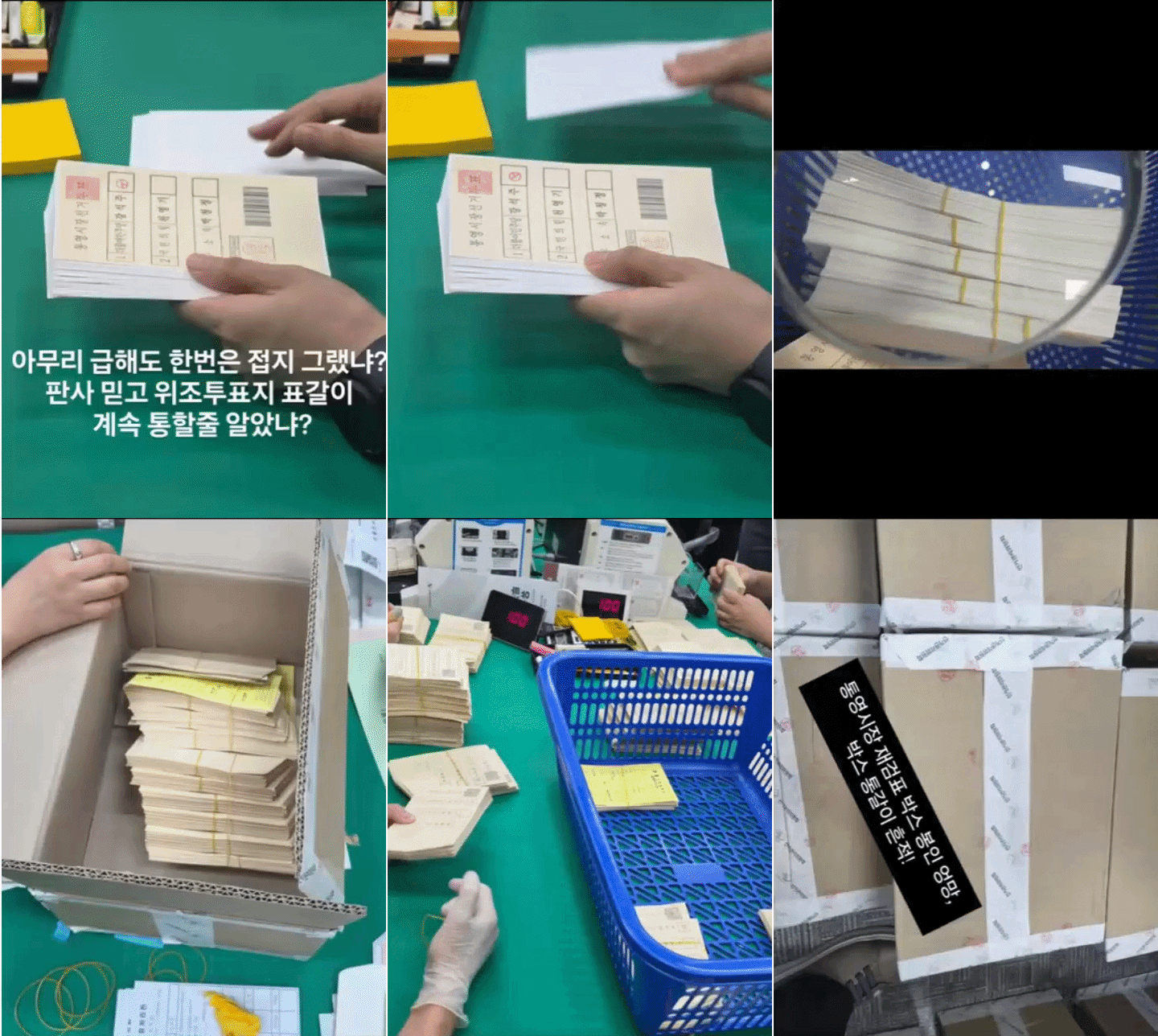
Suspected counterfeit ballots discovered in Tongyeong [GIF from social media of Representative Hwang Kyo-ahn / Attorney Park Joo-hyun]During a recount of the Tongyeong mayoral election in South Gyeong
“Ignoring crisp ballots and damaged seals”… Tongyeong mayoral recount concludes with ‘no change in outcome,’ leaving suspicions and public outrage behind
Suspected counterfeit ballots discovered in Tongyeong [GIF from social media of Representative Hwang Kyo-ahn / Attorney Park Joo-hyun]During a recount of the Tongyeong mayoral election in South Gyeong
 President Yoon, regarding the first-instance ruling on the Public Official Election Act: “An excessive political verdict that distorts the facts… We will appeal immediately.”
The first-instance sentencing hearing for President Yoon Suk Yeol regarding violations of the Public Official Election Act is being broadcast live at Seoul Station on the 27th. [Photo=Yonhap News]Pres
President Yoon, regarding the first-instance ruling on the Public Official Election Act: “An excessive political verdict that distorts the facts… We will appeal immediately.”
The first-instance sentencing hearing for President Yoon Suk Yeol regarding violations of the Public Official Election Act is being broadcast live at Seoul Station on the 27th. [Photo=Yonhap News]Pres
 WSJ: "SK Hynix ADR Premium Is a Sign of AI Trading Overheat"
Advertisement for SK Hynix ADR listing in New York's Times Square [Reuters=Yonhap News file photo]The Wall Street Journal (WSJ) has pointed out that the price of SK Hynix’s American Depositary Recei
WSJ: "SK Hynix ADR Premium Is a Sign of AI Trading Overheat"
Advertisement for SK Hynix ADR listing in New York's Times Square [Reuters=Yonhap News file photo]The Wall Street Journal (WSJ) has pointed out that the price of SK Hynix’s American Depositary Recei
 'Godfather of Japanese Mystery Novels' Keigo Higashino Passes Away After Battle with Cancer at 68
Famous Japanese mystery novelist Keigo Higashino [AFP=Yonhap News]It has been belatedly reported that Keigo Higashino, the "godfather of Japanese mystery novels" and author of bestsellers such as "The
'Godfather of Japanese Mystery Novels' Keigo Higashino Passes Away After Battle with Cancer at 68
Famous Japanese mystery novelist Keigo Higashino [AFP=Yonhap News]It has been belatedly reported that Keigo Higashino, the "godfather of Japanese mystery novels" and author of bestsellers such as "The
 [Park Pil-kyu Security Column] To the Ignorant Trying to Clothe a Beast in Sheep's Clothing
Rep. Kim Byung-joo of the Democratic Party of Korea [Photo=Yonhap News]“The Air Force Academy doesn't teach you how to fly a plane!” “The Army, Navy, and Air Force academies are exactly the
[Park Pil-kyu Security Column] To the Ignorant Trying to Clothe a Beast in Sheep's Clothing
Rep. Kim Byung-joo of the Democratic Party of Korea [Photo=Yonhap News]“The Air Force Academy doesn't teach you how to fly a plane!” “The Army, Navy, and Air Force academies are exactly the
 [Issue Diagnosis] Two Effects of the Election Petition Review
 [Photo] Evidence of Election Fraud Flooding U.S. Media… Trump Had 2.7 Million Votes Stolen
 [Video] U.S. Semiquincentennial Air Show... 'Art in the Sky' streaks across New York
 [Editorial Cartoon] A Draconian Law That Undermines Freedom of Expression

 List
List