본 칼럼은 이재명 대통령의 국무회의 발언인 “의심나면 무죄가 헌법정신”을 중심으로, 3심제 비판과 공직선거법 개정 추진의 이중성을 짚었습니다. 2020년 대법원 전원합의체의 무죄 판결로 정치적 생명을 구한 이재명 대통령이, 이번에는 대법원 유죄취지 파기환송을 앞두고 법 개정으로 대응하려는 현 상황은 제도에 대한 자기모순적 행태로 비칩니다. <편집자 주>
 President Lee Jae-myung. Yonhap News
In July 2020, the Supreme Court en banc, led by Chief Justice Kim Myeong-su, remanded the case of then-Gyeonggi Province Governor Lee Jae-myung regarding the "false statement on the forced hospitalization of his older brother" with a ruling of acquittal.
The court of first instance had acquitted Lee of all charges, arguing that his statements were ambiguous. However, the second court found him guilty, imposing a fine of 3 million won, stating that his claim during a debate that "there was no directive for forced hospitalization" was a clear falsehood. Under the Public Official Election Act, this amounted to a sentence that would invalidate his election.
The Supreme Court, however, overturned the second-instance ruling, stating that "remarks made during a debate are often impulsive and carry strong political context, and therefore cannot be definitively labeled as false in a fragmentary manner."
With this single decision, Lee Jae-myung escaped political death; the final stage of the three-tier judicial system served as the starting point that allowed him to ascend to the presidency today.
Yet, that Supreme Court ruling immediately sparked controversy. Critics argued that it "excessively expanded the scope of freedom of expression" and "neutralized the original intent of the law against the dissemination of false information." In short, while the ruling saved Lee, it left questions regarding legal consistency and political neutrality.
Now, five years later, the scene has been reversed.
This time, the issue concerns President Lee Jae-myung’s dissemination of false information regarding the Daejang-dong and Baekhyeon-dong development projects.
The first court found some of his statements to be false and declared him guilty, a ruling that was overturned by the second court, which acquitted him of all charges. However, this year, the Supreme Court remanded the case again with a ruling leaning toward a guilty verdict. The final-stage judgment was now unfavorable to Lee.
Ironically, the three-tier judicial system that once saved him is now threatening his political fate.
It is precisely at this juncture that the Democratic Party is pushing for an amendment to the Public Official Election Act. Having already passed the Legislation and Judiciary Committee, it awaits only a plenary session vote. Scenarios are openly discussed wherein the party would immediately use the revised law as a countermeasure once the Supreme Court holds its hearing. This is why critics call it "political legislation" for his own benefit.
Meanwhile, the President stated at a Cabinet meeting that "the constitutional spirit dictates that if there is doubt, one must be found not guilty," criticizing the prosecution's practice of appealing and the three-tier judicial system itself. Minister of Justice Jeong Seong-ho echoed these sentiments, joining in the criticism of the system. While the stated goal is "institutional improvement," it is interpreted in reality as a political backlash against the Supreme Court’s ruling pointing toward a guilty verdict.
In 2020, he was saved by the three-tier judicial system. Now, however, he blames that same system because it is unfavorable, seeking to avoid it through legislative amendments—all while invoking the "spirit of the law" at a Cabinet meeting.
Can there be a clearer instance of self-contradiction? Nothing erodes public trust more than someone who uses the law as a shield preaching about the rule of law.
The three-tier judicial system is not perfect. Issues such as the prosecution's abuse of appeals, prolonged trials, and social costs are tasks that need improvement. But these discussions must be held for the sake of the people. The moment a president leads legislation to avoid his own judicial risks, and the Minister of Justice provides political backing, the rule of law becomes a servant to power.
Supreme Court rulings will always exist amidst controversy. But one thing is certain.
The moment you amend the law to fit your own destiny, the law is no longer the law.
The President, having forgotten that the three-tier judicial system once saved him, now blames the system while prattling about the constitutional spirit.
The public asks: "Does he who alters the law have the right to speak of the law?"
#LeeJaeMyung #ThreeTierJudicialSystem #SupremeCourt #PublicOfficialElectionActAmendment #JusticeMinisterJeongSeongHo #RuleOfLaw #RemandWithGuiltyIntent #CabinetMeetingRemarks #HanmiIlbo #KimYoungHanColumn

 [Statement by the Seobeokka KMA Patriots Association] ㉛ Recount the ballots openly, as the previous recount covered up election fraud
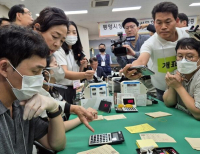
Recount of the Tongyeong mayoral election [Photo=Yonhap News]South Korea's liberal democracy is dying. The National Election Commission (NEC), which has degraded into a criminal organization through t
[Statement by the Seobeokka KMA Patriots Association] ㉛ Recount the ballots openly, as the previous recount covered up election fraud
Recount of the Tongyeong mayoral election [Photo=Yonhap News]South Korea's liberal democracy is dying. The National Election Commission (NEC), which has degraded into a criminal organization through t
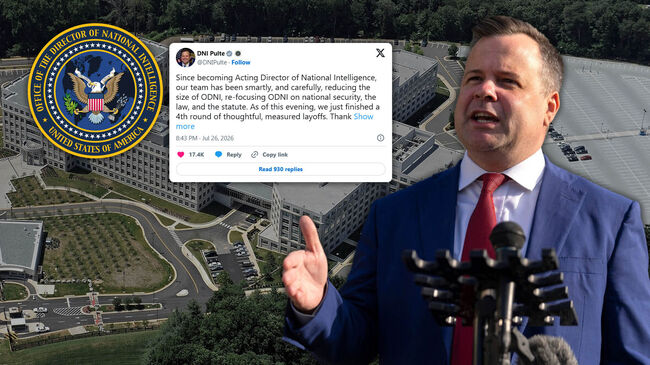 Bill Pulte to Restructure ‘Deep State’… Announces 4th Round of Layoffs at the Office of the Director of National Intelligence
Acting Director of National Intelligence Bill Pulte announced Sunday that he has carried out a fourth "deliberate and measured" reduction in personnel since taking office on June 19, as part of the Tr
Bill Pulte to Restructure ‘Deep State’… Announces 4th Round of Layoffs at the Office of the Director of National Intelligence
Acting Director of National Intelligence Bill Pulte announced Sunday that he has carried out a fourth "deliberate and measured" reduction in personnel since taking office on June 19, as part of the Tr
 First U.S. Ambassador of Trump's Second Term to Arrive This Week… Will It Provide Momentum to Resolve Pending Issues?
U.S. Ambassador to South Korea Michelle Steel speaks at the opening ceremony of the Korea-U.S. Shipbuilding Cooperation Center held at the Mayflower Hotel in Washington, D.C., on the 23rd (local time)
First U.S. Ambassador of Trump's Second Term to Arrive This Week… Will It Provide Momentum to Resolve Pending Issues?
U.S. Ambassador to South Korea Michelle Steel speaks at the opening ceremony of the Korea-U.S. Shipbuilding Cooperation Center held at the Mayflower Hotel in Washington, D.C., on the 23rd (local time)
 President Yoon, regarding the first-instance ruling on the Public Official Election Act: “An excessive political verdict that distorts the facts… We will appeal immediately.”
The first-instance sentencing hearing for President Yoon Suk Yeol regarding violations of the Public Official Election Act is being broadcast live at Seoul Station on the 27th. [Photo=Yonhap News]Pres
President Yoon, regarding the first-instance ruling on the Public Official Election Act: “An excessive political verdict that distorts the facts… We will appeal immediately.”
The first-instance sentencing hearing for President Yoon Suk Yeol regarding violations of the Public Official Election Act is being broadcast live at Seoul Station on the 27th. [Photo=Yonhap News]Pres
 91% of Net Influx of MZ Generation Goes to Seoul Metropolitan Area… Population Migration Also Shows 'K-shaped Polarization' by Industry
[Provided by Leaders Index]Over the past four years, the MZ generation population has become increasingly concentrated in the Seoul metropolitan area and the Chungcheong region. While cities cen
91% of Net Influx of MZ Generation Goes to Seoul Metropolitan Area… Population Migration Also Shows 'K-shaped Polarization' by Industry
[Provided by Leaders Index]Over the past four years, the MZ generation population has become increasingly concentrated in the Seoul metropolitan area and the Chungcheong region. While cities cen
 'Godfather of Japanese Mystery Novels' Keigo Higashino Passes Away After Battle with Cancer at 68
Famous Japanese mystery novelist Keigo Higashino [AFP=Yonhap News]It has been belatedly reported that Keigo Higashino, the "godfather of Japanese mystery novels" and author of bestsellers such as "The
'Godfather of Japanese Mystery Novels' Keigo Higashino Passes Away After Battle with Cancer at 68
Famous Japanese mystery novelist Keigo Higashino [AFP=Yonhap News]It has been belatedly reported that Keigo Higashino, the "godfather of Japanese mystery novels" and author of bestsellers such as "The
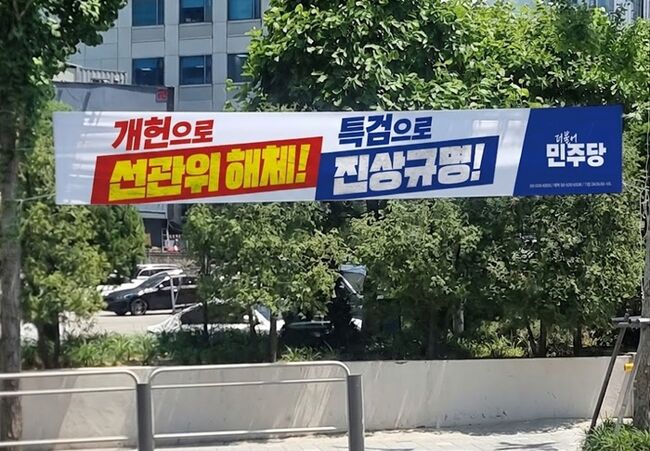 [Cho Yang-geon Column] The NEC: Facing a Fate of "Discarding the Dog After the Hunt"
Banner calling for the "dissolution of the NEC" posted by the Democratic Party. [AI-generated image]Banners calling for the "dissolution of the National Election Commission (NEC)" posted by the Democr
[Cho Yang-geon Column] The NEC: Facing a Fate of "Discarding the Dog After the Hunt"
Banner calling for the "dissolution of the NEC" posted by the Democratic Party. [AI-generated image]Banners calling for the "dissolution of the National Election Commission (NEC)" posted by the Democr
 [Photo] Evidence of Election Fraud Flooding U.S. Media… Trump Had 2.7 Million Votes Stolen
 [Video] U.S. Semiquincentennial Air Show... 'Art in the Sky' streaks across New York
 [Editorial Cartoon] A Draconian Law That Undermines Freedom of Expression

 List
List