Cars waiting for export at Pyeongtaek Port. Yonhap News.
The U.S. government has partially adjusted the port entry fee policy announced in April, which was aimed at curbing China's shipbuilding and shipping industries while encouraging the construction of U.S.-made vessels.
The Office of the United States Trade Representative (USTR) announced that the port entry fee for foreign-built car carriers will be set at $46 per net ton.
Initially, in April, the USTR proposed a fee of $150 per CEU (a unit of space capable of transporting one car) for foreign car carriers entering the U.S., but adjusted it to $14 per ton in June, and has now revised it to $46 per ton.
The USTR explained that a per-ton fee structure is easier to manage and helps prevent manipulative activities aimed at lowering the fee amount.
The USTR further announced that the number of times the port entry fee can be charged for car carriers will be limited to five times per year.
Previously, the South Korean government submitted a formal opinion to the USTR requesting a cap on the number of times the fee could be charged, noting that car carriers often enter U.S. ports multiple times a year.
At the time, the Korean government also requested that the port entry fee be limited to China, the "original target" of the U.S. policy, but the USTR’s latest announcement did not include any provision restricting the fee to a specific country.
The port entry fee will take effect on the 14th of this month.
Additionally, the USTR decided not to block exports if liquefied natural gas (LNG) exporters fail to transport the USTR-mandated portion of LNG on U.S.-built vessels.
To encourage the construction of LNG carriers in the U.S., the USTR had previously mandated that 1% of total LNG export volumes be transported on U.S.-built LNG carriers starting April 17, 2028, with that portion increasing to 15% by 2047.
The original announcement included a provision stating that the USTR could suspend LNG export permits if this quota was not met, but this clause has now been removed.
The USTR explained that there is significant domestic demand for new LNG carriers and increased investment in the U.S. shipbuilding industry, expressing confidence that the construction of LNG carriers will be successfully achieved in the U.S. over the coming years.
Furthermore, the USTR confirmed that it will impose a 100% additional tariff on Chinese-made ship-to-shore (STS) cranes, as proposed in April.
Yonhap News
What do you think of this article?

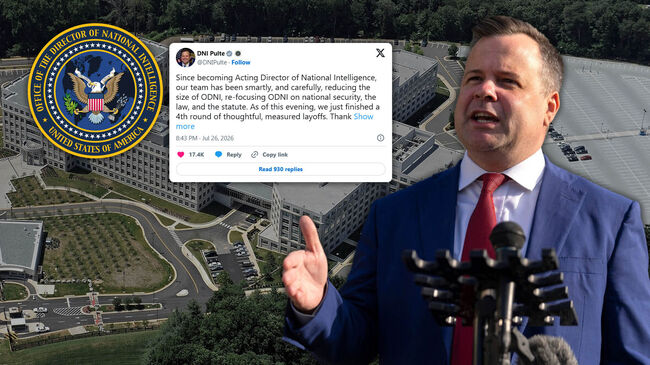 Bill Pulte to Restructure ‘Deep State’… Announces 4th Round of Layoffs at the Office of the Director of National Intelligence
Acting Director of National Intelligence Bill Pulte announced Sunday that he has carried out a fourth "deliberate and measured" reduction in personnel since taking office on June 19, as part of the Tr
Bill Pulte to Restructure ‘Deep State’… Announces 4th Round of Layoffs at the Office of the Director of National Intelligence
Acting Director of National Intelligence Bill Pulte announced Sunday that he has carried out a fourth "deliberate and measured" reduction in personnel since taking office on June 19, as part of the Tr
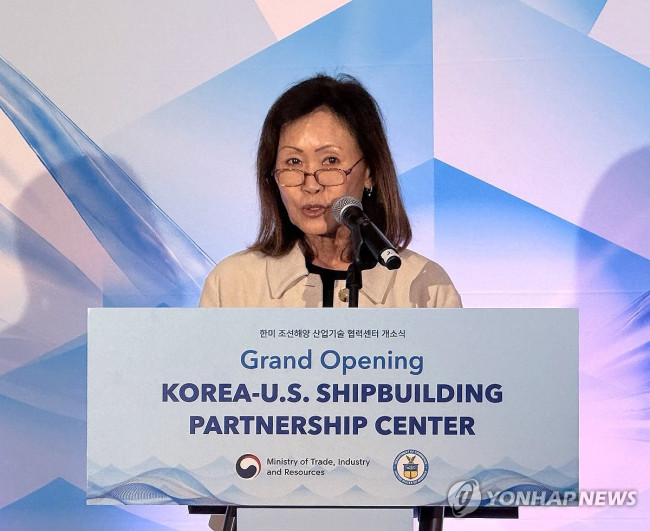 First U.S. Ambassador of Trump's Second Term to Arrive This Week… Will It Provide Momentum to Resolve Pending Issues?
U.S. Ambassador to South Korea Michelle Steel speaks at the opening ceremony of the Korea-U.S. Shipbuilding Cooperation Center held at the Mayflower Hotel in Washington, D.C., on the 23rd (local time)
First U.S. Ambassador of Trump's Second Term to Arrive This Week… Will It Provide Momentum to Resolve Pending Issues?
U.S. Ambassador to South Korea Michelle Steel speaks at the opening ceremony of the Korea-U.S. Shipbuilding Cooperation Center held at the Mayflower Hotel in Washington, D.C., on the 23rd (local time)
 President Yoon, regarding the first-instance ruling on the Public Official Election Act: “An excessive political verdict that distorts the facts… We will appeal immediately.”
The first-instance sentencing hearing for President Yoon Suk Yeol regarding violations of the Public Official Election Act is being broadcast live at Seoul Station on the 27th. [Photo=Yonhap News]Pres
President Yoon, regarding the first-instance ruling on the Public Official Election Act: “An excessive political verdict that distorts the facts… We will appeal immediately.”
The first-instance sentencing hearing for President Yoon Suk Yeol regarding violations of the Public Official Election Act is being broadcast live at Seoul Station on the 27th. [Photo=Yonhap News]Pres
 91% of Net Influx of MZ Generation Goes to Seoul Metropolitan Area… Population Migration Also Shows 'K-shaped Polarization' by Industry
[Provided by Leaders Index]Over the past four years, the MZ generation population has become increasingly concentrated in the Seoul metropolitan area and the Chungcheong region. While cities cen
91% of Net Influx of MZ Generation Goes to Seoul Metropolitan Area… Population Migration Also Shows 'K-shaped Polarization' by Industry
[Provided by Leaders Index]Over the past four years, the MZ generation population has become increasingly concentrated in the Seoul metropolitan area and the Chungcheong region. While cities cen
 'Godfather of Japanese Mystery Novels' Keigo Higashino Passes Away After Battle with Cancer at 68
Famous Japanese mystery novelist Keigo Higashino [AFP=Yonhap News]It has been belatedly reported that Keigo Higashino, the "godfather of Japanese mystery novels" and author of bestsellers such as "The
'Godfather of Japanese Mystery Novels' Keigo Higashino Passes Away After Battle with Cancer at 68
Famous Japanese mystery novelist Keigo Higashino [AFP=Yonhap News]It has been belatedly reported that Keigo Higashino, the "godfather of Japanese mystery novels" and author of bestsellers such as "The
 [Park Pil-kyu Security Column] To the Ignorant Trying to Clothe a Beast in Sheep's Clothing
Rep. Kim Byung-joo of the Democratic Party of Korea [Photo=Yonhap News]“The Air Force Academy doesn't teach you how to fly a plane!” “The Army, Navy, and Air Force academies are exactly the
[Park Pil-kyu Security Column] To the Ignorant Trying to Clothe a Beast in Sheep's Clothing
Rep. Kim Byung-joo of the Democratic Party of Korea [Photo=Yonhap News]“The Air Force Academy doesn't teach you how to fly a plane!” “The Army, Navy, and Air Force academies are exactly the
 [Issue Diagnosis] Two Effects of the Election Petition Review
 [Photo] Evidence of Election Fraud Flooding U.S. Media… Trump Had 2.7 Million Votes Stolen
 [Video] U.S. Semiquincentennial Air Show... 'Art in the Sky' streaks across New York
 [Editorial Cartoon] A Draconian Law That Undermines Freedom of Expression

 List
List