U.S. President Donald Trump (right). AFP=Yonhap News.
U.S. President Donald Trump said on October 20 (local time) that he expects to "make a very fair deal with China, like the trade agreements the United States has made with South Korea, Japan, and the European Union."
Speaking to reporters at a summit with Australian Prime Minister Anthony Albanese at the White House, Trump reiterated that he maintains a very good relationship with Chinese President Xi Jinping and that he is scheduled to meet with him during the Asia-Pacific Economic Cooperation (APEC) summit in Gyeongju, South Korea, later this month.
He added, "The EU also tried to take advantage of us, but not anymore. We've made very fair trade agreements. We've made very fair trade agreements with Japan, and we've made fair agreements with South Korea, where I'll be meeting President Xi."
In the case of the U.S.-South Korea trade negotiations, there are still differences of opinion regarding South Korea's proposed $350 billion (approximately 500 trillion won) investment package to the U.S. However, President Trump has consistently expressed the perception that an agreement has already been reached, and today he spoke as if the agreement were complete.
He then stated, "I will probably make a very fair deal with President Xi," adding, "So most of them will be with us." He continued, "It will be very interesting, and we will make something great for both countries (U.S.-China)."
President Trump also emphasized, "When I leave South Korea, though maybe not, I think we will have a very strong trade agreement. Both sides will be satisfied."
However, President Trump warned, "China has respected us very much. They have paid us enormous amounts of money in the form of tariffs," and "China is paying 55% (in tariffs to the U.S.) and could potentially increase to 155% on November 1 if a deal is not reached."
Regarding these tariff hikes, President Trump stated, "If China doesn't do business with us, they will be in big trouble, and I don't know if they can sustain it. I want them to be great, to prosper. But they have to prosper with us," he stressed.
President Trump claimed that in response to China weaponizing rare earth elements and imposing export controls amidst trade tensions with the U.S., he is securing additional leverage beyond tariffs.
"They threatened us with rare earth elements, and I countered with tariffs. But I can threaten them with many other things, like airplanes," he said.
Mentioning U.S. aircraft manufacturer Boeing, President Trump explained, "We can stop the supply of parts because they can't get airplane parts. We did actually stop it, and it was very big when they made their first (rare earth) threat. Over 400 of their airplanes were grounded."
President Trump criticized that the trade agreement he made with China during his first term was not implemented during the presidency of former President Joe Biden. He then emphasized, "Now that there is no such president, we will eventually have a fantastic deal with China. It will be a great trade deal, and it will be fantastic not only for both countries but for the entire world."
President Trump also mentioned that he has been invited by President Xi to visit China early next year, stating, "It's somewhat set."
During the meeting, President Trump and Prime Minister Albanese signed a critical minerals agreement.
While the specific details of the agreement have not yet been disclosed, President Trump said the negotiations "went on for 4-5 months" and that "in about a year, we will secure so many critical minerals and rare earths that we won't know what to do with them. They will be worth about $2 then."
Currently, China is using its rare earth export controls as leverage against the U.S. It is understood that the U.S. aims to reduce its reliance on China by diversifying its supply channels for critical minerals.
Prime Minister Albanese highlighted a $8.5 billion (approximately 12 trillion won) pipeline project as a very unique aspect of this agreement, explaining, "'Future Made in Australia' is our plan, and it seeks not just to mine and export resources, but to ensure that we can share the benefits and seize opportunities with our allies in the supply chain."
Yonhap News

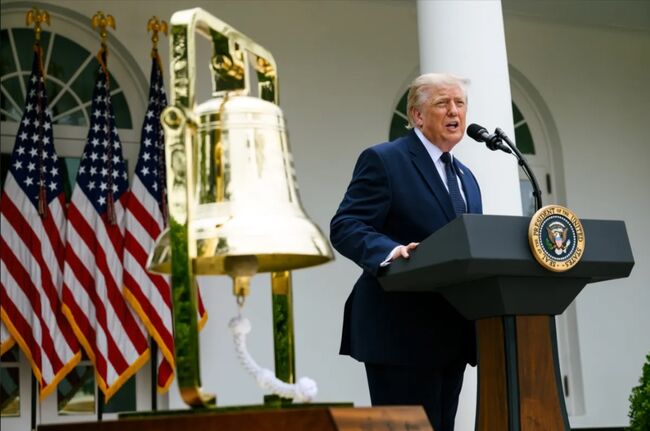 Trump pressures for rate cut again ahead of FOMC... "Should be the lowest in the world"
U.S. President Donald Trump. [Photo = The White House] U.S. President Donald Trump once again pressured the Federal Reserve, the U.S. central bank, to lower interest rates on the 27th (local time
Trump pressures for rate cut again ahead of FOMC... "Should be the lowest in the world"
U.S. President Donald Trump. [Photo = The White House] U.S. President Donald Trump once again pressured the Federal Reserve, the U.S. central bank, to lower interest rates on the 27th (local time
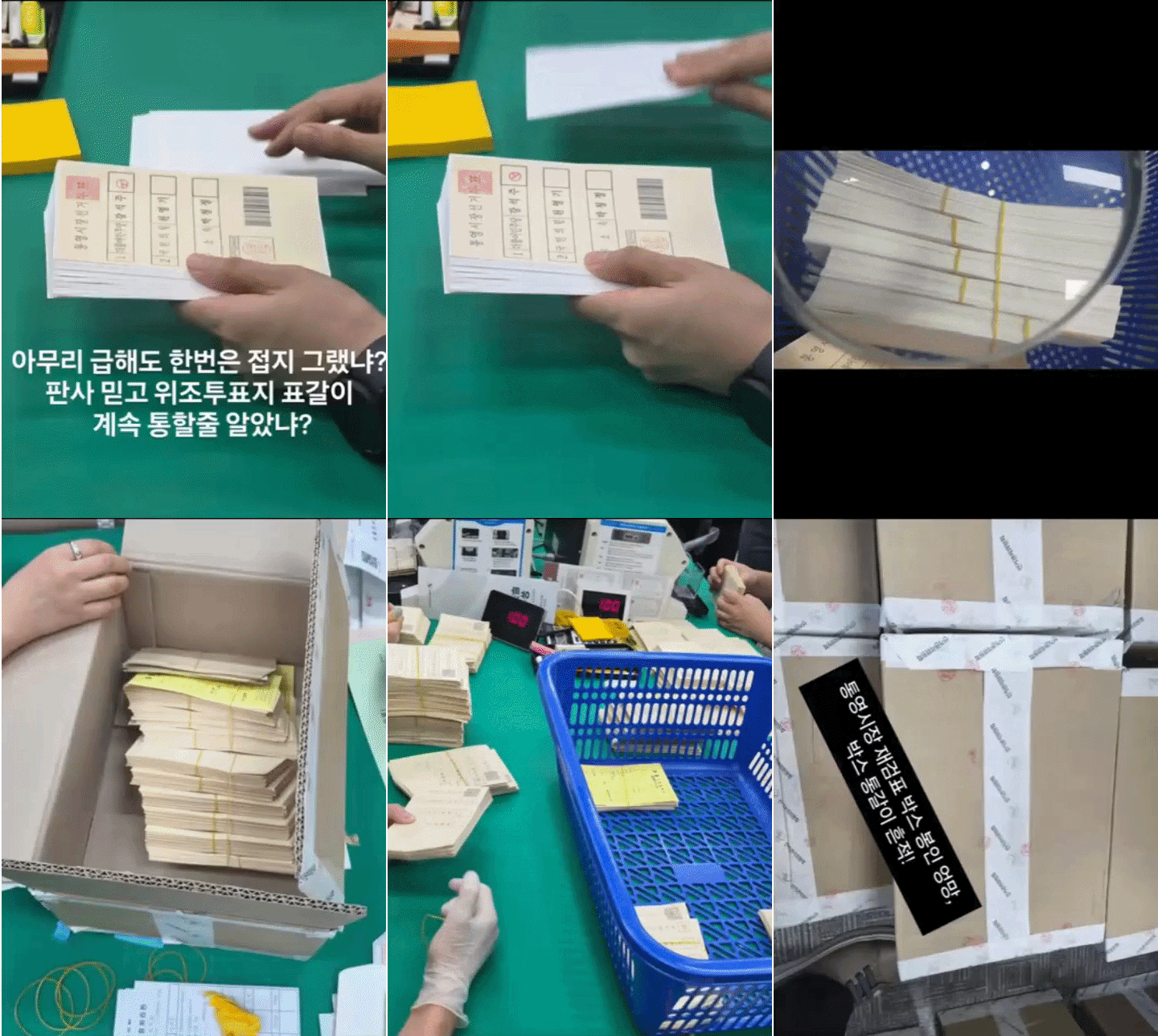 “Ignoring crisp ballots and damaged seals”… Tongyeong mayoral recount concludes with ‘no change in outcome,’ leaving suspicions and public outrage behind
Suspected counterfeit ballots discovered in Tongyeong [GIF from social media of Representative Hwang Kyo-ahn / Attorney Park Joo-hyun]During a recount of the Tongyeong mayoral election in South Gyeong
“Ignoring crisp ballots and damaged seals”… Tongyeong mayoral recount concludes with ‘no change in outcome,’ leaving suspicions and public outrage behind
Suspected counterfeit ballots discovered in Tongyeong [GIF from social media of Representative Hwang Kyo-ahn / Attorney Park Joo-hyun]During a recount of the Tongyeong mayoral election in South Gyeong
 President Yoon, regarding the first-instance ruling on the Public Official Election Act: “An excessive political verdict that distorts the facts… We will appeal immediately.”
The first-instance sentencing hearing for President Yoon Suk Yeol regarding violations of the Public Official Election Act is being broadcast live at Seoul Station on the 27th. [Photo=Yonhap News]Pres
President Yoon, regarding the first-instance ruling on the Public Official Election Act: “An excessive political verdict that distorts the facts… We will appeal immediately.”
The first-instance sentencing hearing for President Yoon Suk Yeol regarding violations of the Public Official Election Act is being broadcast live at Seoul Station on the 27th. [Photo=Yonhap News]Pres
 WSJ: "SK Hynix ADR Premium Is a Sign of AI Trading Overheat"
Advertisement for SK Hynix ADR listing in New York's Times Square [Reuters=Yonhap News file photo]The Wall Street Journal (WSJ) has pointed out that the price of SK Hynix’s American Depositary Recei
WSJ: "SK Hynix ADR Premium Is a Sign of AI Trading Overheat"
Advertisement for SK Hynix ADR listing in New York's Times Square [Reuters=Yonhap News file photo]The Wall Street Journal (WSJ) has pointed out that the price of SK Hynix’s American Depositary Recei
 'Godfather of Japanese Mystery Novels' Keigo Higashino Passes Away After Battle with Cancer at 68
Famous Japanese mystery novelist Keigo Higashino [AFP=Yonhap News]It has been belatedly reported that Keigo Higashino, the "godfather of Japanese mystery novels" and author of bestsellers such as "The
'Godfather of Japanese Mystery Novels' Keigo Higashino Passes Away After Battle with Cancer at 68
Famous Japanese mystery novelist Keigo Higashino [AFP=Yonhap News]It has been belatedly reported that Keigo Higashino, the "godfather of Japanese mystery novels" and author of bestsellers such as "The
 [Park Pil-kyu Security Column] To the Ignorant Trying to Clothe a Beast in Sheep's Clothing
Rep. Kim Byung-joo of the Democratic Party of Korea [Photo=Yonhap News]“The Air Force Academy doesn't teach you how to fly a plane!” “The Army, Navy, and Air Force academies are exactly the
[Park Pil-kyu Security Column] To the Ignorant Trying to Clothe a Beast in Sheep's Clothing
Rep. Kim Byung-joo of the Democratic Party of Korea [Photo=Yonhap News]“The Air Force Academy doesn't teach you how to fly a plane!” “The Army, Navy, and Air Force academies are exactly the
 [Issue Diagnosis] Two Effects of the Election Petition Review
 [Photo] Evidence of Election Fraud Flooding U.S. Media… Trump Had 2.7 Million Votes Stolen
 [Video] U.S. Semiquincentennial Air Show... 'Art in the Sky' streaks across New York
 [Editorial Cartoon] A Draconian Law That Undermines Freedom of Expression

 List
List