캄보디아 스캠센터는 단순한 해외사기가 아니다. 한국 청년이 가장 많이 피해를 입었고, 그 배후엔 제재 공백과 금융의 허점이 있었다. 이번 기획은 프린스그룹을 중심으로, 왜 한국이 국제범죄의 표적이 되었는지 그 구조적 이유를 추적한다. <편집자 주>
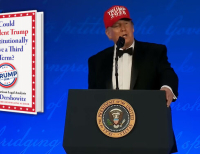
 The shadow of Cambodian scams, lost voices. A newspaper left on an empty podium symbolizes the disappearance of Koreans overlooked by a nation without sanctions. Hanmi Ilbo Graphics
Prince Group's Shadow, 330 Missing... Citizens of a 'Nation Without Sanctions' Became Targets
The reason for the disproportionately high number of Korean victims is not simple.
Prince Group, which operated scam centers in Cambodia, has been designated a 'Transnational Criminal Organization (TCO)' by the United States and the United Kingdom, yet has not faced a single official sanction in Korea. In the meantime, victims have piled up, and 91.2 billion KRW in deposits linked to this organization are frozen in domestic banks.
Hanmi Ilbo analyzed the structure of this situation by synthesizing foreign media records, financial authority data, and victim testimonies.
The number of Korean victims is estimated to be at least over 330 in the past year.
The primary type of victimization was recruitment fraud, luring individuals with promises of high-paying overseas employment. Online job postings in Cambodia, Laos, and Myanmar featured phrases like "Guaranteed 5 million KRW per month" and "English not required."
Upon arrival, victims had their passports confiscated, their contact with the outside world severed, and were forcibly engaged in online scams or cryptocurrency investment schemes. Partial evidence of Korean intermediaries being involved in this process has emerged from local police investigations.
The term "scam center" refers to the 'online farms' of criminal organizations.
Prince Group is suspected of operating such facilities across Cambodia, generating profits through forced labor, human trafficking, and assault.
The U.S. Department of Justice indicted Prince Group chairman Chen Zhi on charges of operating online fraud through forced labor, and the U.S. Treasury Department added 146 entities and individuals associated with the group to its sanctions list. The UK also froze assets, including real estate in London.
However, Korea's response was different.
The government was unable to impose independent sanctions, citing the absence of entities directly linked to Prince Group in Korea. Korea lacks legislation like the U.S. 'Global Magnitsky Act' to sanction overseas human rights violators or criminal organizations. The government's stance is that without a UN Security Council resolution, there is no legal basis to sanction foreign companies under domestic law.
As a result, the 91.2 billion KRW in Prince Group-related deposits remaining in the Cambodian branches of Kookmin Bank, Shinhan Bank, Woori Bank, and Jeonbuk Bank remain merely 'frozen.' Legal confiscation or recovery of criminal proceeds has not occurred.
This systemic gap has led to the targeting of Koreans for crimes.
As the channels blocked by sanctions from the U.S. and UK were closed, criminal organizations turned to the less regulated Korean market as an 'alternative route.' Korean banks, being outside international sanctions networks, became highly susceptible to being exploited as channels for money laundering or remittance.
Young Koreans dreaming of overseas employment became easy prey within this structure.
Cultural factors also played a role.
Scam organizations meticulously mimicked 'Korean trust codes.' They presented business cards and contracts that did not actually exist, such as 'Seoul Branch' or 'Korean Team Leader,' in an attempt to imitate formal hiring procedures. Koreans tend to place a strong emphasis on documents and formality, lowering their guard the more perfect the paperwork appears.
According to foreign media reports, the proportion of Koreans drawn into scam centers was two to three times higher than that of Taiwanese and Malaysians.
The government's response was belated.
The Ministry of Foreign Affairs issued a travel advisory 'black code' for Sihanoukville and Phnom Penh three months after the deaths occurred. Victim families were unable to access local investigations, and Korea remained at an observer level within the international cooperation network.
Ultimately, citizens remained 'citizens outside their nation's protection.'
Experts point to Korea's sanctioning gap as a "blind spot of a developed nation without institutions."
While economically developed, Korea's approach to sanctions and human rights responses is at a developing country level. The argument for Korea to adopt U.S.-style 'independent sanction laws' is growing. While sanctions are delayed due to diplomatic concerns, Prince Group's funds continue to circulate in Cambodia.
A financial authority official stated, "While deposits are frozen, legal confiscation is difficult. Sanctions are only possible once it is confirmed as criminal proceeds through international cooperation." However, this 'confirmation' could take years. Meanwhile, another young Korean falls into the same trap through another job posting.
In conclusion, there are three reasons for the significant extent of damage in Korea.
First, individual vulnerabilities created by illusions of overseas employment and investment.
Second, the nation's incompetence in lacking institutional mechanisms to respond to overseas crimes.
Third, international criminal organizations, unafraid of sanctions, view Korea as an 'easy country.'
While Korea refrains from imposing sanctions, the world has already begun to classify Koreans not as those to be protected, but as 'Targets.'
#Cambodia #PrinceGroup #ScamCenter #KoreanVictims #InternationalCrime #MoneyLaundering #OverseasEmploymentScam #912BillionKRWDeposits #InternationalSanctions #HanmiIlboInvestigation

 [Statement by the Seobeokka KMA Patriots Association] ㉛ Recount the ballots openly, as the previous recount covered up election fraud
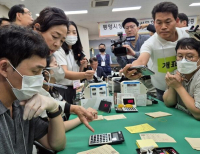
Recount of the Tongyeong mayoral election [Photo=Yonhap News]South Korea's liberal democracy is dying. The National Election Commission (NEC), which has degraded into a criminal organization through t
[Statement by the Seobeokka KMA Patriots Association] ㉛ Recount the ballots openly, as the previous recount covered up election fraud
Recount of the Tongyeong mayoral election [Photo=Yonhap News]South Korea's liberal democracy is dying. The National Election Commission (NEC), which has degraded into a criminal organization through t
 What is the significance of the "Trump 2028" red hat that keeps reappearing?
It is noteworthy that while it is "highly likely" that President Donald Trump is "seriously considering" a run for the presidency in 2028, he is also "deliberately" fueling speculation regarding wheth
What is the significance of the "Trump 2028" red hat that keeps reappearing?
It is noteworthy that while it is "highly likely" that President Donald Trump is "seriously considering" a run for the presidency in 2028, he is also "deliberately" fueling speculation regarding wheth
 First U.S. Ambassador of Trump's Second Term to Arrive This Week… Will It Provide Momentum to Resolve Pending Issues?
U.S. Ambassador to South Korea Michelle Steel speaks at the opening ceremony of the Korea-U.S. Shipbuilding Cooperation Center held at the Mayflower Hotel in Washington, D.C., on the 23rd (local time)
First U.S. Ambassador of Trump's Second Term to Arrive This Week… Will It Provide Momentum to Resolve Pending Issues?
U.S. Ambassador to South Korea Michelle Steel speaks at the opening ceremony of the Korea-U.S. Shipbuilding Cooperation Center held at the Mayflower Hotel in Washington, D.C., on the 23rd (local time)
 President Yoon, regarding the first-instance ruling on the Public Official Election Act: “An excessive political verdict that distorts the facts… We will appeal immediately.”
The first-instance sentencing hearing for President Yoon Suk Yeol regarding violations of the Public Official Election Act is being broadcast live at Seoul Station on the 27th. [Photo=Yonhap News]Pres
President Yoon, regarding the first-instance ruling on the Public Official Election Act: “An excessive political verdict that distorts the facts… We will appeal immediately.”
The first-instance sentencing hearing for President Yoon Suk Yeol regarding violations of the Public Official Election Act is being broadcast live at Seoul Station on the 27th. [Photo=Yonhap News]Pres
 91% of Net Influx of MZ Generation Goes to Seoul Metropolitan Area… Population Migration Also Shows 'K-shaped Polarization' by Industry
[Provided by Leaders Index]Over the past four years, the MZ generation population has become increasingly concentrated in the Seoul metropolitan area and the Chungcheong region. While cities cen
91% of Net Influx of MZ Generation Goes to Seoul Metropolitan Area… Population Migration Also Shows 'K-shaped Polarization' by Industry
[Provided by Leaders Index]Over the past four years, the MZ generation population has become increasingly concentrated in the Seoul metropolitan area and the Chungcheong region. While cities cen
 'Godfather of Japanese Mystery Novels' Keigo Higashino Passes Away After Battle with Cancer at 68
Famous Japanese mystery novelist Keigo Higashino [AFP=Yonhap News]It has been belatedly reported that Keigo Higashino, the "godfather of Japanese mystery novels" and author of bestsellers such as "The
'Godfather of Japanese Mystery Novels' Keigo Higashino Passes Away After Battle with Cancer at 68
Famous Japanese mystery novelist Keigo Higashino [AFP=Yonhap News]It has been belatedly reported that Keigo Higashino, the "godfather of Japanese mystery novels" and author of bestsellers such as "The
 [Cho Yang-geon Column] The NEC: Facing a Fate of "Discarding the Dog After the Hunt"
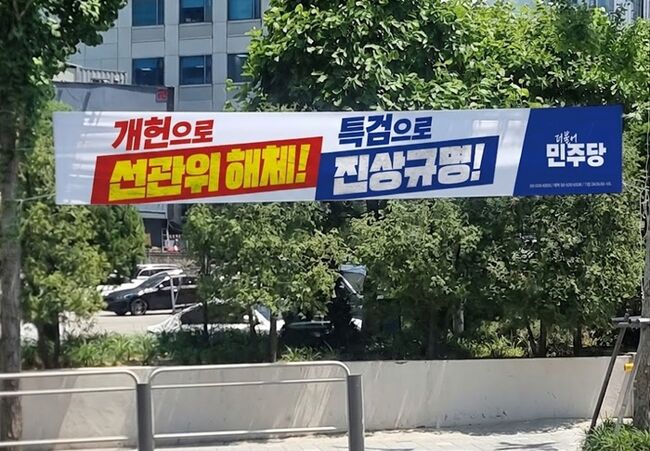
Banner calling for the "dissolution of the NEC" posted by the Democratic Party. [AI-generated image]Banners calling for the "dissolution of the National Election Commission (NEC)" posted by the Democr
[Cho Yang-geon Column] The NEC: Facing a Fate of "Discarding the Dog After the Hunt"
Banner calling for the "dissolution of the NEC" posted by the Democratic Party. [AI-generated image]Banners calling for the "dissolution of the National Election Commission (NEC)" posted by the Democr
 [Photo] Evidence of Election Fraud Flooding U.S. Media… Trump Had 2.7 Million Votes Stolen
 [Video] U.S. Semiquincentennial Air Show... 'Art in the Sky' streaks across New York
 [Editorial Cartoon] A Draconian Law That Undermines Freedom of Expression

 List
List