미 의회가 10월 9일 통과시킨 국방수권법(NDAA)에 ‘국익 인증 없이는 전작권 전환 불가’ 조항이 포함된 사실이 뒤늦게 논란이 되고 있다. 이재명 대통령은 그 직전 국군의 날에서 ‘작전통제권 회복’을 약속했지만, 정부는 한 달이 지나도록 입장을 내놓지 않았다. 한미일보는 7월 단독보도로 해당 조항을 최초 보도한 바 있으며, 이번 기사는 그 법안의 실제 내용과 정부의 인식 부재를 검증한다. <편집자 주>
 On October 20th, at a defense industry development forum held at KINTEX in Ilsanseo-gu, Goyang-si, Gyeonggi Province, President Lee Jae-myung stated, "It is difficult for me to understand the fact that some citizens believe that the Republic of Korea, even in its current situation, cannot achieve self-reliant defense and must rely on someone else for defense." Yonhap News
President Lee Jae-myung declared on October 1st, at the 77th Armed Forces Day ceremony, "Our military must take one step further towards the completion of self-reliant defense and the recovery of operational control authority."
While the President's speech was evaluated as a message reaffirming the will for self-reliant defense, just 8 days later (October 9th), the U.S. Senate made a decision that was the complete opposite. The Senate passed the National Defense Authorization Act (NDAA) for Fiscal Year 2026, confirming a provision (Section 1233) that legally restricts the reduction of U.S. Forces Korea and the transfer of wartime operational control (OPCON).
At the very moment the South Korean President was mentioning the 'recovery of operational control,' the U.S. was blocking that recovery through legislation.
The core of the issue is Section 1233 of the NDAA 2026. The provision states the following:
"The Secretary of Defense may not reduce the U.S. military posture on the Korean Peninsula or alter the wartime operational control (OPCON) of the Combined Forces Command unless the Secretary certifies to Congress that such action is consistent with the national interest of the United States."
This provision was finalized without a single word being amended, having passed the Senate Armed Services Committee (SASC) on July 9, 2025, and the House Armed Services Committee (HASC) on July 15, then the House of Representatives on September 10, and finally the Senate on October 9.
The White House expressed concern on September 9th through a Statement of Administration Policy, stating, "It excessively restricts executive discretion," but Congress maintained it as is.
Consequently, any form of operational control transfer or reduction of U.S. Forces Korea has become impossible without the U.S. Congress's certification of national interest. This means it operates as an institutional control mechanism that requires legislative approval rather than simple diplomatic consultation.
On October 20th, at a defense industry development forum held at KINTEX in Ilsanseo-gu, Goyang-si, Gyeonggi Province, President Lee Jae-myung argued, "It is difficult for me to understand the fact that some citizens believe that the Republic of Korea, even in its current situation, cannot achieve self-reliant defense and must rely on someone else for defense."
There are criticisms that before making such claims, the President should first answer the question of whether diplomatic cooperation was sought to prevent the U.S. from passing such a bill.
A foreign affairs and security expert evaluated, "The U.S. Congress's national interest certification process is effectively a prior approval system by Congress, moving the issue of operational control from diplomacy to the realm of legislation."
Exclusive report by Hankook Ilbo in July, proven true
Hankook Ilbo first reported the core content of the provision in its exclusive article on July 19th titled 'Operational Control Transfer Blocked by U.S. Congress.' At the time, our newspaper analyzed the 'prohibition of budget execution' and the 'national interest certification' procedures included in the draft by the U.S. Congressional Armed Services Committee, stating, "The recovery of operational control has been effectively blocked."
Subsequently, major domestic media outlets belatedly reported on this around October 22nd, after the Senate's passage, and most of them downplayed it as "budget-related restrictions" or "administrative reservations."
However, the word used in the original text of the NDAA is "prohibits." This is an explicit prohibition, not a mere reservation, and leaves no room for the executive branch to disregard it.
Lee Jae-myung's Self-Reliant Defense... 'Recovery' and 'Prohibition' in Reality, Mere Words
In the first week of October, when the President mentioned "recovery of operational control," Congress in Washington was already finalizing the process to legally restrict that recovery. The President's remarks were words of determination, but in reality, they were closer to eloquent but empty rhetoric that obscured the truth.
While promising self-reliant defense to the nation, the U.S. Congress immediately afterward closed the door to self-reliance through legislation. The phrase 'recovery of operational control' is language used in domestic politics, but its implementation has now shifted to a triple structure involving approval from the U.S. Congress, certification by the Secretary of Defense, and joint resolution by the joint chiefs of staff of both countries. In particular, the remarks made on the 20th seem to be fitting for ridicule as "disembodied speech."
Operational control is an issue of a nation's sovereignty and, at the same time, falls within the legal domain of the ROK-U.S. Mutual Defense Treaty and the Status of Forces Agreement. In other words, it is not a right that can be regained solely by the will or assertion of one party. The phrase 'recovery of operational control' is language used in domestic politics, but its implementation has become more difficult. It can only be realized through a triple structure involving approval from the U.S. Congress, certification by the Secretary of Defense, and joint resolution by the joint chiefs of staff of both countries.
If the Lee Jae-myung administration was unaware of this, it is incompetence; if it knew and used it for political symbolism, it has deceived the public.
Operational Control is a System, Not a Will
President Lee Jae-myung's remarks on "recovery of operational control" symbolized the ideal of self-reliant defense, but that ideal was already blocked by law. Section 1233 of the NDAA 2026 has moved South Korea's military sovereignty from the domain of diplomacy to the domain of legislation. Now, the return of operational control has become a matter of congressional approval and procedure, rather than negotiation.
Therefore, the question remains:
"Is the recovery of operational control truly possible with our assertions alone?"
#FactCheck #LeeJaeMyung #OperationalControl #NDAA2026 #Section1233 #ArmedForcesDay #USFK #SelfReliantDefense #ROKUSRelations #HankookIlbo

 [Statement by the Seobeokka KMA Patriots Association] ㉛ Recount the ballots openly, as the previous recount covered up election fraud
Recount of the Tongyeong mayoral election [Photo=Yonhap News]South Korea's liberal democracy is dying. The National Election Commission (NEC), which has degraded into a criminal organization through t
[Statement by the Seobeokka KMA Patriots Association] ㉛ Recount the ballots openly, as the previous recount covered up election fraud
Recount of the Tongyeong mayoral election [Photo=Yonhap News]South Korea's liberal democracy is dying. The National Election Commission (NEC), which has degraded into a criminal organization through t
 What is the significance of the "Trump 2028" red hat that keeps reappearing?
It is noteworthy that while it is "highly likely" that President Donald Trump is "seriously considering" a run for the presidency in 2028, he is also "deliberately" fueling speculation regarding wheth
What is the significance of the "Trump 2028" red hat that keeps reappearing?
It is noteworthy that while it is "highly likely" that President Donald Trump is "seriously considering" a run for the presidency in 2028, he is also "deliberately" fueling speculation regarding wheth
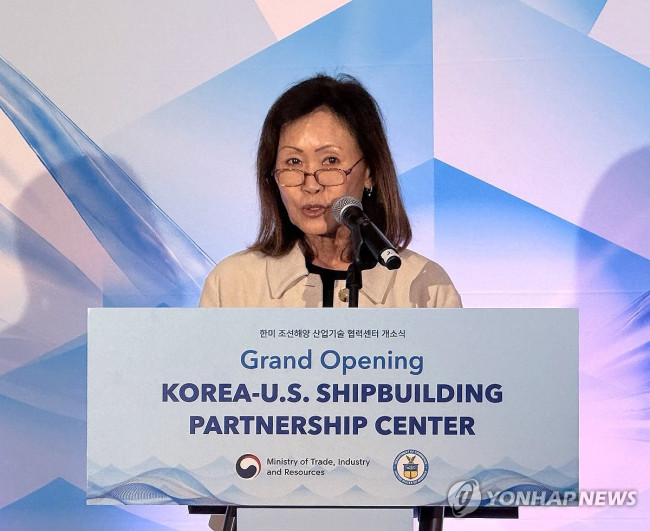 First U.S. Ambassador of Trump's Second Term to Arrive This Week… Will It Provide Momentum to Resolve Pending Issues?
U.S. Ambassador to South Korea Michelle Steel speaks at the opening ceremony of the Korea-U.S. Shipbuilding Cooperation Center held at the Mayflower Hotel in Washington, D.C., on the 23rd (local time)
First U.S. Ambassador of Trump's Second Term to Arrive This Week… Will It Provide Momentum to Resolve Pending Issues?
U.S. Ambassador to South Korea Michelle Steel speaks at the opening ceremony of the Korea-U.S. Shipbuilding Cooperation Center held at the Mayflower Hotel in Washington, D.C., on the 23rd (local time)
 President Yoon, regarding the first-instance ruling on the Public Official Election Act: “An excessive political verdict that distorts the facts… We will appeal immediately.”
The first-instance sentencing hearing for President Yoon Suk Yeol regarding violations of the Public Official Election Act is being broadcast live at Seoul Station on the 27th. [Photo=Yonhap News]Pres
President Yoon, regarding the first-instance ruling on the Public Official Election Act: “An excessive political verdict that distorts the facts… We will appeal immediately.”
The first-instance sentencing hearing for President Yoon Suk Yeol regarding violations of the Public Official Election Act is being broadcast live at Seoul Station on the 27th. [Photo=Yonhap News]Pres
 91% of Net Influx of MZ Generation Goes to Seoul Metropolitan Area… Population Migration Also Shows 'K-shaped Polarization' by Industry
[Provided by Leaders Index]Over the past four years, the MZ generation population has become increasingly concentrated in the Seoul metropolitan area and the Chungcheong region. While cities cen
91% of Net Influx of MZ Generation Goes to Seoul Metropolitan Area… Population Migration Also Shows 'K-shaped Polarization' by Industry
[Provided by Leaders Index]Over the past four years, the MZ generation population has become increasingly concentrated in the Seoul metropolitan area and the Chungcheong region. While cities cen
 'Godfather of Japanese Mystery Novels' Keigo Higashino Passes Away After Battle with Cancer at 68
Famous Japanese mystery novelist Keigo Higashino [AFP=Yonhap News]It has been belatedly reported that Keigo Higashino, the "godfather of Japanese mystery novels" and author of bestsellers such as "The
'Godfather of Japanese Mystery Novels' Keigo Higashino Passes Away After Battle with Cancer at 68
Famous Japanese mystery novelist Keigo Higashino [AFP=Yonhap News]It has been belatedly reported that Keigo Higashino, the "godfather of Japanese mystery novels" and author of bestsellers such as "The
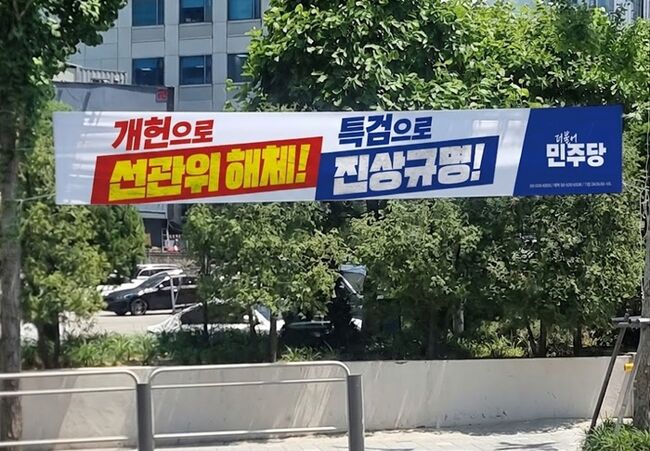 [Cho Yang-geon Column] The NEC: Facing a Fate of "Discarding the Dog After the Hunt"
Banner calling for the "dissolution of the NEC" posted by the Democratic Party. [AI-generated image]Banners calling for the "dissolution of the National Election Commission (NEC)" posted by the Democr
[Cho Yang-geon Column] The NEC: Facing a Fate of "Discarding the Dog After the Hunt"
Banner calling for the "dissolution of the NEC" posted by the Democratic Party. [AI-generated image]Banners calling for the "dissolution of the National Election Commission (NEC)" posted by the Democr
 [Photo] Evidence of Election Fraud Flooding U.S. Media… Trump Had 2.7 Million Votes Stolen
 [Video] U.S. Semiquincentennial Air Show... 'Art in the Sky' streaks across New York
 [Editorial Cartoon] A Draconian Law That Undermines Freedom of Expression

 List
List