본 기획은 ‘AI 자본주의와 국가의 귀환’ 3부작 중 제2부로, 트럼프 정부의 산업주권 2.0 전략과 AI–전력–데이터 인프라를 중심으로 재편되는 국가 설계의 정치학(Politics of Design)을 다룹니다. 제4장은 트럼프 행정부의 ‘인더스트리얼 웹 팩트(Industrial Web Pact)’를 통해 민간이 헌법을 집행하는 새로운 산업 계약의 출현을, 제5장은 산업주권의 헌법과 책임의 귀환을 중심으로 국가가 다시 헌법의 자리로 돌아오는 과정을 탐구합니다. <편집자 주>
 The coordinates of servers are the coordinates of borders — data and power grids redraw national boundaries. Hankook Ilbo Graphic
Part 2. The Return of the State… The Politics of Design
Chapter 4. Trump’s Return and Industrial Sovereignty 2.0
(Trump’s Return and Industrial Sovereignty 2.0)
Trump’s return is not just a political comeback. It is the day the relationship between capital and the state was rewritten.
He did not deny the market. He merely reclaimed the state's Design Sovereignty.
Instead of the language of free trade, he presented the constitution of Industrial Sovereignty.
The era when the state "supported" industry is over; the era when industry "builds the state" has begun.
1. The Return of Energy Realism
In 2024, the U.S. Department of Energy (DOE) officially approved the acquisition contract of Westinghouse by a consortium of Brookfield, Cameco, and BlackRock.
The document contained one sentence.
"Private Capital will build the state."
This sentence declares that the foundation of the state's legitimacy has shifted from "politics" to "investment." It is a declaration of capital and signifies the return of the state. In other words, investors, not public officials, are now the designers of the state.
Trump called this contract "a grand compromise between the market and the government."
The core idea was not that capital would replace state policy, but that it would build the nation's mission on its behalf.
He said, "If the government can’t build, let the investors build it."
This was not the neoliberalism of the 1980s, but the industrial constitution of the 2020s.
Energy Realism was a political science that redesigned the nation around the structure of power grids, rather than technology.
His industrial policy can be summarized in one sentence:
"National security is now Energy Stability."
2. Industrial Web Pact: "Private Sector Builds the State"
In March 2025, the 'Industrial Web Pact,' spearheaded by Elon Musk, Larry Fink, and Linda Yaccarino, was announced in the White House briefing room.
It was a new 'state-capital alliance' that bound AI, power, data, and media networks into a single industrial ecosystem.
Its structure can be summarized in three pillars:
AI, Power, Data: The material infrastructure of design
Capital, Corporations, State: The legal subjects of design
Public Opinion, Market, Votes: The democratic legitimacy of design
This pact was the first industrial contract where the private sector, not the government, executed the constitution.
A Memorandum of Understanding, rather than an executive order, replaced the role of the constitution.
Trump said in his speech, "Private capital works for the state, not above it."
This was a return to "state design," not the "market freedom" of the past.
He did not abolish regulations; he changed their direction.
It was a shift from politics above the market to the Politics of Design.
3. The Return of Anti-Globalization: "Two Circuits, One Race"
In early 2025, the United States, Japan, and the United Kingdom signed the 'AI-Energy Partnership,'
creating a structure where AI infrastructure investments circulate only within the alliance.
This is the so-called 'Dual Circuit, One Race' strategy.
AI computation networks, power supply chains, and semiconductor supply chains were all separated into 'Alliance Circuits' and 'External Circuits.'
Trump's world was an order of Free Design, not free trade.
He did not deny globalization; he merely reclaimed the right to design its circuits.
"America doesn’t outsource sovereignty."
This statement was a warning to South Korea.
In August 2025, the U.S. Department of Commerce released a 'List of AI Power and Semiconductor Alliance Countries,' but South Korea was not on it.
South Korea was classified as an 'investment market.' It had become a commodity of capital, not a national strategy.
4. The Conclusion: "A State That Did Not Dismantle the Market"
Trump did not destroy the market. He returned the market's blueprint to the state's constitution.
His return was not of "protectionism" but of "design sovereignty."
He trusted companies' blueprints more than executive orders.
He prioritized infrastructure over budgets and accountability over regulation.
His era was not one where the state controlled the market, but one where the state was returned to the position of market designer.
His return was not the return of capital, but the Return of the State.
Chapter 5. The Constitution of Industrial Sovereignty: "Taking Responsibility for Design"
(The Constitution of Industrial Sovereignty)
The state did not disappear. It was merely preparing. The name of that language is Industrial Sovereignty.
1. The Code of Industrial Sovereignty: "The Right to Design"
The essence of AI capitalism is not technology, but the concentration of the right to design.
Industrial policy has now become a constitutional task, not a job for economic ministries. The U.S. has reorganized industry as part of its security through the Inflation Reduction Act (IRA).
The European Union (EU) announced a 'Declaration on Industrial Sovereignty,' reclassifying data centers and semiconductor facilities as 'Critical Infrastructure.'
Japan, through its GX (Green Transformation) strategy, has consolidated energy, nuclear power, and AI data infrastructure as a single national asset.
In contrast, South Korea has packaged its participation in BlackRock's AI infrastructure fund as "attracting foreign investment," effectively replacing industrial sovereignty with a contract.
"A nation that has lost its industry is no different from a nation that has lost its territory."
The core of industrial sovereignty is not ownership, but the Right to Design. The right to decide how technology will be used is more important than possessing the technology itself.
2. Power Sovereignty: "Energy is National Strength"
AI is not just a tool that consumes electricity; it is a power that reallocates it.
Data centers are now a "Power Government."
The IEA predicts that by 2030, 20% of global electricity consumption will be used by data centers. More than half of that will be for AI computation.
Whoever designs the flow of electricity designs the nation's destiny.
Power Sovereignty is not simply an energy policy; it is the physical foundation of the constitution.
The nation's power grid is no longer technological infrastructure but the Foundation of Politics.
In the age of AI capitalism, electricity is the constitution.
3. Data Sovereignty: "Redrawing the Borders of Information"
Data is territory.
Over 70% of AI training data is processed on servers within the United States. This means data already possesses nationality.
The EU, through the 'Data Act,' has specified the pathways of data generation, processing, and transfer as 'sovereign rights.'
The U.S. secured judicial jurisdiction over data access with the 'Cloud Act.'
Japan established a 'Data Security' section within its GX strategy.
Only South Korea has yet to define 'Data Nationality.'
The sovereign is not the one who possesses data, but the one who designs and moves it. The borders of information are drawn by the location of servers.
"The coordinates of servers are the coordinates of borders."
4. The Return of Accountability: "Beyond the Completion of Efficiency"
AI capitalism stands on the completion of Efficiency. However, efficiency lacks Accountability.
Trump said,
"Government should not manage the market, but it must own the mission."
This statement pierces the paradox of AI capitalism.
AI can calculate everything, but it cannot be held accountable. Therefore, the return of the state is not the return of market interference, but the Return of Accountability.
The state is not the hand that writes laws, but the shoulder that bears responsibility. AI capitalism replaces humans with efficiency, but the constitution of industrial sovereignty restores humans through accountability. The state has returned to its constitutional place. That constitution is written not on paper, but in the code of power grids and the pathways of data.
"The next civilization of AI capitalism is 'The Age of Design.'"
The following Part 4 is Part 3. Civilization and Records: "Commentaries of the Scribe."

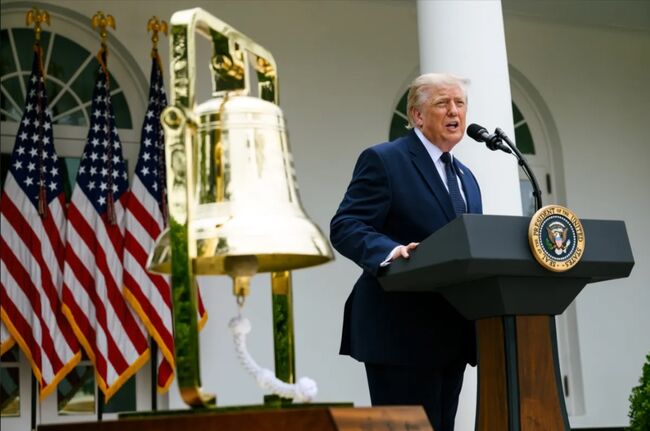 Trump pressures for rate cut again ahead of FOMC... "Should be the lowest in the world"
U.S. President Donald Trump. [Photo = The White House] U.S. President Donald Trump once again pressured the Federal Reserve, the U.S. central bank, to lower interest rates on the 27th (local time
Trump pressures for rate cut again ahead of FOMC... "Should be the lowest in the world"
U.S. President Donald Trump. [Photo = The White House] U.S. President Donald Trump once again pressured the Federal Reserve, the U.S. central bank, to lower interest rates on the 27th (local time
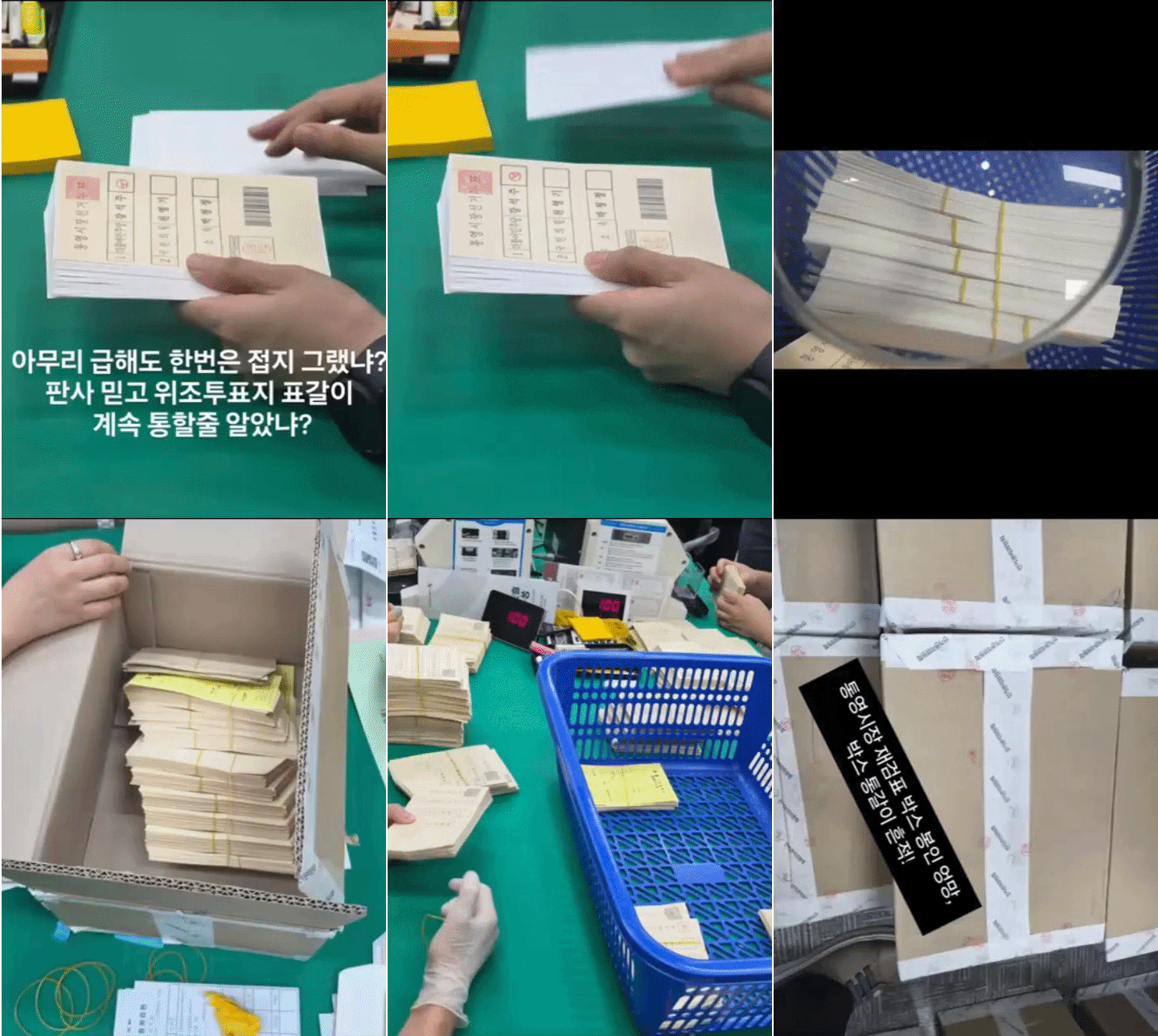 “Ignoring crisp ballots and damaged seals”… Tongyeong mayoral recount concludes with ‘no change in outcome,’ leaving suspicions and public outrage behind
Suspected counterfeit ballots discovered in Tongyeong [GIF from social media of Representative Hwang Kyo-ahn / Attorney Park Joo-hyun]During a recount of the Tongyeong mayoral election in South Gyeong
“Ignoring crisp ballots and damaged seals”… Tongyeong mayoral recount concludes with ‘no change in outcome,’ leaving suspicions and public outrage behind
Suspected counterfeit ballots discovered in Tongyeong [GIF from social media of Representative Hwang Kyo-ahn / Attorney Park Joo-hyun]During a recount of the Tongyeong mayoral election in South Gyeong
 President Yoon, regarding the first-instance ruling on the Public Official Election Act: “An excessive political verdict that distorts the facts… We will appeal immediately.”
The first-instance sentencing hearing for President Yoon Suk Yeol regarding violations of the Public Official Election Act is being broadcast live at Seoul Station on the 27th. [Photo=Yonhap News]Pres
President Yoon, regarding the first-instance ruling on the Public Official Election Act: “An excessive political verdict that distorts the facts… We will appeal immediately.”
The first-instance sentencing hearing for President Yoon Suk Yeol regarding violations of the Public Official Election Act is being broadcast live at Seoul Station on the 27th. [Photo=Yonhap News]Pres
 WSJ: "SK Hynix ADR Premium Is a Sign of AI Trading Overheat"
Advertisement for SK Hynix ADR listing in New York's Times Square [Reuters=Yonhap News file photo]The Wall Street Journal (WSJ) has pointed out that the price of SK Hynix’s American Depositary Recei
WSJ: "SK Hynix ADR Premium Is a Sign of AI Trading Overheat"
Advertisement for SK Hynix ADR listing in New York's Times Square [Reuters=Yonhap News file photo]The Wall Street Journal (WSJ) has pointed out that the price of SK Hynix’s American Depositary Recei
 'Godfather of Japanese Mystery Novels' Keigo Higashino Passes Away After Battle with Cancer at 68
Famous Japanese mystery novelist Keigo Higashino [AFP=Yonhap News]It has been belatedly reported that Keigo Higashino, the "godfather of Japanese mystery novels" and author of bestsellers such as "The
'Godfather of Japanese Mystery Novels' Keigo Higashino Passes Away After Battle with Cancer at 68
Famous Japanese mystery novelist Keigo Higashino [AFP=Yonhap News]It has been belatedly reported that Keigo Higashino, the "godfather of Japanese mystery novels" and author of bestsellers such as "The
 [Park Pil-kyu Security Column] To the Ignorant Trying to Clothe a Beast in Sheep's Clothing
Rep. Kim Byung-joo of the Democratic Party of Korea [Photo=Yonhap News]“The Air Force Academy doesn't teach you how to fly a plane!” “The Army, Navy, and Air Force academies are exactly the
[Park Pil-kyu Security Column] To the Ignorant Trying to Clothe a Beast in Sheep's Clothing
Rep. Kim Byung-joo of the Democratic Party of Korea [Photo=Yonhap News]“The Air Force Academy doesn't teach you how to fly a plane!” “The Army, Navy, and Air Force academies are exactly the
 [Issue Diagnosis] Two Effects of the Election Petition Review
 [Photo] Evidence of Election Fraud Flooding U.S. Media… Trump Had 2.7 Million Votes Stolen
 [Video] U.S. Semiquincentennial Air Show... 'Art in the Sky' streaks across New York
 [Editorial Cartoon] A Draconian Law That Undermines Freedom of Expression

 List
List