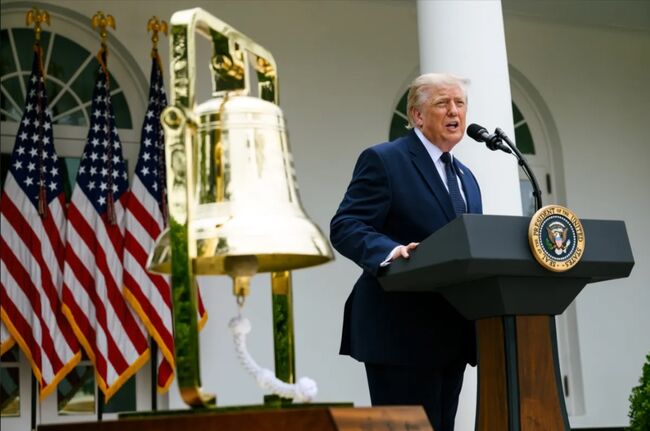
U.S. President Trump delivering a special address at the APEC CEO Summit. Yonhap News.
 Kim Byung-joon, Former Professor at Kangnam University, Ph.D. in Business Administration, Current Co-CEO of JagyomoOn October 29th, the government announced that the ROK-U.S. tariff agreement had been effectively reached. While the National Assembly plans to pass a special law related to this, the specific details of the substantive agreement have not been disclosed, and there has been no signing ceremony. Given the past experience where the substantive agreement from the July negotiations was announced and then fell through, it is still difficult to draw firm conclusions. First, here are the detailed progress points of the tariff negotiations released by Kim Yong-beom, the Senior Secretary to the President for Policy of Korea.
The investment in the U.S. made with government funding will be structured as a total of $200 billion, with an annual limit of $20 billion. This is explained as being coverable by interest income at an annual rate of 5%, considering the current foreign exchange reserves slightly exceeding $400 billion. Second, the cooperation in the shipbuilding industry, named the MASGA project, will be driven by Korean companies with private capital. It is said that Korean companies can reduce the burden on the foreign exchange market through long-term ship financing to secure investment funds amounting to $150 billion. Third, the mutual tariff rates for automobiles and automotive parts have been set at 15%, and for semiconductors, it was announced that Korea is not at a disadvantage compared to competitor Taiwan. Fourth, among tariff items, pharmaceuticals and timber products will receive most-favored-nation treatment, while aircraft parts, generic drugs, and natural resources not produced in the U.S. will be tariff-free. Additionally, it is reported that market opening for sensitive items such as rice and beef, which are subject to increased agricultural product liberalization, has been defended. Finally, the tariff reduction will be backdated to November 1st, with the timing of the tariff reduction determined from the submission of the related bill to the National Assembly around mid-November.
In response, statements from U.S. President Donald Trump and Secretary of Commerce Howard Rutnick differed from those of our government. First, President Trump announced that in addition to the total $350 billion in U.S. investment, an additional investment from wealthy Korean companies would be received, bringing the total investment to $600 billion (interpreted as including the existing $350 billion). Secretary Rutnick announced that a 100% market opening, including agricultural products, had been agreed upon. While the discrepancy in announcements between the two governments is problematic, this article will focus on the Korean government's announcement for analysis, even though it contains serious issues, and intends to point out the main arguments.
Firstly, Secretary Kim only mentioned the tariff rate for automobiles and did not address items such as steel and aluminum, for which the U.S. has announced a 50% tariff rate, leaving no contingency plans. Furthermore, while the tariff rate for automotive parts was specified as 15%, if the 50% export tariff on steel products to the U.S. is maintained, an increase in the supply price to automotive export companies, who are supplied with cold-rolled steel sheets for car bodies, is inevitable. Generally, it is crucial whether "automotive parts" includes all items comprising raw materials, intermediate goods, and work-in-progress for automobiles, or if raw materials are excluded. Cold-rolled steel sheets, which form the car body, are undoubtedly important raw materials for automobile manufacturers. In the unlikely event that cold-rolled steel sheets supplied by Korean steel companies to automobile manufacturers are not included in the scope of parts, export tariffs will have to be paid separately by the cold-rolled steel sheet suppliers when the vehicles produced by automobile manufacturers are exported to the U.S., inevitably leading to an increase in supply costs. In that case, for automobile manufacturers to maintain export competitiveness to the U.S., they would have to use cold-rolled steel sheets produced by U.S. subsidiaries or American companies rather than Korean steel companies to achieve price competitiveness. While it is true that U.S. steel production costs, including labor costs, are higher than ours, they become significantly cheaper when a 50% tariff is applied. Generally, export-bound vehicle parts sold by subcontractors to the automotive industry are separately marked as exports. When parts are supplied directly to overseas automobile manufacturers, they are marked as direct exports, and when supplied through domestic companies for export, they are marked as KD (knockdown) exports, with only this distinction. This is also the case for steel companies supplying to domestic automobile manufacturers. The key issue boils down to whether the cold-rolled steel sheets supplied by steel companies are recognized as parts or not, and it is indeed difficult to make a definitive judgment at this time as the agreement document has not been fully disclosed.
Secondly, from the perspective that U.S. President Trump adheres to the MAGA policy of aiming for U.S. production and consumption, breaking the previous paradigm of Chinese production and U.S. consumption, Korea cannot be an exception. That is, with the goal of making the U.S. a manufacturing powerhouse again by attracting core manufacturing industries such as steel, shipbuilding, nuclear power, semiconductors, and secondary batteries to the U.S., the $600 billion figure, which considers additional private sector investment beyond government and shipbuilding industry investments, is interpreted as such. It is clear that the private sector's additional investment will be in areas such as secondary batteries, nuclear power, and semiconductors, which are core Korean manufacturing sectors. In essence, this is a request to move Korea's manufacturing center to the U.S. This is because, apart from automobiles, tariff rates for items in these sectors have not even been mentioned, and the possibility of high tariffs, exceeding 15%, is strong. In that case, for globally competitive Korean manufacturing conglomerates, whose future business sustainability is already questionable due to the current administration's numerous restrictive laws (amended Commercial Act, Yellow Envelope Act, forced sale of treasury shares, etc.), relocating production bases to the U.S. is an essential strategy for survival. Moreover, the problem becomes even more severe if the 15% tariff rate applicable to steel suppliers for automobiles is not applied. POSCO, whose capital and technological capabilities have been significantly eroded by China and which cannot escape the 50% U.S. tariff, has already invested a 10% stake in US Steel, the second-largest steel company in the U.S. acquired by Japan's Nippon Steel, and plans to participate in the construction of an integrated steel mill in Louisiana with Hyundai Steel, as a final resort. It is also seeking cooperation with U.S. competitors by investing up to 2 trillion won in Cleveland-Cliffs, which acquired Arcelor Mittal U.S., to explore cooperation with domestic competitors in the U.S. In other words, even if the automobile tariff rate is 15%, if the basic steel components for the car body are not included in the 15%, not only steel companies but also automobile manufacturers will eventually have to consider relocating their production bases to the U.S.
Thirdly, I would like to point out the sustainability of the government's annual investment of up to $20 billion. In the worst-case scenario, as mentioned above, our major manufacturing conglomerates, which are at the forefront of global competition, might largely relocate to the U.S., potentially leading to severe growth stagnation or decline due to manufacturing hollowing out. Foreign exchange reserves refer to foreign currency held under the responsibility of the Bank of Korea, the central bank. In this context, Korea's current account surplus (a concept combining the trade balance with the service balance and the current transfer balance) has averaged $60 billion since 2020, with the surplus primarily attributable to the increase in net exports by the private sector. The government mainly purchases foreign currency inflows from private sector net exports for foreign exchange management purposes, and this constitutes foreign exchange reserves. That is, as net exports increase, foreign exchange reserves also increase. However, if faced with manufacturing hollowing out, our exports will plummet, and consequently, private sector foreign currency inflows will decrease, leading to an automatic decline in government foreign exchange reserves. Will our foreign exchange reserves be maintained at a level exceeding $400 billion, commensurate with our status as an export powerhouse, within the next 10 years? I believe this is highly unlikely. If shipbuilding, steel, secondary batteries, and nuclear power industries relocate to the U.S., net exports are expected to show a deficit within the next five years, and as a result, foreign exchange reserves are likely to plummet drastically. Furthermore, considering that our key export items such as automobiles and semiconductors, even if not relocating their production bases entirely, will likely see a significant shift in their proportion, the situation is even more pessimistic.
Therefore, I will explain why the government is so anxious to make a hasty announcement during the APEC period, and why President Trump responded so readily. The Lee Jae-myung administration, regardless of what anyone says, has shown a pro-China, anti-U.S. stance. Moreover, having seized power through an unacceptable and erroneous ruling by the Constitutional Court and by thoroughly rejecting the verification of election fraud through advance voting by power institutions, this government likely needed to publicize a swift agreement conclusion to the public for its own stability. As mentioned earlier, President Trump had no reason not to accept such an investment proposal, which is an offer he simply cannot lose from. While it may seem like a step back from the initial $350 billion all-cash investment reported by the media, in reality, both this proposal (which I believe was initially proposed by the current administration) and the proposal of annual installments of $20 billion have no significant difference, as President Trump presumably judges. This is because, as former Ambassador-at-Large for International Criminal Justice Morse Tan pointed out in September, by simply halting the import of wind and solar power generation equipment from China and cutting subsidies for the illegal pro-China activities of Democratic Party lawmakers (which Morse Tan referred to as national subsidies, including those for pro-China social organizations affiliated with the Democratic Party), at least $200 billion could be easily procured within a few years. However, given the current administration's actions, there is no possibility of this happening. Therefore, it can be seen as a welcome gesture by President Trump, as a means to warn the current Lee Jae-myung administration, which explicitly adheres to pro-China and anti-U.S. policies, and to urge the Korean people to awaken, even while fully acknowledging the inevitable collapse of the Korean economy in both the short and long term. In other words, the $20 billion annual investment, which lacks long-term sustainability, or the $200 billion investment, which could even trigger a one-time foreign exchange crisis, are all the same. It can be interpreted as an indirect blow to the current government and the established media, which remain within the framework of pro-China and anti-U.S. sentiment, while simultaneously serving as an implicit call for the Korean people to actively resist Lee Jae-myung's misdeeds.
The task of facing and responding to these facts squarely now rests with the Korean people. As I have repeatedly pointed out in this publication, the Republic of Korea is on a voyage of endless shipwreck, led by a misguided captain. The aforementioned challenges in the ROK-U.S. tariff agreement can be readily grasped by anyone with even a little knowledge of economics. This government must no longer deceive the people. The established media is no different. To finally herald the success of the tariff negotiations is akin to herding the public into a state of being like chickens, who, despite having their insides eaten by rats, are induced to peck diligently at only the corn.
Kim Byung-joon, Former Professor at Kangnam University, Ph.D. in Business Administration, Current Co-CEO of Jagyomo

 Trump pressures for rate cut again ahead of FOMC... "Should be the lowest in the world"
U.S. President Donald Trump. [Photo = The White House] U.S. President Donald Trump once again pressured the Federal Reserve, the U.S. central bank, to lower interest rates on the 27th (local time
Trump pressures for rate cut again ahead of FOMC... "Should be the lowest in the world"
U.S. President Donald Trump. [Photo = The White House] U.S. President Donald Trump once again pressured the Federal Reserve, the U.S. central bank, to lower interest rates on the 27th (local time
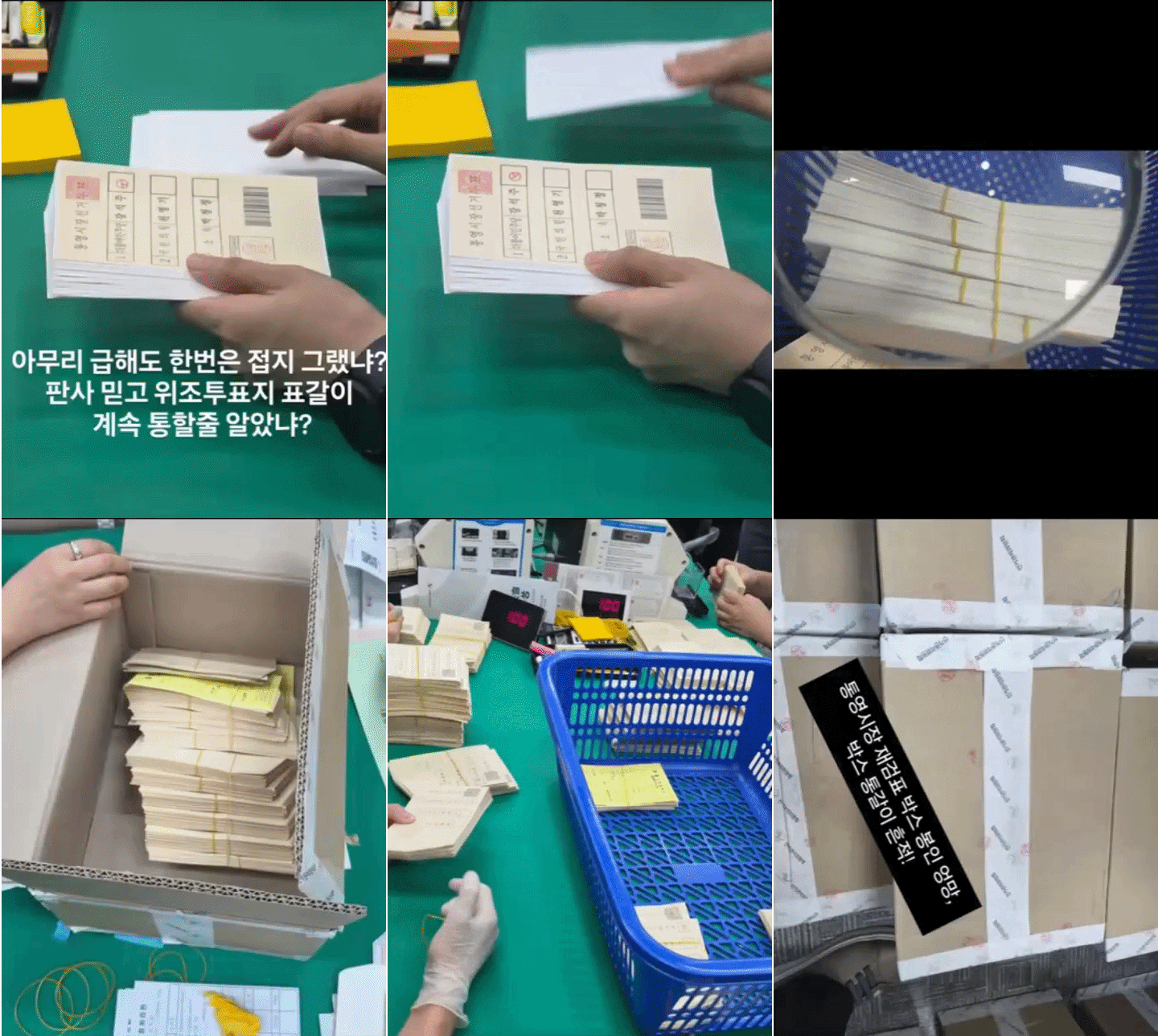 “Ignoring crisp ballots and damaged seals”… Tongyeong mayoral recount concludes with ‘no change in outcome,’ leaving suspicions and public outrage behind
Suspected counterfeit ballots discovered in Tongyeong [GIF from social media of Representative Hwang Kyo-ahn / Attorney Park Joo-hyun]During a recount of the Tongyeong mayoral election in South Gyeong
“Ignoring crisp ballots and damaged seals”… Tongyeong mayoral recount concludes with ‘no change in outcome,’ leaving suspicions and public outrage behind
Suspected counterfeit ballots discovered in Tongyeong [GIF from social media of Representative Hwang Kyo-ahn / Attorney Park Joo-hyun]During a recount of the Tongyeong mayoral election in South Gyeong
 President Yoon, regarding the first-instance ruling on the Public Official Election Act: “An excessive political verdict that distorts the facts… We will appeal immediately.”
The first-instance sentencing hearing for President Yoon Suk Yeol regarding violations of the Public Official Election Act is being broadcast live at Seoul Station on the 27th. [Photo=Yonhap News]Pres
President Yoon, regarding the first-instance ruling on the Public Official Election Act: “An excessive political verdict that distorts the facts… We will appeal immediately.”
The first-instance sentencing hearing for President Yoon Suk Yeol regarding violations of the Public Official Election Act is being broadcast live at Seoul Station on the 27th. [Photo=Yonhap News]Pres
 WSJ: "SK Hynix ADR Premium Is a Sign of AI Trading Overheat"
Advertisement for SK Hynix ADR listing in New York's Times Square [Reuters=Yonhap News file photo]The Wall Street Journal (WSJ) has pointed out that the price of SK Hynix’s American Depositary Recei
WSJ: "SK Hynix ADR Premium Is a Sign of AI Trading Overheat"
Advertisement for SK Hynix ADR listing in New York's Times Square [Reuters=Yonhap News file photo]The Wall Street Journal (WSJ) has pointed out that the price of SK Hynix’s American Depositary Recei
 'Godfather of Japanese Mystery Novels' Keigo Higashino Passes Away After Battle with Cancer at 68
Famous Japanese mystery novelist Keigo Higashino [AFP=Yonhap News]It has been belatedly reported that Keigo Higashino, the "godfather of Japanese mystery novels" and author of bestsellers such as "The
'Godfather of Japanese Mystery Novels' Keigo Higashino Passes Away After Battle with Cancer at 68
Famous Japanese mystery novelist Keigo Higashino [AFP=Yonhap News]It has been belatedly reported that Keigo Higashino, the "godfather of Japanese mystery novels" and author of bestsellers such as "The
 [Park Pil-kyu Security Column] To the Ignorant Trying to Clothe a Beast in Sheep's Clothing
Rep. Kim Byung-joo of the Democratic Party of Korea [Photo=Yonhap News]“The Air Force Academy doesn't teach you how to fly a plane!” “The Army, Navy, and Air Force academies are exactly the
[Park Pil-kyu Security Column] To the Ignorant Trying to Clothe a Beast in Sheep's Clothing
Rep. Kim Byung-joo of the Democratic Party of Korea [Photo=Yonhap News]“The Air Force Academy doesn't teach you how to fly a plane!” “The Army, Navy, and Air Force academies are exactly the
 [Issue Diagnosis] Two Effects of the Election Petition Review
 [Photo] Evidence of Election Fraud Flooding U.S. Media… Trump Had 2.7 Million Votes Stolen
 [Video] U.S. Semiquincentennial Air Show... 'Art in the Sky' streaks across New York
 [Editorial Cartoon] A Draconian Law That Undermines Freedom of Expression

 List
List