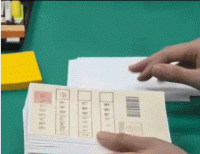
The U.S. Treasury Department building in Washington D.C. AFP=Yonhap News.
The U.S. government has newly designated eight North Korean nationals and two North Korean-based entities as targets for sanctions, involved in laundering illicit proceeds from North Korea's cybercrimes.
The U.S. believes the North Korean regime engages in international cybercrime to evade sanctions and uses the proceeds for its nuclear and missile development. This latest round of sanctions is part of an effort to cut off these funding channels.
The U.S. Department of the Treasury's Office of Foreign Assets Control (OFAC) announced on the 4th (local time) that it has designated eight individuals and two entities for sanctions, who are involved in money laundering stemming from various illicit North Korean operations, including cybercrime and IT worker fraud.
The designated North Korean nationals, Jang Kuk-chol and Ho Jong-sun, have managed funds including $5.3 million in cryptocurrency (virtual assets). The Treasury Department explained that some of these funds are linked to North Korean ransomware groups with a history of targeting the United States.
The North Korean IT company, Chosun Man-gyongdae Computer Technology Company, and its representative, Woo Yong-su, have also been added to the sanctions list.
This company has operated IT personnel dispatch operations in at least two cities, including Shenyang and Dandong in China. IT personnel affiliated with the company have used Chinese nationals as proxies for financial transactions to conceal the sources of illicitly generated funds.
Ryugong Credit Bank, a North Korean financial institution, was included in the sanctions for its suspected involvement in financial support activities for sanctions evasion schemes between China and North Korea.
Additionally, representatives of North Korean financial institutions based in China or Russia, including Heo Yong-chol, Han Hong-gil, Jeong Seong-hyuk, Choi Chun-bom, and Ri Jin-hyuk, were also sanctioned. They were involved in fund transfers and other activities on behalf of North Korean financial institutions subject to U.S. sanctions.
Individuals and entities subject to sanctions will have all their assets within the United States frozen, and transactions with them within the U.S. are prohibited.
Under Secretary of the Treasury for Terrorism and Financial Intelligence, John K. Halley, stated, "The North Korean regime is enlisting regime-sponsored hackers to steal and launder money to finance its nuclear weapons program. By generating revenue for North Korea's weapons development, they directly threaten U.S. and international security."
According to a Treasury Department press release, cybercriminals linked to North Korea have stolen over $3 billion (approximately 4.3 trillion won) in the past three years. They primarily targeted cryptocurrency and sometimes employed advanced methods such as sophisticated malware.
The Treasury Department explained that North Korea relies on an overseas network to launder proceeds generated through the disguised employment of IT personnel, digital asset theft, and sanctions evasion schemes, and to gain access to international markets and financial systems.
This network consists of bank representatives, financial institutions, and shell companies located in North Korea, China, and Russia.
The Treasury Department stated, "The United States strongly condemns the activities of North Korean-related forces that, in violation of multiple UN Security Council resolutions, support North Korea's weapons of mass destruction and ballistic missile programs and enable associated sanctions evasion activities."
The previous day, the U.S. Department of State also announced that it would pursue UN sanctions designations against seven third-country vessels involved in the export of North Korean coal and iron ore to China, in violation of UN Security Council sanctions resolutions against North Korea.
Following the unsuccessful attempt at a North Korea-U.S. summit, which U.S. President Donald Trump had expressed hope for during his visit to South Korea (October 29-30), the U.S. continues to announce measures related to North Korea sanctions, drawing attention to the background and potential impact on future North Korea-U.S. relations.
Yonhap News

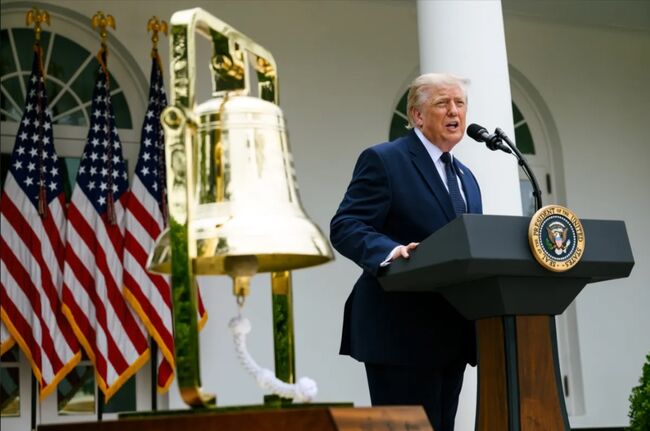 Trump pressures for rate cut again ahead of FOMC... "Should be the lowest in the world"
U.S. President Donald Trump. [Photo = The White House] U.S. President Donald Trump once again pressured the Federal Reserve, the U.S. central bank, to lower interest rates on the 27th (local time
Trump pressures for rate cut again ahead of FOMC... "Should be the lowest in the world"
U.S. President Donald Trump. [Photo = The White House] U.S. President Donald Trump once again pressured the Federal Reserve, the U.S. central bank, to lower interest rates on the 27th (local time
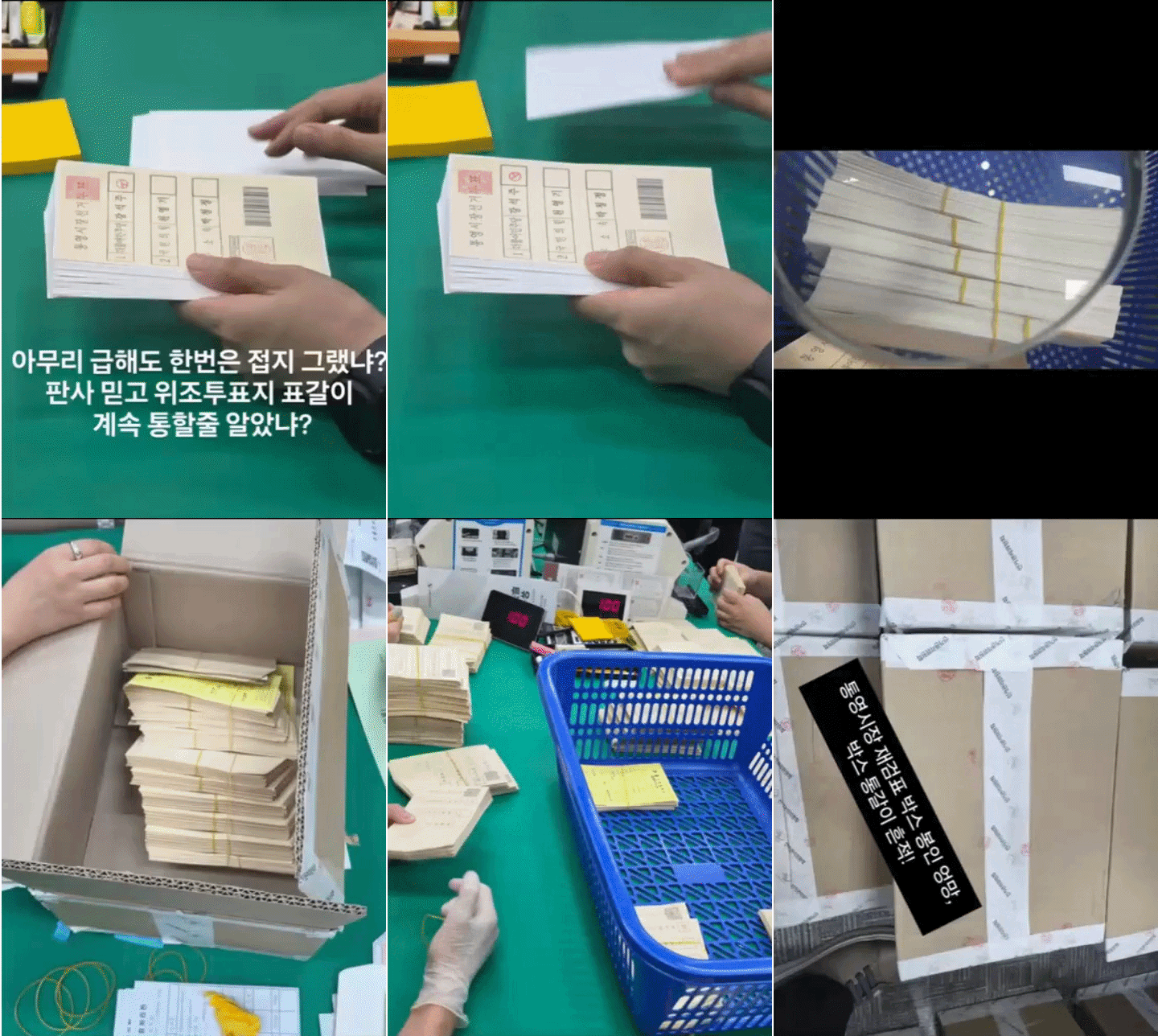 “Ignoring crisp ballots and damaged seals”… Tongyeong mayoral recount concludes with ‘no change in outcome,’ leaving suspicions and public outrage behind
Suspected counterfeit ballots discovered in Tongyeong [GIF from social media of Representative Hwang Kyo-ahn / Attorney Park Joo-hyun]During a recount of the Tongyeong mayoral election in South Gyeong
“Ignoring crisp ballots and damaged seals”… Tongyeong mayoral recount concludes with ‘no change in outcome,’ leaving suspicions and public outrage behind
Suspected counterfeit ballots discovered in Tongyeong [GIF from social media of Representative Hwang Kyo-ahn / Attorney Park Joo-hyun]During a recount of the Tongyeong mayoral election in South Gyeong
 President Yoon, regarding the first-instance ruling on the Public Official Election Act: “An excessive political verdict that distorts the facts… We will appeal immediately.”
The first-instance sentencing hearing for President Yoon Suk Yeol regarding violations of the Public Official Election Act is being broadcast live at Seoul Station on the 27th. [Photo=Yonhap News]Pres
President Yoon, regarding the first-instance ruling on the Public Official Election Act: “An excessive political verdict that distorts the facts… We will appeal immediately.”
The first-instance sentencing hearing for President Yoon Suk Yeol regarding violations of the Public Official Election Act is being broadcast live at Seoul Station on the 27th. [Photo=Yonhap News]Pres
 WSJ: "SK Hynix ADR Premium Is a Sign of AI Trading Overheat"
Advertisement for SK Hynix ADR listing in New York's Times Square [Reuters=Yonhap News file photo]The Wall Street Journal (WSJ) has pointed out that the price of SK Hynix’s American Depositary Recei
WSJ: "SK Hynix ADR Premium Is a Sign of AI Trading Overheat"
Advertisement for SK Hynix ADR listing in New York's Times Square [Reuters=Yonhap News file photo]The Wall Street Journal (WSJ) has pointed out that the price of SK Hynix’s American Depositary Recei
 'Godfather of Japanese Mystery Novels' Keigo Higashino Passes Away After Battle with Cancer at 68
Famous Japanese mystery novelist Keigo Higashino [AFP=Yonhap News]It has been belatedly reported that Keigo Higashino, the "godfather of Japanese mystery novels" and author of bestsellers such as "The
'Godfather of Japanese Mystery Novels' Keigo Higashino Passes Away After Battle with Cancer at 68
Famous Japanese mystery novelist Keigo Higashino [AFP=Yonhap News]It has been belatedly reported that Keigo Higashino, the "godfather of Japanese mystery novels" and author of bestsellers such as "The
 [Park Pil-kyu Security Column] To the Ignorant Trying to Clothe a Beast in Sheep's Clothing
Rep. Kim Byung-joo of the Democratic Party of Korea [Photo=Yonhap News]“The Air Force Academy doesn't teach you how to fly a plane!” “The Army, Navy, and Air Force academies are exactly the
[Park Pil-kyu Security Column] To the Ignorant Trying to Clothe a Beast in Sheep's Clothing
Rep. Kim Byung-joo of the Democratic Party of Korea [Photo=Yonhap News]“The Air Force Academy doesn't teach you how to fly a plane!” “The Army, Navy, and Air Force academies are exactly the
 [Issue Diagnosis] Two Effects of the Election Petition Review
 [Photo] Evidence of Election Fraud Flooding U.S. Media… Trump Had 2.7 Million Votes Stolen
 [Video] U.S. Semiquincentennial Air Show... 'Art in the Sky' streaks across New York
 [Editorial Cartoon] A Draconian Law That Undermines Freedom of Expression

 List
List