11월 4일 민주당 양부남 의원 등 11명이 발의한 「형법 일부개정법률안」은 ‘혐오표현 방지’를 명분으로 내세웠으나, 반중(反中) 집회와 국민 비판 여론을 처벌할 수 있는 조항을 담고 있다. 이재명 대통령의 ‘깽판’ 발언 이후 입법부가 국민을 죄인으로 만든 현실을, 본 사설은 헌정 질서에 대한 도전으로 비판한다. <편집자 주>
 Legislation becomes judgment, and the people's words become crimes. Hanmi Ilbo Graphics
On November 4, 2025, the 'Amendment to the Criminal Act' proposed by Representative Yang Bu-nam of the Democratic Party of Korea and 11 other lawmakers has torn through the boundaries of freedom that the Constitution has upheld.
While ostensibly presented as 'prevention of hate speech,' it is, in essence, a censorship law that criminalizes public criticism. This bill, which seeks to dismantle the law in the name of the law and confine freedom of expression, is not merely a revision of the Criminal Act but a challenge to the constitutional order.
If the legislature, under the guise of protecting the people, silences them, it is not justice but control, and it marks the day the National Assembly stands above the Constitution.
The bill introduces new articles, Article 307-2 (Group Defamation) and Article 311-2 (Group Insult) of the Criminal Act, stipulating a penalty of up to 5 years imprisonment or a fine of up to 10 million won for 'defaming or insulting the honor of a specific country, its people, or race.'
Furthermore, it includes a clause stating that 'due to the nature of groups, prosecution can be initiated regardless of the victim's intent.' This is an attempt to shift the framework of the Criminal Act, which is premised on freedom of expression, to a punitive structure centered on group honor.
Is the Democratic Party also holding trials? Legislative overreach, infringement of the Constitution
Legislation is about establishing principles, not serving as a tool for rendering judgments. Yet, the legislative intent statement of the Yang Bu-nam bill states, "False information was disseminated at an anti-China rally on National Foundation Day." If the National Assembly preemptively declares something as 'false' and 'disseminated' before any trial has even taken place, it is not legislation but a judicial act.
The moment the legislature writes a judgment, the rule of law collapses. The people are no longer protected by the law, and power dictates to the people in the name of the law.
It is rare in the history of the Republic to find instances where the legislative intent statement includes a factual determination. In essence, the National Assembly has authored a 'guilty verdict' beyond the grounds for legislation. Since when did the Democratic Party acquire judicial authority?
This bill is effectively a 'National Assembly's Declaration of Guilt' and a political trial masquerading as legislation.
Is Xi Jinping the Regent? Double Standards: Anti-Americanism is Freedom, Anti-China is a Crime
Everyone knows who this bill is targeting. It is China. Although the country's name is not explicitly mentioned anywhere in the bill, expressions like "anti-China rally on National Foundation Day" and "Ching Chong song" already indicate its direction. To define criticism of China as 'hate' and to frame issues raised about China as 'crimes' is not legislation of a democratic nation but diplomatic censorship.
The Democratic Party, which cried 'freedom of expression' during anti-American protests, is now wielding 'criminal penalties' for anti-China protests. If the mouths of the people are to be muzzled out of consideration for Xi Jinping's sentiments, then from that day forward, the National Assembly of this country is no longer a sovereign parliament.
The question 'Is Xi Jinping the Regent?' is not mere satire but a depiction of reality.
Where is Your Homeland? The President's 'Rampage Politics' and Legislative Subservience
The legislative overreach originated from the President's rhetoric. The moment President Lee Jae-myung labeled the anti-China protest in September as 'rampage,' the people's protest became a 'target of public order maintenance,' and now it has transformed into a 'target of punishment.'
The trend of branding slogans that the administration finds inconvenient as 'national insult' is the very context in which the Yang Bu-nam bill of November 4th exists. If the president's emotions lead to a legislative bill, and that bill dictates the people's expression, then that nation is no longer a democracy where the people are above the government. The moment the people exist for the sake of the regime, law becomes the language of violence.
Now the people ask, "Where is your homeland?"
Those Who Judge the People in the Name of the Law
The law exists to protect the honor of the people. However, this bill has trampled upon the people's honor. A National Assembly that insults the people in the name of legislation and censors their language is not an institution of the sovereign. The moment the legislature mimics the judiciary, appeases the executive branch, and saves face for a foreign country, the homeland of that law is no longer South Korea.
"The law should be a shield that protects the people's language. But now, the Democratic Party's law has become a sword aimed at the people."
#ThoseWhoToreTheLaw #FreedomOfExpression #YangBuNamLaw #RampagePolitics #LegislativeOverreach #ProChinaLegislation #ConstitutionalInfringement #SeparationOfPowers #LawToInsultThePeople #HanmiColumn

 [Statement by the Seobeokka KMA Patriots Association] ㉛ Recount the ballots openly, as the previous recount covered up election fraud
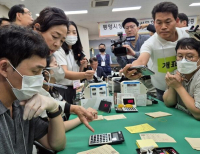
Recount of the Tongyeong mayoral election [Photo=Yonhap News]South Korea's liberal democracy is dying. The National Election Commission (NEC), which has degraded into a criminal organization through t
[Statement by the Seobeokka KMA Patriots Association] ㉛ Recount the ballots openly, as the previous recount covered up election fraud
Recount of the Tongyeong mayoral election [Photo=Yonhap News]South Korea's liberal democracy is dying. The National Election Commission (NEC), which has degraded into a criminal organization through t
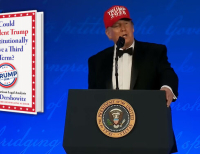
 What is the significance of the "Trump 2028" red hat that keeps reappearing?
It is noteworthy that while it is "highly likely" that President Donald Trump is "seriously considering" a run for the presidency in 2028, he is also "deliberately" fueling speculation regarding wheth
What is the significance of the "Trump 2028" red hat that keeps reappearing?
It is noteworthy that while it is "highly likely" that President Donald Trump is "seriously considering" a run for the presidency in 2028, he is also "deliberately" fueling speculation regarding wheth
 First U.S. Ambassador of Trump's Second Term to Arrive This Week… Will It Provide Momentum to Resolve Pending Issues?
U.S. Ambassador to South Korea Michelle Steel speaks at the opening ceremony of the Korea-U.S. Shipbuilding Cooperation Center held at the Mayflower Hotel in Washington, D.C., on the 23rd (local time)
First U.S. Ambassador of Trump's Second Term to Arrive This Week… Will It Provide Momentum to Resolve Pending Issues?
U.S. Ambassador to South Korea Michelle Steel speaks at the opening ceremony of the Korea-U.S. Shipbuilding Cooperation Center held at the Mayflower Hotel in Washington, D.C., on the 23rd (local time)
 President Yoon, regarding the first-instance ruling on the Public Official Election Act: “An excessive political verdict that distorts the facts… We will appeal immediately.”
The first-instance sentencing hearing for President Yoon Suk Yeol regarding violations of the Public Official Election Act is being broadcast live at Seoul Station on the 27th. [Photo=Yonhap News]Pres
President Yoon, regarding the first-instance ruling on the Public Official Election Act: “An excessive political verdict that distorts the facts… We will appeal immediately.”
The first-instance sentencing hearing for President Yoon Suk Yeol regarding violations of the Public Official Election Act is being broadcast live at Seoul Station on the 27th. [Photo=Yonhap News]Pres
 91% of Net Influx of MZ Generation Goes to Seoul Metropolitan Area… Population Migration Also Shows 'K-shaped Polarization' by Industry
[Provided by Leaders Index]Over the past four years, the MZ generation population has become increasingly concentrated in the Seoul metropolitan area and the Chungcheong region. While cities cen
91% of Net Influx of MZ Generation Goes to Seoul Metropolitan Area… Population Migration Also Shows 'K-shaped Polarization' by Industry
[Provided by Leaders Index]Over the past four years, the MZ generation population has become increasingly concentrated in the Seoul metropolitan area and the Chungcheong region. While cities cen
 'Godfather of Japanese Mystery Novels' Keigo Higashino Passes Away After Battle with Cancer at 68
Famous Japanese mystery novelist Keigo Higashino [AFP=Yonhap News]It has been belatedly reported that Keigo Higashino, the "godfather of Japanese mystery novels" and author of bestsellers such as "The
'Godfather of Japanese Mystery Novels' Keigo Higashino Passes Away After Battle with Cancer at 68
Famous Japanese mystery novelist Keigo Higashino [AFP=Yonhap News]It has been belatedly reported that Keigo Higashino, the "godfather of Japanese mystery novels" and author of bestsellers such as "The
 [Cho Yang-geon Column] The NEC: Facing a Fate of "Discarding the Dog After the Hunt"
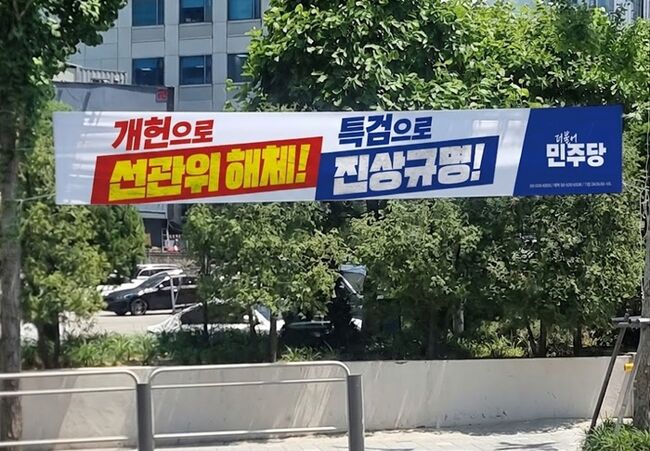
Banner calling for the "dissolution of the NEC" posted by the Democratic Party. [AI-generated image]Banners calling for the "dissolution of the National Election Commission (NEC)" posted by the Democr
[Cho Yang-geon Column] The NEC: Facing a Fate of "Discarding the Dog After the Hunt"
Banner calling for the "dissolution of the NEC" posted by the Democratic Party. [AI-generated image]Banners calling for the "dissolution of the National Election Commission (NEC)" posted by the Democr
 [Photo] Evidence of Election Fraud Flooding U.S. Media… Trump Had 2.7 Million Votes Stolen
 [Video] U.S. Semiquincentennial Air Show... 'Art in the Sky' streaks across New York
 [Editorial Cartoon] A Draconian Law That Undermines Freedom of Expression

 List
List