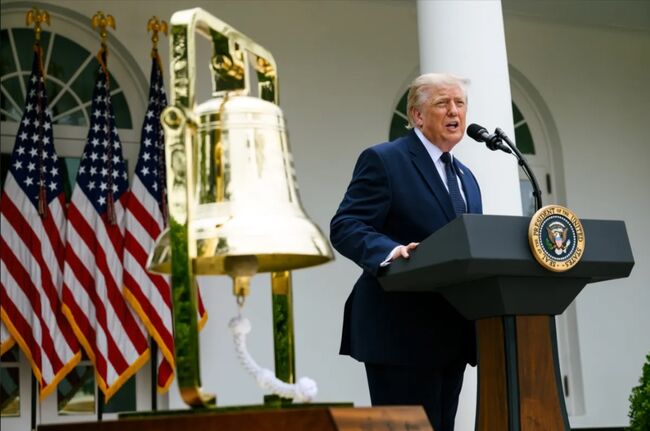
Foreign nationals with certain medical conditions like diabetes or obesity, or those lacking the financial resources and assets to support themselves, will find it harder to visit or reside in the United States under new guidelines from President Donald Trump's administration.
Embassy and consulate officials are being instructed to conduct comprehensive and thorough reviews of visa applicants, ensuring they can prove they will not need to rely on government public benefits at any point after entering the U.S., according to a State Department cable obtained exclusively by Fox News.
The guidelines demonstrate how the Trump administration is interpreting public charge, a concept in immigration law that can allow officials to deny entry or permanent residency to immigrants if they are likely to depend on certain types of U.S. government resources, such as cash and food assistance, AP analyzed.
While federal law has already required those applying for permanent residency or legal status to prove they would not become a public charge, Trump expanded the scope of welfare programs that could strip eligibility during his first term, and the guidelines in the cable appear to broaden that scope even further.
"This could significantly reduce the scale of immigration," said Julia Gellatly, deputy director of the U.S. immigration policy program at the Migration Policy Institute (MPI). "The Trump administration is trying to revert to policies it attempted to implement in its first term concerning public charge."
Since resuming office in January, President Trump has pursued a government-wide immigration crackdown, including strengthening regulations for foreign entry and stay.
Immigration policy experts pointed out that these guidelines could reduce the number of immigrant and non-immigrant visas issued, and disproportionately affect certain groups of foreigners wishing to enter the U.S., such as the elderly or low-income individuals.
The cable was sent from the State Department headquarters to all U.S. embassies and consulates worldwide, according to AP.
State Department spokesperson Tommy Pigott stated on Tuesday, "The Trump administration prioritizes the interests of the American people. This includes implementing policies to ensure that our immigration system does not burden American taxpayers."
Immigrants seeking to enter the U.S. already undergo health screenings by physicians approved by U.S. embassies. They are required to be tested for communicable diseases like tuberculosis, disclose a history of drug and alcohol use, mental health status, and any history of violence. They must also receive various vaccinations.
The new guidelines introduce more specific requirements. According to the cable, consulate officers must consider a range of details for visa applicants, including their age, health status, family composition, financial situation, education level, skills, and whether they have ever received public assistance, regardless of nationality.
It also specifies that applicants' English proficiency should be assessed, and interviews can be conducted in English for this purpose.
Health conditions that could disqualify a visa applicant include chronic illnesses, obesity, high blood pressure, cardiovascular, metabolic, or neurological disorders, depression, anxiety, and mental health conditions that "require hundreds of thousands of dollars in treatment," the cable states.
Furthermore, the cable specifies that when applicants attempt to meet public charge requirements through financial documentation, consulate officers must request to review the applicant's bank and financial statements, proof of assets, checking accounts, savings accounts, brokerage accounts, trust funds, and retirement accounts.
While the guidelines primarily affect those residing outside the U.S. or seeking visa renewals, some experts warn that they could also impact family members of individuals already residing in the U.S. who wish to visit or live with them.
Adriana Cadena, executive director of Families for Families, an immigrant family advocacy group, called the policy "dangerous" and said it impacts families of immigrants who legally reside in the U.S.
"The broadness and secrecy of this policy create confusion and fear that prevents legally residing immigrants and U.S. citizens within immigrant families from receiving the help and care they are entitled to under federal law," Cadena said.
U.S. officials familiar with the new guidelines stated that the change applies to immigrant visas and not to non-immigrant visas, such as the B-2 visa, which allows for short stays, including personal visits and medical treatment.
Immigration attorney Stephen Heller said consulate officers have significant discretion to interpret the guidelines as they see fit. However, he added that the guidelines shift the message from an approach that reviewed visa applications favorably to one that looks for reasons to deny them by considering all circumstances.
"The new guidelines are about messaging," Heller said. "They've been given the authority to use the 'totality of the circumstances' as a sword rather than a shield."
U.S. NNP=Sung Ku Hong Chief Reporter / Special Correspondent for this paper NNP info@newsandpost.com

 Trump pressures for rate cut again ahead of FOMC... "Should be the lowest in the world"
U.S. President Donald Trump. [Photo = The White House] U.S. President Donald Trump once again pressured the Federal Reserve, the U.S. central bank, to lower interest rates on the 27th (local time
Trump pressures for rate cut again ahead of FOMC... "Should be the lowest in the world"
U.S. President Donald Trump. [Photo = The White House] U.S. President Donald Trump once again pressured the Federal Reserve, the U.S. central bank, to lower interest rates on the 27th (local time
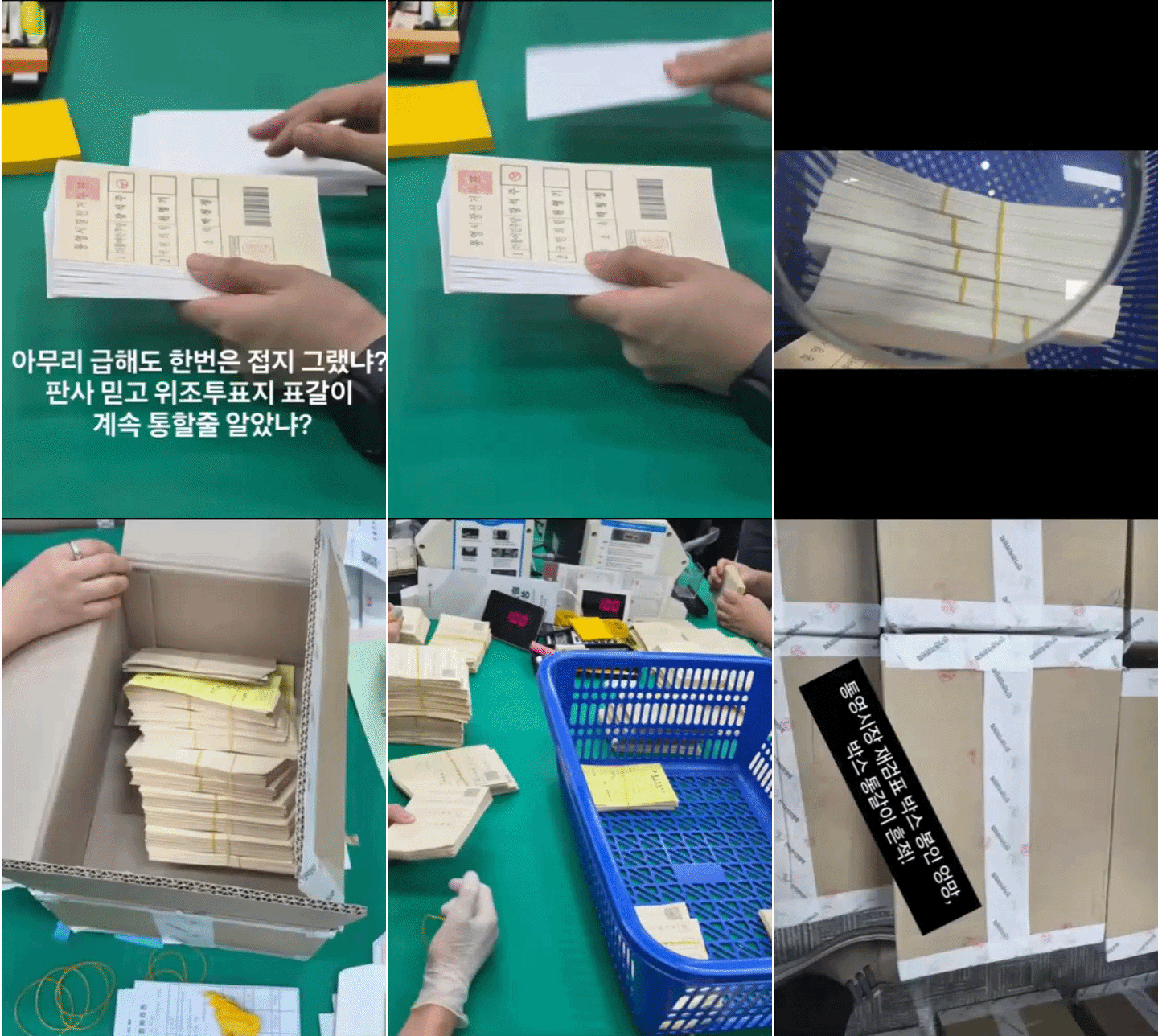 “Ignoring crisp ballots and damaged seals”… Tongyeong mayoral recount concludes with ‘no change in outcome,’ leaving suspicions and public outrage behind
Suspected counterfeit ballots discovered in Tongyeong [GIF from social media of Representative Hwang Kyo-ahn / Attorney Park Joo-hyun]During a recount of the Tongyeong mayoral election in South Gyeong
“Ignoring crisp ballots and damaged seals”… Tongyeong mayoral recount concludes with ‘no change in outcome,’ leaving suspicions and public outrage behind
Suspected counterfeit ballots discovered in Tongyeong [GIF from social media of Representative Hwang Kyo-ahn / Attorney Park Joo-hyun]During a recount of the Tongyeong mayoral election in South Gyeong
 President Yoon, regarding the first-instance ruling on the Public Official Election Act: “An excessive political verdict that distorts the facts… We will appeal immediately.”
The first-instance sentencing hearing for President Yoon Suk Yeol regarding violations of the Public Official Election Act is being broadcast live at Seoul Station on the 27th. [Photo=Yonhap News]Pres
President Yoon, regarding the first-instance ruling on the Public Official Election Act: “An excessive political verdict that distorts the facts… We will appeal immediately.”
The first-instance sentencing hearing for President Yoon Suk Yeol regarding violations of the Public Official Election Act is being broadcast live at Seoul Station on the 27th. [Photo=Yonhap News]Pres
 WSJ: "SK Hynix ADR Premium Is a Sign of AI Trading Overheat"
Advertisement for SK Hynix ADR listing in New York's Times Square [Reuters=Yonhap News file photo]The Wall Street Journal (WSJ) has pointed out that the price of SK Hynix’s American Depositary Recei
WSJ: "SK Hynix ADR Premium Is a Sign of AI Trading Overheat"
Advertisement for SK Hynix ADR listing in New York's Times Square [Reuters=Yonhap News file photo]The Wall Street Journal (WSJ) has pointed out that the price of SK Hynix’s American Depositary Recei
 'Godfather of Japanese Mystery Novels' Keigo Higashino Passes Away After Battle with Cancer at 68
Famous Japanese mystery novelist Keigo Higashino [AFP=Yonhap News]It has been belatedly reported that Keigo Higashino, the "godfather of Japanese mystery novels" and author of bestsellers such as "The
'Godfather of Japanese Mystery Novels' Keigo Higashino Passes Away After Battle with Cancer at 68
Famous Japanese mystery novelist Keigo Higashino [AFP=Yonhap News]It has been belatedly reported that Keigo Higashino, the "godfather of Japanese mystery novels" and author of bestsellers such as "The
 [Park Pil-kyu Security Column] To the Ignorant Trying to Clothe a Beast in Sheep's Clothing
Rep. Kim Byung-joo of the Democratic Party of Korea [Photo=Yonhap News]“The Air Force Academy doesn't teach you how to fly a plane!” “The Army, Navy, and Air Force academies are exactly the
[Park Pil-kyu Security Column] To the Ignorant Trying to Clothe a Beast in Sheep's Clothing
Rep. Kim Byung-joo of the Democratic Party of Korea [Photo=Yonhap News]“The Air Force Academy doesn't teach you how to fly a plane!” “The Army, Navy, and Air Force academies are exactly the
 [Issue Diagnosis] Two Effects of the Election Petition Review
 [Photo] Evidence of Election Fraud Flooding U.S. Media… Trump Had 2.7 Million Votes Stolen
 [Video] U.S. Semiquincentennial Air Show... 'Art in the Sky' streaks across New York
 [Editorial Cartoon] A Draconian Law That Undermines Freedom of Expression

 List
List