이재명 정부가 추진하는 감사원 개편, 공무원 검증, 검찰 구조조정, 대법원 증원 등 일련의 제도개혁은 ‘정치적 중립 강화’라는 명분 아래 진행되고 있지만, 실질적으로는 헌법이 보장한 권력 분립과 행정 견제 시스템의 재구성으로 이어지고 있다. <한미일보>는 이를 ‘개혁이라는 이름의 국가 권력 재설계’로 규정하고, 감사원·공무원·검찰·사법부의 제도 변화를 축으로 삼아 그 권력 집중의 메커니즘과 민주주의적 함의를 검증한다. 〈편집자 주〉
 The blindfold of justice corrupted by dictatorship. The blindfold worn by Justitia, the Roman goddess of justice, is being transformed into a tool to obscure justice under the Lee Jae-myung administration. Hanmi Ilbo Graphic
[Table of Contents]
① The Reform That Blinded the Board of Audit and Inspection
② The Administrative State of Loyalty = The Democratic Party's Election Machinery
③ Those Who Seized the Prosecutor's Sword
④ Judicial Politics and the Backstory of the Supreme Court Justice Expansion Bill
⑤ The Language of Reform, the Grammar of Dictatorship
“Rational administrative execution should not be stifled by audits and investigations.”
This single remark made by President Lee Jae-myung at a meeting with his senior secretaries and aides on July 24 was the starting point for reforming the Board of Audit and Inspection (BAI). Subsequently, the Presidential Office officially announced a review of abolishing policy audits, and Chief of Staff Kang Hoon-sik stated at a briefing at the Government Complex Seoul on November 12 that "we will amend the BAI Act in the first half of next year to institutionally abolish policy audits."
Although the BAI is subordinate to the President, it is the only internal oversight body constitutionally designed to check the entire administrative branch. However, its eyes are now in danger of falling under the control of the administration. As the BAI's vision fades, the word "reform" is becoming a tool for absolution of power.
The BAI is the only internal check mechanism for the executive branch guaranteed by the Constitution. This is why it is designed not only to audit accounts but also to monitor the rationality and procedural legitimacy of policies. Although it is under the President, it is able to audit the President's administrative acts as a self-regulatory mechanism for power. However, the abolition of policy audits, which the Lee Jae-myung administration is pursuing, is fundamentally undermining this constitutional balance.
The Presidential Office explains this as "preventing the politicization of audits." This is because complaints have been raised by both the ruling and opposition parties that the BAI has conducted audits with political intentions in the past regarding policies such as nuclear phase-out, fiscal execution, and public institution hiring.
However, the proposed reform is not restoring the BAI's neutrality but rather weakening its oversight function by completely excluding "policy decisions" from the scope of audits.
The problem is that this discussion was not initiated within the BAI itself but was led by a TF under the Presidential Office's Senior Secretary for Policy Planning. This TF, which included the Ministry of Government Legislation, the Ministry of the Interior and Safety, and the Ministry of Personnel Management, did not have a single BAI official participating.
In other words, the administrative branch, which should be subject to oversight, is changing the structure of the oversight body itself. Consequently, the "Act on the Board of Audit and Inspection Amendment Bill" proposed by Representative Park Soo-young of the People Power Party and submitted to the National Assembly at the end of October includes provisions limiting the BAI's audit scope to accounting and dereliction of duty and deleting the authority for policy audits. This is effectively the Presidential Office's intentions materialized in legislative form.
The BAI's policy audits are not mere administrative interference but the final process of verifying the conversion of public funds into policies. If these are abolished, the administration can escape all responsibility with a single statement of "it was a policy judgment."
Since the National Assembly's settlement review is also based on the BAI's audit results, the abolition of policy audits effectively neutralizes the National Assembly's settlement authority. The judiciary also makes decisions on state liability in administrative litigation based on audit results. Ultimately, both the legislative and judicial branches move further away from the control of administrative power.
Internationally, this trend is regressive.
Japan's Board of Audit (Kaikei Kensain) operates as a legally independent audit institution, although it belongs to the Cabinet. Recently, Japan has been strengthening "policy effect audits" that go beyond simple accounting checks to evaluate the effectiveness of policies and the rationality of budget execution.
For example, the 2023 Board of Audit report meticulously reviewed the efficiency of the Fukushima nuclear wastewater treatment budget and the appropriateness of policy responses, issuing over 80 recommendations for improvement to the government. In this way, Japan has institutionalized the BAI to oversee the entire process of public funds being executed as policies, even without substantial intervention in the administrative policy-making process.
In contrast, Korea is attempting to reduce the BAI's functions with the logic that "auditing policies stifles administration."
The U.S. Government Accountability Office (GAO) is affiliated with Congress and functions as a check on the government by evaluating policy efficiency and budget execution responsibility.
The more democratic a country is, the more it expands audit functions and increases transparency, which is the trend of the times. However, Korea is heading in the opposite direction. The Lee Jae-myung administration calls this "protection of the public service." However, in reality, it is a "shield for the administration."
Civil servants' mistakes will be covered up, and budget abuses will be hidden. The BAI will be reduced to an accounting office, and policies will remain as irresponsible decisions. Ultimately, the abolition of policy audits is not about preventing the politicization of the BAI, but a process of institutionalizing the administration's self-exoneration.
Power without oversight eventually corrupts itself. The moment the BAI's eyes are blinded, the last mirror of democracy is shattered. The "abolition of policy audits" may be the first completed stage of administrative dictatorship disguised as reform.
The blindfold held by Justitia, the Roman goddess of law, was originally a tool of justice. It was a pledge of fairness, an unyielding stance before power. However, the BAI's blindfold is now being transformed from a tool of justice into a symbol of control. The moment the eyes of oversight are covered, the state is no longer above the law, and power no longer looks upon the people.
The next installment will discuss how the civil servant verification system is creating an "administrative state of loyalty."
#BoardofAuditandInspection #PolicyAudit #AdministrativeDictatorship #ConcentrationofPower #Article97ofConstitution #PowerUnchecked #PresidentialOfficeTF #ChiefofStaffKangHoonSik #RepresentativeParkSooYoung #HanmiIlbo

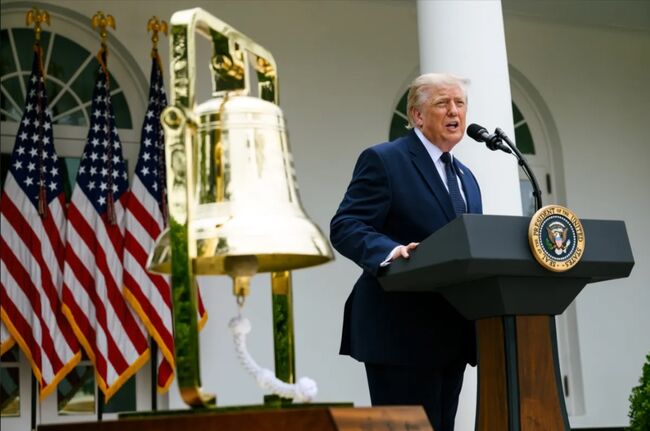 Trump pressures for rate cut again ahead of FOMC... "Should be the lowest in the world"
U.S. President Donald Trump. [Photo = The White House] U.S. President Donald Trump once again pressured the Federal Reserve, the U.S. central bank, to lower interest rates on the 27th (local time
Trump pressures for rate cut again ahead of FOMC... "Should be the lowest in the world"
U.S. President Donald Trump. [Photo = The White House] U.S. President Donald Trump once again pressured the Federal Reserve, the U.S. central bank, to lower interest rates on the 27th (local time
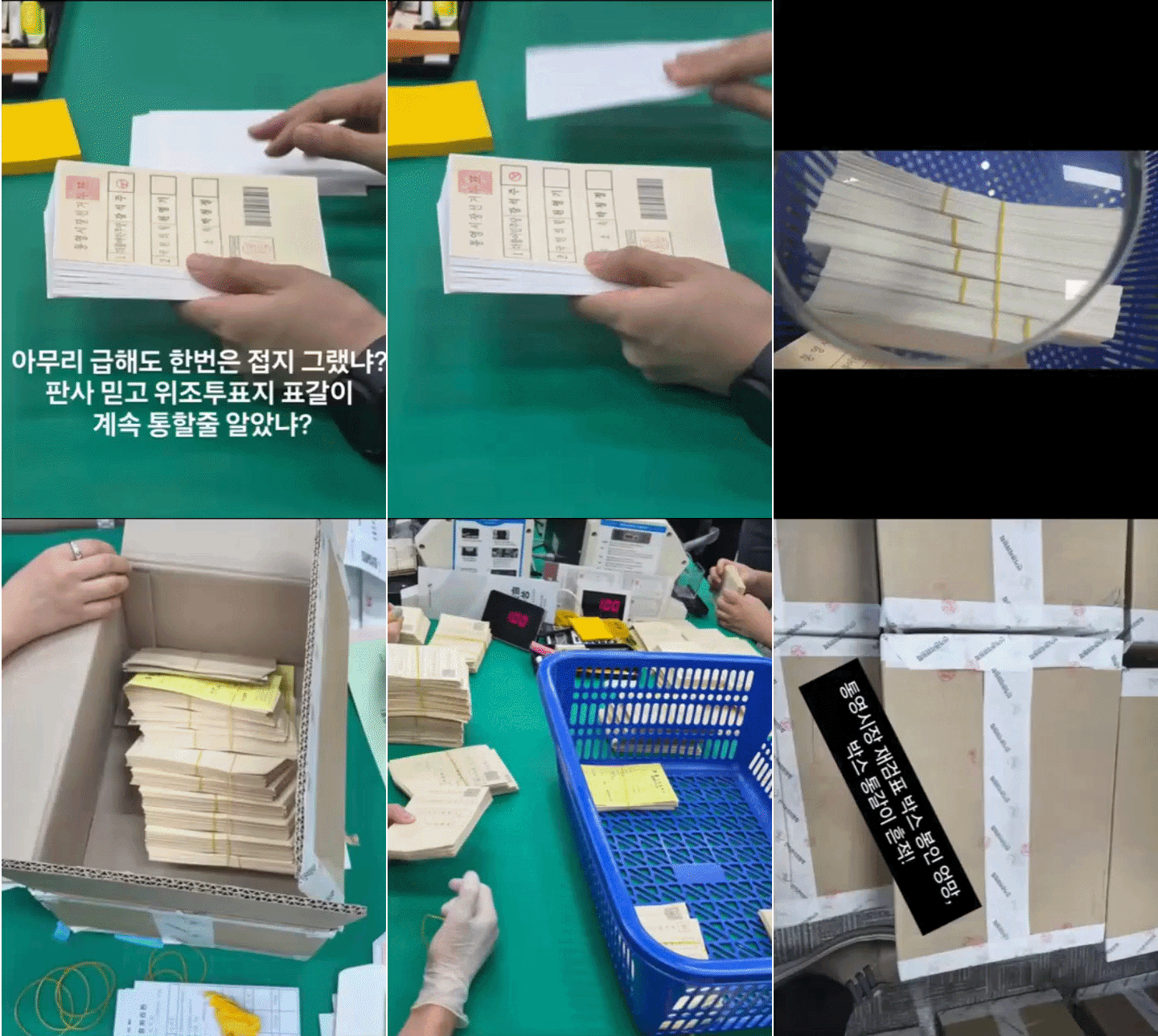 “Ignoring crisp ballots and damaged seals”… Tongyeong mayoral recount concludes with ‘no change in outcome,’ leaving suspicions and public outrage behind
Suspected counterfeit ballots discovered in Tongyeong [GIF from social media of Representative Hwang Kyo-ahn / Attorney Park Joo-hyun]During a recount of the Tongyeong mayoral election in South Gyeong
“Ignoring crisp ballots and damaged seals”… Tongyeong mayoral recount concludes with ‘no change in outcome,’ leaving suspicions and public outrage behind
Suspected counterfeit ballots discovered in Tongyeong [GIF from social media of Representative Hwang Kyo-ahn / Attorney Park Joo-hyun]During a recount of the Tongyeong mayoral election in South Gyeong
 President Yoon, regarding the first-instance ruling on the Public Official Election Act: “An excessive political verdict that distorts the facts… We will appeal immediately.”
The first-instance sentencing hearing for President Yoon Suk Yeol regarding violations of the Public Official Election Act is being broadcast live at Seoul Station on the 27th. [Photo=Yonhap News]Pres
President Yoon, regarding the first-instance ruling on the Public Official Election Act: “An excessive political verdict that distorts the facts… We will appeal immediately.”
The first-instance sentencing hearing for President Yoon Suk Yeol regarding violations of the Public Official Election Act is being broadcast live at Seoul Station on the 27th. [Photo=Yonhap News]Pres
 WSJ: "SK Hynix ADR Premium Is a Sign of AI Trading Overheat"
Advertisement for SK Hynix ADR listing in New York's Times Square [Reuters=Yonhap News file photo]The Wall Street Journal (WSJ) has pointed out that the price of SK Hynix’s American Depositary Recei
WSJ: "SK Hynix ADR Premium Is a Sign of AI Trading Overheat"
Advertisement for SK Hynix ADR listing in New York's Times Square [Reuters=Yonhap News file photo]The Wall Street Journal (WSJ) has pointed out that the price of SK Hynix’s American Depositary Recei
 'Godfather of Japanese Mystery Novels' Keigo Higashino Passes Away After Battle with Cancer at 68
Famous Japanese mystery novelist Keigo Higashino [AFP=Yonhap News]It has been belatedly reported that Keigo Higashino, the "godfather of Japanese mystery novels" and author of bestsellers such as "The
'Godfather of Japanese Mystery Novels' Keigo Higashino Passes Away After Battle with Cancer at 68
Famous Japanese mystery novelist Keigo Higashino [AFP=Yonhap News]It has been belatedly reported that Keigo Higashino, the "godfather of Japanese mystery novels" and author of bestsellers such as "The
 [Park Pil-kyu Security Column] To the Ignorant Trying to Clothe a Beast in Sheep's Clothing
Rep. Kim Byung-joo of the Democratic Party of Korea [Photo=Yonhap News]“The Air Force Academy doesn't teach you how to fly a plane!” “The Army, Navy, and Air Force academies are exactly the
[Park Pil-kyu Security Column] To the Ignorant Trying to Clothe a Beast in Sheep's Clothing
Rep. Kim Byung-joo of the Democratic Party of Korea [Photo=Yonhap News]“The Air Force Academy doesn't teach you how to fly a plane!” “The Army, Navy, and Air Force academies are exactly the
 [Issue Diagnosis] Two Effects of the Election Petition Review
 [Photo] Evidence of Election Fraud Flooding U.S. Media… Trump Had 2.7 Million Votes Stolen
 [Video] U.S. Semiquincentennial Air Show... 'Art in the Sky' streaks across New York
 [Editorial Cartoon] A Draconian Law That Undermines Freedom of Expression

 List
List










