 Yonhap News TV / ROK-US-Japan Daily.
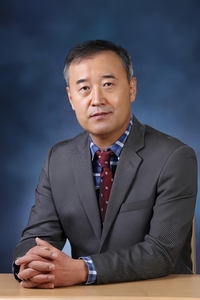 Professor, Ewha Womans University School of LawBundang and Pangyo were developed, drawing attention to Daejang-dong, the last prime piece of land. Originally, President Lee Myung-bak opposed the Korea Land and Housing Corporation's involvement in the Daejang-dong development, leaving it to proceed as a purely private development. In contrast, then-Seongnam Mayor Lee Jae-myung initially pushed for public development before shifting to a public-private joint development approach. Seongnam Development Corporation and Hwacheon Daeyu proceeded with the project through a company called Seongnamui Tteul. They justified the immense development profits by citing "high risk, high return." In reality, the maximum risk in case of project failure was limited to the capital of 5 billion KRW. Notably, the 4040 billion KRW in dividends secured by Cheonhwadongin No. 1-7, which invested in Hwacheon Daeyu, came from an investment of only 300 million KRW. Even this risk of losing 300 million KRW was virtually non-existent because the structure was such that the risk of unsold properties was borne not by Seongnamui Tteul, but by private developers and construction companies. Seongnamui Tteul easily acquired land by acting as a 'city development executor,' forcibly acquiring public land, and then avoided the housing price cap by claiming it was a private land sale when selling it as building lots. They effectively acted as land speculators, acquiring cheap land and selling it at a higher price to the development company.
This effortless profiteering yielded 404 billion KRW in dividends for Cheonhwadongin. Because there was fundamentally no risk, project financing amounting to 1 trillion KRW was possible despite a small capital investment. Nevertheless, the specious argument of "high risk-high return" was the official stance of candidate Lee Jae-myung, who rose to the presidential candidacy using his position as Seongnam Mayor as a stepping stone.
While institutions holding 93% of the shares (Seongnam Development Corporation and participating financial institutions like banks) received preferential dividends of 183 billion KRW, Hwacheon Daeyu and Cheonhwadongin No. 1-7, holding only 7% of the shares, reaped enormous profits of 404 billion KRW. The corporation cited the unusually significant role of Hwacheon Daeyu and Cheonhwadongin in the project execution as the reason. This was despite their role being akin to effortless profiteering. They boasted that Seongnam City had recouped 550.3 billion KRW of the Daejang-dong development profits compared to a private development scenario. This 550.3 billion KRW figure also inflated the amount by including the 256.1 billion KRW for park construction, which is conventionally a condition for urban development donations. This was a deception of Seongnam citizens and the public.
In essence, the Daejang-dong gate is a case where it is reasonably suspected that Seongnam Development Corporation funneled vast profits to a specific company and, to conceal this, engaged in pervasive lobbying across the legal and media sectors, including the "5 billion club." This case is directly linked to the trial of former President Lee Jae-myung regarding the Daejang-dong corruption, which is currently suspended.
In the first trial of this critical case, the court assessed that there was communication between the 'Seongnam City leadership' and private developers, and handed down prison sentences of 4 to 8 years to the Seongnam Development Corporation's planning director and private developers. Although the prosecution had obtained internal approval to appeal the case, the appeal was blocked at the final stage due to opposition from the Minister of Justice and subsequent intervention by the Prosecutor General of the Central District Prosecutors' Office. This led to public protests from the prosecution team and the Prosecutor's Office, and the Prosecutor General of the Seoul Central District Prosecutors' Office resigned within a day.
The Supreme Prosecutors' Office is making excuses by citing "the guilty verdict for breach of trust and the fact that one of the defendants received a heavier sentence than the prosecution's request" as reasons for the lack of practical benefit in appealing. However, the recognition of breach of trust was expected, and it is true that the sentences for other key defendants fell short of the prosecution's requested sentences. Despite the illicit profits of hundreds of billions of KRW earned by Daejang-dong private developers, the forfeiture amount was ruled as '42.8 billion KRW.' They were acquitted of bribery charges. Nevertheless, by the prosecution abandoning the appeal and only the defendants appealing, the principle of no disadvantageous amendment in the appellate trial now prevents sentences harsher than the first-instance rulings. Why did the prosecution unilaterally abandon the appeal, creating a favorable environment for the defendants, when an appellate trial was going to take place anyway? The first trial court's finding that the Seongnam City leadership had communicated with private developers is a matter directly related to the direct or indirect involvement of then-Mayor Lee Jae-myung. In such a critical matter of national interest, why was the appellate trial environment deliberately shaped to favor the key defendants, and why was the acquittal on bribery charges effectively confirmed? The Minister of Justice must provide an answer. They must also reveal under whose instructions the pressure to abandon the appeal was exerted at the final stage.
When the political superstructure remains at the level of a gangster-like force, it was only a matter of time before the underlying principles built up over time were eroded by forces engaging in illegality and circumvention of the law. The Lime, Optimus fund scandals, the LH incident, the LCT gate, and the delayed verification of the April 15th general election fall into the same category. The world inherently has common sense and truth, yet it has become a society where even the ascertainment of facts is fundamentally blocked, and specious arguments prevail. The "Cho Kuk incident" in 2019 opened the door to an era of relentless power struggles. Even when the truth was revealed like a string of sweet potatoes, regardless of the target of the investigation, it has become commonplace to accept the specious argument that it is merely a result of the opposing side's attack and to cover it up. At that time, President Moon Jae-in shielded the specious logic and used it as a driving force for his administration. The precious principles of the superstructure that had been built up, such as public officials pursuing national interests, judges exercising political restraint, respecting intellectuals' critical spirit of politics, and demanding high ethical standards from public officials, were all discarded like waste paper. Now, Cho Kuk has been pardoned and is openly playing a central role in the ruling party's politics.
Now, as judicial independence and public official ethics have collapsed, and our society has lost its dignity and truth, we are facing a situation where reforms are being self-congratulatory. Distrust is rampant not only among the "386 generation" but also in the democratization movement itself, and the public is witnessing top leaders openly resorting to irregular practices to maintain power, which are being disguised as part of the process of realizing political ideology. Anomic phenomena regarding trust in value systems and human nature are occurring. South Korea's trajectory, which shifted from a "power-centric society" in the 1950s-60s to a "rule of law society" in the 70s-90s, and then developed into a "principle-establishment society" in the 2000s, has regressed by two stages back to a power-centric society. Now, like in ancient Greece, the relativism, skepticism, and sophistry of sophists have become the dominant political logic. The Daejang-dong gate, along with the Cho Kuk incident, is merely the beginning of the advent of a sophist society. It is impossible to fathom how many more power-based corruptions and specious arguments will emerge.
Stop the investigation into the Daejang-dong mastermind? How much longer must the predatory corrupt cartel of politics, law, media, and foreign powers run rampant for the rule of law in Korea to awaken? Clearly revealing the facts about the mastermind behind Daejang-dong is the first step to breaking the vicious cycle.
Choi Won-mok, Professor, Ewha Womans University School of Law

 Iranian Foreign Ministry: "Continuing Message Exchanges with the U.S. and Activities of Mediating Countries"
Esmaeil Baghaei, Spokesperson for the Iranian Ministry of Foreign Affairs [Xinhua, Yonhap News file photo]Esmaeil Baghaei, spokesperson for the Iranian Ministry of Foreign Affairs, stated on the 26th
Iranian Foreign Ministry: "Continuing Message Exchanges with the U.S. and Activities of Mediating Countries"
Esmaeil Baghaei, Spokesperson for the Iranian Ministry of Foreign Affairs [Xinhua, Yonhap News file photo]Esmaeil Baghaei, spokesperson for the Iranian Ministry of Foreign Affairs, stated on the 26th
 President Yoon: "Do You Think You Are Safe from the Special Counsel?"... Final Statement Video Released
President Yoon Suk Yeol rebuking the special prosecutor on the 24th. [Court video / @birds_justice X account subtitle GIF] A video of President Yoon Suk Yeol's closing statement at his trial rega
President Yoon: "Do You Think You Are Safe from the Special Counsel?"... Final Statement Video Released
President Yoon Suk Yeol rebuking the special prosecutor on the 24th. [Court video / @birds_justice X account subtitle GIF] A video of President Yoon Suk Yeol's closing statement at his trial rega
 President Yoon, regarding the first-instance ruling on the Public Official Election Act: “An excessive political verdict that distorts the facts… We will appeal immediately.”
The first-instance sentencing hearing for President Yoon Suk Yeol regarding violations of the Public Official Election Act is being broadcast live at Seoul Station on the 27th. [Photo=Yonhap News]Pres
President Yoon, regarding the first-instance ruling on the Public Official Election Act: “An excessive political verdict that distorts the facts… We will appeal immediately.”
The first-instance sentencing hearing for President Yoon Suk Yeol regarding violations of the Public Official Election Act is being broadcast live at Seoul Station on the 27th. [Photo=Yonhap News]Pres
 WSJ: "SK Hynix ADR Premium Is a Sign of AI Trading Overheat"
Advertisement for SK Hynix ADR listing in New York's Times Square [Reuters=Yonhap News file photo]The Wall Street Journal (WSJ) has pointed out that the price of SK Hynix’s American Depositary Recei
WSJ: "SK Hynix ADR Premium Is a Sign of AI Trading Overheat"
Advertisement for SK Hynix ADR listing in New York's Times Square [Reuters=Yonhap News file photo]The Wall Street Journal (WSJ) has pointed out that the price of SK Hynix’s American Depositary Recei
 'Godfather of Japanese Mystery Novels' Keigo Higashino Passes Away After Battle with Cancer at 68
Famous Japanese mystery novelist Keigo Higashino [AFP=Yonhap News]It has been belatedly reported that Keigo Higashino, the "godfather of Japanese mystery novels" and author of bestsellers such as "The
'Godfather of Japanese Mystery Novels' Keigo Higashino Passes Away After Battle with Cancer at 68
Famous Japanese mystery novelist Keigo Higashino [AFP=Yonhap News]It has been belatedly reported that Keigo Higashino, the "godfather of Japanese mystery novels" and author of bestsellers such as "The
 [Park Pil-kyu Security Column] To the Ignorant Trying to Clothe a Beast in Sheep's Clothing
Rep. Kim Byung-joo of the Democratic Party of Korea [Photo=Yonhap News]“The Air Force Academy doesn't teach you how to fly a plane!” “The Army, Navy, and Air Force academies are exactly the
[Park Pil-kyu Security Column] To the Ignorant Trying to Clothe a Beast in Sheep's Clothing
Rep. Kim Byung-joo of the Democratic Party of Korea [Photo=Yonhap News]“The Air Force Academy doesn't teach you how to fly a plane!” “The Army, Navy, and Air Force academies are exactly the
 [Issue Diagnosis] Two Effects of the Election Petition Review
 [Photo] Evidence of Election Fraud Flooding U.S. Media… Trump Had 2.7 Million Votes Stolen
 [Video] U.S. Semiquincentennial Air Show... 'Art in the Sky' streaks across New York
 [Editorial Cartoon] A Draconian Law That Undermines Freedom of Expression

 List
List










