 Pope Leo XIV receives a delegation of artists and others on the evening of the 13th in relation to missionary work in the Democratic Republic of Congo. Vatican
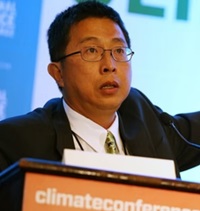 Willie Soon, President of the Center for Environmental Research and Sustainable Technology (CERES) Elected as the 267th Pope in May of this year, Leo XIV urged in his sermon on July 9th, "Let us pray for those who still fail to recognize the urgency of caring for our common home, the Earth," and mentioned that recent natural disasters occurring around the world are related to human lifestyles.
Ahead of the "Day of Prayer for Creation" on September 1st, he again warned that the Earth is being harmed by injustice, environmental destruction, and biodiversity loss, and that extreme natural phenomena are intensifying due to human-induced climate change.
Ten years ago, when Pope Francis issued the encyclical 'Laudato Si,' I raised criticisms that the encyclical addressed climate issues from a very limited perspective and lacked sufficient scientific grounding.
As I worried then, it is difficult to shake the feeling that social and political intentions, rather than science, are often involved in the discourse on climate within the encyclical and the Vatican.
About 400 years ago, Galileo said, "No amount of authority can change the truth. Truth exists in itself." This is something that religious institutions should reflect upon when engaging in scientific debates. It is necessary to reconsider the fundamental labeling of fossil fuels, which have greatly improved human life, as inherently harmful without sufficient scientific review.
It is understandable that Leo XIV or Pope Francis are not experts in climate science. However, portraying carbon dioxide as an inherently dangerous substance can be perceived as a fear-mongering message.
The assumption that reducing industrial activity will immediately decrease atmospheric carbon dioxide concentrations does not align with observational facts. Despite an unprecedented global decrease in industrial activity due to the COVID-19 pandemic from 2020-23, atmospheric carbon dioxide concentrations continued to rise. Why is that?
Observational data reveals several realities. The UK has reduced emissions by more than half since the 1970s, and US fossil fuel carbon dioxide emissions have also decreased by 18% from their peak since the mid-2000s. By June 2025, the US Environmental Protection Agency (EPA) announced a 38% reduction in carbon dioxide emissions from the power sector.
Globally, emissions have largely stagnated over the past decade, with minimal increases. However, atmospheric carbon dioxide concentrations continue to rise. This suggests that the Earth's carbon cycle is governed by complex natural systems that cannot be explained by a simple sum of human emissions.
Carbon dioxide is an essential life gas that enhances ecosystem productivity. Satellite observations show that the Earth has become greener over the past century, and plants' water use efficiency has improved. During the Ice Ages, when carbon dioxide concentrations were very low, plant and animal populations significantly declined.
Today, atmospheric carbon dioxide is a trace gas, accounting for only about 0.043% by volume, and various evidence indicates that the Earth's biosphere benefits more from an environment with higher carbon dioxide concentrations.
Moving forward, climate issues should be discussed based on measurable data and validated science, rather than prioritizing moral fervor or political convictions. It is also desirable for religion to respect scientific truths that reveal the workings of nature and add theological and ethical reflections upon them.
It is hoped that all religious institutions, including the Vatican, will refrain from fear-centered messages or moral declarations condemning human activity when discussing climate change in the future, and will communicate with the public through scientific evidence and rational theories. That is the true way to care for our common home and the only way for science and religion to coexist harmoniously.
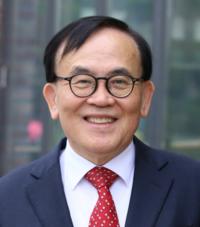 Park Seok-soon, Emeritus Professor at Ewha Womans University and former Director of the National Institute of Environmental Research
This column was first published in The New American (www.thenewamerican.com) in the United States on October 1, 2025, and was translated and revised in collaboration with Emeritus Professor Park Seok-soon of Ewha Womans University. Professor Park Seok-soon is currently serving as the Korean Ambassador for the Climate Intelligence Foundation (Clintel), a member of the CO2 Coalition, the head of the Free Environment Forum, and operates the YouTube channel "Park Seok-soon's Environment TV."

 Trump pressures for rate cut again ahead of FOMC... "Should be the lowest in the world"
U.S. President Donald Trump. [Photo = The White House] U.S. President Donald Trump once again pressured the Federal Reserve, the U.S. central bank, to lower interest rates on the 27th (local time
Trump pressures for rate cut again ahead of FOMC... "Should be the lowest in the world"
U.S. President Donald Trump. [Photo = The White House] U.S. President Donald Trump once again pressured the Federal Reserve, the U.S. central bank, to lower interest rates on the 27th (local time
 “Ignoring crisp ballots and damaged seals”… Tongyeong mayoral recount concludes with ‘no change in outcome,’ leaving suspicions and public outrage behind
Suspected counterfeit ballots discovered in Tongyeong [GIF from social media of Representative Hwang Kyo-ahn / Attorney Park Joo-hyun]During a recount of the Tongyeong mayoral election in South Gyeong
“Ignoring crisp ballots and damaged seals”… Tongyeong mayoral recount concludes with ‘no change in outcome,’ leaving suspicions and public outrage behind
Suspected counterfeit ballots discovered in Tongyeong [GIF from social media of Representative Hwang Kyo-ahn / Attorney Park Joo-hyun]During a recount of the Tongyeong mayoral election in South Gyeong
 President Yoon, regarding the first-instance ruling on the Public Official Election Act: “An excessive political verdict that distorts the facts… We will appeal immediately.”
The first-instance sentencing hearing for President Yoon Suk Yeol regarding violations of the Public Official Election Act is being broadcast live at Seoul Station on the 27th. [Photo=Yonhap News]Pres
President Yoon, regarding the first-instance ruling on the Public Official Election Act: “An excessive political verdict that distorts the facts… We will appeal immediately.”
The first-instance sentencing hearing for President Yoon Suk Yeol regarding violations of the Public Official Election Act is being broadcast live at Seoul Station on the 27th. [Photo=Yonhap News]Pres
 WSJ: "SK Hynix ADR Premium Is a Sign of AI Trading Overheat"
Advertisement for SK Hynix ADR listing in New York's Times Square [Reuters=Yonhap News file photo]The Wall Street Journal (WSJ) has pointed out that the price of SK Hynix’s American Depositary Recei
WSJ: "SK Hynix ADR Premium Is a Sign of AI Trading Overheat"
Advertisement for SK Hynix ADR listing in New York's Times Square [Reuters=Yonhap News file photo]The Wall Street Journal (WSJ) has pointed out that the price of SK Hynix’s American Depositary Recei
 'Godfather of Japanese Mystery Novels' Keigo Higashino Passes Away After Battle with Cancer at 68
Famous Japanese mystery novelist Keigo Higashino [AFP=Yonhap News]It has been belatedly reported that Keigo Higashino, the "godfather of Japanese mystery novels" and author of bestsellers such as "The
'Godfather of Japanese Mystery Novels' Keigo Higashino Passes Away After Battle with Cancer at 68
Famous Japanese mystery novelist Keigo Higashino [AFP=Yonhap News]It has been belatedly reported that Keigo Higashino, the "godfather of Japanese mystery novels" and author of bestsellers such as "The
 [Park Pil-kyu Security Column] To the Ignorant Trying to Clothe a Beast in Sheep's Clothing
Rep. Kim Byung-joo of the Democratic Party of Korea [Photo=Yonhap News]“The Air Force Academy doesn't teach you how to fly a plane!” “The Army, Navy, and Air Force academies are exactly the
[Park Pil-kyu Security Column] To the Ignorant Trying to Clothe a Beast in Sheep's Clothing
Rep. Kim Byung-joo of the Democratic Party of Korea [Photo=Yonhap News]“The Air Force Academy doesn't teach you how to fly a plane!” “The Army, Navy, and Air Force academies are exactly the
 [Issue Diagnosis] Two Effects of the Election Petition Review
 [Photo] Evidence of Election Fraud Flooding U.S. Media… Trump Had 2.7 Million Votes Stolen
 [Video] U.S. Semiquincentennial Air Show... 'Art in the Sky' streaks across New York
 [Editorial Cartoon] A Draconian Law That Undermines Freedom of Expression

 List
List









