이번 기사는 11월13일 백악관이 공개한 ‘한미 공동 팩트시트(Joint Fact Sheet)’ 원문을 토대로 한국이 미국 무역확장법 232조 체계에서 어떤 지위를 부여받았는지 조항별로 분석한 탐사형 기획이다. 팩트시트는 개별 문장만 보면 협력 문안처럼 보이지만 전체 구조를 연결하면 한국만 ‘관리국’으로 편입되는 비대칭 체계가 드러난다. 본 분석은 팩트시트가 규정한 관세·반도체·외환·디지털 규범의 적용 범위를 일본·유럽연합(EU)과 비교해 해석하고, 한국의 정책 자율성에 미칠 영향을 독자가 이해하기 쉽게 설명하는 데 목적이 있다. <편집자 주>
 U.S. President Donald Trump holds the national flags of Japan and South Korea in each hand. This symbolizes the contrasting positions of the two countries within the framework of Section 232. [Graphic=The Hankook Ilbo]
"Looking at just one clause, it appears to be cooperation."
However, when reading the "Korea-U.S. Joint Fact Sheet (hereinafter referred to as Fact Sheet)" released by the White House on November 13th in its entirety, it becomes clear that it is not simply an economic cooperation agreement, but rather an accord that reconfigures South Korea's policy autonomy across all sectors, including trade, semiconductors, foreign exchange, internet, agriculture, and security.
In particular, the structural arrangement of the clauses, which is not apparent when reading individual industry-specific phrases, reveals an overarching pattern: South Korea is being incorporated into a U.S.-designed normative system in a "first-acceptance, later-adjustment (Up Front)" manner.
◇ Section 232 of the Trade Expansion Act... Application of a "Management System" Completely Different from Japan and the EU
The most striking aspect of the Fact Sheet is the tariff provision under Section 232 of the U.S. Trade Expansion Act.
Japan and the EU are subject to an exemption and quota system only in the steel and aluminum sectors, effectively securing a status close to that of an exempted country from the Section 232 tariff system. However, South Korea finds itself in the opposite position.
Under this agreement, South Korea will be subject to a 15% upper limit management system for six strategic industries: automobiles, automobile parts, lumber, pharmaceuticals, machinery, and semiconductors. This structure requires the combined total of existing tariffs and additional Section 232 tariffs to not exceed 15%.
This is not a tariff reduction, but an incorporation into a "U.S.-set upper limit system." Unlike Japan and the EU, which have secured exemptions or selective adjustment rights, South Korea has been classified as a separate "managed country."
◇ Semiconductors... An Unprecedented Structure of "Automatic Incorporation into Future Agreements"
The semiconductor clause reveals the most symbolic asymmetry within the entire Fact Sheet.
The White House explicitly stated regarding South Korea: "will provide terms no less favorable than those that may be offered to such country in a future agreement covering a volume of semiconductor trade." While this phrasing appears to be preferential on the surface, it is structurally akin to pre-approving future agreements that do not yet exist.
In contrast to Japan, the EU, and Taiwan, which exercise "joint design" in the semiconductor supply chain, South Korea has accepted a structure of automatic incorporation into future U.S. rulemaking. This results in abandoning the "right to participate in design" in strategic industries and becoming a "post-acceptance country."
◇ Foreign Exchange... Behavioral Constraints of "20 Billion Dollar Ceiling" and "Non-Market Procurement"
While the foreign exchange provision is difficult for even economic experts to interpret, its structure is clear. The U.S. has imposed a ceiling on South Korea, prohibiting it from directly procuring more than $20 billion annually from the market, and has inserted the phrase, "will use its best efforts to source the U.S. dollars through means other than market purchases so as to minimize any potential impact on the market."
This implies that South Korea's traditional response of the Bank of Korea intervening in the market to buy large amounts of dollars to curb rapid appreciation during periods of exchange rate surges may be constrained. Although South Korea is stated to have the ability to "request an adjustment," the U.S. role is limited to "giving due consideration in good faith" to such requests, retaining discretionary power.
Ultimately, this forms an asymmetric structure where South Korea's actions in foreign exchange policy are limited, and the U.S. secures a supervisory status.
◇ Internet and Platforms... The Only Sector Specifically Mentioning South Korean Regulations
"U.S. companies are not discriminated against (...) including network usage fees and online platform regulations."
This clause is clearly targeted at South Korea. South Korea is the only country in the world that has attempted to legislate "network usage fees," and it is also true that major U.S. platform companies have strongly raised objections to regulatory movements by the South Korean National Assembly and government.
This provision declares the principle that South Korea's platform regulations, cross-border data transfer, and network usage fee policies should not unfairly disadvantage U.S. companies. This is not a simple trade issue but signifies a readjustment of digital regulatory sovereignty.
◇ Agriculture... "Americanization" of Procedures, Not Market Opening
While the wording of the agriculture clause appears positive on the surface, it actually demands the "Americanization" of procedures.
The U.S. has requested South Korea to comply with existing agricultural product agreements, resolve the backlog of quarantine inspections, expedite approval procedures for bio-crops, and establish a dedicated desk for U.S. agricultural products.
This is not a compulsion for market opening, but a demand to reconfigure the procedural environment to U.S. standards so that U.S. agricultural and food products are not delayed in customs clearance due to South Korean procedures. By reducing waiting times for U.S. companies in quarantine and inspection processes and prioritizing regulatory adjustments, this will lead to an effective expansion of market access.
◇ Defense and Nuclear Submarines... "Approval" is a Supervisory System, Not Cooperation
The nuclear submarine clause also appears to be simple cooperation, but its structural meaning is different.
The U.S. has granted "approval" for South Korea's construction of nuclear-powered submarines, which implies dependence on the U.S. supervisory and inspection system in all areas, including fuel procurement, nuclear materials, and safety regulations. Unlike AUKUS (a military alliance of the U.S., UK, and Australia in the Indo-Pacific region) where military alliance is not structurally defined, South Korea's solitary incorporation into this supervisory system marks the first instance of U.S. standard supervisory structures being directly applied in the defense and nuclear sectors.
◇ Other Clauses... "Americanization" of Competition, IP, Labor, and Environment
Other clauses, such as competition law procedures (attorney-client privilege), demands for accession to the Patent Law Treaty (PLT), norms against forced labor, and environmental standards, appear minor but, within the overall structure, serve to align South Korea's regulatory system with global standards centered on the U.S. and the EU.
This could lead to a reduction in South Korea's regulatory authority and legislative discretion in the long term.
◇ Conclusion... Why Trump's "Up Front" Strategy Was Fully Implemented Only in South Korea
Connecting all the clauses of the Fact Sheet reveals that the "Up Front" strategy, emphasized by Trump since before his presidency, has been applied in its most perfect form to South Korea.
"Up Front" is not simply a matter of "paying first," but a structural concept of first being incorporated into the order designed by the U.S., with detailed adjustments made later. This Fact Sheet reflects that structure almost exactly as is.
The reasons why South Korea, unlike Japan, the EU, and Taiwan, has been fully incorporated into this system are threefold.
First, South Korea chose a method of pre-acceptance of the norms demanded by the U.S. in key areas such as semiconductors, foreign exchange, and digital regulation.
Second, South Korea had accumulated unresolved issues in foreign exchange, digital, and quarantine, and the U.S. bundled these into a comprehensive management system.
Third, the moment the South Korean government emphasized investment and approval structures as achievements, the negotiation frame was already tilted, and the U.S. conversely focused on securing normative and supervisory rights.
As a result, while each clause may appear cooperative, the overall structure concludes with unprecedented asymmetry. This document is less an agreement and more akin to a design document for reconfiguring South Korea's policy structure according to U.S. standards.
◇ What Did the Lee Jae Myung Administration Negotiate?
Reading the entire Fact Sheet again naturally brings forth one question:
"What did the Lee Jae Myung administration negotiate?"
What South Korea gained was akin to "pre-arranged investments" and an "approval structure," while what the U.S. gained was the preemptive acquisition of norms, standards, and supervisory rights across all sectors, including trade, semiconductors, foreign exchange, digital, defense, and arms.
The judgment of whether this constitutes negotiation, acceptance, cooperation, or simply mechanical execution of "Up Front" must be left to the reader. However, one fact is clear.
This Fact Sheet is a document that has redesigned South Korea's policy autonomy landscape according to U.S. standards, and we must wait to see what explanation the government will provide regarding it.
Kim Young, Editor
Joint Fact Sheet on President Donald J. Trump’s Meeting
with President Lee Jae Myung
The White House
November 13, 2025
President Lee Jae Myung of the Republic of Korea (ROK) welcomed President Donald J. Trump of the United States of America (United States or U.S.) for a State Visit to ROK on October 29. This marks the first time in Korean history that a State Visit has been hosted in Gyeongju and follows on the two leaders’ first meeting in Washington on August 25. Notably, it is also the first time that the ROK has welcomed the same leader for a second state visit.
In light of President Trump’s historic 2024 victory and President Lee’s election demonstrating the ROK’s democratic strength and resilience, they declared a new chapter in the U.S.-ROK Alliance, the linchpin for peace, security and prosperity on the Korean Peninsula and in the Indo-Pacific region.
REBUILDING AND EXPANDING CRITICAL INDUSTRIES: President Trump and President Lee reaffirmed the historic announcement in July of The Korea Strategic Trade and Investment deal, which reflects the strength and endurance of the U.S.-ROK Alliance.
Both leaders welcome Korean investments in various sectors to advance economic and national security interests, including but not limited to shipbuilding, energy, semiconductors, pharmaceuticals, critical minerals, and artificial intelligence/quantum computing.
This deal includes $150 billion of Korean investment in the shipbuilding sector approved by the United States, which is referred to as the Approved Investments.
This deal also includes $200 billion of additional Korean investment committed pursuant to the Memorandum of Understanding with respect to Strategic Investments (MOU), which is expected to be signed by representatives of the United States and ROK.
The United States will apply the higher of either the U.S.-Korea Free Trade Agreement (“KORUS FTA”) or U.S. Most Favored Nation (“MFN”) tariff rate, as applicable, or a tariff rate of 15 percent on originating goods of the ROK, for purposes of the reciprocal tariff provided under Executive Order 14257 of April 2, 2025, as amended.
The United States will reduce its Section 232 sectoral tariffs on automobiles, auto parts, timber, lumber, and wood derivatives of the ROK to 15 percent. For such products of the ROK with a KORUS FTA or MFN tariff rate, as applicable, equal to or greater than 15 percent, no additional Section 232 tariff shall apply. For such products of the ROK with a KORUS FTA or MFN tariff, as applicable, less than 15 percent, the sum of the KORUS FTA or MFN tariff and the additional Section 232 tariff shall be 15 percent.
For any Section 232 tariffs imposed on pharmaceuticals, the United States intends to apply to originating goods of the ROK a Section 232 tariff rate no greater than 15 percent.
For any Section 232 tariffs imposed on semiconductors (including semiconductor manufacturing equipment), the United States intends to provide terms for such Section 232 tariffs on Korea that are no less favorable than terms that may be offered in a future agreement covering a volume of semiconductor trade at least as large as Korea’s, as determined by the United States.
The United States intends to remove supplemental tariffs imposed pursuant to Executive Order 14257 of April 2, 2025, as amended for certain products identified on the list of Potential Tariff Adjustments for Aligned Partners, such as generic pharmaceuticals, generic pharmaceutical ingredients, generic pharmaceutical chemical precursors, and certain natural resources unavailable in the United States. The United States will also remove tariffs on certain aircraft and parts of the ROK from the tariffs imposed pursuant to Executive Order 14257, as amended, by Proclamation 9704, as amended, Proclamation 9705, as amended, and Proclamation 10962.
FOREIGN EXCHANGE MARKET STABILITY: The United States and the ROK, in connection with their respective commitments included in the MOU, have thoroughly discussed the potential impact of the MOU on the foreign exchange market stability of the ROK. They have reached a mutual understanding that commitments in the MOU shall not be allowed to give rise to market instability. As trusted partners, the two nations agree that the ROK shall not be required to fund an aggregate amount of U.S. dollars greater than $20 billion in any calendar year. The ROK will use its best efforts, to the greatest extent possible, to source the U.S. dollars through means other than market purchases so as to minimize any potential impact on the market. Should it appear that the fulfillment of the commitments in the MOU may cause market instability, such as disorderly movements of Korean won, the ROK may request an adjustment in the amount and timing of the funding, and the United States will, in good faith, give due consideration to such request.
ENHANCING COMMERCIAL TIES: The two leaders welcomed a series of commercial commitments in strategic sectors, reflecting the confidence of the private sector in the strong bilateral economic partnership.
The two leaders welcomed the announcement in August by ROK companies of foreign direct investments in the United States totaling $150 billion during President Trump’s term. Both countries will use their best efforts to facilitate these investments.
The two leaders welcomed the announcement by Korean Air (KAL) in August of a purchase order of 103 Boeing aircraft powered by GE Aerospace engines. The Boeing commitment is valued at U.S. $36 billion and will include a mix of Boeing 737 MAX jets, 787 Dreamliners, and 777X passenger and freighters, bringing KAL’s total order in 2025 to more than 150 Boeing airplanes.
The United States and the ROK welcome the Buy America in Seoul initiative, whereby the ROK, in collaboration with the State Governments, will organize an annual exhibition featuring U.S. companies, including Small and Medium-sized Enterprises, to promote the export of U.S. goods into Korea.
PROMOTING RECIPROCAL TRADE: The two leaders recognized that the recently announced deal reflects a common goal to increase mutually beneficial trade and investment. In the spirit of the deal, the United States and the ROK will address non-tariff barriers and memorialize commitments and a plan of action to promote reciprocal trade, to be adopted by the KORUS Joint Committee before the end of the year. This will include but not be limited to the following:
The ROK will eliminate the 50,000-unit cap on U.S.-originating Federal Motor Vehicle Safety Standards (FMVSS)-compliant vehicles that can enter the ROK without further modifications. The ROK will also reduce regulatory burdens for U.S. automotive exports by not requiring additional documentation in its emissions certification process other than those submitted to U.S certification authorities.
The ROK will work together with the United States to address non-tariff barriers affecting trade in food and agricultural products, including by: ensuring that existing commitments under bilateral agreements and protocols are met; streamlining the regulatory approval process for agricultural biotechnology products and resolving the backlog of U.S. applications; establishing a U.S. Desk dedicated to requests for U.S. horticultural products; and preserving market access for U.S. meats and cheeses that use certain terms.
The United States and the ROK commit to ensure that U.S. companies are not discriminated against and do not face unnecessary barriers in terms of laws and policies concerning digital services, including network usage fees and online platform regulations, and to facilitate cross-border transfer of data, including for location, reinsurance, and personal data. Further, the United States and the ROK will support the permanent moratorium on customs duties on electronic transmissions at the World Trade Organization.
The ROK commits to provide additional procedural fairness provisions in competition proceedings, including the recognition of attorney-client privilege.
The United States and the ROK will work together to protect intellectual property rights. The ROK will continue to take the necessary steps to accede to the Patent Law Treaty.
The United States and the ROK commit to work together to ensure strong protection of internationally-recognized labor rights. The United States and the ROK will work together to combat all forms of forced labor globally, including by combatting the importation of goods made with forced labor.
The United States and the ROK reaffirm the importance of ensuring differences in environmental protection do not distort trade and investment. To this end, the ROK will effectively enforce its environmental laws to facilitate reciprocal trade, including by fully implementing the WTO Agreement on Fisheries Subsidies.
PROTECTING ECONOMIC PROSPERITY: The two leaders acknowledged the need to strengthen economic and national security alignment in order to preserve our competitiveness and maintain secure supply chains. This includes cooperation to combat duty evasion and taking complementary actions to address unfair and non-market policies and practices, enhancing inbound investment and outbound investment regulations, and both countries will ensure that international procurement obligations provide a benefit to those countries that have taken on the same commitments.
MODERNIZING THE U.S.-ROK ALLIANCE: The United States underscored its commitment to the defense of the ROK through the enduring presence of the U.S. Forces Korea (USFK).
The United States reaffirmed its pledge to provide extended deterrence, leveraging the full range of its capabilities, including nuclear. The two leaders committed to strengthening cooperation through consultation mechanisms including the Nuclear Consultative Group.
President Lee shared the ROK’s plan to increase its defense spending to 3.5% of GDP as soon as possible in accordance with ROK legal requirements, which President Trump welcomed.
The ROK also committed to spending $25 billion on U.S. military equipment purchases by 2030, and shared its plan to provide comprehensive support for U.S. Forces Korea amounting to $33 billion in accordance with ROK legal requirements.
The two leaders committed to continue alliance cooperation toward the transition of wartime operational control. With the support of the United States, the ROK pledged to accelerate efforts to strengthen its military capabilities necessary to lead the combined conventional defense against the Democratic People’s Republic of Korea (DPRK). These include acquisition of advanced U.S. weapons systems and expansion of bilateral defense industrial cooperation, including in high-tech weapons systems.
The United States and the ROK will enhance U.S. conventional deterrence posture against all regional threats to the Alliance, including the DPRK. The two sides affirm relevant understandings since 2006. Both sides will continue close consultation and report the progress on implementation to their leadership.
The United States and the ROK pledged to expand cooperation in cyberspace and outer space. The two leaders also reaffirmed their intention to continue working together on AI in the military domain.
COORDINATING ON KOREAN PENINSULA AND REGIONAL ISSUES: The two leaders committed to peace, security, and prosperity both on the Korean Peninsula and in the Indo-Pacific region.
The two leaders reiterated their commitment to the complete denuclearization of the DPRK and peace and stability on the Korean Peninsula, and pledged to work together to implement the Joint Statement of the 2018 U.S.-DPRK Singapore Summit.
Both leaders agreed to coordinate closely on DPRK policy and called on the DPRK to return to meaningful dialogue and abide by its international obligations, including by abandoning its weapons of mass destruction (WMD) and ballistic missile programs.
The two leaders committed to strengthen the trilateral partnership with Japan.
The two leaders reaffirmed efforts to uphold freedoms of navigation and overflight and other lawful uses of the sea. They reaffirmed that the maritime claims of all nations should comply with the international law of the sea.
They emphasized the importance of preserving peace and stability across the Taiwan Strait. They encouraged the peaceful resolution of cross-Strait issues and opposed unilateral changes to the status quo.
FURTHERING OUR MARITIME AND NUCLEAR PARTNERSHIP: The United States welcomed the ROK’s commitment to contribute to modernizing and expanding the capacity of American shipbuilding industries, including through investments in U.S. shipyards and America’s workforce. The ROK welcomed the United States’ support for the ROK’s civil and naval nuclear power programs.
Both countries committed to collaborate further through a shipbuilding working group, including on maintenance, repair, and overhaul, workforce development, shipyard modernization, and supply chain resilience.
These initiatives will increase the number of U.S. commercial ships and combat-ready U.S. military vessels as quickly as possible, including the potential construction of U.S. vessels in the ROK.
Consistent with the bilateral 123 agreement and subject to U.S. legal requirements, the United States supports the process that will lead to the ROK’s civil uranium enrichment and spent fuel reprocessing for peaceful uses.
The United States has given approval for the ROK to build nuclear-powered attack submarines. The United States will work closely with the ROK to advance requirements for this shipbuilding project, including avenues to source fuel.
#KoreaUSFactSheet #Section232ManagedCountry #JapanExemptCountry #SemiconductorAutoIncorporation #ForeignExchange20BillionCeiling #USDigitalNorms #KoreanPolicyAutonomy #UpFrontStrategy #KoreaUSRelations #TheHankookIlbo

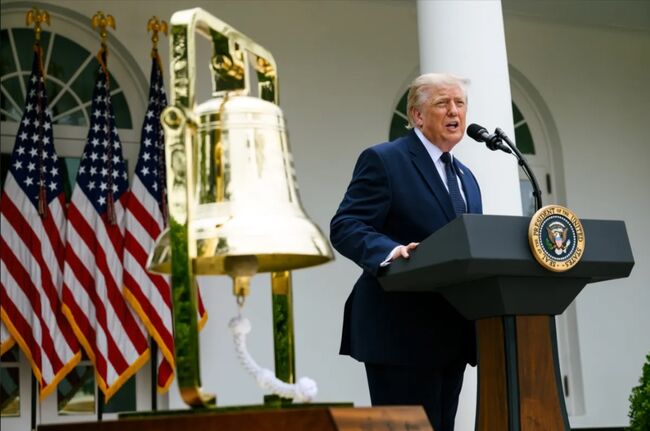 Trump pressures for rate cut again ahead of FOMC... "Should be the lowest in the world"
U.S. President Donald Trump. [Photo = The White House] U.S. President Donald Trump once again pressured the Federal Reserve, the U.S. central bank, to lower interest rates on the 27th (local time
Trump pressures for rate cut again ahead of FOMC... "Should be the lowest in the world"
U.S. President Donald Trump. [Photo = The White House] U.S. President Donald Trump once again pressured the Federal Reserve, the U.S. central bank, to lower interest rates on the 27th (local time
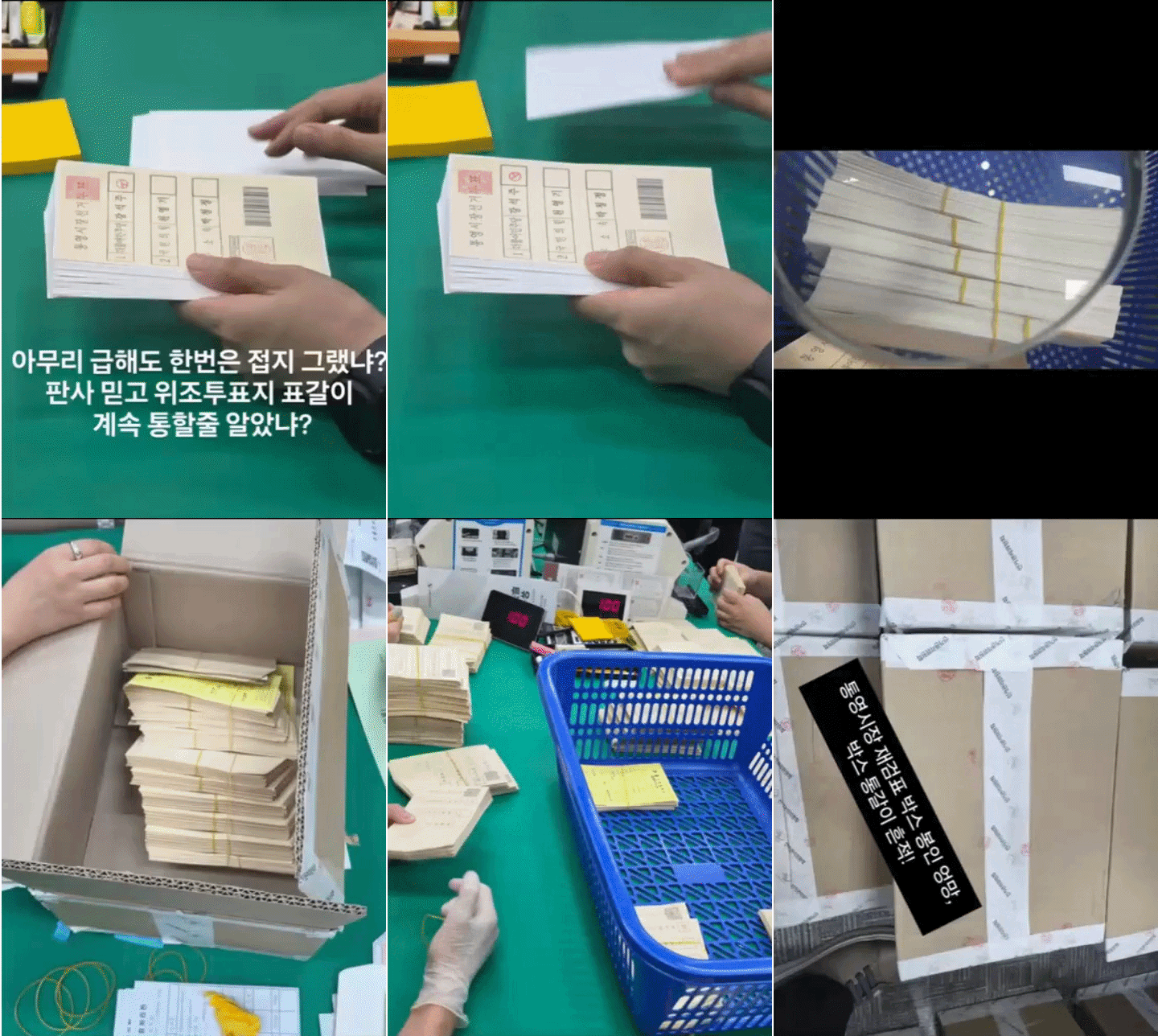 “Ignoring crisp ballots and damaged seals”… Tongyeong mayoral recount concludes with ‘no change in outcome,’ leaving suspicions and public outrage behind
Suspected counterfeit ballots discovered in Tongyeong [GIF from social media of Representative Hwang Kyo-ahn / Attorney Park Joo-hyun]During a recount of the Tongyeong mayoral election in South Gyeong
“Ignoring crisp ballots and damaged seals”… Tongyeong mayoral recount concludes with ‘no change in outcome,’ leaving suspicions and public outrage behind
Suspected counterfeit ballots discovered in Tongyeong [GIF from social media of Representative Hwang Kyo-ahn / Attorney Park Joo-hyun]During a recount of the Tongyeong mayoral election in South Gyeong
 President Yoon, regarding the first-instance ruling on the Public Official Election Act: “An excessive political verdict that distorts the facts… We will appeal immediately.”
The first-instance sentencing hearing for President Yoon Suk Yeol regarding violations of the Public Official Election Act is being broadcast live at Seoul Station on the 27th. [Photo=Yonhap News]Pres
President Yoon, regarding the first-instance ruling on the Public Official Election Act: “An excessive political verdict that distorts the facts… We will appeal immediately.”
The first-instance sentencing hearing for President Yoon Suk Yeol regarding violations of the Public Official Election Act is being broadcast live at Seoul Station on the 27th. [Photo=Yonhap News]Pres
 WSJ: "SK Hynix ADR Premium Is a Sign of AI Trading Overheat"
Advertisement for SK Hynix ADR listing in New York's Times Square [Reuters=Yonhap News file photo]The Wall Street Journal (WSJ) has pointed out that the price of SK Hynix’s American Depositary Recei
WSJ: "SK Hynix ADR Premium Is a Sign of AI Trading Overheat"
Advertisement for SK Hynix ADR listing in New York's Times Square [Reuters=Yonhap News file photo]The Wall Street Journal (WSJ) has pointed out that the price of SK Hynix’s American Depositary Recei
 'Godfather of Japanese Mystery Novels' Keigo Higashino Passes Away After Battle with Cancer at 68
Famous Japanese mystery novelist Keigo Higashino [AFP=Yonhap News]It has been belatedly reported that Keigo Higashino, the "godfather of Japanese mystery novels" and author of bestsellers such as "The
'Godfather of Japanese Mystery Novels' Keigo Higashino Passes Away After Battle with Cancer at 68
Famous Japanese mystery novelist Keigo Higashino [AFP=Yonhap News]It has been belatedly reported that Keigo Higashino, the "godfather of Japanese mystery novels" and author of bestsellers such as "The
 [Park Pil-kyu Security Column] To the Ignorant Trying to Clothe a Beast in Sheep's Clothing
Rep. Kim Byung-joo of the Democratic Party of Korea [Photo=Yonhap News]“The Air Force Academy doesn't teach you how to fly a plane!” “The Army, Navy, and Air Force academies are exactly the
[Park Pil-kyu Security Column] To the Ignorant Trying to Clothe a Beast in Sheep's Clothing
Rep. Kim Byung-joo of the Democratic Party of Korea [Photo=Yonhap News]“The Air Force Academy doesn't teach you how to fly a plane!” “The Army, Navy, and Air Force academies are exactly the
 [Issue Diagnosis] Two Effects of the Election Petition Review
 [Photo] Evidence of Election Fraud Flooding U.S. Media… Trump Had 2.7 Million Votes Stolen
 [Video] U.S. Semiquincentennial Air Show... 'Art in the Sky' streaks across New York
 [Editorial Cartoon] A Draconian Law That Undermines Freedom of Expression

 List
List