2025년 미국의 선거개혁 입법인 OBBBA(One Big Beautiful Bill Act)와 그 후속 조치인 RLA(Retraction of Legal Ambiguities Act)는 단순한 정쟁을 넘어 민주주의 제도의 본질을 묻는 시도였습니다. 이번 편에서는 ‘선거 조작 논란은 왜 처벌되지 않았는가’라는 질문을 중심으로, RLA가 밝힌 법적 사각지대의 실체를 짚어봅니다. 이는 대한민국에도 중요한 질문을 던집니다.<편집자 주>
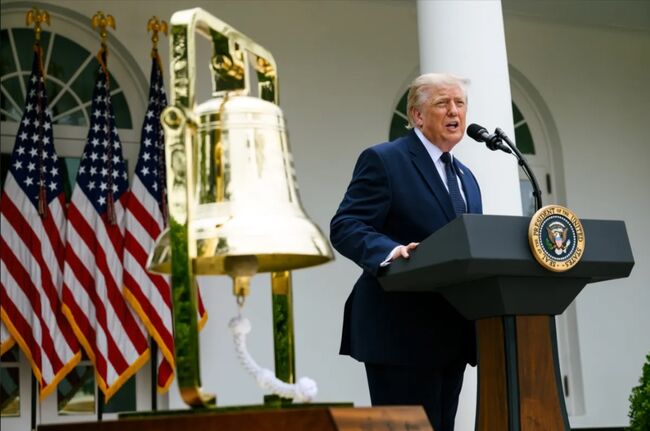
 President Trump during the assassination attempt last year (center) Yonhap News
Table of Contents
1. The Shadow of Elections Targeted by Trump's 'OBBBA Bill'
2. Why Election Manipulation Went Unpunished
3. 'Unsupervised Technology' is the Enemy of Democracy
4. Whose Responsibility is Election Monitoring?
5. South Korea, Redesign Your Electoral System
The controversy over election manipulation that emerged with the 2020 U.S. presidential election has not yet ended. President Donald Trump claimed the election was systematically rigged at the time, and numerous lawsuits followed, but the courts dismissed most of them.
The reasons are clear: "Insufficient evidence," "inapplicability to past events," and "not a violation of current law." In other words, the problem was not that manipulation didn't occur, but rather a legal loophole that made it "impossible to punish because it was not defined as illegal."
The bill proposed by Trump, directly addressing this gap, is the RLA, or the 'Retraction of Legal Ambiguities Act.' This act, along with OBBBA, a landmark election reform legislation in the United States, is considered a 'legal safeguard' for restoring election confidence.
"It wasn't that there was no illegality, but that it couldn't be called illegal."
Trump's legal team analyzed various cases raised during the 2020 presidential election and the 2022 midterm elections. Representative examples include: △ Unauthorized storage of absentee ballots △ Nighttime counting in blind spots of polling station CCTV cameras △ Resumption of counting after observers were removed △ Controversies over electronic counting machine errors and communication connections △ External IT personnel accessing servers.
Despite concerns being raised about many of these issues, investigations were closed with the reason that "it is difficult to consider it illegal under current law." In other words, the 'absence of legal requirements' was the biggest obstacle.
What the RLA Changed
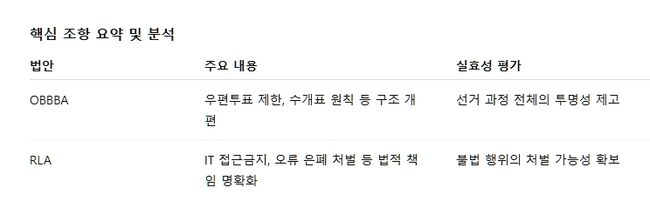
The RLA is a bill to fill these legal blind spots and is currently being implemented in some states. Key provisions include:
△ Prohibition of proxy collection of mail-in ballots: Penalties for a third party receiving or storing absentee ballots.
△ Prohibition of voter inducement near polling stations: Violation of election law for providing gifts or beverages within 100 meters of a polling station.
△ Criminal liability for concealing counting errors: Potential loss of public office and criminal charges for failing to report anomalies.
△ Criminal charges for unauthorized IT access: Unauthorized access to election servers or counting systems will be considered a felony.
This law goes beyond simply enhancing procedural transparency; it is a measure that clearly defines election fraud and enables actual punishment.
Why So Many Controversies Went Unpunished
The cases that Trump supporters focused on were diverse. In Michigan, allegations of data manipulation by Dominion voting machines were raised, and in Georgia, there was an issue of ballots being double-counted during a recount. In Pennsylvania, there were indications that unpunched ballots entered the counting machines. However, most of these did not lead to legal punishment due to the reason that "whether it was a violation of the law was unclear."
The RLA targets precisely this point. While retroactive application is not possible, it clearly draws a line to prevent similar incidents from recurring in the future.
Failure in System Design Creates Distrust
Beyond mere political struggle, Trump has emphasized that 'trusted elections' are a prerequisite for democracy. While OBBBA focuses on structural reforms (limiting mail-in voting, principles of manual counting, etc.), RLA is legislation that defines specific accountability. These two form the pillars of mutually complementary institutional reform.
Is Korea an Exception?
South Korea has also experienced similar issues in various elections.
△ Tampering with seals of absentee ballot boxes
△ Impossibility of verifying electronic counting machines
△ Limitations on observer authority
△ Possibility of external access to the National Election Commission's servers
However, most of these did not lead to legal punishment. The reason is the same: the related acts were not defined as 'illegal'.
Trust Without Law is Dangerous
Democracy functions only on institutional trust. Election procedures must be guaranteed by laws and systems, not by 'good intentions' or 'practices.' In this regard, OBBBA and RLA are not mere political legislation but function as 'democratic safeguards'.
South Korea Cannot Ignore This Question.
"Can we truly trust our elections?"
"Are the legal and institutional safeguards necessary for trust sufficient?"
#OBBBA #RLA #ElectionReform #ElectionManipulation #TrumpBill #USElectionSystem #KoreanElectionLaw #ElectronicCountingMachine #ElectoralSystemImprovement #KoreaUSJapanPlanning

 Trump pressures for rate cut again ahead of FOMC... "Should be the lowest in the world"
U.S. President Donald Trump. [Photo = The White House] U.S. President Donald Trump once again pressured the Federal Reserve, the U.S. central bank, to lower interest rates on the 27th (local time
Trump pressures for rate cut again ahead of FOMC... "Should be the lowest in the world"
U.S. President Donald Trump. [Photo = The White House] U.S. President Donald Trump once again pressured the Federal Reserve, the U.S. central bank, to lower interest rates on the 27th (local time
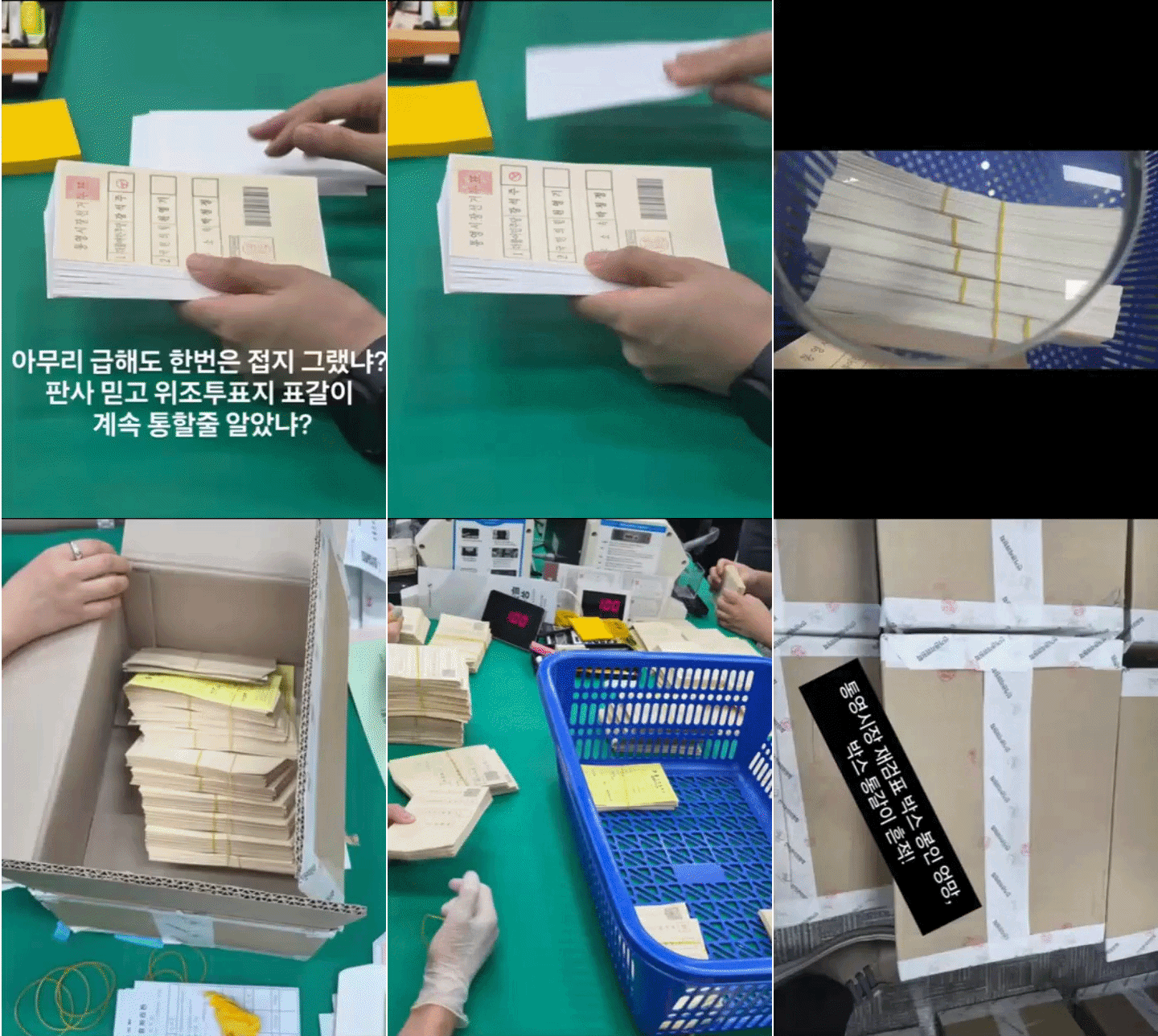 “Ignoring crisp ballots and damaged seals”… Tongyeong mayoral recount concludes with ‘no change in outcome,’ leaving suspicions and public outrage behind
Suspected counterfeit ballots discovered in Tongyeong [GIF from social media of Representative Hwang Kyo-ahn / Attorney Park Joo-hyun]During a recount of the Tongyeong mayoral election in South Gyeong
“Ignoring crisp ballots and damaged seals”… Tongyeong mayoral recount concludes with ‘no change in outcome,’ leaving suspicions and public outrage behind
Suspected counterfeit ballots discovered in Tongyeong [GIF from social media of Representative Hwang Kyo-ahn / Attorney Park Joo-hyun]During a recount of the Tongyeong mayoral election in South Gyeong
 President Yoon, regarding the first-instance ruling on the Public Official Election Act: “An excessive political verdict that distorts the facts… We will appeal immediately.”
The first-instance sentencing hearing for President Yoon Suk Yeol regarding violations of the Public Official Election Act is being broadcast live at Seoul Station on the 27th. [Photo=Yonhap News]Pres
President Yoon, regarding the first-instance ruling on the Public Official Election Act: “An excessive political verdict that distorts the facts… We will appeal immediately.”
The first-instance sentencing hearing for President Yoon Suk Yeol regarding violations of the Public Official Election Act is being broadcast live at Seoul Station on the 27th. [Photo=Yonhap News]Pres
 WSJ: "SK Hynix ADR Premium Is a Sign of AI Trading Overheat"
Advertisement for SK Hynix ADR listing in New York's Times Square [Reuters=Yonhap News file photo]The Wall Street Journal (WSJ) has pointed out that the price of SK Hynix’s American Depositary Recei
WSJ: "SK Hynix ADR Premium Is a Sign of AI Trading Overheat"
Advertisement for SK Hynix ADR listing in New York's Times Square [Reuters=Yonhap News file photo]The Wall Street Journal (WSJ) has pointed out that the price of SK Hynix’s American Depositary Recei
 'Godfather of Japanese Mystery Novels' Keigo Higashino Passes Away After Battle with Cancer at 68
Famous Japanese mystery novelist Keigo Higashino [AFP=Yonhap News]It has been belatedly reported that Keigo Higashino, the "godfather of Japanese mystery novels" and author of bestsellers such as "The
'Godfather of Japanese Mystery Novels' Keigo Higashino Passes Away After Battle with Cancer at 68
Famous Japanese mystery novelist Keigo Higashino [AFP=Yonhap News]It has been belatedly reported that Keigo Higashino, the "godfather of Japanese mystery novels" and author of bestsellers such as "The
 [Park Pil-kyu Security Column] To the Ignorant Trying to Clothe a Beast in Sheep's Clothing
Rep. Kim Byung-joo of the Democratic Party of Korea [Photo=Yonhap News]“The Air Force Academy doesn't teach you how to fly a plane!” “The Army, Navy, and Air Force academies are exactly the
[Park Pil-kyu Security Column] To the Ignorant Trying to Clothe a Beast in Sheep's Clothing
Rep. Kim Byung-joo of the Democratic Party of Korea [Photo=Yonhap News]“The Air Force Academy doesn't teach you how to fly a plane!” “The Army, Navy, and Air Force academies are exactly the
 [Issue Diagnosis] Two Effects of the Election Petition Review
 [Photo] Evidence of Election Fraud Flooding U.S. Media… Trump Had 2.7 Million Votes Stolen
 [Video] U.S. Semiquincentennial Air Show... 'Art in the Sky' streaks across New York
 [Editorial Cartoon] A Draconian Law That Undermines Freedom of Expression

 List
List









