 Advertisement for the 86th National Commemoration of Martyrs and Patriots Day. Ministry of Patriots and Veterans Affairs.
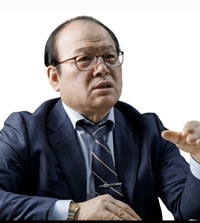 Joo Eun-sik, Director of the Korea Strategic Research Institute The Ministry of Patriots and Veterans Affairs is facing growing controversy after deciding to hold this year's 86th National Commemoration of Martyrs and Patriots Day for the first time on the grounds of the Korea Military Academy. Previously, national events honoring martyrs and patriots have taken place in symbolically significant locations such as the Seoul National Cemetery, the Provisional Government Memorial Hall, and the Independence Hall of Korea. However, suspicions have arisen that the sudden relocation of the event to the heart of a military educational institution this year is a result of overlapping demands from the Korean Veterans Association and political interpretations. This is precisely what fuels public concern about the Korea Military Academy, an institution symbolizing South Korea's national security.
The Issue Isn't the 'Change of Venue' Itself
Martyrs and patriots are the roots of the Republic of Korea, and the commemoration ceremony's dignity should be respected regardless of its location. However, when the identity and mission of an institution become intertwined with the political and ideological objectives of a particular group, the repercussions become a matter of a completely different magnitude. The Korea Military Academy is not merely an educational institution; it is the origin of the officer corps' spirit that defended against communism through the founding of the Korean armed forces and the Korean War.
The process by which a specific organization 'demanded' the Korea Military Academy as the venue for the event and the government accepted it is not something to be taken lightly. This is because it results in drawing the Military Academy back into the arena of political debate, overshadowing the symbolic significance of the commemoration.
Following the 'Controversy over the Removal of Hong Beom-do's Statue,' the Korea Military Academy has been subjected to significant political attacks.
Last year, the Korea Military Academy was already embroiled in political turmoil due to the issue of General Hong Beom-do's statue. An 'ideological historical debate,' separate from the identity, founding history, and chain of command of the Korean armed forces, directly impacted the military educational institution. Such debates violate the principle of political neutrality in national defense, and many criticized it as unhealthy to drag a military academy that trains officers into the very center of social conflict.
Yet, this time, the Korean Veterans Association has again placed the Military Academy at the forefront, claiming, "Let's hold the commemoration ceremony at the Military Academy to resolve the identity confusion of the institution." The paradoxical situation arises where they claim to rectify the Military Academy's confusion while in fact politicizing it.
'The Claim That Shinheung Military School is the Predecessor of the Korea Military Academy is Historically Inaccurate'
During this venue selection process, the remarks made by Lee Jong-chan, President of the Korean Veterans Association, have once again come under scrutiny. While some have consistently claimed that "Shinheung Military School is the predecessor of the Korea Military Academy," this is not true.
Shinheung Military School, as an 'anti-Japanese armed school' for training independence army soldiers, holds immense historical value. However, it was an armed educational institution for the independence movement operated in exile in China during the Japanese colonial period.
The Republic of Korea Military Academy, on the other hand, is the institutional root of the Republic of Korea's armed forces, which began as the Joseon Constabulary Academy after the nation's founding in 1946.
Furthermore, the 'educational tradition of Shinheung Military School' is generally evaluated by academia as having been succeeded by Kyung Hee University, which has expressed its intent and pursued related projects.
In other words, the two institutions differ entirely in their historical character, legal lineage, educational systems, and institutional continuity.
Despite this, a specific individual claiming 'predecessor of the Military Academy' as a logical link to honor their grandfather is a dangerous attempt to mix historical interpretation with personal objectives.
Respect for Independence Activists and Military Legitimacy Are Separate Issues
The Lee Hoe-young family contributed their wealth to establish Shinheung Military School in Manchuria during the independence movement, and their descendants highly value his dedication. After liberation, upon the establishment of the government, the Republic of Korea sufficiently compensated the family by electing Lee Si-yeong, a descendant, as Vice President. However, it is also a historical fact that Lee Hoe-young adopted an anarchist, stateless ideology in his later years.
This issue falls within the domain of independence movement history research and is a discussion on a different level from the military and national operating systems. However, the process of establishing a specific statue on the Military Academy grounds by compromising ideological inclinations and institutional legitimacy, and then using it as a basis for designating the commemoration venue, is highly susceptible to criticism as an administrative act that unduly interferes with the interpretation of the modern military's identity, rather than 'respect for the independence movement.'
The Republic of Korea Military Academy is the linchpin of national security, and political neutrality is an absolute value.
From the process of founding the Republic of Korea, the Korean War, the establishment of the anti-communist defense line, to the establishment of modern joint operational systems, the Military Academy is an organization that exists for national survival, not politics.
The role of the Military Academy is to defend national ideology, foster the ethics and responsibilities of the officer corps, and nurture military leadership for war deterrence and national defense.
If the historical views of specific organizations or individuals influence this, and national events move to support them, this is already the beginning of 'politicization,' which shakes the military's political neutrality.
The Ministry of Patriots and Veterans Affairs' Acceptance Process is Also Problematic
The announcement that the Korean Veterans Association hinted at boycotting the event and demanded the 'Military Academy as the venue,' and that the Ministry of Patriots and Veterans Affairs mediated and finally accepted it, means the government has presented a military educational institution as an option to avoid conflict.
However, security and military institutions cannot be venues for mediating political conflicts, and they should never be bargaining chips to satisfy the demands of specific organizations.
In this regard, the decision-making process of the Ministry of Patriots and Veterans Affairs also requires future criticism and scrutiny. The Korea Military Academy belongs to no one. It is an asset of the entire Republic of Korea.
The essence of this controversy is not whether one person's historical view is right or wrong. The core can be summarized in the following sentence.
"Any attempt to use the Korea Military Academy as a symbolic stage for specific political or ideological forces undermines the foundation of national security."
When the military is contaminated by politics, the credibility of war deterrence crumbles, and national unity is shaken. Hwarangdae at the Korea Military Academy, where the future officers of the Republic of Korea learn, is not a space where any force can arbitrarily project 'political interpretations.'
Beware of the Politicization of the Korea Military Academy
Neither the Korean Veterans Association nor any specific individual should be allowed to reframe or utilize the identity of the Military Academy based on their own historical interpretations. The Military Academy is not a stage for politics; it is a national sanctuary where one learns to prepare to lay down their life to protect the Republic of Korea.
The Ministry of Patriots and Veterans Affairs must also prioritize the military's values, traditions, and neutrality in the future when mediating conflicts between organizations.
With this controversy as an opportunity, we must reaffirm once again.
The Korea Military Academy does not belong to any political faction, nor is it a place to honor the ancestors of any particular lineage. The Military Academy exists solely for the future of the Republic of Korea. The preamble of the Constitution states that the spirit of the Provisional Army is inherited, meaning that the Provisional Army does not directly inherit the legal legitimacy of the Republic of Korea's armed forces but respects its spirit. The claim that Shinheung Military School is the predecessor of the Military Academy because it trained military officers is the same logic as stating that all commissioned officers are graduates of the Military Academy. Greed leads to failure. We must be wary of the excessive ambition and unreasonable demands of Lee Jong-chan, President of the Korean Veterans Association.
Joo Eun-sik, Director of the Korea Strategic Research Institute

 Iranian Foreign Ministry: "Continuing Message Exchanges with the U.S. and Activities of Mediating Countries"
Esmaeil Baghaei, Spokesperson for the Iranian Ministry of Foreign Affairs [Xinhua, Yonhap News file photo]Esmaeil Baghaei, spokesperson for the Iranian Ministry of Foreign Affairs, stated on the 26th
Iranian Foreign Ministry: "Continuing Message Exchanges with the U.S. and Activities of Mediating Countries"
Esmaeil Baghaei, Spokesperson for the Iranian Ministry of Foreign Affairs [Xinhua, Yonhap News file photo]Esmaeil Baghaei, spokesperson for the Iranian Ministry of Foreign Affairs, stated on the 26th
 President Yoon: "Do You Think You Are Safe from the Special Counsel?"... Final Statement Video Released
President Yoon Suk Yeol rebuking the special prosecutor on the 24th. [Court video / @birds_justice X account subtitle GIF] A video of President Yoon Suk Yeol's closing statement at his trial rega
President Yoon: "Do You Think You Are Safe from the Special Counsel?"... Final Statement Video Released
President Yoon Suk Yeol rebuking the special prosecutor on the 24th. [Court video / @birds_justice X account subtitle GIF] A video of President Yoon Suk Yeol's closing statement at his trial rega
 President Yoon, regarding the first-instance ruling on the Public Official Election Act: “An excessive political verdict that distorts the facts… We will appeal immediately.”
The first-instance sentencing hearing for President Yoon Suk Yeol regarding violations of the Public Official Election Act is being broadcast live at Seoul Station on the 27th. [Photo=Yonhap News]Pres
President Yoon, regarding the first-instance ruling on the Public Official Election Act: “An excessive political verdict that distorts the facts… We will appeal immediately.”
The first-instance sentencing hearing for President Yoon Suk Yeol regarding violations of the Public Official Election Act is being broadcast live at Seoul Station on the 27th. [Photo=Yonhap News]Pres
 WSJ: "SK Hynix ADR Premium Is a Sign of AI Trading Overheat"
Advertisement for SK Hynix ADR listing in New York's Times Square [Reuters=Yonhap News file photo]The Wall Street Journal (WSJ) has pointed out that the price of SK Hynix’s American Depositary Recei
WSJ: "SK Hynix ADR Premium Is a Sign of AI Trading Overheat"
Advertisement for SK Hynix ADR listing in New York's Times Square [Reuters=Yonhap News file photo]The Wall Street Journal (WSJ) has pointed out that the price of SK Hynix’s American Depositary Recei
 'Godfather of Japanese Mystery Novels' Keigo Higashino Passes Away After Battle with Cancer at 68
Famous Japanese mystery novelist Keigo Higashino [AFP=Yonhap News]It has been belatedly reported that Keigo Higashino, the "godfather of Japanese mystery novels" and author of bestsellers such as "The
'Godfather of Japanese Mystery Novels' Keigo Higashino Passes Away After Battle with Cancer at 68
Famous Japanese mystery novelist Keigo Higashino [AFP=Yonhap News]It has been belatedly reported that Keigo Higashino, the "godfather of Japanese mystery novels" and author of bestsellers such as "The
 [Park Pil-kyu Security Column] To the Ignorant Trying to Clothe a Beast in Sheep's Clothing
Rep. Kim Byung-joo of the Democratic Party of Korea [Photo=Yonhap News]“The Air Force Academy doesn't teach you how to fly a plane!” “The Army, Navy, and Air Force academies are exactly the
[Park Pil-kyu Security Column] To the Ignorant Trying to Clothe a Beast in Sheep's Clothing
Rep. Kim Byung-joo of the Democratic Party of Korea [Photo=Yonhap News]“The Air Force Academy doesn't teach you how to fly a plane!” “The Army, Navy, and Air Force academies are exactly the
 [Issue Diagnosis] Two Effects of the Election Petition Review
 [Photo] Evidence of Election Fraud Flooding U.S. Media… Trump Had 2.7 Million Votes Stolen
 [Video] U.S. Semiquincentennial Air Show... 'Art in the Sky' streaks across New York
 [Editorial Cartoon] A Draconian Law That Undermines Freedom of Expression

 List
List









