 US-ROK Fact Sheet. Yonhap News
 Guest Columnist, ROK Military Academy Class of '88The controversy surrounding the US-ROK ‘Joint Fact Sheet’ pits emotional frames of ‘National Interest Sheet’ against ‘Blank Sheet.’ One side claims a diplomatic victory, while the other attacks it as excessive appeasement for regime preservation. Amidst this confrontation, the essential question is: "What does this document actually benefit national security, what does it require, and what detailed plans need to be filled in going forward?"
The fact sheet's core security-related points are three: support for the construction of US nuclear-powered submarines (SSNs), large-scale investment by South Korean companies in the US, and expanded cooperation in advanced weapons and extended deterrence. However, these do not automatically translate to preventing war, achieving national interests, or ensuring survival. This document is, at best, a general overview. Numerous detailed tasks remain to be overcome for its implementation.
The noticeable changes in the fact sheet are clear. For the first time, the US has documented its ‘support’ for South Korea's construction of nuclear-powered submarines. South Korea has committed to a significant financial obligation: increasing defense spending to 3.5% of GDP, purchasing $25 billion in US military equipment by 2030, and providing $33 billion for US Forces Korea (currently $1 billion annually). South Korea's strategic role has expanded beyond North Korea to the Taiwan Strait and the Indo-Pacific region. The cost of constructing nuclear-powered submarines will require immense sacrifices.
While hailed as a symbolic diplomatic achievement, not a single core technology that determines the success of the nuclear submarine project or the legal framework within the US has been secured. A nuclear submarine is not a project completed by mere declaration. There is no need to make a fuss over a single line of ‘support’ for nuclear submarines.
At this juncture, Australia's experience with nuclear-powered submarines offers a crucial lesson. In 2021, the trilateral security partnership between Australia, the United Kingdom, and the United States, AUKUS, was formed, officially announcing Australia's nuclear-powered submarines. Australia chose nuclear submarines to counter China's growing naval power, but their deployment has been pushed back to the late 2040s, and the total cost has soared to astronomical levels. International controversy also remains fierce regarding the use of nuclear propulsion by non-nuclear states.
Most importantly, Australia is utterly dependent on the US and UK for nuclear fuel, maintenance, and training. This demonstrates that pursuing nuclear submarines is a super-complex project entangled with diplomacy, technology, industry, and international law. South Korea, despite its abundant technological capabilities, is no exception. In reality, South Korea's pursuit of nuclear submarines faces structural challenges that cannot be satisfied merely by the broad consensus reached by the leaders of the two nations.
First, the legal and institutional barriers are immense. The current ROK-US Atomic Energy Agreement prohibits the use of nuclear energy for military purposes, preventing progress even at the starting line for acquiring nuclear submarines. To proceed with nuclear submarines, the agreement needs to be revised or a separate treaty concluded. This is a highly difficult process requiring the approval of the US Congress. In other words, it is not an issue that can be resolved with a single word of ‘support.’
Second, there are significant differences in detailed plans between South Korea and the US regarding the method of acquiring nuclear submarines. South Korea hopes for domestic construction based on nuclear fuel approval and technology transfer, but President Trump argued that they should be built in US shipyards. South Korea's goal of securing strategic assets directly clashes with the US's industrial, employment, and technological security strategies. To achieve detailed agreements on nuclear fuel approval and technology transfer as we desire, the current administration's steadfast adherence to pro-China policies would require a proactive change in attitude.
Third, the US political establishment will block technology transfer. Nuclear submarine technology is accessible to only a limited number of individuals within the US, and even the UK and Australia share only limited aspects. In this situation, it is uncertain how much technological cooperation South Korea can actually receive. Unless these three layers of challenges are resolved, South Korea's pursuit of nuclear submarines cannot avoid being evaluated as an ‘unfinished strategic blueprint’ or, probabilistically, a ‘gamble’ with many potential losses.
Ultimately, the real issue of the fact sheet is not the expression of ‘support’ itself. It lies in the action plan to fill in the void of detailed plans. The nuclear submarine project can become the backbone of national survival strategy, but it is simultaneously a mega-project where trillions of won in finances and international legal risks are superimposed.
What the National Assembly should do now is not engage in emotional debates but conduct a sober verification. The phased goals and bottom lines of the US-ROK working-level negotiations should be disclosed, a roadmap including construction schedules and budgets should be presented, and a continuous verification system involving the National Assembly and experts should be established. Nuclear submarine pursuit that lacks transparency is not a national interest but a political illusion, and the phrase ‘support’ is merely a possibility, not an achievement.
National interest is protected by verification, not declaration. If the legally and institutionally insurmountable barriers, detailed plans, nuclear fuel, and technology transfer are not overcome, nuclear submarines will become a national debt, not a strategic asset.
The public is frustrated by impromptu conclusions in foreign negotiations that prioritize political calculations and disregard future burdens. Negotiation capability is the first line of defense for national interest and requires practical verification and long-term strategy. The standard for judgment should be the continuity of the nation, not the temporary interests and emotions of the administration. For nuclear submarines, entrusting the mission to the military rather than politics will yield faster results.
The true sentiment of the military calls for the restoration of command order and the establishment of a command system, rather than the pursuit of nuclear submarines. Strange clandestine directives that control and manipulate the military from behind with immense power must be eradicated. Major military-related decisions must have a clear command line. The cowardly act of concealing the origin of orders due to the awareness of opposition backlash and responsibility must stop.
The Joint Chiefs of Staff Chairman's remark about a ‘complete replacement of JCS generals’ and the decision to hold the ‘Day of the Patriotic Martyrs’ commemoration ceremony at the Korea Military Academy on November 17th appear to be orders that could only be given by the highest decision-maker. In this world, one can know where the wind began by observing the ripples on the waves. The military's sentiment calls for a transparent command system over nuclear submarines.
Park Pil-gyu, Guest Columnist

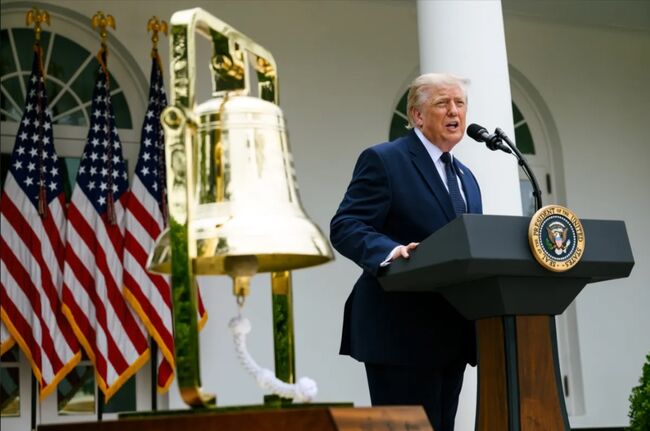 Trump pressures for rate cut again ahead of FOMC... "Should be the lowest in the world"
U.S. President Donald Trump. [Photo = The White House] U.S. President Donald Trump once again pressured the Federal Reserve, the U.S. central bank, to lower interest rates on the 27th (local time
Trump pressures for rate cut again ahead of FOMC... "Should be the lowest in the world"
U.S. President Donald Trump. [Photo = The White House] U.S. President Donald Trump once again pressured the Federal Reserve, the U.S. central bank, to lower interest rates on the 27th (local time
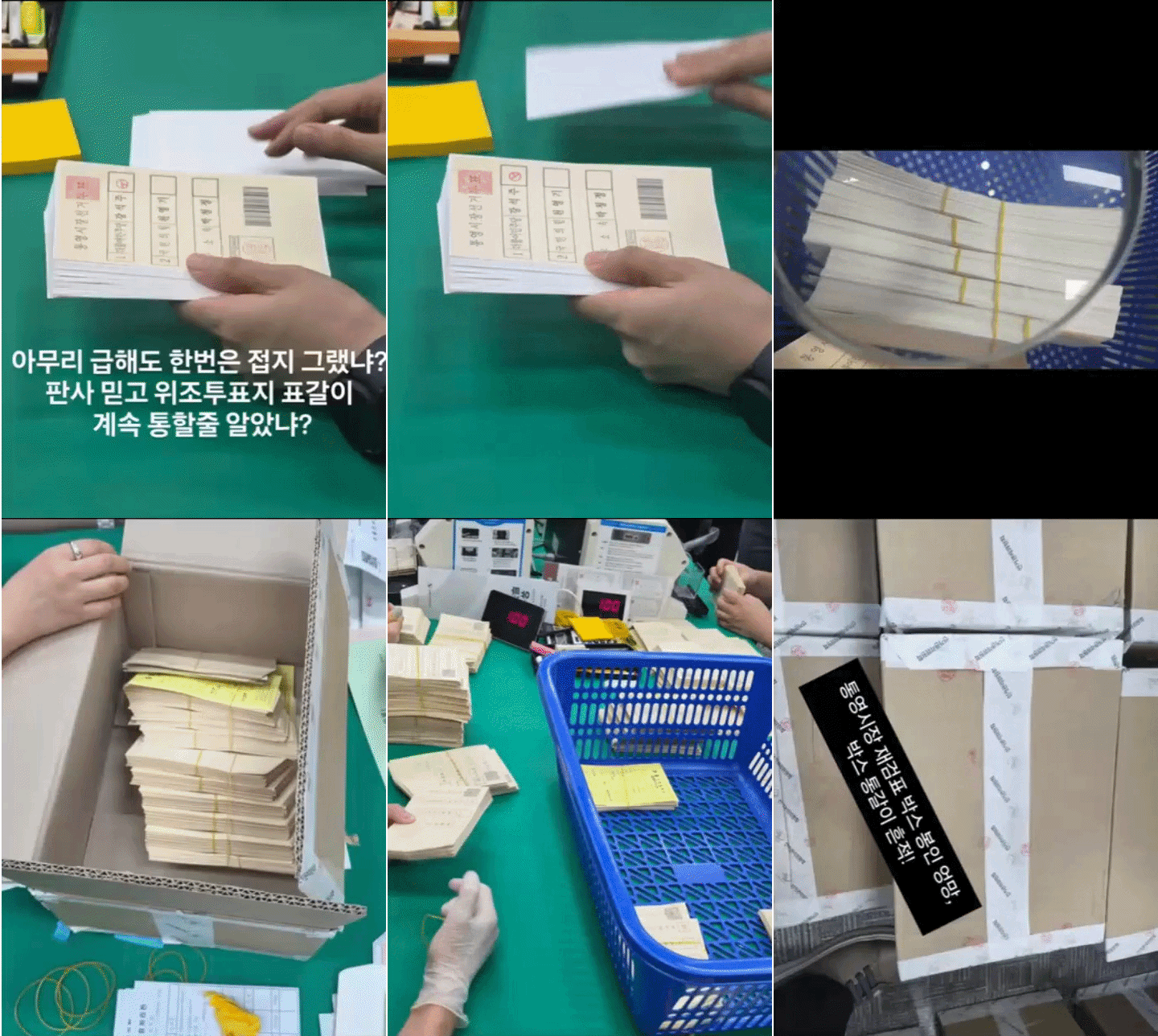 “Ignoring crisp ballots and damaged seals”… Tongyeong mayoral recount concludes with ‘no change in outcome,’ leaving suspicions and public outrage behind
Suspected counterfeit ballots discovered in Tongyeong [GIF from social media of Representative Hwang Kyo-ahn / Attorney Park Joo-hyun]During a recount of the Tongyeong mayoral election in South Gyeong
“Ignoring crisp ballots and damaged seals”… Tongyeong mayoral recount concludes with ‘no change in outcome,’ leaving suspicions and public outrage behind
Suspected counterfeit ballots discovered in Tongyeong [GIF from social media of Representative Hwang Kyo-ahn / Attorney Park Joo-hyun]During a recount of the Tongyeong mayoral election in South Gyeong
 President Yoon, regarding the first-instance ruling on the Public Official Election Act: “An excessive political verdict that distorts the facts… We will appeal immediately.”
The first-instance sentencing hearing for President Yoon Suk Yeol regarding violations of the Public Official Election Act is being broadcast live at Seoul Station on the 27th. [Photo=Yonhap News]Pres
President Yoon, regarding the first-instance ruling on the Public Official Election Act: “An excessive political verdict that distorts the facts… We will appeal immediately.”
The first-instance sentencing hearing for President Yoon Suk Yeol regarding violations of the Public Official Election Act is being broadcast live at Seoul Station on the 27th. [Photo=Yonhap News]Pres
 WSJ: "SK Hynix ADR Premium Is a Sign of AI Trading Overheat"
Advertisement for SK Hynix ADR listing in New York's Times Square [Reuters=Yonhap News file photo]The Wall Street Journal (WSJ) has pointed out that the price of SK Hynix’s American Depositary Recei
WSJ: "SK Hynix ADR Premium Is a Sign of AI Trading Overheat"
Advertisement for SK Hynix ADR listing in New York's Times Square [Reuters=Yonhap News file photo]The Wall Street Journal (WSJ) has pointed out that the price of SK Hynix’s American Depositary Recei
 'Godfather of Japanese Mystery Novels' Keigo Higashino Passes Away After Battle with Cancer at 68
Famous Japanese mystery novelist Keigo Higashino [AFP=Yonhap News]It has been belatedly reported that Keigo Higashino, the "godfather of Japanese mystery novels" and author of bestsellers such as "The
'Godfather of Japanese Mystery Novels' Keigo Higashino Passes Away After Battle with Cancer at 68
Famous Japanese mystery novelist Keigo Higashino [AFP=Yonhap News]It has been belatedly reported that Keigo Higashino, the "godfather of Japanese mystery novels" and author of bestsellers such as "The
 [Park Pil-kyu Security Column] To the Ignorant Trying to Clothe a Beast in Sheep's Clothing
Rep. Kim Byung-joo of the Democratic Party of Korea [Photo=Yonhap News]“The Air Force Academy doesn't teach you how to fly a plane!” “The Army, Navy, and Air Force academies are exactly the
[Park Pil-kyu Security Column] To the Ignorant Trying to Clothe a Beast in Sheep's Clothing
Rep. Kim Byung-joo of the Democratic Party of Korea [Photo=Yonhap News]“The Air Force Academy doesn't teach you how to fly a plane!” “The Army, Navy, and Air Force academies are exactly the
 [Issue Diagnosis] Two Effects of the Election Petition Review
 [Photo] Evidence of Election Fraud Flooding U.S. Media… Trump Had 2.7 Million Votes Stolen
 [Video] U.S. Semiquincentennial Air Show... 'Art in the Sky' streaks across New York
 [Editorial Cartoon] A Draconian Law That Undermines Freedom of Expression

 List
List









