 Former President Chun Doo-hwan. Yonhap News
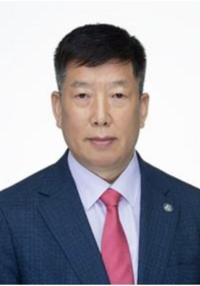 Guest Columnist, Korea Military Academy Class of '40November 23rd marks the 4th anniversary of the passing of former President Chun Doo-hwan. For four years, his remains have been temporarily interred as a final resting place has yet to be determined. His wish, "to remain as white bones on a forward observation post overlooking North Korea and welcome reunification," was thwarted in November 2023 by the opposition of 11 Paju civic groups, including the 'Paju Branch of the Institute for the Study of National Issues.' Under current law, his enshrinement at home is also difficult. Apart from scattering his ashes, there seems to be no viable solution.
This issue is not anyone's fault. It vividly illustrates the structural confrontations within our society, where historical debates, social sentiments, and political conflicts are intertwined, preventing any conclusion. The left-right divide, where factional emotions react before the essence of an issue, has already deepened to a level of civil war.
The legal basis preventing the enshrinement of former President Chun Doo-hwan in the National Cemetery is Article 5 of the National Cemetery Act and its governmental interpretation. Provisions stating that "individuals whose conviction for a crime punishable by imprisonment or heavier has been finalized" or "those convicted of serious crimes such as rebellion" may be excluded from enshrinement are preventing his burial in the National Cemetery.
The legal status of individuals who have been pardoned and had their civil rights restored is not clearly defined in law, leaving room for interpretation and application. Former President Kim Dae-jung and former Chief of the Presidential Security Service Ahn Hyun-tae were enshrined in the National Cemetery based on the "Supreme Court's official interpretation that if pardoned and civil rights restored, the eligibility for enshrinement in the National Cemetery is also restored." Former President Chun Doo-hwan was also granted a special pardon and restoration of civil rights on December 22, 1997, under the pretext of national unity and political reconciliation.
Humans are emotional beings, but nations must be governed by principles, dignity, and justice, not by emotions. National principles are standards that are not swayed by the sentiments or political preferences of a particular era, and national dignity and justice are the foundations that sustain the continuity of state governance. The delay in the enshrinement of President Chun is a shameful example demonstrating that we are undermining the basic principles of our nation. This is an unbecoming face for a nation ranked among the top 10 economies in the world.
What constitutes national principles and justice is proven by the enemy (적군) cemetery in Paju. During the Korean War, North Korean and Chinese soldiers were clear enemies. We fought them at the risk of national existence, and the scars of that war continue to this day. Nevertheless, the Republic of Korea enshrines and manages their remains. This is not a result of emotion, but a choice of national principles and justice to adhere to ethics, international custom, and institutional responsibility. The fact that we can uphold our principles even towards enemies is a significant demonstration of the institutional maturity of the Republic of Korea.
Then why can't we apply these principles, which we extend even to our enemies, to our internal conflicts? Factional emotional politics are destroying institutional standards and national dignity. It is time to resolve conflicts not through emotions, but through the higher principle of national justice.
Three criteria are needed to resolve the enshrinement issue.
First, the national protocol associated with the position of a former president must be separated from the debate over individual qualifications. Procedural protocol for the position is a matter of constitutional order, while the debate over individual eligibility for enshrinement is a matter of historical record, legal interpretation, and sentiment. Only when these two domains are separated can national justice be firmly established.
Second, we must restore consistency in our principles. We must shed the duality of interpreting the same issue differently depending on the faction. The "Supreme Court's official interpretation during the Lee Myung-bak administration that if pardoned and civil rights restored, the eligibility for enshrinement in the National Cemetery is also restored" must be applied equally to former President Chun Doo-hwan.
Third, safeguards must be established for the future constitutional order. The moment the posthumous honors for former presidents become a tool for political conflict, any future leader will inevitably fall into the same confusion. Clear procedural norms by a non-political protocol committee must be institutionalized.
Ultimately, this issue goes beyond a specific individual and poses a question about what standards the community of the Republic of Korea will stand upon. Will we continue to adhere to the dualistic dichotomy of "some are allowed, some are not" based on factional logic? Or will we now shed our own dualistic contradictions and restore national justice? It is time to review the enshrinement issue of President Chun under the pretext of national unity and political reconciliation.
The enshrinement issue of former President Chun Doo-hwan is not a matter of an individual, but of the nation. Responsible resolution from the government and the National Assembly is now needed. The government, rather than neglecting the issue due to controversy, must legislate standards for posthumous honors to create a decision-making structure independent of political sentiment.
The National Assembly must also cease calculating advantages and disadvantages and establish joint standard protocol norms for both ruling and opposition parties to eliminate double standards. If this is not institutionalized, the enshrinement controversy will become a political civil war reignited with each administration. If preventing future conflicts is the responsibility of state governance, then fulfilling that responsibility is the government's duty.
The Paju enemy cemetery already tells us that we are a nation capable of upholding national justice and principles. What is now needed is the determination to apply those principles to domestic politics as well. When we reach a conclusion based on national justice and dignity, not the emotions of the administration, we can finally overcome conflicts at the level of civil war and leave a solid legacy of national justice for future generations.
Everyone dies equally. Dishonoring the death of a former president through political strife is not the act of civic groups or politicians.
Park Pil-gyu, Guest Columnist

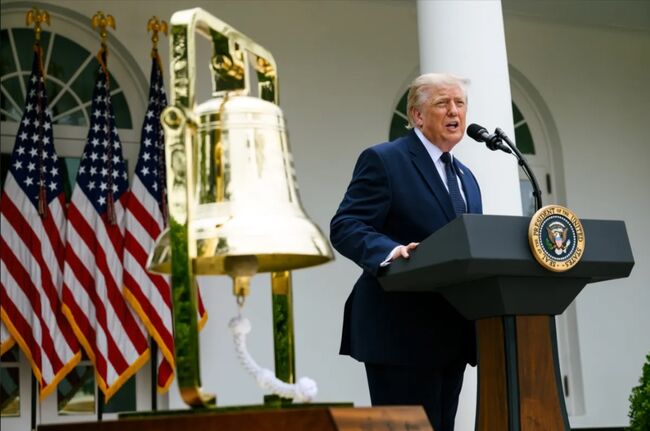 Trump pressures for rate cut again ahead of FOMC... "Should be the lowest in the world"
U.S. President Donald Trump. [Photo = The White House] U.S. President Donald Trump once again pressured the Federal Reserve, the U.S. central bank, to lower interest rates on the 27th (local time
Trump pressures for rate cut again ahead of FOMC... "Should be the lowest in the world"
U.S. President Donald Trump. [Photo = The White House] U.S. President Donald Trump once again pressured the Federal Reserve, the U.S. central bank, to lower interest rates on the 27th (local time
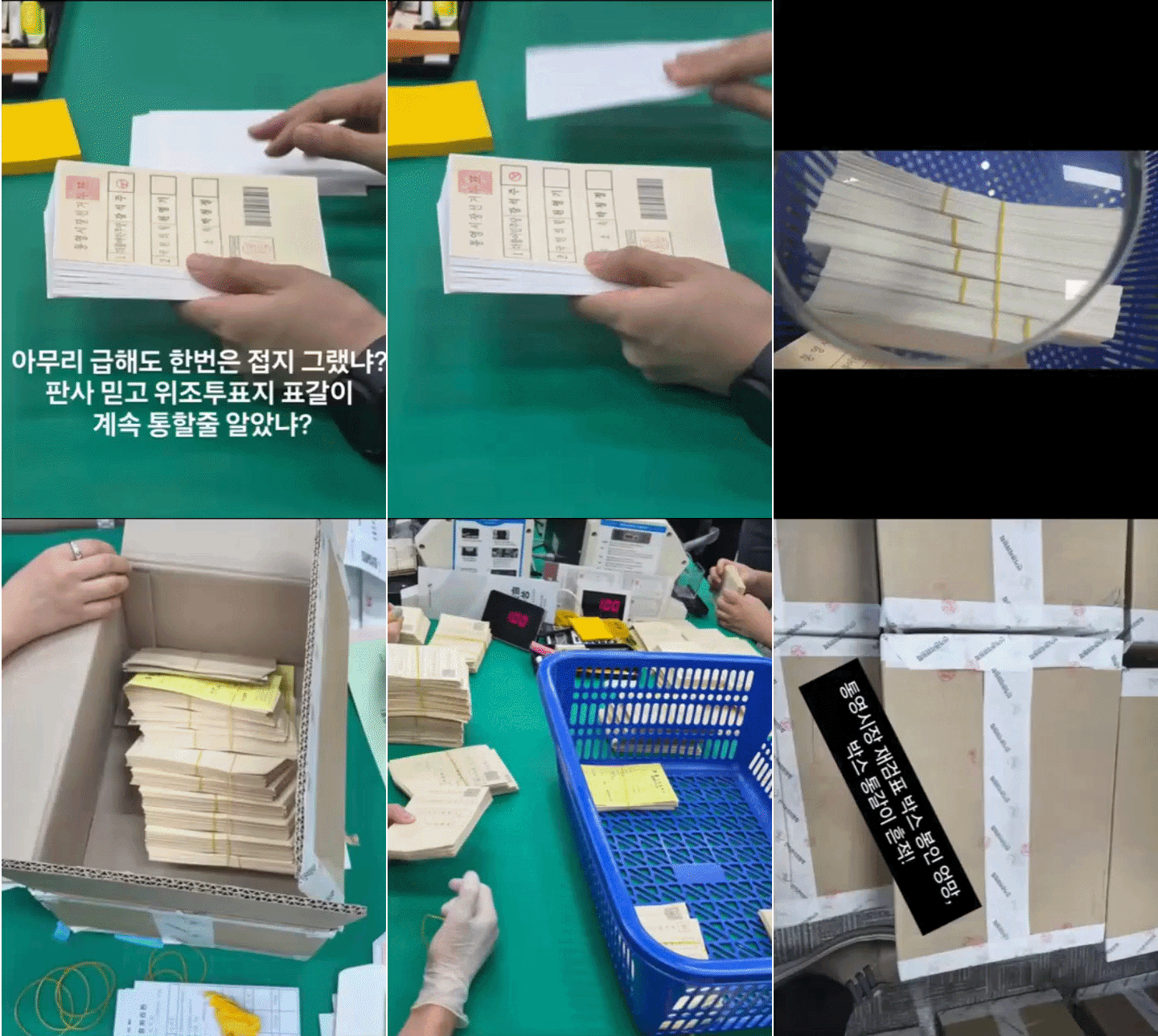 “Ignoring crisp ballots and damaged seals”… Tongyeong mayoral recount concludes with ‘no change in outcome,’ leaving suspicions and public outrage behind
Suspected counterfeit ballots discovered in Tongyeong [GIF from social media of Representative Hwang Kyo-ahn / Attorney Park Joo-hyun]During a recount of the Tongyeong mayoral election in South Gyeong
“Ignoring crisp ballots and damaged seals”… Tongyeong mayoral recount concludes with ‘no change in outcome,’ leaving suspicions and public outrage behind
Suspected counterfeit ballots discovered in Tongyeong [GIF from social media of Representative Hwang Kyo-ahn / Attorney Park Joo-hyun]During a recount of the Tongyeong mayoral election in South Gyeong
 President Yoon, regarding the first-instance ruling on the Public Official Election Act: “An excessive political verdict that distorts the facts… We will appeal immediately.”
The first-instance sentencing hearing for President Yoon Suk Yeol regarding violations of the Public Official Election Act is being broadcast live at Seoul Station on the 27th. [Photo=Yonhap News]Pres
President Yoon, regarding the first-instance ruling on the Public Official Election Act: “An excessive political verdict that distorts the facts… We will appeal immediately.”
The first-instance sentencing hearing for President Yoon Suk Yeol regarding violations of the Public Official Election Act is being broadcast live at Seoul Station on the 27th. [Photo=Yonhap News]Pres
 WSJ: "SK Hynix ADR Premium Is a Sign of AI Trading Overheat"
Advertisement for SK Hynix ADR listing in New York's Times Square [Reuters=Yonhap News file photo]The Wall Street Journal (WSJ) has pointed out that the price of SK Hynix’s American Depositary Recei
WSJ: "SK Hynix ADR Premium Is a Sign of AI Trading Overheat"
Advertisement for SK Hynix ADR listing in New York's Times Square [Reuters=Yonhap News file photo]The Wall Street Journal (WSJ) has pointed out that the price of SK Hynix’s American Depositary Recei
 'Godfather of Japanese Mystery Novels' Keigo Higashino Passes Away After Battle with Cancer at 68
Famous Japanese mystery novelist Keigo Higashino [AFP=Yonhap News]It has been belatedly reported that Keigo Higashino, the "godfather of Japanese mystery novels" and author of bestsellers such as "The
'Godfather of Japanese Mystery Novels' Keigo Higashino Passes Away After Battle with Cancer at 68
Famous Japanese mystery novelist Keigo Higashino [AFP=Yonhap News]It has been belatedly reported that Keigo Higashino, the "godfather of Japanese mystery novels" and author of bestsellers such as "The
 [Park Pil-kyu Security Column] To the Ignorant Trying to Clothe a Beast in Sheep's Clothing
Rep. Kim Byung-joo of the Democratic Party of Korea [Photo=Yonhap News]“The Air Force Academy doesn't teach you how to fly a plane!” “The Army, Navy, and Air Force academies are exactly the
[Park Pil-kyu Security Column] To the Ignorant Trying to Clothe a Beast in Sheep's Clothing
Rep. Kim Byung-joo of the Democratic Party of Korea [Photo=Yonhap News]“The Air Force Academy doesn't teach you how to fly a plane!” “The Army, Navy, and Air Force academies are exactly the
 [Issue Diagnosis] Two Effects of the Election Petition Review
 [Photo] Evidence of Election Fraud Flooding U.S. Media… Trump Had 2.7 Million Votes Stolen
 [Video] U.S. Semiquincentennial Air Show... 'Art in the Sky' streaks across New York
 [Editorial Cartoon] A Draconian Law That Undermines Freedom of Expression

 List
List









