Panmunjom. Yonhap News
 Joo Eun-sik, Director of the Korea Strategy InstituteSince the armistice agreement in 1953, the security order on the Korean Peninsula has been maintained with the Military Demarcation Line (MDL) as its central axis. Although the MDL is not legally equivalent to a territorial border, it serves as a minimum safety device for maintaining the armistice system and a quasi-international normative mechanism that neither side can unilaterally interpret or alter. However, with reports on the 17th that the Ministry of National Defense proposed "re-confirmation and re-marking of the exact location of the Military Demarcation Line" through inter-Korean military talks, concerns are growing as to whether this proposal aligns with our security strategy and military realities. While the remarks made in the statement by Policy Director Kim Hong-chul may appear to be intended for purely technical and practical coordination, they carry a significant risk of strategic miscalculation and opening the door to North Korea's psychological and legal offensives on the military and psychological warfare fronts.
MDL Controversy is a Strategic and Intentional Domain, Not a Technical Issue
Some military officials cite reasons such as outdated markers, mountainous terrain, and changes in vegetation, arguing for the "possibility of confusion in on-site recognition." However, instances of North Korean incursions across the MDL are never accidental entries due to the failure to identify arbitrary markers or navigation errors. They are predominantly evaluated as acts of psychological warfare based on information and intent, aimed at assessing mobility, testing alert levels, and securing leverage in negotiations. In other words, North Korea crosses the MDL not because they don't know where it is, but because they know and choose to do so.
The moment this issue is placed on the negotiation table for MDL re-confirmation, North Korea is highly likely to exploit it as a space for a contest of territorial claims, status, and military strength. Consequently, the "technical agreement" we anticipate will be nearly impossible from the outset. In particular, North Korea will likely present a "new baseline" based on historical narratives, revolutionary traditions, and the logic of national liberation struggles, rather than the existing line. This could lead to prolonged negotiation delays, localized military demonstrations, psychological warfare broadcasts, and asymmetric offensives, ultimately resulting in the expansion of conflict-prone areas in the long term.
The NLL Case in the Sea Serves as a Cautionary Precedent
North Korea has long refused to recognize the Northern Limit Line (NLL) in the West Sea and has instead claimed their own "Military Demarcation Line for the Five West Sea Islands," which was part of their scheme to nullify the NLL. This demonstrates that once incorrect justifications are accepted at the negotiation table, claims become entrenched and disputes are prolonged, not simply because of a lack of markers. The land-based Military Demarcation Line has a clear armistice agreement document, existing markers, and an effectively functioning surveillance system. Nevertheless, the moment North Korea appears at the negotiation table with a "new median line," the negotiations will shift from "technical re-confirmation" to a typical conflict structure of "clashing claims and disputes over legitimacy." This issue will work to North Korea's advantage the longer it drags on.
Strategic Misjudgment and Military-Political Risks
While the proposal by Minister of National Defense Ahn, put forward by Director-General Kim, may be intended to improve the situation, it can be assessed as a dangerous policy judgment that overlooks the strategic context and the behavior patterns of an adversary.
① Overlooking North Korea's Strategic Language
North Korea is not a rational negotiator but a institutionalized military dictatorship with a tradition of revolutionary, psychological, and deceptive warfare. This is readily apparent from Admiral Charles Turner Joy's book, "How Communists Negotiate."
② Risk of Legal and Political Costs
The moment we engage in renegotiating the MDL, North Korea will seek to document its claims, which could lead to the solidification of international perceptions.
③ Risk of Exacerbating Domestic Political Conflict
The issue of the Military Demarcation Line is not merely a matter of improving military-administrative aspects but has the potential to affect the structure of the armistice system.
④ Weakening of Military Crisis Management Capabilities
If a miscalculation is made, North Korea will simultaneously secure grounds for mobile training, forward deployment of special operations forces, and military demonstrations.
Alternatives and Choices
First, the principle of complete confidentiality and non-disclosure to the press.
Sensitive military matters require an approach based on practical information and intelligence rather than media promotion.
Second, pursue technical restoration through the strengthening of the South's independent technological and surveillance systems.
This can be sufficiently replaced by advancing GIS, drones, satellite imagery, thermal imaging, and AI surveillance systems.
Third, strengthen information warfare strategies to block North Korea's provocation framework.
The moment we acknowledge North Korea's claims or bring them to the discussion table, we have already conceded more than 50%.
In conclusion, the Military Demarcation Line is not a matter of "markers" but a matter of military deterrence and dominance in political and psychological warfare.
Minister of National Defense Ahn's proposal appears to be a dangerous judgment that mistakes a military-technical issue for a strategic and psychological warfare issue. If North Korea utilizes this proposal as a negotiation space, it could lead to the erosion of both symbolic and actual national defense interests.
What is needed now is not a negotiation table, but a realistic military strategy based on deterrence.
We must not provide an excuse for North Korea's schemes to nullify the MDL and NLL.
Joo Eun-sik, Director of the Korea Strategy Institute

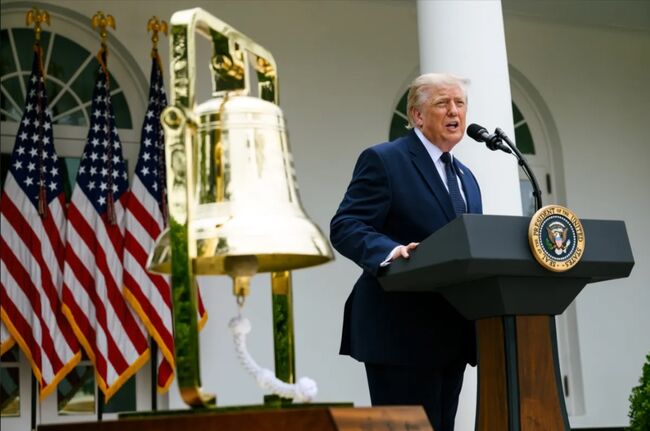 Trump pressures for rate cut again ahead of FOMC... "Should be the lowest in the world"
U.S. President Donald Trump. [Photo = The White House] U.S. President Donald Trump once again pressured the Federal Reserve, the U.S. central bank, to lower interest rates on the 27th (local time
Trump pressures for rate cut again ahead of FOMC... "Should be the lowest in the world"
U.S. President Donald Trump. [Photo = The White House] U.S. President Donald Trump once again pressured the Federal Reserve, the U.S. central bank, to lower interest rates on the 27th (local time
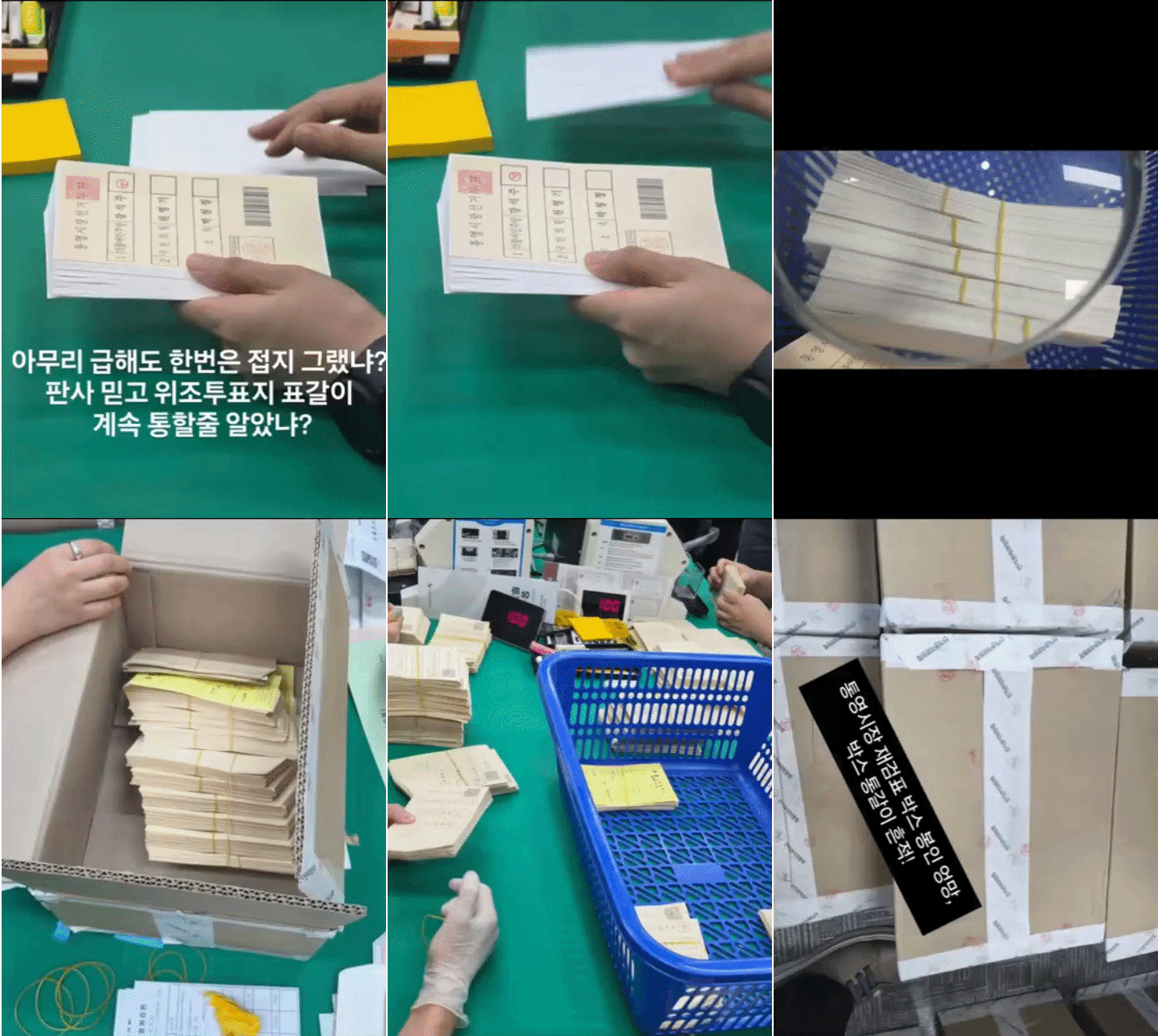 “Ignoring crisp ballots and damaged seals”… Tongyeong mayoral recount concludes with ‘no change in outcome,’ leaving suspicions and public outrage behind
Suspected counterfeit ballots discovered in Tongyeong [GIF from social media of Representative Hwang Kyo-ahn / Attorney Park Joo-hyun]During a recount of the Tongyeong mayoral election in South Gyeong
“Ignoring crisp ballots and damaged seals”… Tongyeong mayoral recount concludes with ‘no change in outcome,’ leaving suspicions and public outrage behind
Suspected counterfeit ballots discovered in Tongyeong [GIF from social media of Representative Hwang Kyo-ahn / Attorney Park Joo-hyun]During a recount of the Tongyeong mayoral election in South Gyeong
 President Yoon, regarding the first-instance ruling on the Public Official Election Act: “An excessive political verdict that distorts the facts… We will appeal immediately.”
The first-instance sentencing hearing for President Yoon Suk Yeol regarding violations of the Public Official Election Act is being broadcast live at Seoul Station on the 27th. [Photo=Yonhap News]Pres
President Yoon, regarding the first-instance ruling on the Public Official Election Act: “An excessive political verdict that distorts the facts… We will appeal immediately.”
The first-instance sentencing hearing for President Yoon Suk Yeol regarding violations of the Public Official Election Act is being broadcast live at Seoul Station on the 27th. [Photo=Yonhap News]Pres
 WSJ: "SK Hynix ADR Premium Is a Sign of AI Trading Overheat"
Advertisement for SK Hynix ADR listing in New York's Times Square [Reuters=Yonhap News file photo]The Wall Street Journal (WSJ) has pointed out that the price of SK Hynix’s American Depositary Recei
WSJ: "SK Hynix ADR Premium Is a Sign of AI Trading Overheat"
Advertisement for SK Hynix ADR listing in New York's Times Square [Reuters=Yonhap News file photo]The Wall Street Journal (WSJ) has pointed out that the price of SK Hynix’s American Depositary Recei
 'Godfather of Japanese Mystery Novels' Keigo Higashino Passes Away After Battle with Cancer at 68
Famous Japanese mystery novelist Keigo Higashino [AFP=Yonhap News]It has been belatedly reported that Keigo Higashino, the "godfather of Japanese mystery novels" and author of bestsellers such as "The
'Godfather of Japanese Mystery Novels' Keigo Higashino Passes Away After Battle with Cancer at 68
Famous Japanese mystery novelist Keigo Higashino [AFP=Yonhap News]It has been belatedly reported that Keigo Higashino, the "godfather of Japanese mystery novels" and author of bestsellers such as "The
 [Park Pil-kyu Security Column] To the Ignorant Trying to Clothe a Beast in Sheep's Clothing
Rep. Kim Byung-joo of the Democratic Party of Korea [Photo=Yonhap News]“The Air Force Academy doesn't teach you how to fly a plane!” “The Army, Navy, and Air Force academies are exactly the
[Park Pil-kyu Security Column] To the Ignorant Trying to Clothe a Beast in Sheep's Clothing
Rep. Kim Byung-joo of the Democratic Party of Korea [Photo=Yonhap News]“The Air Force Academy doesn't teach you how to fly a plane!” “The Army, Navy, and Air Force academies are exactly the
 [Issue Diagnosis] Two Effects of the Election Petition Review
 [Photo] Evidence of Election Fraud Flooding U.S. Media… Trump Had 2.7 Million Votes Stolen
 [Video] U.S. Semiquincentennial Air Show... 'Art in the Sky' streaks across New York
 [Editorial Cartoon] A Draconian Law That Undermines Freedom of Expression

 List
List